Commercial lighting fixtures include a wide range of LED luminaires engineered to illuminate office buildings, retail environments, hospitality spaces, educational facilities, and institutional properties. These systems are designed to balance energy efficiency, visual comfort, architectural integration, and long service life while complying with applicable building codes and performance standards.
Properly specified commercial LED lighting enhances occupant experience, improves task visibility, reduces operational costs, and supports sustainability objectives across indoor and outdoor commercial environments.
Commercial Lighting Fixtures
Transform your commercial environment with our wide range of commercial lighting solutions. From energy-efficient LED fixtures to stylish designs for retail spaces, our commercial lighting fixtures provide the perfect blend of functionality and aesthetics to enhance your business.
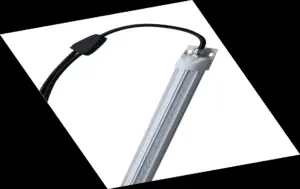
Elko 2nd Gen Cooler Lights
Brand: Beyond
wider beam for more evenly dispersed lighting; built-in driver; daisy-chain wiring design; 4ft, 5ft, 6ft; 18/22/30W; up to 3,900 lumens
Sold in packs of 4 units.
Prices start at $50
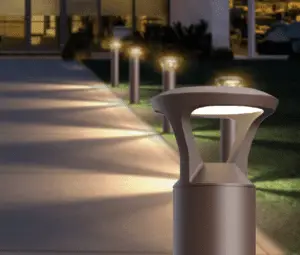
NBB Bollard
Brand: Nebulite
42″ Height; Dark Sky Compliant; Wattage Selectable- 24W/19W/14W;
CCT Selectable -3K/4K/5K; 0-10v Dimming; Built-in Photo Cell; IK10, IP65; Prices start at $300.
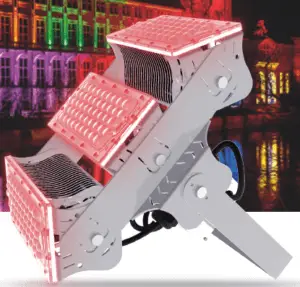
T400A Floodlight
Brand: G-Comin
RGBW Flood Lights, Wall Washer
features Remote and APP controls
Multiple modes, flash, timing,
music color change mode;
50/100/150/200/300/400/600W.
LED Pros Choice;
Prices start at $300.
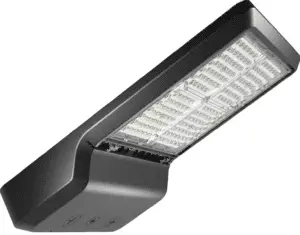
Archer G2
Parking Lot Light
Brand: ATG
DLC; Selectable (60/80/100W),(100/120/150W)(200/240/300W); up to 49,088 lumens; Prices start at $300.
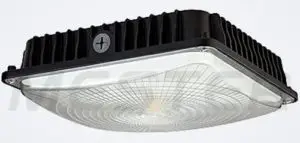
U-LPCN
Brand: Altech
Canopy Light up to 13,050 lumens; IP67; replaces up to 250W, DLC
28/40/60/90W. Prices start at $175.
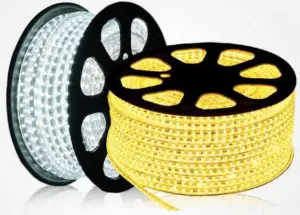
BL-5050SMD-60P
Brand: Beauty
Commercial LED Rope Light SMD 5050 IP65. 165ft. Water-resistant; IP65). nearly 3000 LEDs Per Reel.
High Voltage 100-130V / 200-240V;
Cuttable Every 19.5 Inches. op. temp. -15 to +40; Prices start at $298.
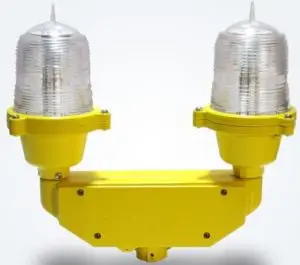
ZL Double
Obstruction Light
Brand: Plusafe
L-810; Low Intensity Type A/B; 100cd; Double light is integrated by 2 single lights; auto-transfer to “standby light”
in case of “service light” failure;
Prices start at $300.
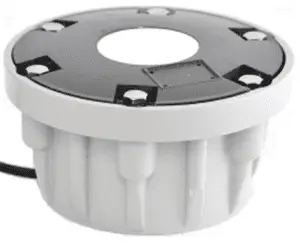
HL-50
Brand: Plusafe
LED 8’’ Flush Heliport; Perimeter Inset Light; Illuminate heliport TLOF/FATO edge area; Prices start at $350.
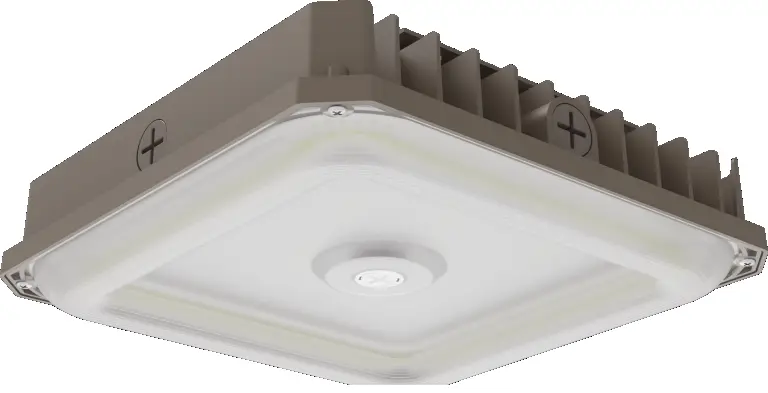
V4
Brand: Ledsion
Parking Garage Lighting; 10″ x 10″; 3Watts, 3CCT LED; Built-in Motion sensor receptacle available in 40/60/80W; up to 10,400 lumens;
Prices start at $300.

ES037
Brand: Ledsion
EZ-snap mounting; thermoplastic in white finish; Red or Green LED; EZ snap-out chevron arrows; Single and double-sided; 90-min emergency illumination; Prices start at $150.
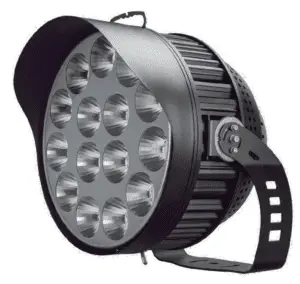
SPL
Sports Light
Brand: Ledsion
Features COB LEDs; Glare and Spill Light Control; UL, CE, IP68; Made in USA; up to 156,000 lumens;
600/1200W; Prices start at $900.
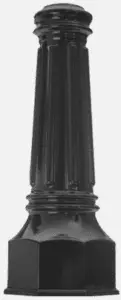
2PC
Brand: Brandon
Tall Decorative cast aluminum clam shell pole base cover for round lamp posts; 3″ and 4″ and 5″ outside diameters; Black and Dark Bronze Finishes; Height: 24″ Diameter: 9 1/4″; Prices start at $400.
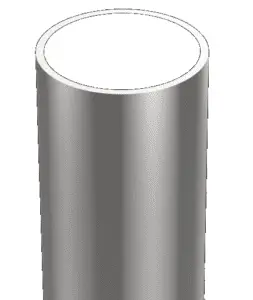
CL-RSA
Brand: Crystal
Round Straight Aluminum Poles
Prices start at $600.
When to Use Commercial Lighting Fixtures
Commercial lighting fixtures are specified when facilities require:
-
Uniform, visually comfortable illumination for interior or exterior environments
-
Compliance with lighting performance standards and foot-candle targets
-
Reduced lifecycle energy and maintenance costs
-
Integrated controls for occupancy, daylight response, and scheduling
-
Alignment with architectural intent and tenant expectations
Commercial lighting systems are engineered for environments where occupant experience, safety, and operational performance are central design priorities.
Commercial lighting includes a wide range of fixture types designed for different spaces, mounting heights, light levels, and operating requirements. For an overview of the most widely used solutions and where they fit, see our guide to common commercial lighting options.
Commercial facilities typically use several layers of illumination rather than relying on a single fixture type. Understanding the four types of commercial lighting—ambient, task, accent, and decorative lighting can help determine which fixtures are appropriate for different areas of a property.
Commercial Lighting Systems by Application
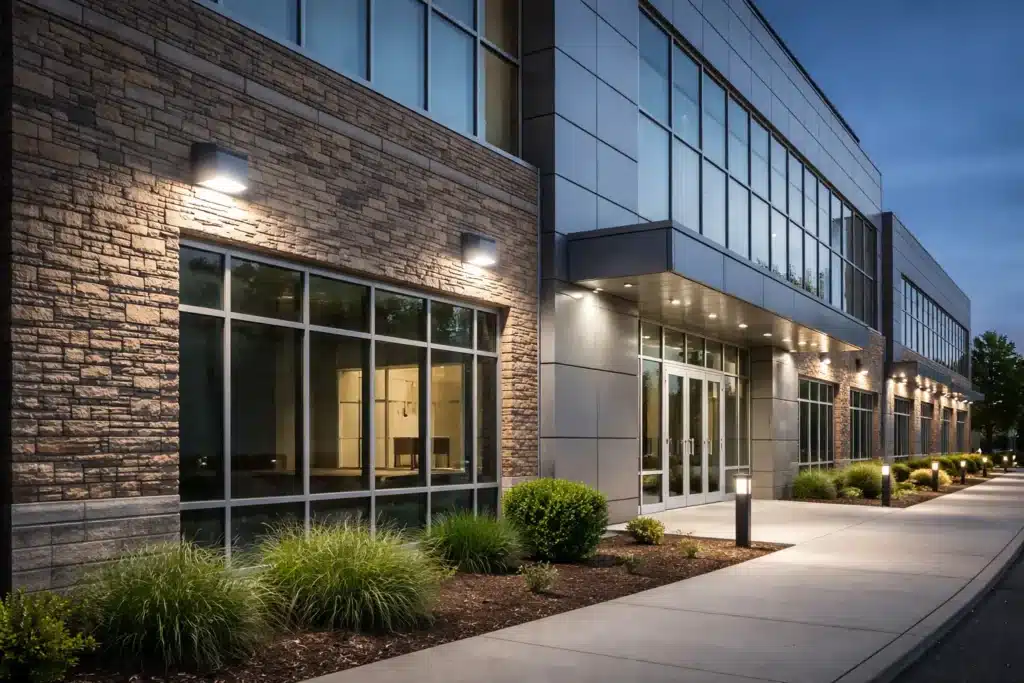
Commercial lighting design often begins at the exterior perimeter, where safety, navigation, and visibility guide fixture selection. Parking surfaces and vehicular circulation areas are commonly illuminated with LED parking lot lights mounted to engineered commercial light poles selected for height, distribution, and wind-load requirements. Pedestrian pathways may incorporate LED bollards to provide low-glare guidance, while LED outdoor security lights reinforce perimeter visibility and surveillance coverage.
Sheltered structures require lighting systems tailored to ceiling height and reflectance conditions. Fueling facilities use LED gas station canopy lighting designed for uniform horizontal distribution and color clarity. Multi-level parking structures rely on dedicated parking garage lighting engineered to reduce shadowing and improve wayfinding. Emergency LED exit signs ensure safe egress across commercial properties.
Building façades and architectural surfaces introduce another layer of lighting strategy. LED façade lighting enhances exterior identity while controlling glare and spill. Retail centers and campuses often supplement with LED sign lighting to preserve legibility and brand visibility. Decorative and transitional zones may incorporate flexible solutions such as LED rope light to reinforce edges or pathways.
Specialized commercial environments expand beyond typical property illumination. Rooftop facilities may require LED heliport lighting, while taller structures incorporate aircraft warning lights to meet aviation safety standards. Athletic venues depend on high-output LED sports lighting fixtures to deliver uniform coverage across expansive play areas.
Modernization efforts frequently prioritize efficiency upgrades without structural replacement. Facilities often deploy LED retrofit kits or lamp-style solutions such as LED corn cob light bulbs to enhance performance within existing housings. Refrigerated merchandising environments may utilize LED cooler door retrofit lights to improve product visibility while reducing energy use. Supporting infrastructure elements such as clam shell pole base covers improve durability and presentation at mounting locations.
Typical Commercial Lighting Specifications
-
Light Output: Lumen packages calibrated to space size and task requirements
-
Optical Control: Diffusers, reflectors, and beam shaping to balance distribution and visual comfort
-
Color Quality: Correlated color temperature (CCT) and Color Rendering Index (CRI) selected for occupant experience
-
Mounting Configuration: Recessed, surface-mounted, suspended, or architectural integration
-
Environmental Protection: IP-rated options for exterior and wet locations
-
Control Compatibility: Dimming, occupancy sensing, daylight harvesting, and networked management systems
Fixture selection is driven by space function, human factors, code requirements, and lifecycle performance rather than simple wattage comparisons.
Selecting the right fixtures is only part of an effective lighting strategy. Our commercial lighting best practices guide covers fixture selection, lighting controls, maintenance, retrofits, energy efficiency, and other considerations for improving long-term system performance.
Choosing between utility-powered and renewable energy lighting systems becomes easier with our detailed Solar vs Traditional LED Lighting commercial lighting comparison.
Commercial Lighting Planning & Selection
Commercial lighting systems are specified through evaluation of space function, occupancy patterns, aesthetic goals, and applicable energy codes. Lighting layouts and photometric analysis are used to confirm fixture count, spacing, and control integration that align with performance objectives.
Planning lighting for an entire commercial property requires coordinating parking areas, building perimeters, walkways, loading docks, and other exterior spaces. Our Commercial LED Outdoor Lighting Guide covers fixture selection, pole heights, photometric planning, energy savings, controls, and other considerations for complete exterior lighting projects.
Common Applications
Commercial lighting fixtures are widely used in:
-
Offices and meeting spaces
-
Retail environments and showrooms; Interior environments often rely on engineered indoor lighting systems designed to deliver uniform and visually comfortable illumination.
-
Hospitality and public assembly areas
-
Educational facilities and corridors
-
Healthcare waiting areas and common spaces
-
Exterior architectural lighting and walkways
Outdoor commercial lighting requirements vary considerably by application. Parking areas, building exteriors, walkways, security zones, and other outdoor spaces each require different fixture types, light distributions, and performance characteristics. Explore where to use commercial LED outdoor lights when planning exterior lighting for your facility.
Space Type vs Fixture Strategy Table
| Space Type | Typical Fixture Type | Design Focus |
|---|---|---|
| Office | Linear troffers, recessed panels | Uniform visual comfort |
| Retail | Adjustable accent lighting | Product emphasis |
| Hospitality | Decorative pendants | Aesthetic + comfort |
| Corridors | Wall pack / surface | Wayfinding reliability |
| Exterior | Wall packs / area lights | Safety + visibility |
Color Temperature Guidance
| Environment | Preferred CCT | Reason |
|---|---|---|
| Office | 3500–4100K | Balanced comfort + visibility |
| Retail | 3000–4000K | Warm product rendering |
| Healthcare | 3500–5000K | High visibility + clarity |
| Hospitality | 2700–3500K | Warm, inviting ambiance |
Human Comfort Considerations
-
Uniform illumination levels
-
Minimized glare and light clutter
-
Appropriate contrast levels
-
Color consistency across zones
-
Visual guidance for wayfinding
Inline Buyer Q&A
How do I choose the right commercial lighting fixtures for my property?
Start with the type of property and the areas being illuminated.
Consider the visual tasks, mounting height, required illumination, operating hours, ceiling or pole configuration, controls, environmental conditions, architectural appearance, maintenance requirements, and applicable project standards.
A commercial property may require several fixture types rather than one lighting solution throughout the building and site.
Should I select commercial lighting by wattage or lumens?
Neither measurement should be used alone.
Wattage indicates electrical power consumption, while lumens describe the amount of light produced by the fixture. Neither tells you how effectively that light will reach the required surfaces.
Fixture optics, distribution, mounting height, spacing, room or site geometry, surface reflectance, and required illumination should also be considered.
Can existing fluorescent, HID, or metal halide fixtures be replaced with LED?
Yes. Many commercial properties can be upgraded from fluorescent, metal halide, high-pressure sodium, and other legacy lighting technologies to LED.
A one-for-one replacement should not automatically be assumed.
LED fixtures can have substantially different outputs and optical distributions, creating an opportunity to reevaluate fixture quantities, wattages, placement, controls, and lighting performance during the retrofit.
Do I need a photometric lighting layout for a commercial project?
For larger interiors, parking lots, exterior sites, warehouses, distribution facilities, sports areas, and other complex projects, photometric analysis can be highly valuable.
A lighting layout can predict illumination and uniformity based on the proposed fixtures, mounting locations, optics, building or site geometry, and other project conditions.
It can also help compare fixture configurations before equipment is ordered.
Can commercial LED lighting be integrated with controls?
Yes, when compatible fixtures, drivers, and control equipment are selected.
Occupancy sensing, dimming, scheduling, daylight-responsive controls, photocells, and networked lighting systems can be incorporated according to the application.
Control strategies should reflect how each space is occupied and operated rather than applying the same approach throughout the property.
What information should I provide when requesting a commercial lighting recommendation?
Useful project information includes:
- Property and application type
- Interior or exterior location
- Area dimensions
- Ceiling, wall, or pole mounting height
- Existing fixtures and wattages
- Available voltage
- Required or desired illumination
- Operating hours
- Controls or sensor requirements
- Architectural or appearance requirements
- Environmental conditions
- Applicable certifications or specialized requirements
- Drawings, photographs, or existing lighting plans when available
These details help determine appropriate fixture types, output, distribution, controls, mounting, and whether a photometric layout should be considered.
Do different areas of a commercial property require different lighting?
Usually.
Offices, retail areas, corridors, warehouses, parking lots, building exteriors, loading areas, walkways, entrances, and architectural spaces can have very different lighting requirements.
A complete commercial lighting system should match the fixture and lighting strategy to the function of each space while maintaining a coordinated property-wide design.
Plan Your Commercial Lighting Project with the Right Fixtures
Commercial lighting can involve everything from offices, retail spaces, schools, and healthcare facilities to parking lots, building exteriors, warehouses, loading areas, and specialized operating environments.
Our lighting specialists can help evaluate fixture selection, LED retrofits, controls, photometric layouts, mounting conditions, and specialized environmental requirements for new construction and existing commercial properties.
Call 1-844-533-7767 to discuss your commercial lighting project.
Frequently Asked Questions About Commercial Lighting Fixtures
What are commercial lighting fixtures?
Commercial lighting fixtures are luminaires designed for businesses, institutions, public facilities, and other nonresidential properties.
Applications include offices, retail stores, schools, healthcare facilities, hospitality properties, warehouses, parking areas, building exteriors, walkways, and many other commercial environments.
Fixture selection can involve energy efficiency, illumination, optical control, visual comfort, durability, controls, maintenance, architecture, and applicable project requirements.
How do commercial lighting fixtures differ from residential lighting?
Commercial fixtures are generally designed around the operating demands and performance requirements of nonresidential buildings and sites.
Depending on the application, they may provide higher output, different optical distributions, longer operating schedules, more robust construction, advanced controls, specialized mounting configurations, or certifications and ratings not typically required for residential lighting.
What lighting levels are required in commercial buildings?
There is no single illumination level appropriate for all commercial spaces.
Offices, retail areas, corridors, classrooms, healthcare spaces, warehouses, parking areas, walkways, and other environments involve different visual tasks and lighting requirements.
Appropriate illumination should be determined according to the application and applicable recommendations, codes, standards, or project requirements.
What color temperature is best for commercial lighting?
There is no universal color temperature for commercial lighting.
Warmer color temperatures may be appropriate for hospitality, restaurants, architectural spaces, and certain retail environments, while neutral or cooler options are commonly considered for offices, schools, healthcare facilities, warehouses, and task-oriented spaces.
The appropriate CCT depends on the application, visual tasks, architecture, materials, desired appearance, and project requirements.
How long do commercial LED lighting fixtures last?
Commercial LED fixtures can provide operating lives measured in tens of thousands of hours.
Published lifetime ratings vary by fixture, LEDs, driver, thermal management, manufacturer, and testing methodology. Actual service life can also be influenced by operating hours, ambient temperature, electrical conditions, controls, maintenance, and the installation environment.
Can commercial LED lighting reduce energy consumption?
Yes. LED lighting can reduce energy consumption compared with many older fluorescent, metal halide, high-pressure sodium, and other legacy lighting systems.
Actual savings depend on existing and replacement wattage, fixture quantities, operating hours, controls, required illumination, and electricity costs.
What types of commercial LED lighting fixtures are available?
Commercial lighting includes many fixture categories, including:
- Ceiling lights and troffers
- Recessed downlights
- Architectural lighting
- High and low bays
- Linear fixtures
- Wall packs and wall-mounted lighting
- Area and parking-lot lights
- Bollards and post-top fixtures
- Floodlights
- Canopy and garage lighting
- Sports lighting
- Specialized industrial and environmental fixtures
The appropriate combination depends on the property and application.
Are commercial LED fixtures dimmable?
Many are, but dimming capability and compatibility vary by fixture and driver.
The fixture, control protocol, sensors, dimmers, and other components should be evaluated as a complete system when dimming is required.
Do outdoor commercial lighting fixtures require different ratings from indoor fixtures?
Often.
Exterior fixtures can be exposed to rain, moisture, dust, temperature changes, wind, corrosion, and other environmental conditions not encountered by typical indoor equipment.
Fixture construction and environmental ratings should be matched to the installation location and expected exposure.
Can one commercial lighting supplier provide fixtures for an entire property?
Potentially, and coordinating multiple fixture categories through one lighting plan can simplify specification and project management.
A commercial property may require different indoor, outdoor, architectural, industrial, and specialized fixtures, but they can be evaluated as parts of one overall lighting system.
When does commercial lighting require specialized fixtures?
Specialized equipment may be needed when lighting is exposed to unusual operating conditions or regulatory requirements.
Examples include hazardous classified locations, high or low temperatures, food-processing environments, washdown areas, corrosive locations, sports facilities, aviation applications, or environmentally sensitive outdoor locations.
Each condition should be evaluated according to its specific requirements rather than assuming a standard commercial fixture is suitable.
Stay Connected with Our Lighting Resources
Add IndustrialLightingFixtures.org as a Preferred Source on Google to see more of our lighting guides and technical resources across Google Search experiences.

Related Commercial Lighting Resources
- Indoor Lighting — Explore commercial interior lighting for offices, schools, healthcare facilities, retail spaces, institutional buildings, and other indoor environments.
- Outdoor LED Lighting Guide — Review fixture selection, mounting, distribution, controls, and design considerations for commercial exterior lighting.
- Industrial Lights — Explore high bays, linear fixtures, environmental lighting, and specialized solutions for warehouses, manufacturing plants, processing facilities, and demanding commercial environments.
- LED Architectural Lighting — Explore architectural lighting for commercial interiors, exteriors, façades, landscape areas, and visually driven applications.
- LED Parking Lot Lights — Review commercial parking-area fixtures, optics, mounting considerations, controls, and site-lighting applications.