
LED searchlights are high-intensity directional lighting systems designed to project focused beams of light across long distances. These luminaires are commonly used in marine navigation, security monitoring, rescue operations, and industrial environments where powerful illumination is required to identify objects or hazards far beyond the range of conventional lighting systems.
Unlike general area lighting fixtures, searchlights concentrate light into a narrow beam using precision optics and high-output LED modules. This allows operators to illuminate distant objects, monitor large outdoor areas, or navigate safely in low-visibility environments.
Searchlights represent a specialized category within specialty LED lighting systems designed for high-performance applications and demanding environments.
LED Searchlights
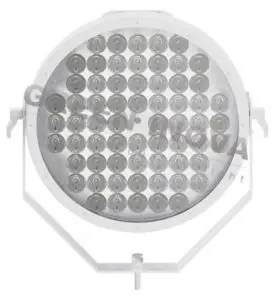
MD Type
Brand: GreenInova
Long-distance spotlight, Manual operation – directly operated at the light fixture; Up to 16, 080 Lumens;
15.5″ x 18.4″; 75/100/150/180/240W;
Prices start at $585.
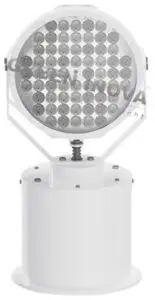
EC Type
Brand: GreenInova
Long-range searchlight; Electrical operation operated by the control panel and remote controller; Up to 16, 080 Lumens; 14.5″ in width;
75/100/150/180/240W;
Prices start at $2,400.
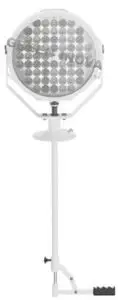
MC
Brand: GreenInova
High power searchlight; Manual operation – with adjustment column operable within the wheelhouse; Up to 16, 080 Lumens; Column height at 48″; 75/100/150/180/240W;
Prices start at $550.
What Are LED Searchlights?
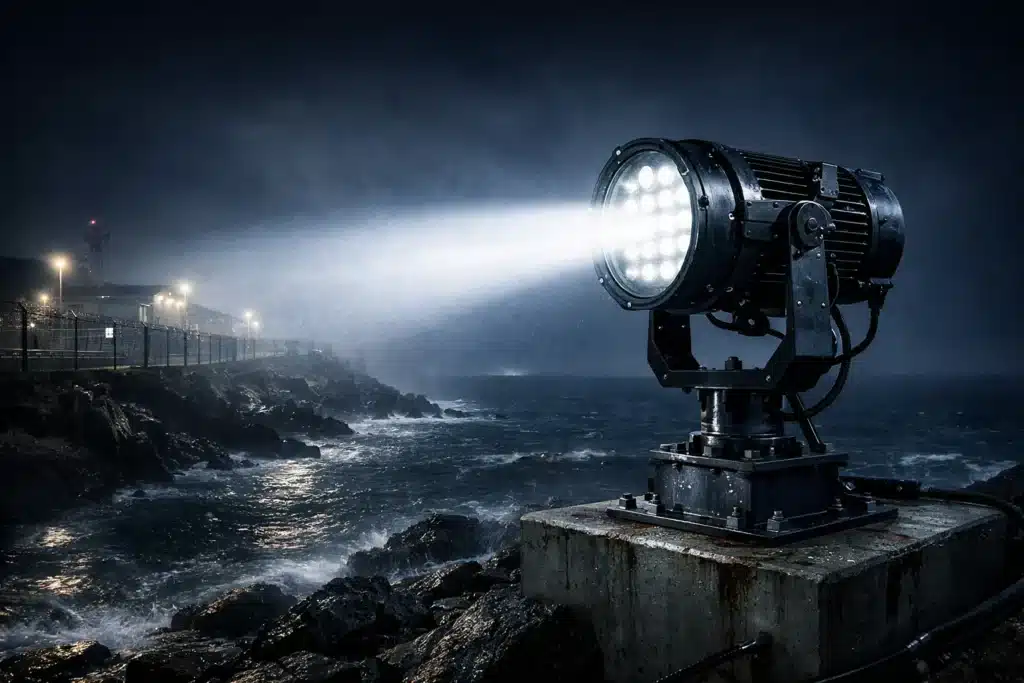
LED searchlights are directional luminaires designed to produce highly focused beams capable of projecting light over long distances. These lighting systems are engineered for applications where precise beam control and extended illumination range are essential.
Searchlights are typically mounted on:
• marine vessels
• security towers
• industrial facilities
• law enforcement vehicles
• search and rescue equipment
By concentrating light into a narrow beam angle, searchlights can illuminate distant objects while minimizing light spill and glare.
How LED Searchlights Work
Searchlights achieve long-distance illumination through a combination of high-output LEDs and precision optical systems.
Key components include:
High-Output LED Modules
Modern LED emitters generate extremely bright light while maintaining high energy efficiency.
Precision Reflectors or Lenses
Optical reflectors or collimating lenses concentrate the light into a focused beam.
Beam Control
Adjustable beam mechanisms allow operators to direct light exactly where it is needed.
Thermal Management
Advanced heat dissipation systems ensure stable operation and long service life.
This combination of optical and electrical engineering enables LED searchlights to deliver powerful illumination across large distances.
Key Features of LED Searchlights
Modern searchlight systems incorporate advanced design features that improve performance and durability.
Long-Range Beam Projection
Searchlights are capable of projecting focused beams across hundreds or even thousands of feet.
High-Intensity Output
High-output LED modules deliver powerful illumination with minimal energy consumption.
Precision Optical Control
Optical systems produce narrow beam angles designed for long-distance visibility.
Weather-Resistant Construction
Outdoor-rated housings protect internal components from moisture, dust, and harsh environments.
Rotational and Remote Control Options
Many searchlights include motorized rotation or remote-control capabilities for directional operation.
Common Applications
LED searchlights are used across a wide range of commercial, industrial, and marine environments.
Marine Navigation
Ships and marine vessels utilize searchlights to illuminate channels, obstacles, and docks during nighttime operations.
Security and Surveillance
Security installations often deploy searchlights to monitor large properties or remote facilities.
Search and Rescue Operations
Emergency responders use searchlights to locate individuals or hazards during rescue missions.
Industrial Facilities
Large industrial properties may utilize searchlights to illuminate storage yards, loading areas, or infrastructure.
Law Enforcement and Tactical Operations
Mobile searchlight systems support patrol vehicles and tactical response operations.
LED Searchlight Technology Comparison
| Feature | LED Searchlights | Traditional Halogen Searchlights |
|---|---|---|
| Energy Efficiency | High | Low |
| Heat Generation | Low | High |
| Service Life | 50,000+ hours | 1,000–5,000 hours |
| Beam Stability | Excellent | Moderate |
| Maintenance | Minimal | Frequent bulb replacement |
LED technology provides significantly improved efficiency and longevity compared with older lighting technologies.
Installation Considerations
Proper installation is critical to maximizing searchlight performance.
Mounting Location
Searchlights should be mounted in elevated positions to maximize beam reach and visibility.
Electrical Supply
Most commercial searchlights operate on line voltage or dedicated DC power systems.
Beam Adjustment
Adjustable mounting brackets allow operators to direct the beam toward specific areas.
Environmental Exposure
Outdoor installations should incorporate corrosion-resistant materials and weather-sealed housings.
Remote Control Integration
Advanced systems may include remote-control or automated positioning systems.
Performance Considerations
Selecting the appropriate searchlight requires evaluating operational requirements and environmental conditions.
Important factors include:
• required beam distance
• beam angle and optical control
• mounting location
• power supply availability
• environmental exposure
• durability requirements
Marine installations should prioritize corrosion resistance and weather-sealed electrical components.
LED Searchlight Planning & Selection
How do I choose the right LED searchlight?
Start with the application, required illumination distance, target size, mounting location, operating environment, and whether the searchlight will be fixed or remotely controlled.
Then compare beam intensity, beam angle, effective illumination distance, fixture wattage, rotation and tilt capability, voltage, control method, mounting configuration, and environmental ratings.
How important is beam angle when selecting a searchlight?
Beam angle is critical because searchlights are designed to concentrate illumination over long distances.
A narrower beam concentrates more light toward a distant target, while a wider beam illuminates a larger area but generally reduces effective long-range intensity. The correct beam should be selected according to both the required distance and the size of the area or object being illuminated.
Should I choose a fixed or remotely controlled LED searchlight?
Fixed searchlights are appropriate when illumination is consistently required in one direction.
Remote-controlled searchlights are better suited to applications where operators need to scan different areas or reposition the beam, such as marine operations, ports, security facilities, rescue operations, and large industrial sites.
What environmental ratings should I look for in an outdoor or marine searchlight?
Consider exposure to rain, moisture, salt air, corrosion, dust, vibration, temperature extremes, and other environmental conditions.
For marine, coastal, and demanding industrial applications, verify the fixture’s ingress-protection rating, housing materials, corrosion resistance, operating temperature range, and mounting hardware before specifying the searchlight.
What information should I provide when requesting an LED searchlight?
Provide the application, required illumination distance, approximate target or coverage area, mounting location and height, voltage, control requirements, environmental conditions, and fixture quantity.
For remote-controlled systems, also identify required rotation and tilt capabilities, operator location, and how the searchlight will be controlled.
Specify an LED Searchlight for Your Application
Long-range illumination requires the right combination of beam intensity, beam angle, effective distance, mounting, controls, and environmental protection.
Whether the application involves marine operations, ports, industrial facilities, security monitoring, or other specialized environments, the searchlight should be selected around the actual operating conditions and visibility requirements.
👉 Call 1-844-533-7767 for help selecting an LED searchlight and determining the appropriate beam, range, controls, mounting configuration, and environmental requirements for your application.
Frequently Asked Questions About LED Searchlights
What are LED searchlights used for?
LED searchlights are used for long-distance illumination in marine navigation, security monitoring, rescue operations, and industrial applications.
How far can LED searchlights shine?
The effective illumination distance varies substantially by searchlight and depends on beam intensity, beam angle, optical design, and the amount of usable illumination required at the target.
Are LED searchlights energy efficient?
Yes. LED technology provides significantly greater efficiency and longer service life compared with traditional halogen searchlights.
Can searchlights be remotely controlled?
Many professional searchlights offer remote-control rotation and beam adjustment for easier operation.
Are LED searchlights weather resistant?
Most commercial searchlights are designed with weather-sealed housings to withstand outdoor environments.
Stay Connected with Our Lighting Resources
Add IndustrialLightingFixtures.org as a Preferred Source on Google to see more of our lighting guides and technical resources across Google Search experiences.
Related LED Searchlight & Specialty Lighting Resources
Explore related professional lighting solutions for specialized, demanding, and mobile applications:
- Specialty LED Lighting Systems — Explore specialized commercial and industrial lighting solutions designed for applications that fall outside conventional indoor and outdoor fixture categories.
- LED Portable Work Lights — Explore portable high-output LED lighting for temporary work areas, maintenance operations, construction environments, emergency applications, and other locations requiring movable illumination.
- LED Above-Water Fishing Lights — Explore specialized above-water lighting systems designed for docks, piers, marinas, and nighttime fishing applications.