
LED above water fishing lights are specialized marine lighting systems designed to illuminate the water surface while attracting baitfish and predatory species during nighttime fishing conditions. These luminaires are commonly installed on docks, piers, seawalls, bridges, and boats where they create illuminated feeding zones that naturally draw marine life.
Unlike underwater fishing lights, above-water systems are mounted above the waterline, simplifying installation and maintenance while still delivering effective fish attraction. These systems are part of a broader category of specialty LED lighting systems used in marine, ecological, and performance-driven lighting applications.
Above Water Fishing Lights
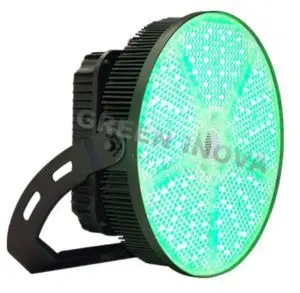
Green
Brand: GreenInova
A true Green color is the best color light for night fishing; approximate
520 nm wavelength; LED is the only
type of light that attains a true Green color; up to 80,850 lumens;
240/320/480/720/920/1100W;
Prices start at $495.
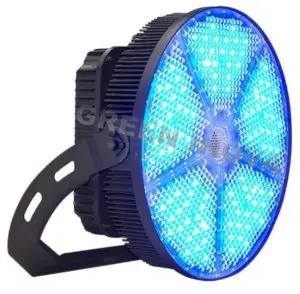
Blue
Brand: GreenInova
these fixtures are mounted on a commercial fishing boat, dock or pier; Blue color attracts quantities of plankton that other fish need to survive; IP68; up to 23,430 lumens;
240/320/480/720/920/1100W;
Prices start at $495.

Oakled-FL
Brand: Oakled
for night fishing, Green is the best color to attract fish; Can penetrate to a depth of 70 to 75 ft underwater;
240/320/480/720/920/1000W;
Prices start at $550.
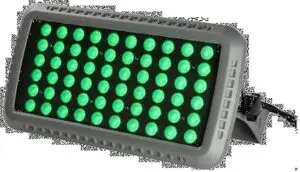
LSL
Brand: Beyond
A power-packed, narrow-beam
floodlight that produces high lumens to illuminate objects up to 98 feet away (100W); 8°/ 30°/ 36° Beam Angles; Prices start at $350.
What Are LED Above Water Fishing Lights?
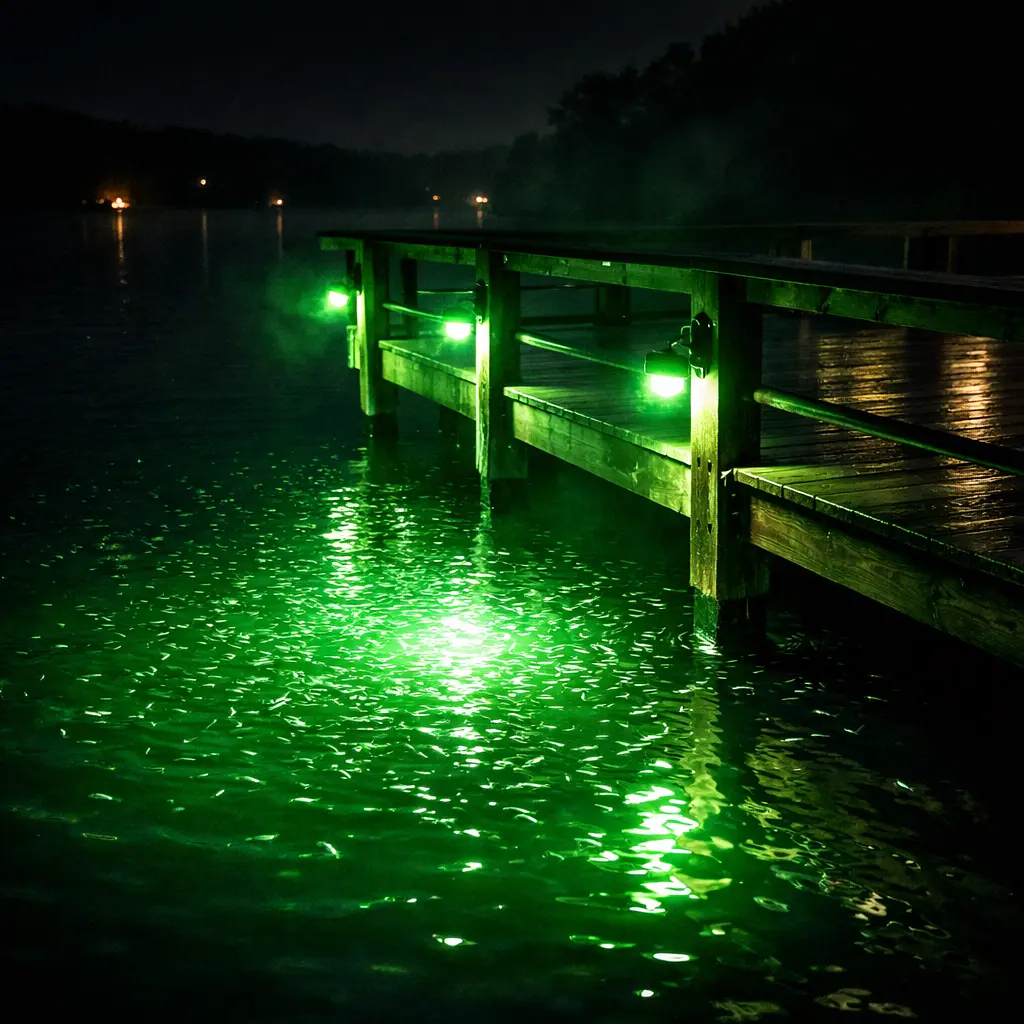
LED above water fishing lights are dock-mounted or structure-mounted luminaires designed to illuminate the water surface and attract fish during nighttime conditions. These lighting systems are typically installed on docks, piers, seawalls, bridges, or boats, directing light downward onto the water to create an illuminated feeding zone.
Unlike underwater fishing lights, above-water systems are easier to install and maintain because the fixture remains above the waterline while still providing strong surface illumination.
Fishing lights work by triggering a natural food chain: light attracts plankton, which draw in baitfish, which then attract larger predatory fish.
Green and blue LED wavelengths are commonly used because they penetrate water effectively and are highly visible to plankton and baitfish.
Not sure which fishing light is right for your dock or marina? Our Buyer’s Guide to Above-Water Fishing Lights explains how to compare LED colors, mounting options, power sources, marine-grade construction, and other key features before making your purchase.
How Above Water Fishing Lights Work
Fish attraction lighting works by introducing controlled illumination into otherwise dark water environments.
When LED light penetrates the water surface, it attracts plankton and microorganisms that naturally respond to light sources. These organisms draw small baitfish, which in turn attract larger fish species.
Key factors influencing effectiveness include:
• Light wavelength
• Water clarity
• Mounting height above water
• Beam angle and optical control
• Light output intensity
Green LED lighting is commonly used because it penetrates water effectively and provides strong visibility for baitfish attraction.
Key Features of LED Above Water Fishing Lights
Modern LED fishing lights incorporate specialized design features engineered for marine environments.
Marine-Grade Construction
Fixtures are typically constructed using corrosion-resistant aluminum housings with marine-grade powder coatings designed to withstand saltwater exposure.
High-Efficiency LED Technology
LED lighting provides significantly higher efficiency compared with traditional halogen or metal-halide fishing lights while reducing energy consumption.
Directional Optical Control
Precision optics focus light downward onto the water surface to maximize fish attraction while minimizing glare.
Long Service Life
LED systems often provide operational lifespans exceeding 50,000 hours, reducing replacement frequency.
Weather-Resistant Sealing
Outdoor marine lighting systems incorporate sealed optics and drivers to protect against moisture and environmental exposure.
Common Applications
LED above water fishing lights are used in a wide variety of marine and waterfront environments.
Dock and Pier Lighting
Private docks and fishing piers commonly use fishing lights to attract fish while improving nighttime visibility.
Marina Installations
Marinas often install fishing lights along slips and walkways to enhance nighttime activity and attract marine life.
Waterfront Residential Properties
Homes located along lakes, rivers, or coastal shorelines may incorporate fishing lights as part of dock lighting systems.
Bridge Structures
Bridge fishing areas may utilize fishing lights to improve visibility and attract fish.
Boat-Mounted Lighting
Fishing vessels sometimes install above-water lights to illuminate surrounding waters during night fishing.
LED Fishing Light Color Comparison
| Light Color | Typical Use | Advantages |
|---|---|---|
| Green LED | Most common fishing light | Strong water penetration and baitfish attraction |
| Blue LED | Clear water environments | Excellent visibility in deeper water |
| White LED | Dock illumination | Provides general lighting with moderate fish attraction |
| Amber LED | Environmentally sensitive areas | Reduced wildlife disturbance |
Green lighting remains the most widely used option for dock fishing environments
Installation Considerations
Proper installation helps maximize fishing light performance.
Mounting Height
Lights are typically mounted between 1–4 feet above the water surface to direct illumination effectively.
Beam Angle
Wide beam angles create larger illuminated feeding zones.
Power Supply
Most fishing lights operate using standard line voltage power supplies connected through outdoor-rated wiring.
Corrosion Protection
Marine-grade materials and finishes help prevent corrosion in saltwater environments.
Light Placement
Multiple lights may be spaced along docks to expand the illuminated area.
Performance and Environmental Considerations
Selecting the appropriate fishing light requires evaluating environmental conditions and operational goals.
Important factors include:
• Water clarity and depth
• Local fish species
• Light color selection
• Dock structure and mounting options
• Electrical supply availability
• Marine corrosion exposure
Lighting systems installed near coastal environments should incorporate corrosion-resistant materials and sealed electrical components.
Inline Buyer Q&A
How do I choose an LED above-water fishing light for a dock?
Start with the installation environment and how the light will be used.
Consider fixture output, beam distribution, mounting location, distance above the water, water clarity, target fishing area, available power, controls, saltwater or freshwater exposure, and how easily the fixture can be aimed and maintained.
For permanent dock or marina installations, fixture construction and resistance to moisture and corrosion are also important.
What color LED light should I use for above-water fishing?
Green is commonly used for nighttime fishing because it can provide strong visibility in and around the water and is widely used for attracting aquatic activity.
However, there is no single color that will perform best under every condition.
Water clarity, depth, local species, ambient light, fixture output, and environmental conditions can all influence results.
How should an above-water fishing light be positioned?
The fixture should be positioned and aimed so useful light reaches the target water area without creating unnecessary glare for people on the dock or nearby properties.
Mounting height, beam angle, fixture output, dock configuration, and water conditions all affect the illuminated area.
Adjustable mounting can be useful when the fishing area or water level changes.
Should I choose an above-water or underwater fishing light?
The two approaches have different installation and maintenance characteristics.
Above-water fixtures remain accessible for inspection, cleaning, adjustment, and replacement without placing the luminaire below the waterline.
Underwater lights place the light source directly in the water but require equipment and installation methods appropriate for submerged operation.
The better choice depends on the dock, water conditions, installation requirements, maintenance preferences, and fishing application.
Can above-water fishing lights be permanently installed on commercial docks and marinas?
Yes, when the fixture and installation are appropriate for the environment.
Permanent waterfront installations should account for moisture, salt exposure where applicable, corrosion, wind, mounting security, electrical conditions, and other environmental factors.
The fixture’s ratings and construction should be verified for the proposed location.
What information should I provide when selecting an above-water fishing light?
Useful project information includes:
- Freshwater or saltwater location
- Dock, pier, marina, or shoreline application
- Approximate area of water to illuminate
- Mounting location
- Mounting height above the water
- Available voltage or power source
- Desired light color
- Fixed or adjustable mounting
- Permanent or portable installation
- Environmental and corrosion exposure
- Photographs of the installation area when available
Put the Right Light Over Your Fishing Area
Above-water LED fishing lights provide a practical way to illuminate water around docks, piers, marinas, and other waterfront locations while keeping the fixture accessible above the waterline.
Light color, output, beam distribution, mounting height, aiming, power source, water conditions, and environmental exposure should all be considered when selecting a system.
Our lighting specialists can help evaluate above-water LED fishing lights for residential docks, commercial marinas, fishing piers, waterfront properties, and other nighttime fishing applications.
Call 1-844-533-7767 to discuss your above-water fishing-lighting application.
Frequently Asked Questions About LED Above-Water Fishing Lights
Do above-water fishing lights attract fish?
Fishing lights can concentrate nighttime aquatic activity around an illuminated area.
Light can attract or concentrate plankton, insects, and other small organisms, which may draw baitfish and, in turn, larger predatory fish.
Results vary with water conditions, species, season, location, weather, and other environmental factors.
What color fishing light works best?
Green is one of the most commonly used colors for nighttime fishing lights, but it should not be considered universally best for every fishing environment.
Water clarity, depth, target species, ambient lighting, fixture output, and local conditions can influence performance.
Why is green commonly used for fishing lights?
Green light is widely used because it can provide useful visibility in many water conditions and is commonly associated with fishing-light applications.
Actual performance depends on more than color alone, including fixture output, beam distribution, water clarity, mounting, and local aquatic conditions.
Are above-water fishing lights better than underwater lights?
Neither design is inherently better for every application.
Above-water lights offer easier access for mounting, adjustment, inspection, cleaning, and replacement because the fixture remains out of the water.
Underwater lights illuminate directly from below the waterline but require equipment specifically designed and installed for submerged operation.
How high above the water should a fishing light be mounted?
There is no universal mounting height.
Fixture output, beam angle, dock configuration, target area, glare, water level, and the ability to aim the fixture should all be considered.
The objective is to place useful illumination on the desired water area rather than simply mounting the fixture as high as possible.
Can above-water fishing lights be used in freshwater and saltwater?
Yes, provided the selected fixture is appropriate for the environment.
Applications can include lakes, rivers, ponds, coastal docks, fishing piers, marinas, and other waterfront locations.
Saltwater environments can require additional attention to fixture materials, finishes, seals, mounting hardware, and corrosion resistance.
Are above-water fishing lights waterproof?
Outdoor fishing lights should have environmental ratings appropriate for their installation, but an above-water fixture should not automatically be assumed suitable for submersion.
Water resistance, wet-location suitability, and submersible ratings describe different operating conditions.
Verify the specific fixture rating for the proposed installation.
Can an above-water fishing light be left outside permanently?
Potentially, if the fixture, mounting system, wiring, and other components are rated for permanent outdoor exposure at the location.
Waterfront installations can expose equipment to moisture, salt, wind, corrosion, temperature changes, and other demanding conditions.
Are LED fishing lights energy efficient?
LED fixtures can provide efficient illumination compared with many older lighting technologies.
Actual energy use depends on fixture wattage, light output, operating hours, controls, and the equipment being compared.
LEDs can also provide advantages such as directional optical control and long service intervals depending on the product.
How long do LED fishing lights last?
Service life varies by fixture.
LEDs can operate for tens of thousands of hours, but actual system life also depends on the driver, thermal management, seals, corrosion exposure, operating conditions, electrical conditions, and other components.
Manufacturer specifications should be reviewed for the selected fixture.
Can above-water fishing lights create glare?
Yes.
Poor aiming, excessive output, or an unsuitable mounting position can create glare for anglers, neighboring docks, boat operators, or nearby properties.
Fixture distribution and aiming should concentrate useful illumination toward the target water area while controlling unnecessary light.
Can above-water fishing lights be used on commercial fishing piers or marinas?
Yes, when the equipment and installation are appropriate for the application.
Commercial environments may require additional consideration of fixture durability, corrosion resistance, mounting security, electrical requirements, glare, maintenance access, and other site conditions.
Are above-water fishing lights portable?
Some systems can be configured for portable use, while others are designed for permanent installation.
Portable applications should consider power source, mounting stability, fixture protection, cord management where applicable, environmental exposure, and ease of setup and storage.
Stay Connected with Our Lighting Resources
Add IndustrialLightingFixtures.org as a Preferred Source on Google to see more of our lighting guides and technical resources across Google Search experiences.

Related Above-Water Fishing Lighting Resources
- Above-Water Fishing Lights — Learn how above-water lighting works, why light can concentrate aquatic activity, and what to consider when using lighting for nighttime fishing.
- How to Choose Above-Water Fishing Lights for Your Dock — Review fixture color, output, mounting, positioning, environmental exposure, and other considerations when selecting a dock fishing light.
- LED Portable Work Lights — Explore portable LED illumination for temporary waterfront, maintenance, construction, and other applications requiring flexible fixture placement.
- LED Searchlights — Review high-intensity directional LED lighting for marine, waterfront, security, search-and-rescue, and long-distance illumination applications.
- Specialty Lighting — Explore the broader Specialty Lighting pillar covering marine, environmental, horticultural, portable, and other specialized LED applications.