LED ceiling lights provide reliable, energy-efficient illumination for commercial and industrial interior spaces where consistent overhead lighting is required. These fixtures are designed to deliver uniform light distribution, improved visual comfort, and long operational life across offices, retail environments, institutional facilities, and light-industrial interiors. As a core component of modern indoor lighting systems, LED ceiling fixtures help support energy efficiency goals while maintaining consistent illumination across occupied interior environments.
Modern LED ceiling lighting systems replace legacy fluorescent and incandescent ceiling fixtures with high-efficiency LED technology that reduces energy consumption while improving illumination quality. By combining optimized optics, advanced driver technology, and durable fixture construction, LED ceiling lights support long-term operational performance and reduced maintenance requirements.
Ceiling-mounted LED lighting solutions are commonly specified in environments where recessed fixtures are impractical or where surface-mounted illumination provides the most effective lighting coverage.
Need Commercial LED Ceiling Lights for Your Building?
Upgrade offices, schools, healthcare facilities, retail spaces, and commercial interiors with efficient LED ceiling lighting selected for your application.
LED PROS supplies commercial LED ceiling light fixtures, including flat panels, troffers, surface-mounted luminaires, and suspended lighting solutions for new construction and lighting retrofit projects.
We can help evaluate ceiling type, fixture dimensions, mounting configuration, lumen output, wattage, color temperature, dimming requirements, and project quantity to identify appropriate lighting options.
Request a Commercial Ceiling Lighting Quote for specifications, availability, and bulk project pricing.
Call 1-844-533-7767 for assistance with your lighting project.
Commercial LED Ceiling Light Fixtures
Explore LED flat panels, troffers, suspended fixtures, and other commercial ceiling lighting solutions. Available mounting configurations, fixture dimensions, wattages, and controls vary by product.
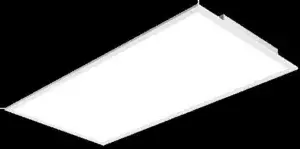
EcoPanel
Brand: Beyond
LED Back-lit Panel Light; CCT and Wattage Tunable; 30/40/50/60/72W 2×4; Prices start at $85

FLOW
Brand: Beyond
LED Back-lit Panel Light; CCT and Wattage Tunable; (24/29/32/39W; 2×2 (29/34/39/49/40/50/60/70) 2×4; Prices start at $70.
NBFP
Brand: Nebulite
LED Flat Panel Light; CCT and Wattage Tunable; Choose from 1×4, 2×2, 2×4; 20/30/40W); (20/30/40W) and (30/40/50W);
Prices start at $165.

Elite Cloud
Brand: Beyond
LED Sky Ceiling Panels; Creating a vibrant atmosphere within indoor spaces by incorporating calming tones of blue and white, 2×2; 2×4; 6000K; 49W; Prices start at $225
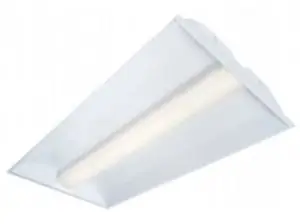
U-TRF
Brand: Altech
2×4 ceiling light troffers, tunable
adj wattage and color temperature;
34/38/45W; DLC, UL listed; up to 5,715 LM; Prices start at $225.
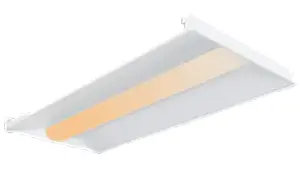
U-TRF
Brand: Altech
2×2 ceiling light troffer, tunable
adj. wattage and color temperature;
Available in 20/25/30W; DLC, UL
3,750 lumens; Prices start at $225.
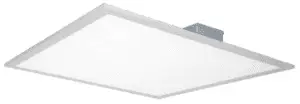
FBPL
Brand: ATG
DUO Color and Power Switchable
Flat Panel; low profile 2×2 and 2×4 fixtures, lighting fixture; easily change and control light and color outputs;
15/20/25/30/35/40/48W;
Prices start at $195.
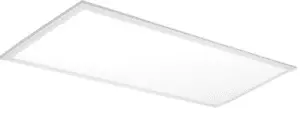
PLB
Brand: Ledsion
Back-lit optics produces uniform
light output, diffuser lens reduces
glare; 0-10V Dimming; DLC Listed;
2×2 and 2×4; 6,450 Lumens;
Select wattage 35/40/45/50W;
Prices start at $195.
ZY-P1
Brand:
recessed, installed on a surface
mount or suspended from an open
ceiling layout; 20/30/40W;
1×4, 2×2, 2×4; Prices start at $195.
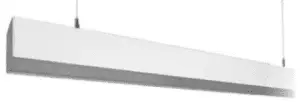
Huron
Brand: ATG
Light linear lights; for Lobbies, conference rooms, recreation and dining areas; 2ft, 4ft, 8ft; 20/40/84W;
Prices start at $175.

WR3
Brand: ATG
Wrap Linear Fixtures; low-profile,
high-efficiency light; 4ft low profile Wraparound Luminaire; Wattage adj. (30W/35W/40W) and color tunable and dimmable. Prices start at $155.
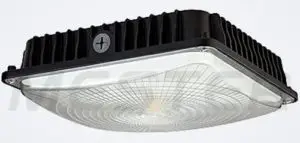
LBSS
Brand: Altech
LED Low Bay Square Canopy; DLC, IP65 Rated, replacing canopy or parking garage fixtures; 28W/40W/60W/90W.
Prices start at $175.

Selecting Commercial LED Ceiling Fixtures for Drop, Suspended, and Surface-Mounted Applications
Commercial ceiling lighting selection begins with the building’s ceiling construction and the type of illumination required.
Although drop ceilings, suspended lighting, and surface-mounted fixtures are often discussed together, they involve different mounting methods and installation requirements.
LED Drop Ceiling Lighting Fixtures
Commercial drop ceilings typically use suspended T-bar grid systems designed to accommodate ceiling panels and compatible lighting fixtures.
LED flat panels and troffers are commonly specified for these installations because they provide broad, uniform illumination while fitting standard ceiling-grid configurations.
Common fixture sizes include 1×4, 2×2, and 2×4, depending on the available product and ceiling layout.
Explore our LED Troffer Lighting for additional commercial drop-ceiling options.
Suspended Commercial Ceiling Lighting
Suspended LED ceiling fixtures are supported below the structural ceiling using compatible suspension systems.
These configurations are commonly used in offices, conference rooms, retail spaces, lobbies, and commercial interiors where fixture positioning and architectural appearance are important.
Unlike fixtures installed directly into a suspended ceiling grid, pendant-mounted and suspended linear luminaires require mounting arrangements appropriate to the fixture and building structure.
Surface-Mounted and Low-Profile Ceiling Fixtures
Surface-mounted LED ceiling lights attach directly to a suitable ceiling surface or approved mounting structure.
They are often appropriate for corridors, utility rooms, workshops, offices, and commercial spaces without conventional suspended ceiling grids.
Low-profile designs may also be useful where ceiling clearance and visual appearance are important.
For commercial or industrial spaces with higher mounting heights, our LED Low Bay Lighting category provides additional fixture options.
Matching Fixtures to Building Requirements
Before selecting commercial LED ceiling lighting, consider:
-
Ceiling construction and mounting method
-
Fixture dimensions and available installation space
-
Required illumination and optical distribution
-
Color temperature and visual comfort
-
Depending on the fixture, available controls may include dimming, occupancy sensing, daylight-responsive operation, or integration with compatible building lighting-control systems.
-
Voltage and electrical requirements
-
Applicable safety listings and installation requirements
-
Fixture quantity and project budget
For larger commercial projects, fixture spacing and photometric performance should be evaluated alongside product specifications.
Request a Commercial LED Ceiling Lighting Quote for assistance comparing fixtures for your building.
Call 1-844-533-7767 to discuss your requirements.
Common Applications for LED Ceiling Lights
Typical applications include:
• Offices and administrative workspaces
• Retail environments and showrooms
• Schools, classrooms, and educational facilities
• Healthcare buildings and patient care areas
• Corridors, hallways, and shared interior spaces
• Hospitality environments including hotels and conference centers
Drop ceilings commonly accommodate LED flat panels and troffers, with fixture selection depending on ceiling-grid dimensions, illumination requirements, optical performance, and project specifications. For a detailed comparison, see Troffers vs. Flat Panels for Drop Ceilings.
Architectural spaces may combine ceiling lighting with commercial recessed downlights to create layered interior illumination.
Many facilities transitioning from fluorescent lighting also upgrade to LED T8 tube lighting for improved energy efficiency.
LED Ceiling Lighting Performance Considerations
Light Output and Distribution
Ceiling fixtures must deliver adequate lumen output to illuminate the intended space while maintaining uniform distribution across the working plane. Proper optical design helps prevent dark areas and ensures balanced lighting throughout interior environments.
Glare Control and Visual Comfort
Modern LED ceiling lights often incorporate diffusers, lenses, or optical control systems that minimize glare while maintaining high light transmission. This improves occupant comfort in offices, classrooms, and healthcare environments where lighting conditions directly affect productivity and well-being.
Color Temperature and Color Rendering
LED ceiling lights are available in multiple color temperatures to match the function of the space. Neutral white lighting is commonly used in offices and commercial interiors, while warmer color temperatures may be preferred in hospitality environments.
Color Rendering Index (CRI) is also important in environments where accurate color perception is required.
Fixture quality, operating hours, thermal management, and installation conditions can all affect service life. Learn more in our Commercial LED Ceiling Light Lifespan Guide.
Inline Buyer Q&A
How do I choose the right LED ceiling light for a commercial space?
Start with the ceiling type, room dimensions, mounting height, required illumination, visual tasks, fixture spacing, desired appearance, voltage, controls, and existing lighting system.
The appropriate solution may be a troffer, flat panel, recessed downlight, surface-mounted fixture, or another ceiling-lighting configuration depending on the space and application.
For commercial and industrial spaces with higher mounting heights that do not require full high bay output, LED Low Bay Lighting provides another option for workshops, production areas, warehouses, and other facilities where controlled light distribution is required.
Should I use LED troffers, flat panels, or recessed downlights?
Each serves a different purpose.
Troffers and flat panels are commonly used for broad general illumination in suspended-grid ceilings. Recessed downlights use smaller ceiling openings and can provide a different distribution and architectural appearance for conference rooms, reception areas, corridors, retail spaces, and other interiors.
The best choice depends on the ceiling system, room geometry, lighting objectives, glare considerations, and desired appearance.
Should I replace existing fluorescent ceiling fixtures or retrofit them?
Both approaches can be appropriate.
Complete fixture replacement provides an opportunity to update the housing, optics, driver, controls, appearance, and overall lighting performance. Retrofit solutions may allow portions of an existing fixture to remain in service and can reduce installation work in suitable applications.
Fixture age and condition, existing components, labor, ceiling access, controls, required performance, and long-term maintenance should be evaluated before choosing an approach.
How many LED ceiling fixtures does my space need?
Fixture quantity depends on room dimensions, ceiling height, fixture output and distribution, required illumination, spacing, surface reflectance, daylight, and how the space is used.
A simple one-for-one replacement may be appropriate for some retrofits, but it does not automatically produce the best lighting layout.
Should I request a photometric layout for commercial ceiling lighting?
For larger interiors, projects involving significant layout changes, or spaces with specific illumination and uniformity objectives, photometric analysis can help evaluate fixture quantity, spacing, output, and predicted light levels before installation.
It can also help compare fixture types or output settings before equipment is ordered.
Request a Quote for Commercial LED Ceiling Lights & Fixtures
Find the right LED ceiling lighting for your office, school, healthcare facility, retail building, or commercial renovation project.
LED PROS supplies commercial LED ceiling fixtures for suspended ceilings, drop-ceiling grids, surface-mounted installations, and other indoor lighting applications.
Our available solutions include LED flat panels, troffers, linear ceiling fixtures, and adjustable-wattage lighting options.
We can help evaluate fixture size, ceiling configuration, mounting requirements, lumen output, wattage, color temperature, dimming compatibility, and project quantity.
For the most accurate recommendation, provide your ceiling type, preferred fixture dimensions, approximate quantity, voltage, and project specifications.
Request a Commercial Ceiling Lighting Quote for product availability, specifications, and bulk pricing.
Call 1-844-533-7767 to discuss your project.
FAQs About Commercial LED Ceiling Lighting
What are LED ceiling lights used for?
LED ceiling lights provide general, task, or complementary illumination in commercial and institutional interiors.
Applications include offices, retail stores, schools, healthcare facilities, conference rooms, corridors, reception areas, government buildings, and other interior spaces.
What types of commercial LED ceiling lights are available?
Commercial ceiling-lighting options include LED troffers, flat panels, recessed downlights, surface-mounted fixtures, and other luminaires designed for different ceiling systems and applications.
Fixture selection should consider both the physical ceiling configuration and the required lighting performance.
Are LED ceiling lights more efficient than fluorescent fixtures?
LED ceiling fixtures can reduce energy consumption compared with many older fluorescent systems while also eliminating routine fluorescent lamp replacement.
Actual savings depend on existing and replacement wattage, fixture quantities, operating hours, required illumination, and lighting controls.
Where are ceiling-mounted LED fixtures commonly installed?
They are used throughout offices, classrooms, retail environments, healthcare facilities, corridors, conference rooms, reception areas, institutional buildings, and other commercial interiors.
Different spaces within the same building may require different fixture types, outputs, distributions, or controls.
What color temperature is best for LED ceiling lights?
There is no single color temperature appropriate for every commercial interior.
3500K and 4000K are commonly considered for many offices, schools, healthcare environments, and institutional spaces, while warmer or cooler selections may be appropriate depending on the application, desired appearance, visual tasks, daylight, and interior finishes.
CCT-selectable fixtures can provide additional flexibility.
How long do commercial LED ceiling lights last?
Commercial LED ceiling fixtures can provide operating lives measured in tens of thousands of hours. Published lifetime ratings vary by fixture and manufacturer.
Actual service life depends on LED and driver quality, thermal management, operating hours, ambient conditions, electrical conditions, controls, and other operating factors.
Can commercial LED ceiling lights be dimmed?
Many commercial ceiling fixtures are available with dimming drivers and can be integrated with compatible occupancy sensors, daylight-responsive controls, scheduling, or building lighting-control systems.
Compatibility should be verified among the fixture, driver, sensor, and control system before equipment is selected.
What are field-selectable LED ceiling lights?
Field-selectable fixtures allow certain settings to be adjusted during installation rather than requiring a separate fixture model for every application.
Depending on the product, selectable features may include wattage or light output, color temperature, or both. This can provide flexibility when similar fixtures are being used across spaces with different lighting requirements.
Can LED ceiling lights be used in existing suspended ceilings?
Yes. Troffers, flat panels, and other compatible fixtures can be installed in many existing suspended-grid ceiling systems.
For retrofit projects, verify grid dimensions, existing fixture openings, ceiling condition, electrical connections, controls, fixture weight, and installation requirements before selecting replacement equipment.
Are LED ceiling lights suitable for emergency-lighting applications?
Some commercial LED ceiling fixtures can be equipped with emergency drivers or incorporated into emergency-lighting systems.
Emergency and life-safety lighting must meet the equipment, illumination, operating-duration, testing, installation, and other requirements applicable to the facility and jurisdiction. Emergency capability should be addressed as part of the project design rather than assumed from the fixture type.
Stay Connected with Our Lighting Resources
Add IndustrialLightingFixtures.org as a Preferred Source on Google to see more of our lighting guides and technical resources across Google Search experiences.
Commercial Ceiling Lighting & Installation Resources
- LED Troffer Lighting — Compare commercial LED troffers for suspended ceiling grids.
- Commercial Recessed Downlights — Explore recessed lighting for commercial interiors.
- Commercial Drop Ceiling Lighting Layout Guide — Understand fixture layout, spacing, and illumination design.
- Commercial LED Ceiling Light Installation Guide — Review installation considerations for different ceiling systems.
- LED Troffers vs. Flat Panels — Compare two common commercial ceiling fixture types.
- LED Low Bay Lighting — Explore lighting for commercial and industrial spaces with higher mounting heights.