
Commercial RGB and RGBW LED lighting gives architects, contractors, property owners, and facility managers the ability to transform buildings and architectural features with programmable color while maintaining the durability required for commercial exterior applications.
RGB and RGBW fixtures can illuminate building façades, columns, rooflines, entrances, monuments, bridges, fountains, landscape features, and other prominent structures. Applications range from corporate branding and hospitality environments to universities, municipalities, landmarks, gated communities, and special-event lighting.
LED PROS WorldWide supplies commercial RGB and RGBW lighting for projects ranging from individual architectural features to coordinated multi-fixture installations. Fixture selection can be based on the required light output, beam distribution, mounting distance, environmental conditions, white-light requirements, and control system.
Need RGB or RGBW Lighting for a Commercial Project?
LED PROS WorldWide can help identify color-changing fixtures for building façades, architectural features, hospitality properties, campuses, municipalities, landmarks, and other commercial applications.
Explore RGB/RGBW Lighting Fixtures Below
Request a Quote or call 844-533-7767 with your building elevations or drawings, fixture quantities, voltage, mounting locations, desired colors or white-light requirements, and control specifications.
RGB LED Light Fixtures
Bring commercial and industrial properties to life with RGB and RGBW LED lighting designed for building façades, architectural features, landscape elements, monuments, hospitality properties, campuses, and public spaces. Our color-changing LED flood lights and architectural fixtures provide programmable color, multiple beam and mounting options, and control capabilities for projects ranging from individual features to coordinated building-wide lighting systems.
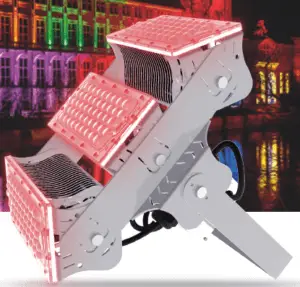
T400A
Brand: G-Comin
RGBW Flood Lights provide 16 million colors allowing you to get the exact color; Remote and APP controls
Multiple modes, flash, timing,
music color change mode;
50/100/150/200/300/400/600W.
LED Pros Choice;
Prices start at $395.
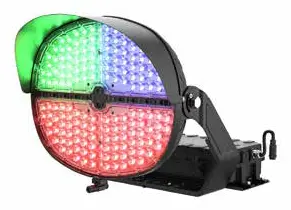
Sportslighter RGB
Brand: LiteLume
High Power Color Changing sports lighting; used in stadiums, amusement parks, theme parks; 480W.
Prices start at $500.
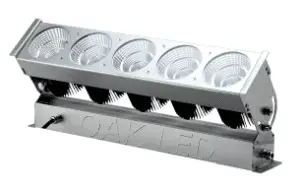
Oak-FL
Brand: Oakled
featuring anti-glare optics, multiple beam angles, DMX Enabled,
Wireless Remote control,
Wifi control, IP67; ETL,cETL; 120W to 1000W; Prices start at $300.
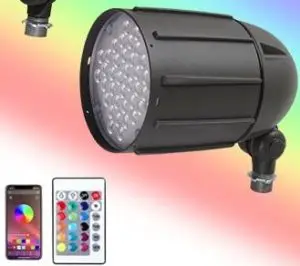
5BF
Brand: Green Inova
Bullet Flood Light; Color and brightness are controlled through the
app or the remote; DC12V/ DC24V/ AC12V; Available in 22°, 35°, and 57°
IP65; outdoor and indoor use;
Available in 6/12/30W;
Prices start at $150.
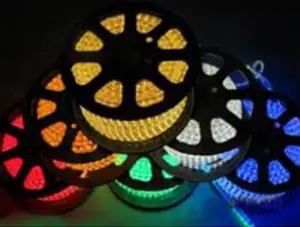
RGB LED Rope Light
Brand: Beauty
RGB Color Changing Strip Lights featuring 3000 LEDs; 65ft reel; 120V; IP65; water-resistant; 120 degree beam angle; op. temperature; -20C to 45C; 2 yr. warr; Prices start at $358.
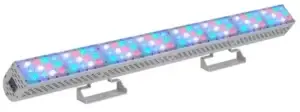
LT-FRGBW
Brand: Tio Tinto
flood light wall washers, landscape light, Architectural lighting .
anti-glare optics, 15˚,25˚,40˚,60˚,90˚beam angles; 50/100/150/200/250W; Prices start at $300.
Commercial RGB and RGBW LED lighting supports architectural façades, hospitality properties, corporate facilities, campuses, municipalities, landmarks, mixed-use developments, and other commercial lighting applications requiring programmable color and coordinated lighting effect
What Are RGB LED Lights?
RGB LED lights combine red, green, and blue LED channels to produce programmable colors from a single fixture. By adjusting the intensity of each channel, commercial RGB lighting systems can create a wide range of colors for architectural and exterior lighting applications.
RGBW fixtures add a dedicated white LED channel, allowing the same fixture to provide both color-changing effects and white architectural illumination. This can be particularly useful for commercial properties that want dynamic color for events, branding, or seasonal displays while also requiring conventional white light.
Commercial RGB and RGBW fixtures are available in different outputs, beam distributions, mounting configurations, and control options to accommodate building façades, landscape features, monuments, hospitality properties, campuses, and other architectural applications.
For a detailed comparison of the different color configurations, see our RGB vs RGBW vs RGBWW Lighting Guide.
Why Commercial Properties Use RGB & RGBW Lighting
Commercial RGB and RGBW lighting allows the appearance of a property to change without replacing fixtures or installing separate lighting systems for different colors and events.
Common uses include:
-
Corporate branding — Illuminate façades and architectural features in company or brand colors.
-
Hotels and hospitality — Create distinctive nighttime environments and change lighting for events, seasons, and special occasions.
-
Universities and campuses — Display school colors for athletics, graduations, celebrations, and campus events.
-
Municipalities and landmarks — Support holidays, civic events, awareness campaigns, and community celebrations.
-
Multifamily and gated communities — Enhance entrances, clubhouses, fountains, landscape features, and shared amenities.
-
Entertainment and mixed-use properties — Coordinate color-changing lighting across buildings, plazas, and architectural features.
The same commercial lighting system can support everyday architectural illumination and programmed color changes, depending on the selected fixtures and controls.
Commercial RGB & RGBW Lighting Applications
RGB and RGBW fixtures can be used throughout commercial properties to highlight buildings, structures, and architectural features with programmable color.
Common applications include:
-
Building façades — Wash exterior walls with color or highlight specific architectural elements.
-
Columns and entrances — Draw attention to prominent entrances, columns, and structural features.
-
Rooflines and upper façades — Add color to visible building outlines and elevated architectural details.
-
Fountains and landscape features — Integrate color-changing illumination into prominent exterior features.
-
Monuments and landmarks — Highlight structures with colors that can change for events and special occasions.
-
Bridges and public spaces — Coordinate lighting across larger structures and architectural environments.
-
Signs and architectural accents — Add programmable color where conventional fixed-color lighting provides limited flexibility.
Fixture output, beam angle, mounting distance, and aiming should be matched to the size and shape of the surface being illuminated. For projects using architectural flood lights, see our RGBW Flood Light Brightness, Beam Angle & Color Temperature Guide.
Choosing RGB vs. RGBW for a Commercial Project
The choice between RGB and RGBW depends primarily on how the lighting system will be used.
-
Choose RGB when programmable color-changing effects are the primary requirement and dedicated white illumination is not necessary.
-
Choose RGBW when the same fixtures need to provide both dynamic colors and a dedicated white-light mode for everyday architectural illumination.
-
Consider the complete project — Fixture output, beam distribution, mounting distance, controls, environmental conditions, and the surfaces being illuminated can be just as important as the color configuration.
For properties that require conventional white architectural lighting most nights but programmable colors for events, branding, holidays, or special occasions, RGBW can provide both functions within the same lighting system.
For a deeper technical comparison, see our RGB vs RGBW vs RGBWW Lighting Guide.
Controlling Commercial RGB & RGBW Lighting
The control system determines how RGB and RGBW fixtures change colors, dim, operate in groups, and create programmed lighting scenes. Control requirements should therefore be considered when the fixtures are selected rather than after the lighting has been installed.
Depending on the project and fixture system, controls may provide:
-
Color selection and dimming
-
Preset lighting scenes
-
Multiple fixture groups or zones
-
Scheduled color changes
-
Synchronized effects across multiple fixtures
-
Building-wide architectural lighting control
For larger commercial installations, DMX512 can provide coordinated control across multiple RGB and RGBW fixtures, façades, and architectural features.
For more information on system planning, addressing, channels, scenes, and synchronized control, see our DMX512 Architectural Lighting Guide for Commercial RGBW Lighting Systems.
Selecting Commercial RGB & RGBW Fixtures
As specialized industrial LED lighting fixtures, commercial RGB and RGBW products should be selected for the specific building, mounting conditions, illuminated surface, and desired lighting effect rather than by wattage alone.
Key specification considerations include:
-
Light output — Match fixture output to the size of the surface, mounting distance, and desired intensity.
-
Beam distribution — Narrower beams can emphasize columns and architectural details, while wider distributions can cover larger façade areas.
-
Mounting location — Consider fixture distance, mounting height, aiming requirements, and available mounting surfaces.
-
RGB or RGBW configuration — Determine whether the project requires color-changing effects only or dedicated white illumination as well.
-
Control compatibility — Confirm that fixtures, drivers, and controllers support the required colors, scenes, dimming, and synchronization.
-
Environmental conditions — Select fixtures with appropriate ratings for rain, moisture, dust, temperature, and other site conditions.
-
Electrical requirements — Verify available voltage and other project-specific electrical requirements before ordering.
Building elevations, drawings, photographs, and mounting information can help determine which fixture configurations are appropriate before a project is quoted.
Color-Changing Lighting for Building Façades
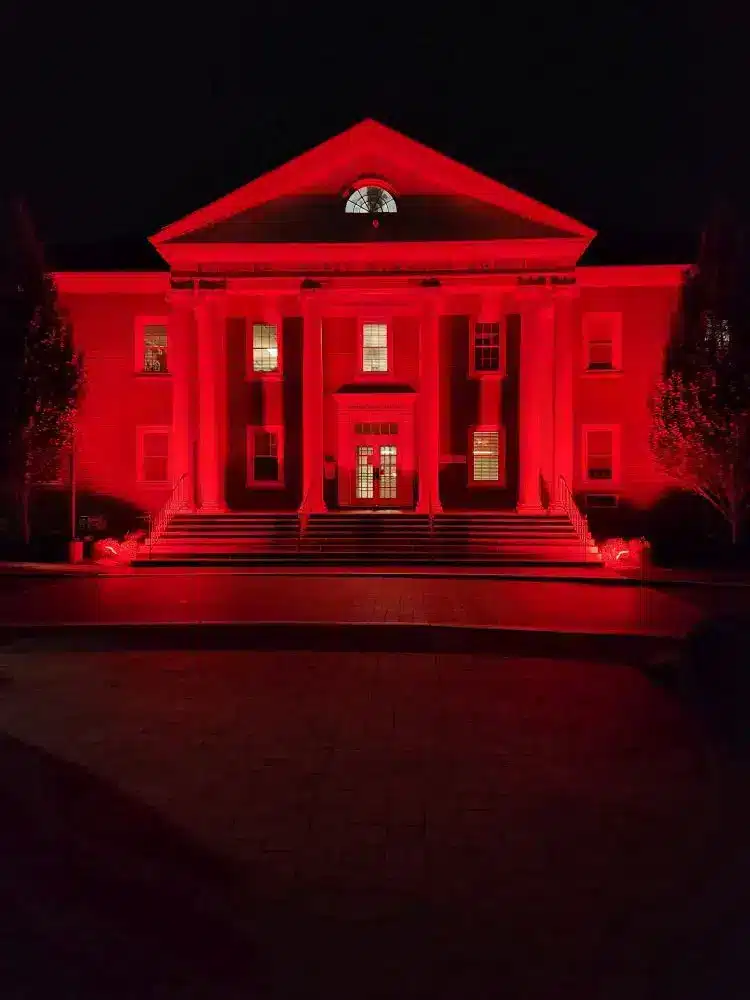
Building façades are one of the primary commercial applications for RGB and RGBW LED lighting. Properly positioned fixtures can highlight walls, columns, entrances, rooflines, architectural details, and other prominent exterior features with static colors or programmed lighting scenes.
Successful façade lighting depends on more than selecting a color-changing fixture. The building height, surface dimensions and materials, mounting distance, fixture output, beam distribution, and available mounting locations all affect the completed appearance.
RGB and RGBW façade lighting can be designed for permanent architectural illumination while allowing the property to change colors for branding, holidays, community events, seasonal programs, and special occasions.
For a broader look at these applications, see our Color Changing LED Flood Lights for Architectural Lighting.
Commercial RGB/RGBW Lighting Project Checklist
Before requesting a quote, gather as much of the following project information as possible:
-
Building elevations, drawings, or site photographs
-
Dimensions of the façades or architectural features being illuminated
-
Fixture mounting locations and approximate distances to the target surfaces
-
Estimated fixture quantities
-
Available voltage
-
RGB or RGBW preference, if already determined
-
Desired colors, white-light requirements, scenes, or effects
-
Control requirements, including dimming, scheduling, zones, or synchronized operation
-
Outdoor and environmental conditions
-
Existing fixture specifications or photometric requirements, if available
If fixture quantities, output, beam angles, or the control system have not yet been determined, send the available project information and describe the architectural lighting effect you want to achieve. LED PROS WorldWide can use that information to help identify appropriate fixture options for the project.
Buyer Q&A
How do I determine how many RGB or RGBW fixtures my building needs?
Fixture quantity depends on the dimensions and shape of the illuminated surfaces, mounting locations, fixture output, beam distribution, and desired lighting effect. Building elevations, drawings, or photographs can help determine appropriate fixture quantities and placement.
Should I use RGB or RGBW lighting?
RGB is appropriate when color-changing effects are the primary requirement. RGBW adds a dedicated white channel and is often a better choice when the same fixtures need to provide both programmable colors and conventional white architectural illumination.
Can multiple RGB fixtures be synchronized across a building?
Yes. Compatible fixtures and controls can coordinate colors, dimming, scenes, and effects across multiple fixtures or areas of a property. The control system should be planned before the fixtures are ordered.
Can RGB lighting be used on large commercial building façades?
Yes. RGB and RGBW fixtures can illuminate large façades, but fixture output, beam distribution, mounting distance, aiming, surface materials, and available mounting locations must be considered when selecting the system.
Can you help if the RGB lighting design is not complete?
Yes. Send the available building elevations, drawings, photographs, dimensions, mounting information, voltage, and a description of the desired lighting effect. LED PROS WorldWide can help identify appropriate fixture options and specifications for the project.
What should I send with an RGB lighting RFQ?
Provide building elevations or drawings, target dimensions, fixture quantities if known, mounting locations, voltage, RGB or RGBW preference, desired colors or white-light requirements, control requirements, and any existing project specifications.
Get Help With Your Commercial RGB & RGBW Lighting Project
LED PROS WorldWide can help identify RGB and RGBW lighting fixtures for building façades, hospitality properties, corporate facilities, campuses, municipalities, landmarks, gated communities, mixed-use developments, and other commercial architectural lighting applications.
Send us your building elevations or drawings, target dimensions, mounting locations, fixture quantities, voltage, desired colors and white-light requirements, and control specifications. If fixture quantities, beam angles, or the control system have not yet been determined, send what you have and describe the lighting effect you want to achieve.
Request a Quote or call 844-533-7767 to discuss your commercial RGB lighting project.
Frequently Asked Questions About Commercial RGB LED Lighting
What are commercial RGB LED lights?
Commercial RGB LED lights use red, green, and blue LED channels to produce programmable colors for building façades, architectural features, hospitality properties, campuses, landmarks, and other commercial applications.
What is the difference between RGB and RGBW lighting?
RGB fixtures use red, green, and blue channels to create colors. RGBW fixtures add a dedicated white channel, allowing the same fixture to provide both color-changing effects and white architectural illumination.
Can RGB LED lights be used on commercial building façades?
Yes. RGB and RGBW fixtures can illuminate walls, columns, entrances, rooflines, and other façade features. Fixture output, beam distribution, mounting distance, aiming, and surface characteristics should be considered when designing the system.
Are commercial RGB lights suitable for outdoor installations?
Many commercial RGB and RGBW fixtures are designed for exterior applications. Verify the environmental ratings, operating temperature, mounting method, and electrical requirements of the specific fixture for the installation conditions.
How are commercial RGB and RGBW lights controlled?
Control options depend on the fixture and system. Commercial installations may support color selection, dimming, scenes, scheduling, zones, and synchronized operation. DMX512 is commonly used when coordinated control across multiple compatible fixtures is required.
Can RGBW fixtures provide normal white architectural lighting?
Yes. RGBW fixtures include a dedicated white channel, allowing compatible fixtures to provide white illumination in addition to programmable colors.
Can LED PROS WorldWide help select RGB or RGBW fixtures for my project?
Yes. Provide building elevations or drawings, target dimensions, mounting locations, voltage, desired colors and white-light requirements, control specifications, and fixture quantities if known. We can help identify fixture options appropriate for the project.
For a complete overview of exterior lighting systems, fixture selection strategies, and design considerations, see our Outdoor LED Lighting Guide.
Stay Connected with Our Lighting Resources
Add IndustrialLightingFixtures.org as a Preferred Source on Google to see more of our lighting guides and technical resources across Google Search experiences.
Related RGB & Color-Changing Lighting Resources
- RGB vs. RGBW vs. RGBWW Lighting Guide — Compare RGB, RGBW, and RGBWW configurations and determine which type of color-changing system best fits the application.
- Guide to LED Color-Changing Floodlights — Learn how commercial color-changing floodlights are used for architectural and exterior applications.
- RGB Flood Light Color, Temperature and Brightness Selection — Review key considerations when selecting RGB floodlighting for commercial projects.
- DMX512 Architectural Lighting Guide — Understand DMX512 controls, addressing, programming, and system considerations for commercial RGBW installations.
- LED Facade Lighting — Explore commercial facade lighting solutions for buildings that require architectural white light, color-changing effects, or a combination of both.