Industrial and commercial LED flood lighting provides directional illumination for building exteriors, security areas, loading zones, equipment yards, signage, work areas, and other outdoor applications. LED flood lights are available in a wide range of fixture sizes, lumen outputs, beam distributions, mounting configurations, voltages, and control options.
Selecting the right flood light depends on mounting height, distance to the target area, required coverage, beam distribution, aiming angle, light output, and site conditions. LED PROS supplies LED flood lights for projects ranging from targeted commercial illumination to large industrial applications.
Need LED Flood Lights for a Commercial or Industrial Project?
Direct light where it is needed with LED flood lights selected for your mounting location, target area, required coverage, and operating environment.
LED PROS supplies industrial and commercial LED flood lights in a range of fixture sizes, outputs, beam distributions, and mounting configurations for exterior lighting projects.
We can help evaluate fixture output, beam distribution, mounting height, aiming distance, voltage, controls, environmental conditions, and project quantity.
Request an LED Flood Lighting Quote for specifications, availability, and project pricing.
Call 1-844-533-7767 for assistance.
Industrial & Commercial LED Flood Light Fixtures
Compare LED flood light fixtures for commercial buildings, industrial facilities, security applications, equipment yards, loading areas, signage, and other exterior spaces. Fixture size, lumen output, beam distribution, mounting options, controls, and environmental ratings vary by model.
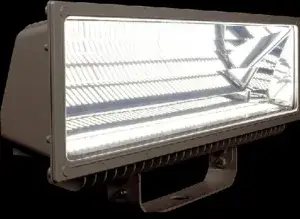
U-HFL
Brand: LightingX
low profile, high performance flood light, billboards, sports courts, parking lots; IP67, up to 24,300 lumens; 15/30/60/90/120/150WPrices start at $70
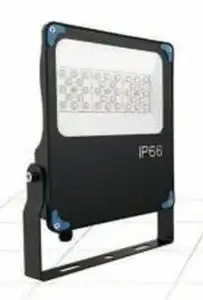
D series
Brand:
Ranges from 20W to 400W; CCT Field Tunable; IP66, Up to 64,000 lumens; Prices start at $375.
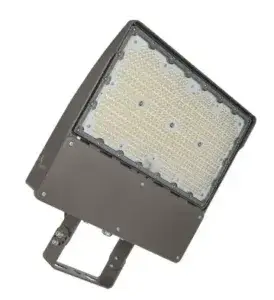
Extreme
Brand: Beyond
Adj Watt 125/150/200/250W; this flood light comes with a Yoke Mount and a slip fitter; Up to 42,500 lumens; Prices start at $275.
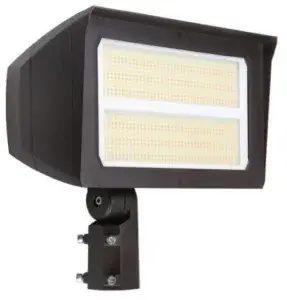
Union
Brand: Beyond
Adj Watt 120W/150W/200W – Adj Watt 200W/240W/300; this flood light comes with a Yoke Mount and a slip fitter; Up to 29,000 lumens; Prices start at $305.
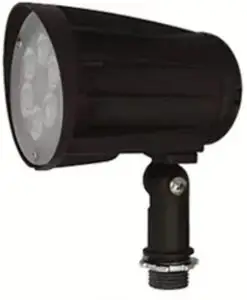
AST-FL17
Brand: Ledsion
LED Bullet Flood Light; Landscape lighting; high-quality tempered PC lens; 38° beam Angle-adj. Knuckle Bracket; UL, cUL, DLC; 25W.
Prices start at $150.

FLC
Brand: Ledsion
Exterior flood lighting for outdoor security, commercial building, pole, wall mount; up to 45,900 lumens; 80/100/150/200/240/300W.
Prices start at $250.
IFL
Brand: LightingX
Exterior flood lighting for outdoor security, commercial building, pole, wall mount; up to 19,200 lumens; 40/60/90/120/150W.
Prices start at $75.
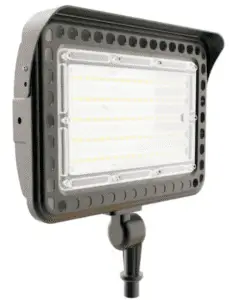
FLCN
Brand: Ledsion
Small sizes 7.5″ and 8.5″ General Area and Exterior Security lighting; Knuckle and Yoke Mount; up to 10,400 lumens; 20/30/50/80W. Prices start at $200.
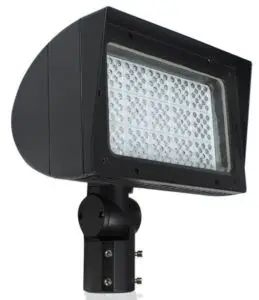
Myriad
Brand: ATG
Outdoor flood lights
for Parking facilities, landscapes,
facades, courtyards, and walkways; up to 17,850 lumens;
available in 30/50/100/150W.
Prices start at $225.
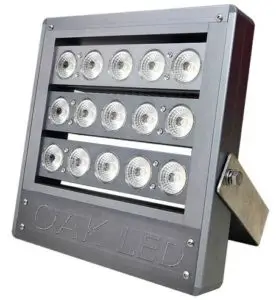
Oak-FL
Brand: Oakled
LED Architectural Flood, 42,000 lumens; adjustable beam angles; 5-year warr; CE, ETL;
100/150/180/200/240/300/360/
400/480/500/720/960/1000W;
Prices start at $300.

What Is LED Flood Lighting?
LED flood lighting refers to high-output luminaires designed to project intense illumination across wide outdoor areas. These fixtures use powerful LED light sources combined with specialized optics to distribute light across large surfaces such as industrial yards, building façades, sports facilities, and security zones.
Flood lights are typically mounted on poles, building walls, towers, or other elevated structures where directional lighting is required. Beam angles may vary from narrow spot distributions used for focused illumination to wide flood patterns designed to cover expansive areas.
Compared with traditional metal halide flood lights, LED flood lighting offers improved energy efficiency, longer operating life, and reduced maintenance requirements. These systems provide consistent brightness while supporting modern lighting controls such as photocells, motion sensors, and automated dimming systems used to optimize energy consumption.
Exterior lighting plays a critical role in safety and visibility around business facilities. Learn more about the advantages in our article on why businesses need commercial LED outdoor lighting.
Where LED Flood Lights Are Commonly Installed
LED flood lighting systems are widely used in environments that require high-intensity illumination across large outdoor areas.
Common installations include:
-
Industrial yards and logistics facilities
-
Warehouses and distribution centers
-
Building perimeters and security zones
-
Construction sites and outdoor work areas
-
Sports fields and athletic complexes
-
Parking areas and commercial campuses
Commercial flood lights serve many different purposes, from industrial security and loading docks to architectural façades, sports facilities, and municipal properties. Our Commercial LED Flood Light Applications Guide explains how fixture selection, beam distribution, mounting, and lighting objectives vary across these environments.
Pedestrian pathways and landscaped areas often incorporate decorative LED Post Top Fixtures or LED Courtyard Post Lighting to provide comfortable illumination while maintaining architectural aesthetics.
In these applications, flood lights are positioned to deliver strong directional illumination while maintaining visibility and operational safety.
Industrial Security Lighting
LED flood lights are frequently used as part of an industrial security lighting system to provide directional illumination around building perimeters, access points, loading areas, equipment yards, storage areas, service entrances, and other exterior spaces.
Effective security lighting should provide useful visibility without relying solely on excessive brightness. Fixture placement, beam distribution, aiming, mounting height, controls, surrounding conditions, and potential glare should be considered together.
Depending on the fixture and application, photocells, occupancy or motion sensors, dimming, scheduling, and other controls may help provide illumination when and where it is needed.
High-Output Industrial LED Flood Lights
High-output industrial LED flood lights are a distinct subset of flood lighting designed for applications requiring substantially greater illumination, coverage, or projection distance than conventional commercial flood-light applications.
These fixtures may be used for large industrial yards, transportation facilities, equipment areas, ports, large building perimeters, and other expansive outdoor spaces.
Selection should consider required light levels, mounting height, distance to the target, beam distribution, aiming angle, fixture output, and photometric performance. Higher output alone does not determine effective coverage.
Key Design & Specification Considerations
Proper flood lighting design involves evaluating several important factors that influence lighting performance and site visibility.
Beam Angle Selection
Flood lights are available with a variety of beam distributions ranging from narrow spot beams to wide flood patterns. Selecting the correct beam angle ensures the illuminated area receives adequate coverage without excessive glare.
Mounting Height
Higher mounting heights increase coverage area but require appropriate optical design to maintain illumination intensity and uniformity.
In roadway environments where consistent forward lighting distribution is required, dedicated LED Street Lights are typically specified instead of flood fixtures.
Light Output
Flood lights are often selected based on lumen output to ensure sufficient brightness for the intended application.
Environmental Durability
Outdoor flood lighting fixtures must withstand environmental exposure including rain, dust, wind, and temperature variation.
Lighting Controls
Photocells, motion sensors, and programmable controls can help reduce energy consumption by activating lighting only when needed.
Choosing the proper flood light begins with more than selecting a wattage. Read our Commercial LED Flood Light Wattage Guide to learn how mounting height, beam angle, lumens, and application determine the best fixture for your project.
LED Flood Lights vs LED Area Lights vs LED Street Lights
| Feature | LED Flood Lights | LED Area Lights | LED Street Lights |
|---|---|---|---|
| Primary Use | High-intensity directional lighting | Uniform site illumination | Roadway and traffic lighting |
| Mounting Locations | Poles, towers, building walls | Light poles in open areas | Street poles along roadways |
| Light Distribution | Wide or narrow beam angles | Type II–V site distributions | Linear roadway distributions |
| Coverage Strategy | Focused illumination | Even illumination across large sites | Forward roadway lighting |
| Typical Applications | Yards, sports fields, security zones | Parking lots, campuses, plazas | Roads, streets, highways |
LED flood lights provide directional illumination aimed toward a particular area, surface, structure, or target. Their mounting and aiming flexibility makes them useful where light needs to be deliberately projected from a specific location.
LED area lights are generally used as part of a broader site-lighting layout to provide coordinated illumination across parking areas, campuses, roadways, pedestrian areas, and other large exterior spaces.
For broader site-lighting applications, explore our Commercial LED Area Lighting solutions.
Architectural Flood Lighting
LED flood lights can also provide directional illumination for building façades, monuments, architectural features, signage, and landscape elements.
Projects where appearance, beam placement, color effects, façade materials, wall washing, wall grazing, or RGB/RGBW controls are primary design considerations should be evaluated as architectural lighting applications.
Flood Lighting for Hazardous Locations
Conventional industrial flood lights should not be assumed suitable for classified hazardous locations.
Oil and gas facilities, chemical processing areas, fuel-handling locations, and other environments involving flammable gases, vapors, or combustible dust may require fixtures specifically certified for the applicable hazardous-location classification.
For classified applications, explore our LED Explosion-Proof Flood Lighting solutions.
Beam Type vs Application Table
| Beam Type | Typical Use |
|---|---|
| Narrow Spot | Long-throw illumination, high poles |
| Medium Flood | Mid-range yard and perimeter areas |
| Wide Flood | Broader coverage, low mount |
| Asymmetric | Facade accent, wall washing |
Beam Type vs Application Table
| Beam Type | Typical Use |
|---|---|
| Narrow Spot | Long-throw illumination, high poles |
| Medium Flood | Mid-range yard and perimeter areas |
| Wide Flood | Broader coverage, low mount |
| Asymmetric | Facade accent, wall washing |
Mounting Height vs Output Reference
| Mounting Height | Typical Output Strategy |
|---|---|
| 10–20 ft | Moderate lumen, wide spread |
| 20–30 ft | Higher lumen, controlled optics |
| 30–40+ ft | Very high output, focused beams |
Controls & Energy Optimization
| Control Type | Operational Benefit |
|---|---|
| Photocell | Automatic dusk-to-dawn operation |
| Scheduled Dimmer | Aligns with use cycles |
| Motion Activation | Saves energy outside active hours |
| Networked Management | Remote optimization and reporting |
Advantages of LED Flood Lighting
In commercial and industrial environments, flood lighting is commonly used to enhance nighttime safety, support surveillance visibility, and maintain operational efficiency in outdoor work zones. From distribution centers and construction sites to municipal facilities and sports complexes, LED flood lights provide dependable illumination across demanding exterior environments.
LED flood lighting systems provide several benefits compared with older outdoor lighting technologies:
-
High-intensity illumination across large areas
-
Reduced energy consumption compared with HID systems
-
Long operational lifespan with minimal maintenance
-
Immediate full brightness without warm-up delay
-
Improved optical control and reduced light spill
-
Compatibility with modern lighting control systems
These advantages make LED flood lights a reliable solution for commercial and industrial environments where dependable exterior lighting is required.
For a complete overview of exterior lighting systems, fixture selection strategies, and design considerations, see our Outdoor LED Lighting Guide.
Inline Buyer Q&A
How do I choose the right LED flood light for my project?
Start with the area or surface being illuminated, mounting location and height, required coverage, available voltage, and environmental conditions. Fixture output alone is not enough; beam distribution and aiming determine where the light actually goes.
How much light output do I need from an LED flood light?
The required lumen output depends on the size of the target area, mounting geometry, desired illumination level, beam distribution, and surrounding conditions. Larger lumen packages are not automatically better if the fixture optics do not match the application.
Should I choose a narrow or wide beam flood light?
Narrower distributions can be useful for longer throws or concentrated illumination, while wider distributions can cover broader areas at shorter distances. The correct distribution depends on mounting position, setback, target dimensions, and desired uniformity.
Can LED flood lights replace existing metal halide flood lights?
Yes, many commercial and industrial metal halide flood lighting systems can be converted to LED. Replacement fixtures should be selected based on delivered lighting performance, existing mounting conditions, voltage, controls, and application requirements rather than wattage equivalency alone.
What information should I provide when requesting a flood-lighting quote?
Provide photographs, project dimensions, mounting locations and heights, voltage, existing fixture information, desired coverage, environmental conditions, and any required illumination criteria. This helps determine appropriate fixture output, optics, quantity, and mounting configuration.
Request a Quote for Industrial & Commercial LED Flood Lights
Need flood lighting for a commercial property, industrial facility, security application, or large outdoor area?
LED PROS supplies industrial and commercial LED flood lights across a range of fixture sizes, outputs, beam distributions, and mounting configurations.
We can help evaluate mounting height, target distance, required coverage, fixture output, beam distribution, aiming, voltage, controls, environmental requirements, and project quantity.
For larger projects, provide available site dimensions, mounting locations and heights, photographs, drawings, existing fixture information, required light levels, or photometric requirements.
Request an LED Flood Lighting Quote for specifications, availability, and project pricing.
Call 1-844-533-7767 to discuss your project.
Frequently Asked Questions
What are LED flood lights used for?
LED flood lights provide directional illumination for commercial and industrial applications such as building exteriors, equipment yards, loading areas, construction sites, signs, façades, sports facilities, and other areas where light needs to be projected toward a defined target.
What is the difference between flood lights and area lights?
Flood lights are generally aimed toward a specific area, object, or surface and are available with different beam distributions. Area lights are typically designed to distribute light across larger horizontal areas such as parking lots, roadways, and commercial sites. The appropriate fixture depends on the required lighting pattern and application.
Are LED flood lights suitable for outdoor environments?
Many commercial LED flood lights are designed for outdoor use, but suitability depends on the fixture’s actual environmental ratings, construction, temperature range, and listings. Projects involving corrosive, hazardous, coastal, washdown, or other demanding environments may require additional specifications.
How long do LED flood lights last?
LED flood-light service life varies by fixture design, driver and LED quality, thermal management, ambient temperature, operating hours, controls, and other conditions. Manufacturer-rated life and warranty information should be reviewed for the specific fixture being considered.
Can LED flood lights replace metal halide fixtures?
Yes. LED flood lights are commonly used to replace metal halide and other legacy flood-lighting systems. The replacement should be selected using delivered lumens, optical distribution, mounting geometry, voltage, and required illumination rather than relying only on the existing fixture wattage.
Can flood lights be used for perimeter and security lighting?
Flood lights can improve nighttime visibility around building perimeters, entrances, equipment areas, and other monitored locations. Effective security lighting also depends on fixture placement, glare control, shadows, cameras, site design, and the facility’s overall security strategy.
How do beam angles affect flood-light performance?
Beam distribution determines how concentrated or widespread the illumination will be. Narrower distributions can project light farther toward a defined target, while wider distributions cover broader areas. Mounting height, setback, aiming, and target dimensions should be considered with the beam pattern.
Can LED flood lights be mounted on poles or buildings?
Depending on the fixture and available mounting hardware, flood lights may be installed on poles, walls, roofs, structures, crossarms, or other suitable mounting points. The mounting method should be compatible with the fixture and structural conditions of the installation.
Are LED flood lights dimmable or compatible with lighting controls?
Many commercial LED flood lights are available with dimming and control options, but capabilities vary by fixture and driver. Photocells, timers, occupancy controls, centralized lighting controls, and other strategies may be appropriate depending on the project.
How can glare and spill light be reduced?
Proper fixture placement, optical distribution, aiming, shielding, mounting height, and output selection can help keep illumination on the intended target while reducing unnecessary light beyond the project area.
Should a photometric layout be used for a flood-lighting project?
For larger or performance-sensitive projects, photometric modeling can help evaluate predicted illumination levels, coverage, uniformity, fixture quantity, mounting locations, and potential dark or excessively bright areas before installation.
Stay Connected with Our Lighting Resources
Add IndustrialLightingFixtures.org as a Preferred Source on Google to see more of our lighting guides and technical resources across Google Search experiences.
Related Industrial & Commercial Flood Lighting Resources
-
Commercial LED Area Lighting — Explore broader site-lighting solutions for parking areas, campuses, roadways, pedestrian areas, facility grounds, and other large exterior spaces.
-
Outdoor LED Lighting Guide — Review fixture selection, mounting, controls, environmental conditions, and other considerations for commercial and industrial outdoor lighting projects.
-
LED Façade Lighting Guide — Learn how directional lighting, beam placement, fixture positioning, and architectural considerations can be used to illuminate commercial building façades and exterior features.
-
Commercial LED Wall Pack Lighting — Compare building-mounted exterior fixtures for entrances, loading areas, service zones, pedestrian routes, and perimeter lighting.
-
Explosion-Proof LED Flood Lighting — Explore specialized LED flood lights for classified hazardous locations where conventional industrial flood lighting may not meet the required safety and certification standards.
-
Dark Sky and BUG Rating Resources — Learn how fixture distribution, aiming, shielding, mounting, backlight, uplight, and glare can affect unwanted light around outdoor properties.