
Commercial solar bollard lights provide low-level outdoor illumination for pathways, pedestrian areas, campuses, parks, commercial landscapes, HOAs, hospitality properties, and other locations where extending conventional electrical service may be difficult or costly.
Unlike decorative residential solar lights, commercial solar bollards are selected around project requirements such as fixture output, light distribution, solar exposure, battery capacity, operating schedule, construction, mounting, and environmental conditions. The products below include solar-powered bollard options for a range of commercial and municipal outdoor lighting applications.
Need Solar Bollards for a Commercial Project?
LED Pros WorldWide can help identify commercial solar bollard lights for pathways, campuses, parks, commercial properties, HOAs, hospitality sites, and municipal projects.
Send us your project location, application, quantity, pathway or area dimensions, desired spacing, operating hours, and any available plans or specifications so we can help evaluate suitable fixture options.
Request a Quote or call 844-533-7767 to discuss your project.
Explore Solar Bollards Below
Solar Bollard Lighting
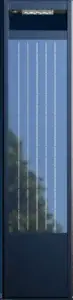
Terra
Brand: E-Lite
Solar Bollard with Vertical solar panels; rectangular silhouette; 42″ H; Prices start at $400.
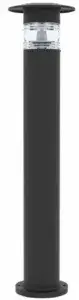
Titan-005
Brand: Beyond
Solar Lawn Light, Ground Mounting; LED Bollard; 43″ and 31″ H; Prices start at $400.
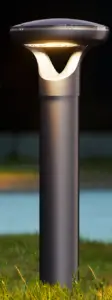
Hestia
Brand: Eco
Solar Lawn Light, LED Bollards; IK10 vandal-resistant construction; Bidirectional lighting; 35″ H; Prices start at $400.
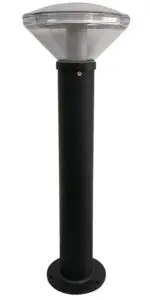
AVS
Brand: Beyond
Vandal Resistant Solar Bollards; IK10++ impact Rating; Dome Top;
Marine Grade Coating; dusk to dawn; 31.5″ H; Prices start at $300.
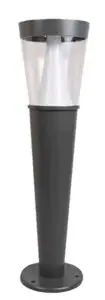
Titan
Brand: Beyond
Available in 5 different styles; 31.5″ to 39″ H; Works for 23 Hours; After 6 Hour Full Charge; polycarbonate diffuser; Prices start at $400.
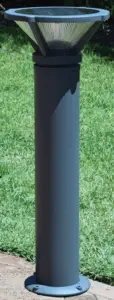
Lyra
Brand: Eco
Commercial grade solar bollard light; 350 lumens; dusk to dawn operation;39″ H;
Prices start at $400.
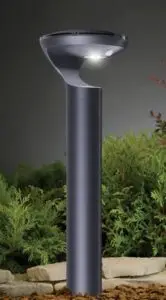
Eris
Brand: Eco
Premium grade solar bollard, asymmetrical lighting pattern; PIR motion sensor to save energy; Dark Sky compliant, 31.50″ Ht: 280 lumens,
Prices start at $400.
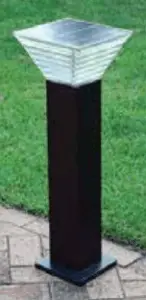
Andromeda
Brand: Eco
Commercial-grade solar bollard
light; powder coat satin black, polycarbonate diffuser; 350 lumens; 31.4″ Height; Prices start at $400.
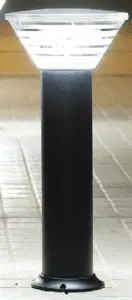
Orion
Brand: Eco
Vandal resistant, Remote controlled RGB, CCT color selection; 360 lumens; 35″ Height; Prices start at $400.
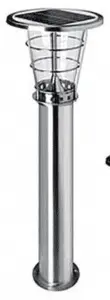
Sirius
Brand: Eco
solar bollard; Stainless steel; polycarbonate diffuser; 300 lumens;
Prices start at $450.
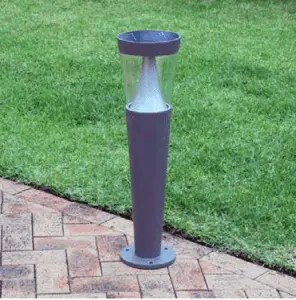
Gemini
Brand: Eco
solar powered bollard lights; 18 high-intensity LEDs; 200 lumen output;
Anti-corrosive aluminum body; polycarbonate diffuser; Prices start at $450.
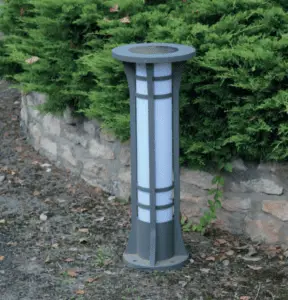
Antares
Brand: Eco
featuring opaque diffuser; dusk to dawn operation; Attractive modern design; powder coated to a satin
grey finish; Prices start at $450.
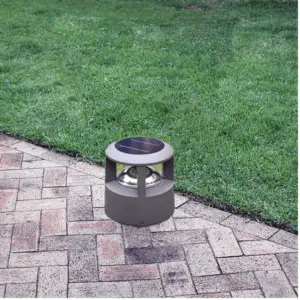
Taurus
Brand: Eco
aluminum and powder-coated to a satin grey or black finish; Commercial grade solar light; 200 lumens; H9.84″;
Prices start at $350.
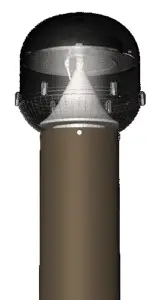
Sundial
Brand: SolTech
ideal for pedestrian lighting, commercial pathway lighting; choose from three heights; features a full 360 design to track full sunlight source; 300 lumens; ground, wall mount options; Prices start at $400.
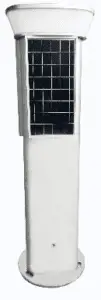
Mini Helios
Brand: Nomo
the triangle design maximizes the collection of the solar panel; 39″ Height; Super bright LED chips-over 280 pcs; 2,000 lumens; 70W;
Prices start at $450.
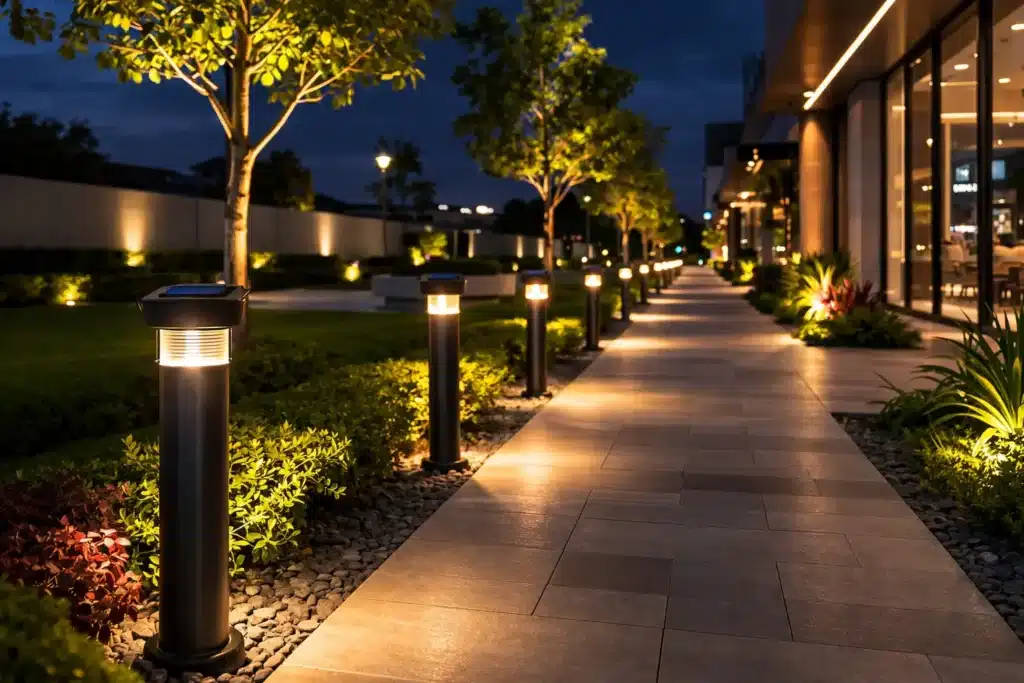
Commercial solar bollard lights provide off-grid pathway and pedestrian lighting for campuses, parks, commercial properties and landscaped outdoor areas.
What Are Commercial Solar Bollard Lights?
Commercial solar bollard lights are freestanding outdoor fixtures that combine LED illumination, photovoltaic panels, battery storage, and automatic controls in an off-grid lighting system.
Installed at pedestrian scale, solar bollards are commonly used along pathways, walkways, parks, campuses, courtyards, landscaped commercial properties, hospitality sites, and municipal public spaces.
Because each fixture generates and stores its own energy, solar bollards can be particularly useful where trenching, conduit, wiring, or extending electrical service would be difficult, disruptive, or expensive.
Why Choose Solar Bollard Lighting?
Solar bollards can provide a practical alternative to wired pathway lighting when extending electrical infrastructure is difficult or costly.
For suitable commercial and municipal sites, potential advantages include:
-
Reduced trenching and wiring requirements
-
Independent off-grid operation
-
Pedestrian-scale pathway illumination
-
Flexible placement where electrical service is unavailable
-
LED efficiency and automatic lighting controls
-
Reduced disruption to established landscapes and hardscapes
Solar suitability still depends on available solar exposure, required runtime, battery capacity, fixture output, site conditions, and the project’s lighting requirements.
Commercial Solar Bollard Applications
Solar bollard lights are used for pedestrian and landscape lighting across a range of commercial and municipal properties, including:
-
Parks and recreational trails — Pathway and pedestrian guidance without extending electrical service through landscaped areas.
-
Schools and university campuses — Walkways, pedestrian corridors, courtyards, and common areas.
-
Commercial and corporate campuses — Entrances, landscaped pathways, plazas, and pedestrian connections.
-
Hotels and resorts — Walkways, gardens, courtyards, poolsides, and landscaped guest areas.
-
HOAs and multifamily properties — Common-area paths, community spaces, and pedestrian routes.
-
Waterfront developments and boardwalks — Locations where electrical installation or corrosion exposure may require additional project consideration.
-
Municipal pedestrian spaces — Parks, public walkways, plazas, and other off-grid pathway applications.
For a deeper look at commercial applications, project planning, spacing, battery runtime, and site considerations, see our Commercial Solar Bollard Lighting Guide.
Additional Commercial Solar Bollard Options
For projects requiring different architectural styles and materials, additional options include the Sirius Range Solar Bollard, featuring commercial-grade 304 stainless-steel construction, and the Eco Hestia Solar Lawn Light, a compact decorative solar bollard for upscale pathways and landscaped areas.
Solar Bollard Lighting Design Considerations
Commercial solar bollard projects should be evaluated around the pathway, site conditions, available solar exposure, operating schedule, and lighting requirements rather than fixture appearance alone.
Spacing & Layout
Solar bollard lights are typically spaced approximately 10 to 15 feet apart along pathways and pedestrian areas. This provides a useful starting range for many applications, but final spacing should account for fixture output, optical distribution, mounting height, pathway width, desired illumination, surrounding ambient light, and site geometry.
For larger commercial projects, manufacturer photometric data or a project-specific lighting layout can help determine appropriate fixture locations and spacing.
Solar Exposure & Shading
Solar panels require adequate exposure to sunlight to recharge the battery system. Trees, buildings, walls, landscaping, and other obstructions can reduce available charging energy.
Evaluate solar exposure at the proposed fixture locations, including seasonal changes in sun angle and vegetation where relevant. A location that receives adequate sunlight during summer may experience significantly different conditions during other times of the year.
Battery Capacity & Operating Schedule
Battery capacity should support the project’s required nightly operating schedule while accounting for fixture load, controls, available charging energy, temperature, and site conditions.
Some commercial solar bollards use scheduled dimming or motion-responsive controls to reduce energy consumption during periods of low pedestrian activity.
Light Distribution & Glare Control
Bollard optics should direct useful illumination toward the pathway or pedestrian area while limiting unnecessary uplight and glare.
Different distributions may be appropriate for narrow pathways, wider pedestrian areas, plazas, entrances, or perimeter applications. Fixture output alone does not determine how effectively a bollard illuminates the intended area.
Construction & Environmental Conditions
As with other outdoor commercial and industrial lighting, solar bollards should be selected for the environment in which they will operate. Consider housing materials, impact resistance, corrosion resistance, ingress protection, mounting method, temperature range, and exposure to moisture or coastal conditions where applicable.
Projects in public spaces or other areas where fixtures may be subject to impact or vandalism should also consider appropriate fixture construction.
For a deeper look at battery systems, controls, vandal resistance, and evolving commercial solar technology, see our Solar Bollard Technology & Infrastructure Guide.
Buyer Q&A
Where are commercial solar bollard lights most useful?
Solar bollard lights are well suited to pedestrian-scale applications where extending electrical service may be difficult, disruptive, or expensive.
Common applications include walkways, pathways, parks, campuses, resorts, courtyards, landscaped commercial properties, HOA common areas, and municipal pedestrian spaces.
Available solar exposure, required illumination, operating schedule, fixture spacing, mounting configuration, and surrounding conditions should be considered before selecting a system.
Are solar bollard lights bright enough for commercial walkways?
They can provide appropriate pedestrian-scale illumination when properly selected and spaced for the application.
Required output depends on pathway width, fixture distribution, spacing, surrounding ambient light, property use, and applicable project requirements.
More output is not necessarily better. Excessive brightness can contribute to glare and undermine the visual character expected from pedestrian-scale lighting.
How far apart should solar bollard lights be installed?
Commercial solar bollard lights are typically spaced approximately 10 to 15 feet apart, but the appropriate spacing can vary by project.
Fixture output, optical distribution, bollard height, pathway width, desired illumination, surrounding conditions, and site geometry should be considered when determining the final layout. Manufacturer photometric data or a lighting layout can help establish appropriate spacing for larger commercial projects.
Do solar bollard lights need direct sunlight?
Solar bollards perform best when their solar panels receive adequate solar exposure.
Trees, buildings, landscaping, walls, structures, and other obstructions can create shading that reduces available charging energy.
Solar exposure should be evaluated at the proposed fixture locations, including seasonal changes where relevant.
Can solar bollards operate from dusk to dawn?
They can when the system is designed to support the required operating schedule.
Nightly runtime depends on solar-panel capacity, battery storage, fixture load, controls, seasonal solar availability, temperature, shading, and charging conditions.
Some applications may also use scheduled dimming or motion-responsive controls to manage stored energy.
Can solar bollards be used instead of wired bollard lights?
Yes, in suitable applications.
Solar bollards can be particularly useful where trenching, conduit, wiring, or extending electrical service would be difficult or expensive.
Where electrical infrastructure is already readily available, wired and solar systems should be compared according to lighting performance, installation requirements, controls, maintenance, and long-term project objectives.
What information should I provide when selecting commercial solar bollard lights?
Useful project information includes:
- Project location
- Pathway or site dimensions
- Application and property type
- Required or desired illumination
- Proposed bollard locations
- Desired fixture spacing
- Nightly operating schedule
- Dimming or motion-control requirements
- Solar exposure and potential shading
- Temperature and environmental conditions
- Architectural requirements
- Dark Sky or light-trespass objectives
- Photographs, drawings, or site plans when available
These details help determine whether solar bollards are appropriate and how the fixtures should be configured.
Need Commercial Solar Bollard Lights for Your Project?
LED Pros WorldWide can help evaluate commercial solar bollard lighting for pathways, campuses, parks, commercial properties, HOAs, hospitality facilities, municipal spaces, and other pedestrian applications.
For the most useful project review, send us your project location, application, quantity, pathway or site dimensions, desired spacing, operating schedule, solar exposure or shading concerns, and any available plans or specifications.
We can help evaluate fixture output, light distribution, battery and runtime requirements, controls, construction, and other project-specific considerations to identify appropriate solar bollard options.
Request a Quote or call 844-533-7767 to discuss your solar bollard lighting project.
Frequently Asked Questions About Solar Bollard Lights
What are solar bollard lights?
Solar bollard lights are freestanding outdoor fixtures that use photovoltaic panels, battery storage, LED light sources, and automatic controls to provide off-grid pedestrian and pathway illumination.
How far apart should solar bollard lights be installed?
Solar bollard lights are typically spaced approximately 10 to 15 feet apart along pathways and pedestrian areas. Final spacing depends on fixture output, optical distribution, bollard height, pathway width, desired illumination, surrounding conditions, and site geometry.
Do solar bollard lights need direct sunlight?
Solar bollards perform best with adequate solar exposure. Buildings, trees, landscaping, walls, and other obstructions can reduce charging energy, so shading should be evaluated at proposed fixture locations.
How long can solar bollard lights operate at night?
Runtime depends on solar-panel capacity, battery storage, fixture load, controls, available charging energy, temperature, shading, and seasonal conditions. Commercial systems should be selected around the required nightly operating schedule rather than assuming every fixture will provide the same runtime.
Are solar bollard lights suitable for commercial properties?
Yes. Properly selected commercial solar bollards can be used for pathways, campuses, parks, HOAs, hospitality properties, corporate sites, landscaped pedestrian areas, and municipal public spaces.
Can solar bollard lights replace wired bollard lighting?
In suitable applications, yes. Solar bollards can be particularly useful where trenching, conduit, wiring, or extending electrical service would be difficult or expensive. Where electrical infrastructure already exists, solar and wired systems should be compared based on the specific project requirements.
Stay Connected with Our Lighting Resources
Add IndustrialLightingFixtures.org as a Preferred Source on Google to see more of our lighting guides and technical resources across Google Search experiences.
Related Solar Lighting Resources
-
Commercial Solar Bollard Lighting Guide — Selection, spacing, applications, battery runtime, cost considerations, and project planning for commercial solar bollards.
-
Solar Bollard Technology & Infrastructure Guide — Explore battery technology, controls, vandal resistance, connected systems, and emerging commercial solar bollard technology.
-
Commercial Solar Lighting Systems — Explore solar lighting solutions for commercial, municipal, and industrial infrastructure.
-
Commercial Bollard Lights — Compare conventional commercial bollard lighting for pathways, landscapes, campuses, and pedestrian areas.
-
Solar Garden Lights — Explore solar-powered landscape and garden lighting for decorative and pedestrian applications.