ATEX LED explosion-proof lighting provides certified illumination solutions for hazardous industrial environments operating under European and international safety regulations. Designed to prevent ignition risks in explosive atmospheres, ATEX-rated luminaires support safe operation across oil and gas facilities, chemical processing plants, offshore platforms, and dust-sensitive manufacturing environments. These lighting systems combine regulatory compliance, rugged construction, and long-life LED performance to ensure reliable operation where environmental safety standards are mandatory.
ATEX LED Lighting Fixtures
Many facilities with international operations combine ATEX-certified explosion-proof lighting with other regionally certified luminaires (such as IECEx) to create lighting systems that meet both local regulation and global compliance expectations.
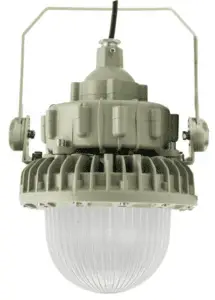
GYD680-T
Brand: CrownFeatures convex glass lens; Ceiling; Wall Bracket; Pendant or Pole
Mounted; Zone 1, 2 & 21, 22; Ex Rate: Ex de IIC T6; IP66; ATEX, CE; up to 14,000 lumens; 50/75/100W; Prices start at $300
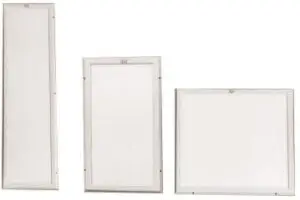
GYD950
Brand: Crown
Embedded ceiling panels; European ATEX rated for Zone 1 and 2, Zone 21 and 22;12×12, 24×12, 24×24, up to 5,280 lumens; 20/24/48W;
Prices start at $300
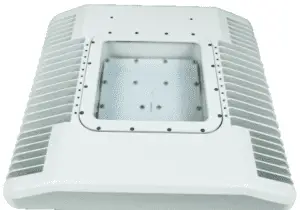
CPA
Brand: Venas
Fuel pump, gas, and oil station canopy light; Atex II2 G EX, UL1598, UL 8750; 15-inch square; 40/60/80/150W;
Prices start at $300
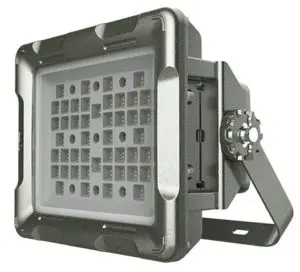
OHBF8260
Brand: ouhui
Ex-proof Grade: ExdIICT6 for Zone 1 and Zone 2 and
Zone 21 and Zone 22 IP66; 70/100/120/200/250W;
Prices start at $300
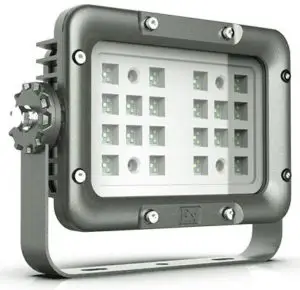
OHBF8189
Brand: ouhui
Ex-proof Grade: ExdIICT6 for Zone and Zone 2 and Zone 21 and Zone 22; 40/60/70W;
Prices start at $300
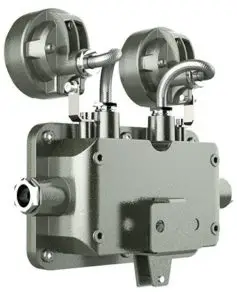
OHBF8190
Brand: ouhui
Emergency Light features a Discharge time>120 min; Ex-proof Grade: ExdIIBT6 for Zone 1 and Zone 2 and Zone; 21 and Zone 22; Prices start at $600.
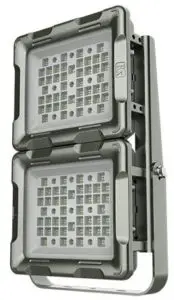
OHBF8266
Brand: ouhui
for general and operational lighting; ExdIICT6 for Zone and Zone 2; Zone 21 and Zone 22; 240/300/350/380/400
440/ 480W;
Prices start at $400
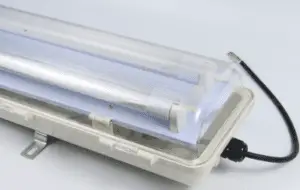
GYD680-T
Brand: CrownFeatures convex glass lens; Ceiling; Wall Bracket; Pendant or Pole
Mounted; Zone 1, 2 & 21, 22; Ex Rate: Ex de IIC T6; IP66; ATEX, CE; up to 14,000 lumens; 50/75/100W; Prices start at $300
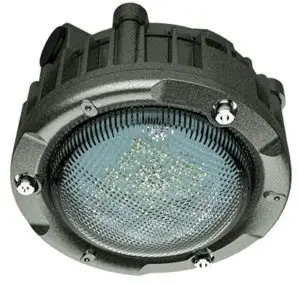
OHBF8230
Brand: ouhui
small round floodlight;
ExdIICT6 for Zone and Zone 2; Zone 21 and Zone 22 10/20/30/35/40/45W;
Prices start at $400

CES-J
Brand: CESP
explosion-proof floodlight;
up to 24,000 lumens;
ATEX, IECEX certified;
20/30/40/60/100/
120/150/180/200W;
Prices start at $300
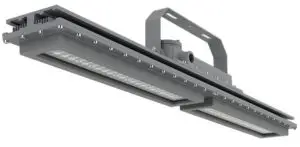
CES-LN
Brand: CESP
EX-Linear light; 24, 48 inches; up to 33,600 lumens;
ATEX, IECEX certified;
50/100/120/240W;
Prices start at $300
What Is ATEX LED Explosion-Proof Lighting?
ATEX (ATmosphères EXplosibles) LED explosion-proof lighting refers to luminaires that meet European Union hazardous location safety standards under the ATEX directive. Specifically defined by EU regulatory frameworks 2014/34/EU, ATEX-certified LED lighting is engineered for use in environments where potentially explosive atmospheres may occur due to flammable gases, vapors, or combustible dust. These fixtures incorporate robust enclosures, certified components, and precise engineering to prevent internal sparks or thermal faults from becoming ignition sources, ensuring safe and compliant illumination in classified areas.
For a complete technical overview of hazardous location classifications, certification standards, and fixture selection methodology, refer to our Explosion-Proof Lighting Standards & Selection Guide.
When Should ATEX-Certified Explosion-Proof Lights Be Used?
ATEX-certified LED lighting is required in industrial facilities located in regions where European regulatory compliance is enforced, including many countries across the EU, UK (under UKCA transition), Middle East, and Africa. These fixtures are specified in environments where explosive gases, vapors, or dust clouds may exist during normal operations or under infrequent conditions. Typical use cases include petrochemical plants, offshore platforms, refineries exporting to EU markets, pharmaceutical powder processes, food processing plants with combustible dusts, and warehousing facilities handling volatile substances. ATEX lighting ensures that legal compliance and safety requirements are met alongside operational illumination goals.
Facilities operating under North American standards may instead specify Class 1 Division 1 LED lighting for continuously hazardous environments.
Core Specifications & Performance Characteristics
ATEX explosion-proof LED luminaires are categorized under specific equipment protection levels (EPL) and gas/dust groupings that align with hazardous zone classifications. Key parameters include:
-
EPL zones (e.g., Gc, Gb, Da, Db)
-
Gas groups (IIA, IIB, IIC)
-
Temperature class (T1–T6)
-
Ingress protection (IP) ratings
-
Mechanical robustness (IK ratings)
These fixtures are constructed with corrosion-resistant housings, dual sealing systems, and thermal management designs suited for wide temperature ranges. Optical distribution is tailored to varying site applications, from area lighting to linear runs and high-output flood configurations.
Industrial Applications & Environmental Context
ATEX explosion-proof LED lights are utilized in a wide range of regulated industrial settings throughout Europe and other markets recognizing ATEX compliance. Typical installations include:
• Offshore oil & gas production platforms
• Chemical and petrochemical process units
• Wastewater treatment zones with flammable gases
• Food and pharmaceutical powder processing areas
• Refinery loading and unloading zones
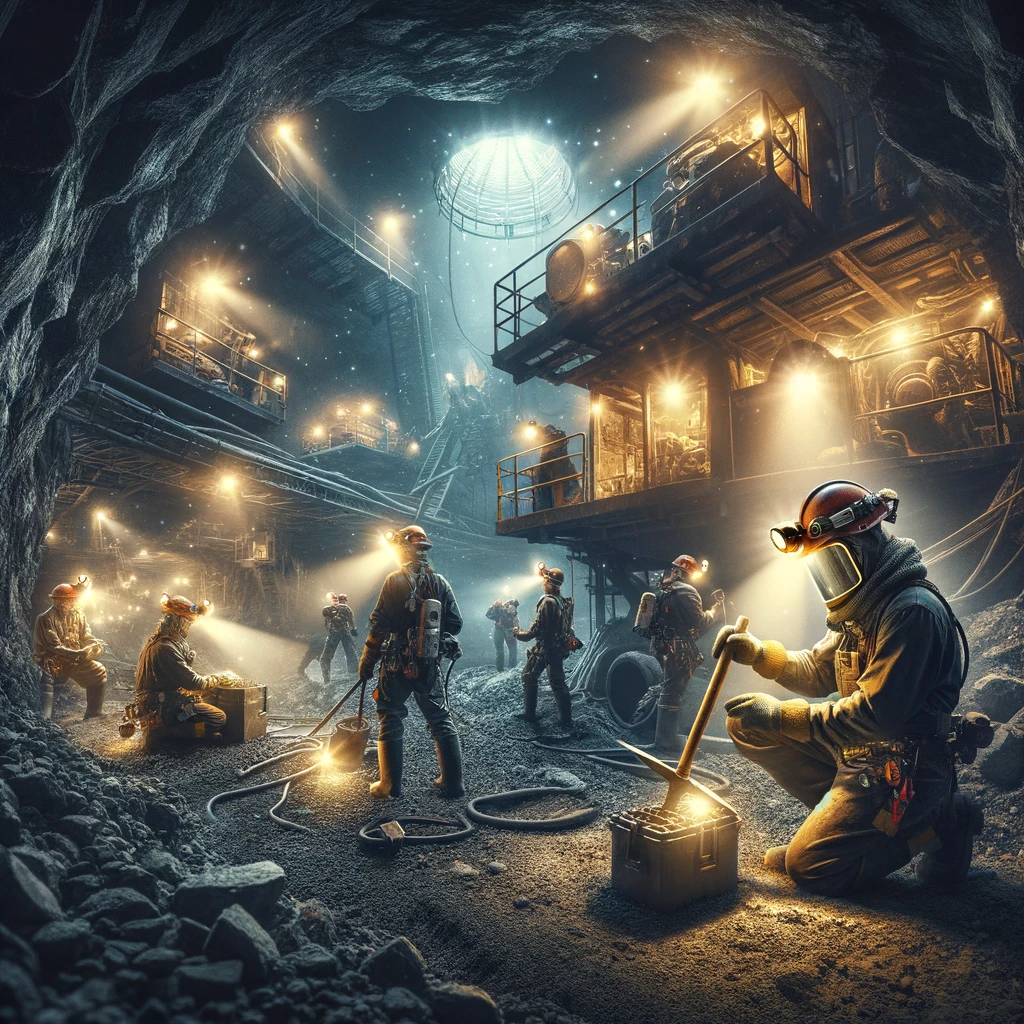
• Mining operations exporting to ATEX jurisdictions
These applications demand fixtures that not only meet hazardous protection criteria but also align with legal compliance for electrical equipment in explosive atmospheres.
Areas where explosive atmospheres occur only under abnormal conditions are often comparable to Class 1 Division 2 hazardous location lighting systems.
Planning & Selection Considerations
When specifying ATEX LED explosion-proof lighting, rigorous assessment of hazardous zone classification (Zone 0, 1, 2 for gases; Zone 20, 21, 22 for dust), gas/dust group, and temperature class is essential. Designers must confirm that the lighting solution matches both the zone risk and the applicable EPL level. Optical specification, mounting height, distribution pattern, and maintenance access must also be balanced with enclosure and certification requirements. Integration with local regulatory inspections and electrical maintenance procedures helps ensure long-term compliance and reliability.
Comparison Table — ATEX vs Other Hazardous Certifications
| Attribute | ATEX Certification | UL844 (Div 1/2) | IECEx Certification |
|---|---|---|---|
| Region | EU + recognized global | US + Canada | Global (IEC member nations) |
| Hazard System | Zone 0/1/2, 20/21/22 | Div 1/2 | Zone 0/1/2, 20/21/22 |
| Equipment Protection Level | Ga/Gb/Gc / Da/Db/Dc | Division risk approach | Ga/Gb/Gc / Da/Db/Dc |
| Gas Groups | IIA / IIB / IIC | Not grouped by gas class | IIA / IIB / IIC |
| Temperature Class | T1–T6 | T-ratings via enclosures | T1–T6 |
| Market Recognition | Strong in EU & MEA | Strong in NA | Broad international |
Buyer Q&A: Selecting ATEX LED Explosion-Proof Lighting
How do I know which ATEX-rated light fixture my project requires?
Fixture selection depends on the hazardous zone, gas or dust group, temperature classification, environmental conditions, and certification requirements specified for the project.
Should I specify ATEX, IECEx, or both?
That depends on the project location and applicable requirements. ATEX is used for equipment placed on the market in the European Economic Area, while IECEx is an international certification system used across many global markets. Some projects specify equipment carrying both certifications.
Is an ATEX-certified fixture automatically suitable for every hazardous zone?
No. The fixture’s specific ATEX marking and equipment protection level must be appropriate for the hazardous atmosphere and zone where it will be installed.
What should I verify before ordering ATEX explosion-proof lighting?
Confirm the required zone, gas or dust classification, temperature class, ambient temperature range, ingress protection, mounting method, voltage, and any project-specific certification requirements before selecting a fixture.
Need Help Selecting ATEX / IECEx Hazardous Location Lighting?
Selecting the correct hazardous location fixture requires more than choosing an explosion-proof luminaire. Zone classification, gas or dust group, temperature class, ambient conditions, and required certifications must all match the application.
👉 Explore LED Explosion-Proof Lighting or call 1-844-533-7767 to discuss your hazardous location lighting requirements.
FAQs — ATEX LED Explosion-Proof Lighting
What does ATEX mean in explosion-proof lighting?
ATEX refers to European Union directives governing equipment used in explosive atmospheres. ATEX-certified lighting ensures fixtures cannot ignite surrounding gases, vapors, or combustible dust under defined operating conditions.
What is the difference between ATEX and UL844 certification?
ATEX certification applies primarily to European and international markets, while UL844 governs hazardous locations in North America. Both systems classify risk differently but share the goal of preventing ignition within hazardous environments.
What ATEX zones require explosion-proof lighting?
Explosion-proof lighting may be required in:
-
Zone 0 — continuous explosive atmosphere
-
Zone 1 — likely during normal operation
-
Zone 2 — abnormal or infrequent presence
Dust environments follow Zone 20, 21, and 22 classifications.
Can ATEX lighting be used outside Europe?
Yes. Many international oil, gas, marine, and industrial projects adopt ATEX-certified equipment even outside EU jurisdictions due to global engineering standards and project specifications.
How long do ATEX LED explosion-proof fixtures last?
Industrial ATEX LED luminaires typically operate for 50,000–100,000 hours, significantly reducing maintenance requirements in hazardous or difficult-access locations.
Are ATEX fixtures suitable for offshore environments?
Yes. ATEX-rated fixtures are commonly engineered with corrosion-resistant housings and sealing systems suitable for offshore platforms exposed to salt spray, vibration, and extreme weather.
Stay Connected with Our Lighting Resources
Add IndustrialLightingFixtures.org as a Preferred Source on Google to see more of our lighting guides and technical resources across Google Search experiences.

Related ATEX & Hazardous Location Lighting Resources
Continue evaluating certified lighting for explosive atmospheres and hazardous industrial environments with these related classification, standards, and fixture-selection resources:
- LED Explosion-Proof Lighting — Explore hazardous location LED fixtures for industrial facilities where flammable gases, vapors, combustible dusts, or other ignition hazards may be present.
- Explosion-Proof Lighting Guide — Review hazardous location classifications, fixture types, applications, and selection considerations when planning explosion-proof lighting systems.
- Hazardous Location Lighting Guide — Understand how hazardous environments are classified and how those classifications affect lighting equipment selection.
- Explosion-Proof Lighting Standards Guide — Review certification systems, safety standards, and other requirements involved in specifying lighting for classified hazardous locations.