
All-in-one solar street lights combine the solar panel, LED luminaire, rechargeable battery, and electronic controls into a compact, integrated lighting system. These off-grid fixtures are designed for commercial developments, municipal facilities, HOA communities, campuses, private roads, parking areas, and pedestrian routes.
Unlike split-system solar street lighting, which uses separately mounted components, integrated solar street lights simplify equipment configuration and can reduce installation complexity where site conditions are suitable.
Selecting the right all-in-one system requires evaluating mounting height, fixture light distribution, solar panel orientation, available sunlight, battery capacity, operating schedule, and structural compatibility.
For suitable projects, integrated solar street lights can reduce underground electrical infrastructure requirements and exposure to copper wire theft. However, the fixed relationship between the solar panel and luminaire makes mounting orientation and solar exposure especially important.
Need All-in-One Solar Street Lights for a Commercial Project?
LED Pros WorldWide can help evaluate integrated solar street lighting systems for municipalities, HOA communities, industrial properties, campuses, parking areas, and commercial developments.
For equipment selection and project pricing, provide your project location, application, fixture quantity, mounting height, required operating hours, and available solar exposure.
For existing pole installations, include photographs showing the complete poles, extension arms, mounting angles, and fixture attachment details. These conditions can affect integrated fixture compatibility and solar panel orientation.
Request a Quote or call 844-533-7767 to discuss your project.
For projects requiring separately mounted solar panels or larger system configurations, explore our Commercial Solar Street Lights.
Explore All-in-One Solar Street Lights Below
Featured All-In-One Solar Street Lighting Systems
Our integrated commercial solar street lights combine high-performance LED technology, premium battery systems, intelligent electronic controls, and high-efficiency solar panels into a single compact fixture. The result is faster installation, lower infrastructure costs, and dependable long-term performance across a wide variety of commercial and municipal applications.
Performance Series
– Designed for municipalities, commercial developments, and roadway projects requiring high-output integrated solar lighting.

Evo
Brand: Beyond
Integrated all-in-one commercial solar street light delivering up to 23,520 lumens with the solar panel, battery, controller, and LED fixture housed in a single compact unit. Ideal for municipalities, campuses, commercial developments, and parking lots where fast installation and minimal maintenance are priorities. Prices start at $850.
Hyper
Brand: SolTech
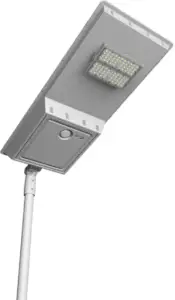
Integrated all-in-one commercial solar street light delivering up to 13,000 lumens in compact 25W, 45W, and 65W models. A practical solution for campuses, parks, HOA communities, pedestrian roadways, and smaller commercial developments requiring dependable off-grid lighting.; Prices start at $895.

SLS
Brand: Ledsion
a compact pole-mounted system, delivering up to 7,000 lumens. Available in 50, 70W; Prices start at $390.

SLS
Brand: Ledsion
Integrated all-in-one commercial solar street light delivering up to 9,000 lumens in a 100W configuration. An economical solution for HOA communities, parks, pedestrian roadways, parking areas, and smaller municipal or commercial lighting projects.; Prices start at $550.

Triton
Brand: E-Lite
Triton Integrated Solar Street Light — Commercial all-in-one solar street lighting with an extendable solar-panel design, LiFePO₄ battery system, intelligent controls, and 30W–150W configurations producing up to 28,500 lumens. Designed for municipal streets, roadways, campuses, parking areas, and other off-grid lighting projects.Prices start at $500.
Athens
Brand: Beyond
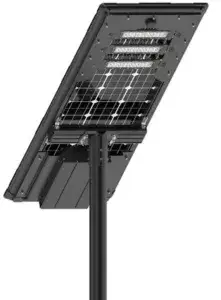
Integrated all-in-one commercial solar street light delivering up to 18,000 lumens with an advanced bifacial solar panel and rotatable LED module for improved energy collection and lighting flexibility. Available in 80W and 100W models for municipalities, campuses, parking lots, and commercial developments; Prices start at $1140.
Talos
Brand: E-Lite
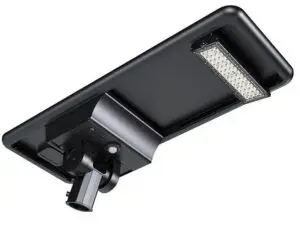
Integrated all-in-one commercial solar street light delivering up to 18,900 lumens with single- or dual-module configurations for added design flexibility. Available in 20W, 30W, 40W, 50W, 60W, 80W, and 90W models for municipalities, campuses, commercial developments, parking lots, and roadway lighting.; Prices start at $475.
Cold Climate Series
– Engineered for dependable performance in northern regions and harsh winter environments.
Sunlike
Brand: SolTech
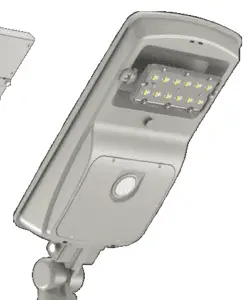
Low-profile all-in-one commercial solar street light delivering up to 9,000 lumens in 8W, 20W, 30W, and 50W models. Its fully integrated off-grid design, IP65 weather protection, and operating range from -4°F to 122°F make it ideal for campuses, parks, pathways, HOA communities, and commercial properties. A BAA-compliant version is also available for qualifying government and federally funded projects.
Prices start at $950.
Sunlike PRO
Brand: SolTech
Engineered for cold climates and extreme weather, the Sunlike PRO features proprietary battery-heating technology that maintains reliable performance in freezing conditions. This integrated 30W all-in-one commercial solar street light operates in temperatures from -40°F to 140°F, making it an ideal solution for northern municipalities, mountain communities, transportation facilities, ski resorts, parks, military installations, and remote commercial sites; Prices start at $1400.
Commercial all-in-one solar street lights combine LED illumination, solar panels, battery storage, and intelligent controls in a compact off-grid system for municipal roadways, industrial facilities, and commercial developments

Why Choose All-in-One Solar Street Lights?
All-in-one solar street lights combine the solar panel, rechargeable battery, LED luminaire, and electronic controls into a compact, self-contained lighting system.
For suitable commercial and municipal applications, this integrated configuration can simplify equipment installation, reduce the number of separately mounted components, and provide off-grid illumination without conventional underground electrical distribution.
Simplified Installation & Integrated Components
All-in-one solar street lights are designed to reduce the complexity of installing separate solar panels, battery enclosures, controllers, and LED fixtures.
Their integrated construction may simplify mounting and reduce external wiring between system components.
However, existing pole dimensions, mounting-arm configurations, fixture orientation, and structural capacity must still be verified before installation.
Reduced Underground Wiring & Copper Theft Exposure
Standalone all-in-one solar street lights operate independently of conventional utility-power distribution.
This can reduce trenching, conduit installation, and underground electrical wiring requirements for new commercial developments, municipal roads, and remote locations.
For properties experiencing repeated copper wire theft, eliminating underground power conductors between lighting poles can also reduce certain theft opportunities and associated repair costs.
Solar fixtures, batteries, and mounting equipment still require appropriate protection against theft and vandalism.
Compact Design for Commercial & Municipal Properties
Integrated solar street lights can provide a streamlined appearance for private roads, business parks, HOA communities, campuses, pedestrian routes, and commercial developments.
Because the solar panel and luminaire are incorporated into the same assembly, fixture orientation and solar exposure must be evaluated together.
The most convenient mounting position for roadway illumination may not provide the best solar charging conditions.
Intelligent Controls & Battery Management
Many all-in-one solar street lights incorporate dusk-to-dawn operation, programmable dimming, motion sensing, and electronic battery management.
These controls can help balance nighttime illumination with available stored energy.
Operating schedules, brightness levels, and backup autonomy should be matched to the project’s lighting requirements and local solar conditions.
Cold-Climate Solar Lighting Options
Not all integrated solar lighting systems are equally suited to freezing temperatures or severe winter conditions.
Battery chemistry, low-temperature charging capability, environmental protection, and seasonal solar availability are important selection factors.
Certain commercial products, including the Soltech SUNLIKE PRO series, are designed for demanding cold-weather applications.
LED Pros WorldWide has supplied a SUNLIKE PRO 30W fixture for an actual installation illuminating a remote commercial sign in South Dakota, where extreme cold-weather suitability was an important equipment-selection requirement.
Even with cold-rated equipment, winter sunlight availability, snow accumulation, mounting orientation, and battery capacity must be evaluated for the intended operating schedule.
When a Split-System Solar Street Light May Be Better
All-in-one solar street lights are not the best solution for every roadway or outdoor lighting application.
A split-system configuration may be preferable when a project requires:
-
Larger or separately positioned solar panels
-
Greater battery storage capacity
-
Higher lighting output or extended operating hours
-
Independent adjustment of panel and luminaire orientation
-
Specialized mounting arrangements or existing pole configurations
The appropriate system should be selected according to the complete lighting application rather than installation convenience alone.
Commercial & Municipal Applications for All-in-One Solar Street Lights
All-in-one solar street lights provide compact, off-grid LED illumination for commercial developments, municipal properties, industrial facilities, and private infrastructure.
Their integrated design can simplify equipment installation where solar exposure, mounting conditions, lighting requirements, and battery capacity are suitable for a self-contained system.
Municipal Streets & Public Facilities
Municipalities may consider all-in-one solar street lights for local access roads, public facilities, parks, pedestrian routes, and selected roadway extensions.
Integrated fixtures can be useful where conventional electrical infrastructure is limited or where reducing underground wiring may help address recurring copper wire theft.
Public roadway projects should be evaluated against applicable lighting requirements, traffic conditions, pole spacing, and illumination uniformity.
Commercial Business Parks & Office Campuses
Business parks, office developments, corporate campuses, and commercial properties may use integrated solar street lights for private roads, internal circulation routes, and pedestrian access areas.
Their compact design can be particularly useful for new construction or property expansions where extending electrical service would be costly or disruptive.
Industrial Facilities & Warehouse Properties
Manufacturing facilities, warehouses, distribution centers, and industrial parks may require off-grid lighting for internal access roads, employee circulation areas, perimeter routes, and remote property sections.
All-in-one solar fixtures can complement conventional industrial lighting fixtures where suitable sunlight and mounting conditions support standalone operation.
Industrial projects should also consider vehicle movement, required illumination, operating schedules, and environmental exposure.
HOA Communities & Multifamily Developments
Homeowners associations, gated communities, multifamily properties, and private residential developments may consider integrated solar street lights for neighborhood roads, community entrances, shared walkways, and internal access routes.
Fixture appearance, mounting height, nighttime illumination, glare control, and available solar exposure are important selection factors.
Parking Areas & Pedestrian Pathways
All-in-one solar lighting can be evaluated for smaller commercial parking areas, pedestrian pathways, campus walkways, and connecting access routes.
The appropriate fixture depends on the required coverage, mounting height, optical distribution, and operating schedule.
For larger parking facilities requiring dedicated area-lighting layouts, explore our Commercial Solar Parking Lot Lights.
Remote Facilities & Cold-Climate Locations
Integrated solar lighting may be useful for remote buildings, utility facilities, recreational properties, commercial signs, and infrastructure locations where conventional electrical service is unavailable or difficult to extend.
Cold-climate applications require particular attention to battery charging temperature, seasonal sunlight availability, snow accumulation, environmental protection, and mounting conditions.
For example, LED Pros WorldWide supplied a Soltech SUNLIKE PRO 30W integrated solar fixture for an installation illuminating a large sign in a remote area of South Dakota, where extreme winter weather was a significant equipment-selection consideration.
The full project experience is discussed in the Project Spotlight below.
🏟️ Project Spotlight: Cold-Climate Solar Lighting Installation in South Dakota
LED Pros WorldWide supplied the Soltech SUNLIKE PRO 30W integrated solar area light for an installation illuminating a large commercial sign or small billboard in a remote area of South Dakota.
The project required a solar lighting system suitable for extreme winter temperatures and severe weather conditions. In addition to providing appropriate illumination, the fixture needed cold-weather battery charging capabilities and a mounting configuration suitable for the application.
The SUNLIKE PRO 30W was selected and installed for this application. Its manufacturer’s published specifications include battery charging and operating temperatures down to −40°F (−40°C), along with an integrated solar panel, LED luminaire, battery storage, and intelligent controls.
This installation illustrates why cold-climate battery performance, seasonal solar exposure, environmental protection, and mounting flexibility are important considerations when selecting all-in-one solar lighting systems.
For projects in northern states and remote locations, LED Pros WorldWide evaluates the complete lighting system rather than selecting equipment based solely on wattage or advertised lumen output.
All-in-One Solar Street Lighting Design Considerations
Selecting an all-in-one solar street light requires evaluating the LED luminaire, solar panel, rechargeable battery, and electronic controls as a complete system.
Because these components are integrated into one assembly, fixture mounting orientation, available sunlight, battery capacity, and required illumination must be considered together.
Solar Panel Orientation & Available Sunlight
Unlike split-system solar street lights, which allow solar panels and luminaires to be positioned independently, all-in-one fixtures generally have a more limited range of adjustment.
The mounting position must provide both appropriate lighting coverage and sufficient sunlight for battery charging.
Important considerations include:
-
Geographic location and seasonal sunlight availability
-
Solar panel orientation and available adjustment
-
Shading from buildings, trees, poles, and nearby structures
-
Winter sun angles and shorter daylight hours
-
Snow accumulation, dust, and debris on the solar panel
-
Fixture mounting angle and its effect on solar collection
A location that provides excellent roadway illumination may not offer adequate solar exposure for an integrated fixture.
Mounting Height, Pole Compatibility & Structural Requirements
All-in-one solar street lights are available with different mounting configurations, including slip-fitters, straight arms, and brackets for round or square poles.
However, mounting compatibility must be verified before selecting equipment.
For existing installations, evaluate:
-
Pole height, diameter, and structural condition
-
Extension-arm length and mounting angle
-
Tenon dimensions and fixture attachment requirements
-
Available adjustment of the integrated luminaire
-
Combined equipment weight and wind loading
-
Pole and foundation structural capacity
Long curved extension arms and angled mounting arrangements can affect both fixture compatibility and solar panel orientation.
Existing poles should not be assumed suitable for integrated solar fixtures without confirming the proposed equipment’s mounting and structural requirements.
Battery Capacity & Nighttime Operating Schedule
The battery must store sufficient energy to operate the LED fixture throughout the required nighttime schedule.
Battery sizing depends on fixture wattage, usable storage capacity, solar charging performance, operating temperature, and lighting controls.
Commercial buyers should verify:
-
Required hours of nighttime operation
-
Full-output versus dimmed operating periods
-
Battery capacity and usable energy
-
Expected charging time under specified conditions
-
Backup autonomy during limited sunlight
-
Battery replacement requirements
Advertised operating hours should be evaluated against the manufacturer’s stated test conditions and the actual project requirements.
Cold-Climate Battery Performance
Cold-weather operation is especially important for integrated solar street lights because battery charging performance may differ significantly among products.
Some batteries restrict charging at or below freezing temperatures unless the system includes suitable battery technology or temperature-management features.
For example, the Soltech SUNLIKE PRO 30W was selected and installed for a remote South Dakota commercial sign-lighting application where severe winter conditions influenced equipment selection.
The manufacturer’s published specifications identify operating and charging temperatures down to −40°F (−40°C).
The SUNLIKE PRO 30W brochure also identifies a 52W solar panel, 320Wh battery, IP65 environmental rating, and several mounting configurations.
These specifications illustrate why cold-weather battery capabilities should be verified for the particular fixture rather than assumed across all integrated solar products.
Even when equipment is rated for extremely low temperatures, winter sunlight availability, snow coverage, and required nighttime operating hours must still be considered.
Light Distribution & Photometric Performance
Commercial all-in-one solar street lights must provide suitable illumination for the intended roadway, parking area, walkway, or outdoor application.
Fixture selection should consider:
-
LED lumen output and optical distribution
-
Mounting height and fixture spacing
-
Required illumination and uniformity
-
Glare control and light trespass
-
Pedestrian and vehicle activity
-
Applicable lighting standards and project specifications
Where required, a photometric lighting layout can help determine whether the selected integrated fixture provides adequate coverage.
The integrated solar configuration should not compromise the lighting performance required for the application.
Lighting Controls & Energy Management
Many all-in-one solar street lights incorporate dusk-to-dawn operation, motion sensors, programmable dimming, or intelligent battery-management controls.
These features can help manage stored energy and support different nighttime operating schedules.
However, dimming or motion-based operation may not be appropriate for every municipal roadway or commercial property.
The selected control strategy should satisfy the project’s illumination requirements while maintaining adequate battery capacity.
Environmental Protection & Long-Term Maintenance
All-in-one solar street lights should be selected for the environmental conditions expected at the installation site.
Important considerations include:
-
Operating and charging temperature ratings
-
Fixture ingress protection and corrosion resistance
-
Wind exposure and mounting requirements
-
Solar panel cleaning and snow removal
-
Battery accessibility and replacement procedures
-
Availability of replacement components
-
Manufacturer warranty and technical support
Although integrated fixtures can reduce external wiring and installation complexity, they are not maintenance-free.
When an Integrated System May Not Be Suitable
An all-in-one solar street light may not be the preferred solution when the project requires unusually high illumination levels, extended full-output operation, large battery reserves, or independent solar panel positioning.
A split-system configuration may provide greater flexibility for these applications.
The appropriate choice is the system that meets the project’s lighting, solar charging, mounting, environmental, and operating requirements—not simply the fixture with the most compact design.
LiFePO₄ Battery Technology for Commercial Solar Lighting
The rechargeable battery is one of the most important components in an all-in-one solar street light. It stores electricity generated by the solar panel during daylight hours and supplies power to the LED luminaire after sunset.
Many premium commercial solar lighting systems use Lithium Iron Phosphate (LiFePO₄) batteries, a type of lithium-ion battery chemistry known for its long cycle life, thermal stability, and suitability for repeated charging and discharging.
Unlike conventional grid-powered lighting, an off-grid solar fixture depends entirely on its stored battery energy during nighttime operation and periods of limited sunlight.
Why LiFePO₄ Batteries Are Preferred
Compared with traditional lead-acid batteries, properly designed LiFePO₄ battery systems offer several important advantages:
-
Long service life: LiFePO₄ batteries can withstand thousands of charge-discharge cycles under suitable operating conditions, potentially reducing replacement frequency.
-
Thermal stability: Their chemistry provides greater resistance to thermal runaway than some other lithium-ion battery chemistries.
-
High usable capacity: LiFePO₄ batteries generally support deeper discharge than conventional lead-acid batteries without the same degree of cycle-life penalty.
-
Efficient energy storage: High charging and discharging efficiency helps conserve the limited energy available from the solar panel.
-
Reduced maintenance: Sealed battery assemblies eliminate routine watering and other maintenance associated with certain lead-acid systems.
-
Consistent voltage characteristics: A relatively flat discharge-voltage curve supports predictable electrical performance when paired with suitable controls.
Actual battery life depends on temperature, depth of discharge, charging conditions, operating schedule, and the manufacturer’s battery-management design.
Understanding Battery Capacity & Backup Autonomy
Battery capacity is commonly expressed in watt-hours (Wh), which indicates the amount of electrical energy stored.
For example, a 320Wh battery has a nominal energy capacity of 320 watt-hours. However, that does not mean a 30W solar light will necessarily operate at full output for more than ten hours.
Actual runtime depends on usable battery capacity, electrical losses, temperature, battery condition, and the fixture’s programmed lighting schedule.
Backup autonomy refers to how long the lighting system can continue operating during periods of insufficient solar charging.
For commercial and municipal applications, battery capacity should be evaluated against the required nighttime operating hours and expected periods of cloudy or unfavorable weather.
The Role of the Battery Management System (BMS)
A Battery Management System monitors and protects the rechargeable battery during charging and discharging.
Depending on the product, a BMS may provide:
-
Overcharge and over-discharge protection
-
Cell-voltage monitoring and balancing
-
Overcurrent and short-circuit protection
-
Battery temperature monitoring
-
Charging restrictions outside permitted temperature ranges
The BMS helps protect the battery, but it does not create additional stored energy or compensate for an undersized solar panel.
The battery, solar panel, LED fixture, and control schedule must be properly matched.
LiFePO₄ Batteries in Freezing Temperatures
Cold-weather performance requires special consideration because battery discharge and battery charging are not the same process.
Many conventional LiFePO₄ batteries can supply power below freezing but should not be charged at temperatures below approximately 32°F (0°C) without appropriate manufacturer-approved provisions.
Charging an unsuitable lithium battery below its permitted temperature can cause permanent damage and shorten its service life.
Cold-climate solar lighting systems may address this limitation through specialized battery designs, temperature-controlled charging, integrated heating systems, or other manufacturer-engineered solutions.
Battery heating is not included in every cold-rated fixture and should never be assumed from the battery chemistry alone.
For northern climates, buyers should verify:
-
Minimum battery operating temperature
-
Minimum permitted battery charging temperature
-
Whether battery heating or specialized cold-temperature charging technology is provided
-
How heating affects the system’s available energy
-
Battery capacity and solar charging performance during short winter days
The Soltech SUNLIKE PRO 30W, used in our South Dakota commercial sign-lighting installation, is an example of a system selected specifically with extreme cold-weather requirements in mind. Its published specifications identify operating and charging temperatures down to −40°F (−40°C).
Battery Replacement & Long-Term Ownership Costs
Even premium LiFePO₄ batteries have a finite service life.
Over time, repeated cycling, temperature exposure, and aging gradually reduce available storage capacity.
For commercial projects, buyers should evaluate whether the battery is replaceable, whether replacement assemblies are available, and how battery servicing affects long-term ownership costs.
A solar lighting fixture with a replaceable battery may offer practical maintenance advantages compared with a system requiring replacement of the complete integrated assembly.
Every off-grid lighting system depends on reliable battery performance. Our guide to Commercial Solar Lighting Batteries: Lifespan, Maintenance & Replacement explains how battery technology, autonomy, Battery Management Systems, and preventive maintenance contribute to dependable long-term operation.
All-in-One Solar Street Lighting Planning & Selection
How do I determine whether an all-in-one solar street light is suitable for my project?
Start with the project location, application, mounting height, required illumination, available sunlight, and nighttime operating schedule.
An integrated solar fixture must provide adequate lighting while allowing its solar panel to collect enough energy to recharge the battery.
All-in-one systems can be suitable for private roads, commercial properties, HOA communities, pedestrian areas, and selected municipal applications. Larger projects or demanding lighting requirements may benefit from a split-system configuration.
Can all-in-one solar street lights be installed on existing poles and mounting arms?
Possibly, but mounting compatibility must be verified before selecting equipment.
Important details include pole height, diameter, extension-arm length, mounting angle, attachment dimensions, structural capacity, and solar panel orientation.
Long curved arms or angled mounting arrangements can affect both fixture installation and solar charging performance.
Provide photographs showing the complete pole, mounting arm, existing fixture connection, and surrounding area. Existing poles and foundations may require structural evaluation before supporting the proposed equipment.
How do I choose between an all-in-one and split-system solar street light?
All-in-one solar street lights integrate the LED luminaire, solar panel, battery, and controls into a compact assembly. They may simplify installation where mounting conditions and solar exposure are suitable.
Split-system configurations provide greater flexibility for independently positioning solar panels, selecting battery capacity, and meeting specialized lighting requirements.
If the preferred luminaire location receives insufficient sunlight, or the project requires substantial battery storage, a split-system design may be more appropriate.
Are all-in-one solar street lights suitable for extremely cold climates?
Some models are specifically designed for low-temperature operation, but cold-weather capabilities vary significantly among manufacturers and battery technologies.
For example, the Soltech SUNLIKE PRO 30W, installed for a remote commercial sign-lighting project in South Dakota, has manufacturer-published operating and charging temperature ratings extending to −40°F (−40°C).
However, temperature ratings alone do not guarantee sufficient winter runtime. Seasonal sunlight availability, snow accumulation, battery capacity, panel orientation, and required operating hours must also be evaluated.
For cold-climate projects, request confirmation of both the fixture’s operating temperature and its battery charging temperature.
What information is needed for an all-in-one solar street lighting quote?
Provide the following information whenever available:
-
Project location: City, state, country, and installation site
-
Application: Municipal road, private street, industrial facility, HOA, parking area, pedestrian route, or remote property
-
Fixture quantity: Number of proposed lights or existing fixtures being replaced
-
Mounting details: Pole height, diameter, extension-arm length, mounting angle, and attachment dimensions
-
Lighting requirements: Area dimensions, desired illumination, fixture spacing, and applicable specifications
-
Operating schedule: Required nighttime hours, full-output periods, and acceptable dimming schedules
-
Solar conditions: Available sunlight, shading, seasonal weather, and potential obstructions
-
Environmental requirements: Extreme temperatures, wind exposure, corrosion conditions, or other site-specific concerns
For retrofit projects, include photographs of the complete poles, existing fixtures, mounting connections, and surrounding site conditions.
LED Pros WorldWide can use this information to evaluate suitable integrated solar lighting equipment and identify additional requirements before preparing project pricing.
Need All-in-One Solar Street Lights for Your Commercial Project?
Selecting the right all-in-one solar street light involves more than comparing wattage, lumens, or battery capacity. The complete system must be matched to your lighting requirements, geographic location, available sunlight, mounting conditions, and nighttime operating schedule.
LED Pros WorldWide helps contractors, municipalities, facility managers, property developers, and HOA communities evaluate integrated solar street lighting solutions for commercial and industrial applications.
Whether you’re planning a new installation, replacing existing fixtures, or sourcing equipment for a remote or cold-climate location, we can assist with product selection and project pricing.
For a more accurate equipment recommendation and quotation, please provide:
-
-
Project location and intended application
-
Fixture quantity and proposed mounting height
-
Existing pole and mounting-arm details, including photographs for retrofit projects
-
Lighting requirements, including operating hours and desired coverage
-
Solar exposure, shading, and seasonal weather conditions
-
Special requirements, including extreme temperatures, battery autonomy, or programmable controls
-
Our experience includes supplying integrated solar lighting for demanding applications, including a remote South Dakota installation where cold-weather battery performance was a critical selection factor.
Request pricing and assistance with your project:
Request a Quote or call 844-533-7767.
We’ll help evaluate whether an integrated all-in-one fixture or a separately configured solar lighting system is better suited to your application.
Frequently Asked Questions About All-in-One Solar Street Lights
What is an all-in-one solar street light?
An all-in-one solar street light is a self-contained outdoor lighting system that integrates a solar panel, LED luminaire, rechargeable battery, and electronic controls into a compact assembly. It generates electricity during daylight hours, stores energy in the battery, and uses that stored energy to provide nighttime illumination without a conventional electrical grid connection.
Do all-in-one solar street lights require electrical wiring or trenching?
Standalone all-in-one solar street lights generally do not require underground utility-power wiring or trenching between poles. This can reduce installation costs and exposure to underground copper wire theft. However, proper pole installation, structural support, grounding or bonding where required, and compliance with applicable electrical and building codes remain important.
How long do all-in-one solar street lights operate at night?
Operating time depends on battery capacity, LED power consumption, available solar charging, and programmed controls. Some systems use dimming or motion sensing to conserve stored energy. Advertised operating hours should be verified against the required brightness level and actual site conditions.
Can all-in-one solar street lights operate during cloudy weather?
Yes, provided the battery has sufficient stored energy. Solar panels can generate electricity under some cloudy conditions, although charging output is reduced. The number of nights a fixture can operate with limited sunlight depends on usable battery capacity, lighting schedules, and system design.
What type of batteries are used in commercial all-in-one solar street lights?
Many commercial systems use Lithium Iron Phosphate (LiFePO₄) batteries because of their long cycle life, thermal stability, and energy-storage characteristics. Battery capacity, charging temperature limits, Battery Management System protections, and replacement availability should be reviewed when comparing products.
Can all-in-one solar street lights withstand freezing temperatures?
Certain commercial models are engineered for severe cold-weather conditions, but not every solar fixture is suitable for freezing temperatures. Battery discharge and charging limits can differ, and some systems require specialized low-temperature charging technology. Buyers should verify the manufacturer’s published operating and charging temperature ratings for the specific model.
How long do all-in-one solar street lights last?
Service life varies among components. LED modules, solar panels, batteries, and electronic controls age differently. Battery capacity gradually decreases over time, and replacement may eventually be necessary. Long-term ownership costs depend on component quality, environmental exposure, maintenance, replacement-part availability, and manufacturer support.
Can the battery be replaced in an all-in-one solar street light?
Some commercial models include replaceable battery assemblies, while others have more limited serviceability. Before purchasing, confirm whether replacement batteries and other components are available and whether servicing requires removing the complete fixture.
Are all-in-one solar street lights suitable for public roadways?
They can be suitable for selected public roadway applications when the complete lighting system meets the project’s illumination, uniformity, operating schedule, and applicable agency requirements. Higher-demand roadways may require more extensive photometric evaluation, greater battery capacity, or a split-system solar lighting design.
Do all-in-one solar street lights require maintenance?
Yes. Although they eliminate some conventional electrical infrastructure, integrated solar fixtures still require periodic inspection. Maintenance may include cleaning solar panels, checking mounting hardware, inspecting for damage, verifying lighting operation, and evaluating battery condition. Snow, dirt, shading, and vegetation can reduce solar charging performance.
Stay Connected with Our Lighting Resources
Add IndustrialLightingFixtures.org as a Preferred Source on Google to see more of our lighting guides and technical resources across Google Search experiences.
🔗 Related Commercial Solar Lighting Resources
Explore additional commercial solar lighting solutions and technical guides to help plan your next project.
-
Commercial Solar Street Lights — Compare integrated and split-system solar street lighting solutions for municipal roads, industrial properties, and commercial developments.
-
Commercial Solar Parking Lot Lights — Explore off-grid lighting systems for parking facilities, business parks, and commercial properties.
-
Solar Street Lighting with Integrated and Separate Components — Review the broader range of solar street lighting configurations when independent solar panel positioning or additional battery capacity is required.
-
Commercial Solar Lighting Batteries: Lifespan, Maintenance & Replacement — Understand LiFePO₄ battery technology, battery management, replacement considerations, and long-term system maintenance.
-
Commercial Solar Lighting Solutions — Explore solar lighting applications and equipment for commercial, municipal, and industrial properties.