
Solar flashing traffic beacons are highly visible warning devices designed to alert drivers to potential hazards such as pedestrian crossings, school zones, intersections, and roadway obstructions. These systems use bright LED signal heads powered by solar panels and integrated battery storage to provide reliable flashing alerts without requiring electrical infrastructure.
Because solar traffic beacons operate independently from grid power, they can be installed quickly in locations where wiring and trenching would be expensive or impractical. This makes them particularly useful for rural roads, construction zones, temporary traffic control installations, and municipal safety projects.
Solar-powered beacons are commonly used to increase driver awareness in high-risk traffic areas by providing bright flashing visual warnings that capture driver attention.
Solar flashing traffic beacons are widely deployed by transportation departments, municipalities, and school districts seeking to improve roadway safety without installing complex electrical infrastructure.
Solar Traffic Beacons
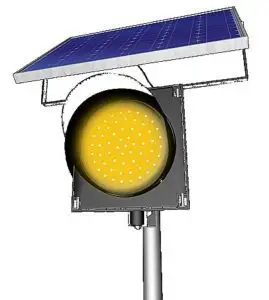
Solar Powered Flashing
Beacon-Single
Brand: Soltech
8″ or 12″ single-head; Can be seen from over 2500 ft; adjustable flash pattern – 12 hrs per day or 24 hrs per day; Features removable solar panel capable of rotation to adjust to the sun’s angle; Prices start at $
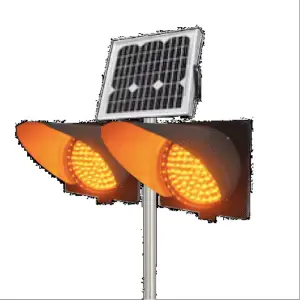
Solar Powered Flashing Beacon-Dual
Brand: Soltech
8″ dual-head; Flash 50 times/min; (customization available on request); Visible in both day & night; Prices start at $

Solar Road Marker-10 Ton
Brand: Eco Solar Lights
Solar Road Markers or lane markers are used on sharp corners, pedestrian and traffic islands and dividing lines. LED illuminated marker. Prices start at $

Solar Road Marker-20 Ton
Brand: Eco Solar Lights
A self-contained, rechargeable, LED illuminated marker. Used to reduce speed or signal driver attention to common features, hazards and dangerous curves; Prices start at $
What Are Solar Flashing Traffic Beacons?
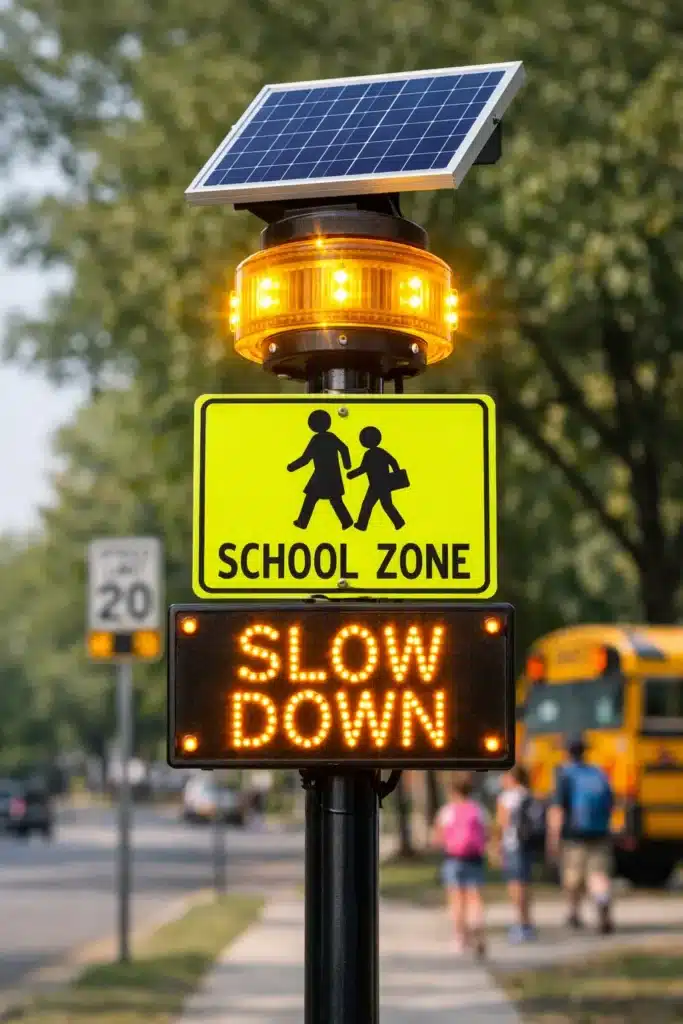
Solar flashing traffic beacons are LED signal devices used to warn motorists of changing road conditions or potential hazards ahead. These beacons typically feature flashing amber or red LED lights mounted above traffic signs or on roadside poles to increase visibility and driver awareness.
A typical solar traffic beacon system includes:
• photovoltaic solar panel
• flashing LED signal head
• rechargeable battery storage
• programmable controller
• mounting pole or bracket assembly
• optional sensors or scheduling systems
During daylight hours, solar panels generate electricity that charges onboard batteries. When activated, the stored energy powers the LED signal head to produce a flashing warning signal visible from long distances.
These devices are widely used as traffic control warnings in areas where increased driver attention is required.
Why Solar Traffic Beacons Are Used for Roadway Safety
Transportation agencies and municipalities frequently deploy solar flashing beacons because they improve safety while reducing infrastructure complexity.
Increased Driver Awareness
Flashing LED lights attract driver attention far more effectively than static traffic signs alone. These warning signals help alert motorists to hazards such as pedestrian crossings, intersections, or roadway changes.
Improved Pedestrian Safety
Solar flashing beacons are commonly used near pedestrian crossings and school zones where additional driver awareness can help reduce accident risk.
School zone flashing beacons help encourage drivers to slow down and comply with posted speed limits during high pedestrian activity periods.
Rapid Installation
Unlike traditional traffic signals that require electrical trenching and grid connections, solar beacons are self-contained systems that can be installed quickly without disrupting traffic.
Low Maintenance Operation
Solar traffic beacons are designed to operate autonomously using renewable energy. Their self-contained design eliminates electrical infrastructure while minimizing maintenance requirements.
Key Components of Solar Flashing Beacon Systems
Solar Panels
Photovoltaic panels generate electricity during daylight hours to power the beacon system.
LED Flashing Signal Heads
High-intensity LED signal heads provide bright flashing warning lights visible during both daytime and nighttime conditions.
Rechargeable Battery Storage
Battery systems store solar energy to ensure reliable beacon operation after sunset and during cloudy weather.
Programmable Controllers
Advanced controllers allow beacons to activate based on schedules, timers, motion detection, or traffic sensors.
Applications for Solar Flashing Traffic Beacons
Solar traffic beacons are widely used across municipal and transportation infrastructure.
School Zones
Flashing beacons are commonly installed above school zone signs to alert drivers to reduced speed limits during peak student activity hours.
Pedestrian Crosswalks
Solar beacons help warn drivers of pedestrian crossings and improve visibility in areas with heavy foot traffic.
Stop Signs and Intersections
Flashing beacons mounted above stop signs increase visibility and reduce intersection collisions.
Construction and Road Work Zones
Temporary traffic control zones often use solar beacons to alert drivers to changing roadway conditions.
Rural Roads and Curves
Solar warning beacons help alert drivers to sharp curves, bridge approaches, or limited visibility areas.
Solar School Zone and Pedestrian Crossing Beacons
Solar flashing traffic beacons are widely used to improve visibility and safety at school zones, pedestrian crossings, and high-risk roadway locations. These warning systems combine bright flashing LED signal heads with solar-powered energy systems to provide reliable operation without requiring electrical infrastructure.
School zone flashing beacons are commonly installed above speed limit signs to alert drivers when reduced speed limits are in effect during student arrival and dismissal periods. Because the flashing lights draw immediate driver attention, they help improve compliance with school zone safety regulations and encourage drivers to slow down in areas where children may be present.
Solar-powered pedestrian crossing beacons are also frequently deployed at marked crosswalks, trail crossings, and urban pedestrian corridors. These systems increase driver awareness by providing bright flashing signals that highlight pedestrian activity and crossing points.
Because solar traffic beacons operate independently from grid power, they can be installed quickly in areas where electrical infrastructure is unavailable or costly to extend. This makes solar warning beacons particularly effective for rural communities, developing urban areas, parks, and temporary roadway installations.
Solar Traffic Beacon Design Considerations
Effective traffic beacon installations require careful planning.
Visibility and Mounting Height
Beacon placement must ensure the signal is clearly visible from approaching vehicles.
Flash Pattern Configuration
Traffic beacons may use alternating flash patterns or synchronized flashing to maximize driver attention.
Solar Exposure
Solar panels should receive adequate sunlight to maintain battery charging capacity.
Environmental Durability
Traffic beacons must withstand harsh outdoor conditions including rain, temperature fluctuations, and wind.
Inline Buyer Q&A
What should I consider when specifying a solar flashing traffic beacon?
Start with the roadway application, required visibility, signal configuration, solar availability, battery autonomy, mounting requirements, and operating schedule. Local transportation requirements should also be reviewed before specifying a system.
Where are solar flashing beacons most useful?
They are particularly useful at pedestrian crossings, school zones, intersections, stop signs, construction areas, and remote roadway locations where extending utility power would be difficult or expensive.
How do I know whether a site receives enough sunlight?
Solar availability, seasonal conditions, shading, geographic location, and required operating hours all affect system sizing. The solar panel and battery should be sized for the specific installation rather than relying on a one-size-fits-all configuration.
What information should I provide when requesting a solar beacon system?
Provide the application, installation location, required signal configuration, operating schedule, mounting requirements, and any applicable municipal or transportation specifications.
Plan a Solar Traffic Beacon System for Your Roadway
Solar flashing traffic beacons provide highly visible warning signals without requiring trenching or connection to utility power. Proper system selection depends on the roadway application, visibility requirements, solar conditions, battery capacity, mounting configuration, and operating schedule.
We can help identify an appropriate solar beacon system for school zones, pedestrian crossings, intersections, construction areas, municipal roadways, and other traffic-safety applications.
👉 Call 1-844-533-7767 to discuss your solar traffic beacon requirements and project specifications.
FAQs
What are solar flashing traffic beacons used for?
Solar flashing traffic beacons are used to warn drivers about hazards such as pedestrian crossings, school zones, stop signs, and roadway changes.
Do solar traffic beacons require electrical wiring?
No. Solar flashing beacons operate using solar panels and battery storage, eliminating the need for electrical wiring or trenching.
Are solar flashing beacons visible during the day?
Yes. High-intensity LED signal heads are designed to be highly visible during both daytime and nighttime driving conditions.
Why do municipalities use solar flashing beacons?
Cities often use solar beacons because they improve roadway safety while reducing installation costs and eliminating electrical infrastructure.
Can solar traffic beacons be programmed?
Many solar traffic beacons include programmable controllers that allow flashing schedules based on time of day, sensors, or traffic conditions.
Stay Connected with Our Lighting Resources
Add IndustrialLightingFixtures.org as a Preferred Source on Google to see more of our lighting guides and technical resources across Google Search experiences.
Related Solar Roadway & Infrastructure Lighting Resources
Solar flashing traffic beacons are often deployed alongside other off-grid lighting systems for municipal, roadway, and infrastructure applications.
Solar Street Lights
Solar Parking Lot Lights
Solar Flood Lights
Commercial Solar Lighting