Explosion proof high bay lighting refers to LED luminaires engineered for overhead illumination in hazardous industrial environments where flammable gases, vapors, or combustible dust may be present. These heavy-duty fixtures are designed with reinforced housings that contain internal ignition sources, preventing sparks or arcs from igniting surrounding atmospheres. Explosion-proof high bay lighting is engineered for hazardous industrial environments requiring elevated mounting heights and certified ignition protection.
Explosion proof high bay LED lighting is commonly specified for Class I Division 1 and Class I Division 2 workspaces, delivering reliable, uniform illumination from elevated mounting heights while meeting applicable safety standards such as UL844, ATEX, or IECEx.
Need Explosion-Proof High Bay Lighting for a Hazardous Location?
LED PROS can help you select high bay fixtures for Class I Division 1 and Division 2 applications based on hazardous-location classification, mounting height, required light output, voltage, ambient temperature, and environmental conditions.
Request a Quote or call 844-533-7767 for help matching the appropriate explosion-proof LED high bay fixture to your facility.
Explosion-Proof High Bay Fixtures
Explosion-proof high bay fixtures provide high-output overhead illumination for classified industrial environments with elevated mounting heights. Available models include Class I Division 1 and Class I Division 2 configurations with different lumen outputs, wattages, mounting options, certifications, and environmental ratings. Select the fixture that matches the hazardous-location classification and lighting requirements of the application.
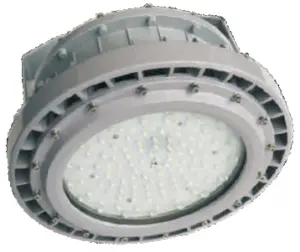
UFO C series
Brand:
High Bay Floodlight;
Up to 32,400 lumens
Surface and pendant installations; UL1598,UL844, Class 1 Division 1; Class 1 Div 2; 60/80/100/150/250W;
Prices start at $400.
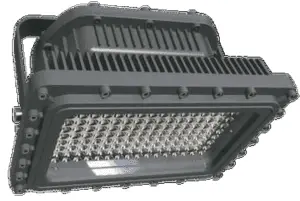
D series
Brand:
High Bay Floodlight;
Up to 29,700 lumens;
Class 1 Div. 1; Class 1 Div. 2; 60/80/100/150W;
Prices start at $400.
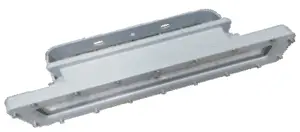
I series
Brand:
Low Bay or High Bay; 2ft, 4ft; Class 1 Div 1; Class 1 Div 2;
up to 14,000 lumens;
40/50/60/80/100W;
Prices start at $600.
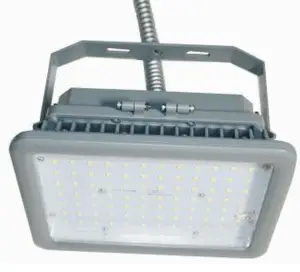
A series
Brand:
Wall Pack, High Bay Flood Light; Marine and Wet Locations; Class 1 Div 2 Class 2 Div 1; 60/80/100/ 150/200/250/300/400W;
Prices start at $385.
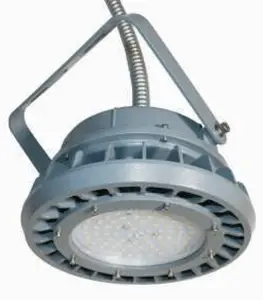
B Series
Brand
High bay or low bay;
Up to 56,000 lumens
ETL: UL1598 / UL1598A / UL844 / Class 1 Div 2; Class 2 Div 1; 40/60/80/100/150/200/250/
300/400W;
Prices start at $375.
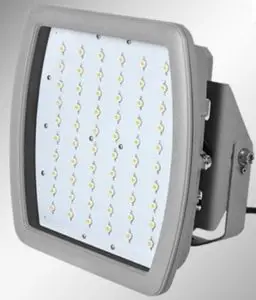
CESP J series
Brand: CESP
UL844 /UL1598, UL1598A; Class 1 Div 2
Marine; UL8750; CSA;
20/30/40/60/80/100/120/150/180/200W;
Prices start at $300.
What Is Explosion-Proof High Bay Lighting?
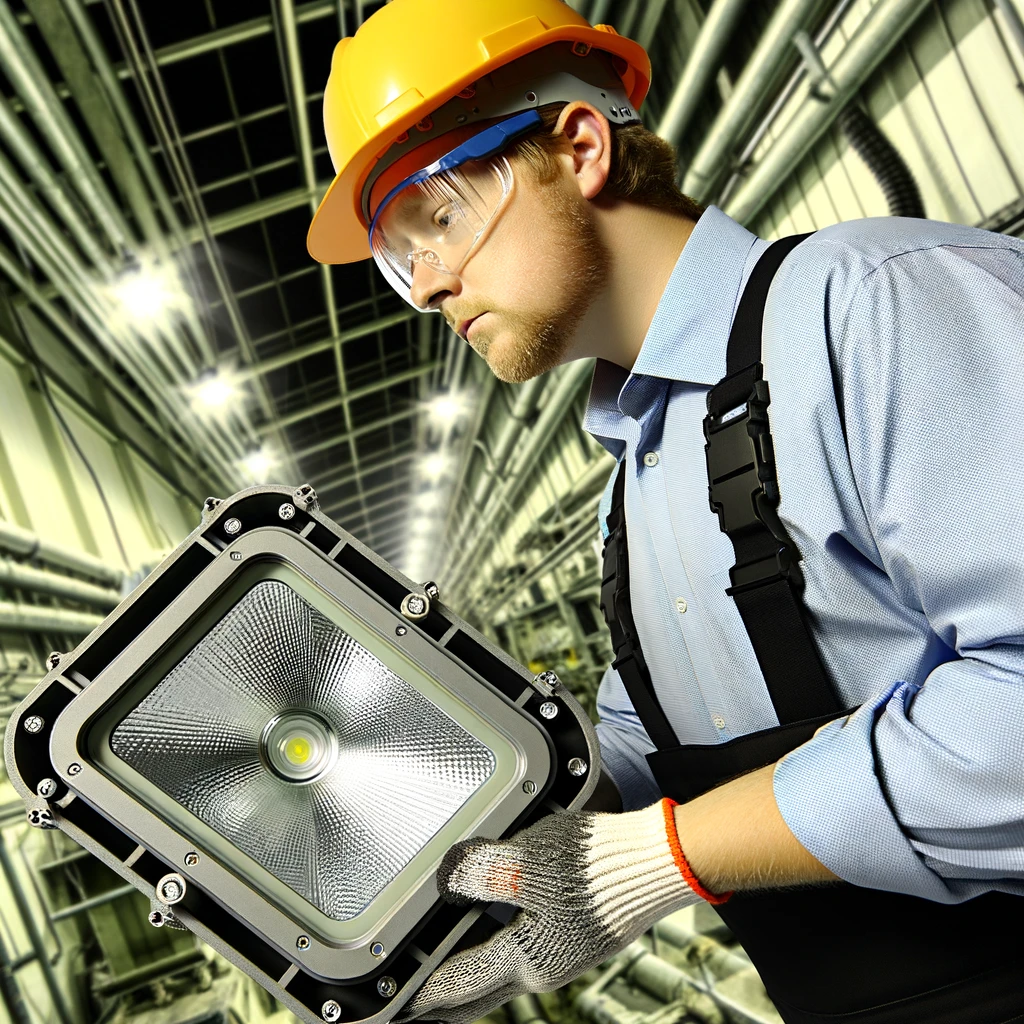
Explosion-proof high bay lighting is designed for hazardous environments with high ceilings where flammable gases, vapors, or dust may be present. These fixtures are engineered to contain internal sparks or heat while delivering high-output illumination across large industrial space
Commonly installed in facilities such as refineries, chemical plants, manufacturing operations, and storage warehouses, explosion-proof high bay fixtures combine hazardous location protection with the performance required for mounting heights typically ranging from 15 to 40 feet.
For a complete technical overview of hazardous location classifications, certification standards, and fixture selection methodology, refer to our Explosion-Proof Lighting Standards & Selection Guide.
When Should You Use Explosion-Proof High Bay Lighting?
- High ceiling industrial environments (15–40 ft)
- Facilities with flammable gases or vapors
- Chemical processing and storage areas
- Oil and gas production facilities
- Manufacturing environments with hazardous exposure
Explosion-proof high bay fixtures are designed for elevated mounting in hazardous industrial environments where flammable gases, vapors, or combustible dust may be present. Learn more about the applications, classifications, and selection considerations in our Explosion-Proof High Bay Lighting Guide.
Where Explosion Proof High Bay Lighting Is Used
Explosion proof high bay lighting is ideal in industrial spaces that require high-output illumination from elevated mounting positions, including:
-
Large manufacturing facilities with hazardous material exposure
-
Chemical processing zones with flammable vapors
-
Refineries and petrochemical plants
-
Oil and gas production and storage facilities
-
Warehouses handling combustible dust
-
Heavy fabrication and machining environments
-
Paint spray booths with overhead high clearance
Explosion-proof high bay lighting is designed for facilities that combine hazardous-location requirements with high mounting heights and demanding industrial operating conditions. See our Explosion-Proof High Bay Lighting Guide for additional guidance on applications, safety considerations, and fixture selection.
High bay layouts often require careful spacing to avoid shadows and ensure even light coverage throughout the facility. Explosion proof LED high bays provide both the lumen output and reliability needed in these environments.
Hazardous industrial facilities use Explosion Proof High Bay fixtures across oil & gas operations, chemical plants, manufacturing facilities, and hazardous warehouse environments requiring elevated industrial illumination.
Explosion-Proof High Bay vs Standard High Bay Lighting
Explosion-proof high bay lighting is designed for hazardous environments where ignition risks are present, while standard high bay lighting is used in non-hazardous industrial or commercial spaces. Explosion-proof fixtures include reinforced housings and certifications such as UL844, whereas standard high bay lights focus primarily on efficiency and illumination.
Hazard Classification Reference Table
| Classification System | Typical Hazard Type |
|---|---|
| Class I | Flammable gases and vapors |
| Class II | Combustible dust |
| Class III | Ignitable fibers |
Division vs Zone Framework
| Framework | Definition |
|---|---|
| Division | Likelihood of hazardous material presence during normal operation |
| Zone | Expected frequency and duration of hazardous conditions |
Thermal Management Considerations
-
Heat sink design and surface area
-
High ambient temperature ratings
-
Driver thermal protection
-
Impact on lumen maintenance
Technical Overview
✔ Certified for Class I Division 1 & 2 (where applicable)
✔ UL844 / ATEX / IECEx compliant models available
✔ Rated for hazardous gas and dust environments
✔ Engineered for high ambient temperature tolerance
✔ Suitable for indoor and outdoor classified zones.
Many industrial facilities require high bay fixtures specifically rated for hazardous environments. Our guide to Class I Division 1 and Division 2 lighting explains the differences between explosion proof and non-incendive fixture requirements.
Inline Buyer Q&A
How do I know which explosion-proof high bay fixture my facility requires?
Start with the hazardous-location classification for the installation area. Important information can include Class and Division or Zone classification, gas or vapor group, temperature requirements, ambient operating temperature, required certifications or approvals, mounting height, voltage, desired light output, and environmental conditions.
Fixture selection should be based on the specific hazardous location rather than simply choosing a fixture labeled “explosion proof.”
What information should I provide when requesting explosion-proof high bay lighting?
Provide the hazardous-area classification, required certifications or approvals, mounting height, voltage, existing fixture type and wattage when applicable, desired light levels, ambient-temperature range, and information about gases, vapors, moisture, dust, corrosion, vibration, or other environmental conditions.
For larger facilities, floor plans or existing lighting layouts can also help determine fixture quantities and placement.
Can explosion-proof LED high bays replace metal halide or HID fixtures?
Often, yes. LED explosion-proof high bays are frequently used to replace older HID fixtures in classified industrial facilities.
Replacement fixtures should be selected according to the hazardous-location requirements as well as mounting height, existing light output, fixture spacing, voltage, ambient temperature, and required illumination. Wattage alone should not be used to determine an LED replacement.
Do I need a photometric layout for explosion-proof high bay lighting?
For larger warehouses, processing facilities, manufacturing areas, hangars, chemical facilities, and other high-ceiling hazardous locations, photometric planning is highly recommended.
A lighting layout can help determine fixture quantity, mounting height, spacing, optical distribution, light levels, and uniformity before equipment is installed.
Can the same explosion-proof high bay be used throughout an entire facility?
Not necessarily. Hazardous classifications and operating conditions can vary between areas of the same facility.
One location may require Class 1 Division 1 equipment while another may be classified differently or may not be classified as a hazardous location at all. Ambient temperature, ceiling height, corrosion, moisture, vibration, and required light levels may also vary throughout the property.
Need Help Selecting Explosion-Proof LED High Bay Lighting?
Hazardous industrial facilities require lighting selected for both the classified environment and the physical lighting application. Hazardous-location classification, required certifications, mounting height, ambient temperature, fixture output, optics, voltage, and environmental exposure should all be evaluated before equipment is specified.
Whether you’re upgrading a chemical processing facility, oil and gas operation, manufacturing plant, industrial warehouse, marine facility, or other classified high-ceiling environment, our lighting specialists can help evaluate explosion-proof LED high bay options for your application.
👉 Explore our LED Explosion-Proof High Bay Lighting solutions or call 1-844-533-7767 to discuss your hazardous-location lighting project.
FAQs About LED Explosion Proof High Bay Lighting
Are explosion-proof high bay LED fixtures suitable for Class 1 Division 1?
Models are available for Class 1 Division 1 applications, but the specific fixture must be approved and suitable for the hazardous classification and conditions present at the installation.
Class 1 Division 1 generally applies to locations where ignitable concentrations of flammable gases or vapors may exist under normal operating conditions or may frequently exist because of maintenance, repair, leakage, or equipment operation.
Verify the fixture’s applicable hazardous-location markings, gas groups, temperature code, ambient-temperature rating, and required certifications or approvals before specification.
What mounting heights are appropriate for explosion-proof high bay lighting?
Explosion-proof high bays are generally intended for higher mounting applications, but there is no universal minimum mounting height that applies to every project.
The appropriate mounting height depends on ceiling height, fixture lumen output, optical distribution, required illumination, fixture spacing, obstructions, and the geometry of the work area. Photometric analysis can help determine an appropriate configuration for larger industrial facilities.
Can explosion-proof high bays be used outdoors?
Some models can be used outdoors when their environmental ratings, hazardous-location approvals, construction, and operating-temperature range are appropriate for the installation.
Verify ratings for moisture, dust, corrosion, temperature, and other environmental exposure in addition to the hazardous-location classification. An IP rating such as IP66 addresses ingress protection but does not by itself establish that a fixture is suitable for a hazardous location.
What is the difference between Class 1 Division 1 and Class 1 Division 2 lighting?
Class 1 Division 1 generally addresses locations where ignitable concentrations of flammable gases or vapors can exist during normal operations or under other conditions defined by the applicable classification system.
Class 1 Division 2 generally addresses locations where hazardous concentrations are not normally present under ordinary operating conditions but could occur under abnormal conditions such as equipment failure, leakage, or process disruption.
Equipment must be selected for the actual classification of the installation area.
What certifications should I look for when selecting explosion-proof high bay lighting?
Certification requirements depend on the project, jurisdiction, and hazardous-location classification.
For North American applications, UL844 and other applicable listings or approvals may be relevant depending on the fixture and installation. ATEX applies within the European regulatory framework, while IECEx is an international certification system used in many global markets.
Do not assume that one certification automatically satisfies the requirements of another jurisdiction or project.
Can explosion-proof LED high bays operate in extreme temperatures?
Some are specifically engineered for high or low ambient temperatures, but temperature capability varies considerably by fixture.
Always verify the manufacturer’s rated ambient operating range as well as the hazardous-location temperature code or other applicable temperature limitations. A fixture’s hazardous-location approval does not automatically mean it is suitable for every extreme-temperature environment.
Stay Connected with Our Lighting Resources
Add IndustrialLightingFixtures.org as a Preferred Source on Google to see more of our lighting guides and technical resources across Google Search experiences.

Related Explosion-Proof & Hazardous Location Resources
- LED Explosion-Proof Lighting — Explore the complete commercial explosion-proof lighting category for classified industrial and hazardous locations.
- Explosion-Proof Lighting Guide — Learn how hazardous classifications, fixture construction, certifications, environmental conditions, and lighting requirements affect explosion-proof fixture selection.
- Class 1 Division 1 Lighting — Review lighting considerations for Class 1 Division 1 environments where flammable gases or vapors may be present under conditions defined by the hazardous-location classification.
- UL844, IECEx & ATEX Certifications — Understand major hazardous-location certification and regulatory frameworks used when specifying explosion-proof lighting.
- Where Is Explosion-Proof Lighting Needed? — Explore facilities and industrial environments where hazardous-location lighting may be required based on the presence of flammable gases, vapors, combustible dusts, or other classified hazards.