Explosion proof lighting is required in environments where flammable gases, vapors, combustible dust, or ignitable fibers may create an explosion hazard. These hazardous locations are commonly found throughout industrial facilities where combustible materials are processed, stored, transported, or handled as part of normal operations.
Selecting certified hazardous location lighting is critical for protecting workers, reducing ignition risks, maintaining compliance, and ensuring safe facility operation.
This guide explores the industries, applications, and environments where explosion proof lighting is commonly required.
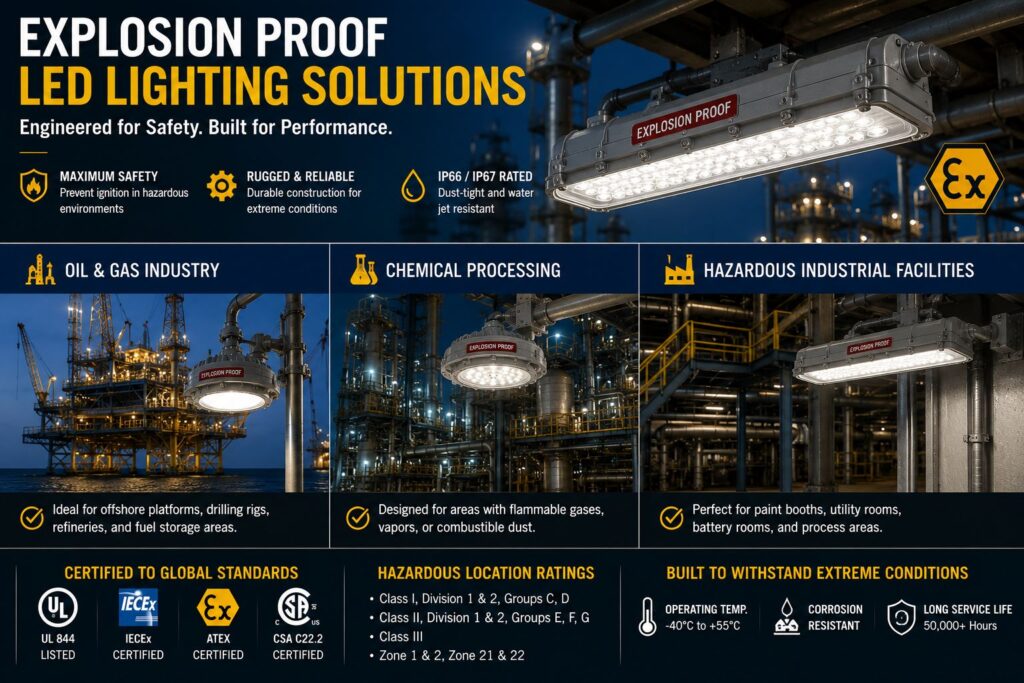
Explosion proof lighting is commonly installed in facilities where flammable gases, vapors, combustible dust, or hazardous materials may be present.
Need Certified Hazardous-Location Lighting for Your Facility?
Explosion-proof lighting must match the hazardous materials present, area classification, environmental conditions, mounting requirements, and lighting needs of the application. LED PROS can help identify appropriate certified fixture types for industrial hazardous locations.
👉 Explore Explosion-Proof Lighting Solutions, request a quote, or call 1-844-533-7767 to discuss your hazardous-location lighting project.
Why Certain Facilities Require Explosion Proof Lighting
Hazardous locations contain substances that may ignite if exposed to:
- Electrical sparks
- Electrical arcs
- Excessive heat
- Hot surfaces
- Equipment failures
Explosion proof fixtures are specifically designed to contain internal ignition events and prevent ignition of surrounding hazardous atmospheres.
Without certified equipment, facilities may face:
- Worker safety risks
- Regulatory violations
- Increased liability
- Failed inspections
- Property damage
- Production downtime
Need to understand hazardous area classifications? Explore our Hazardous Location Lighting Guide covering Classes, Divisions, Groups, and temperature codes.
Oil and Gas Facilities
The oil and gas industry is one of the largest users of explosion proof lighting.
Common applications include:
- Drilling operations
- Wellheads
- Refineries
- Compressor stations
- Processing plants
- Tank farms
- Loading terminals
- Offshore platforms
These environments frequently contain flammable gases and vapors requiring certified lighting systems.
Looking for a detailed review of hazardous lighting requirements within the energy sector? Visit Explosion Proof Lighting for Oil & Gas Facilities for industry-specific guidance.
Chemical Processing Plants
Chemical manufacturing operations often handle:
- Solvents
- Alcohols
- Hydrocarbons
- Industrial chemicals
- Volatile compounds
Because these substances may generate explosive atmospheres, properly certified lighting is essential throughout production and storage areas.
Common installation locations include:
- Mixing rooms
- Processing areas
- Packaging facilities
- Chemical storage zones
Refineries and Petrochemical Facilities
Refineries contain numerous classified areas where flammable vapors may be present.
Typical lighting applications include:
- Distillation units
- Process areas
- Tank farms
- Loading racks
- Utility corridors
- Maintenance facilities
Hazardous location lighting helps support safe operations throughout the facility.
Fuel Storage and Distribution Facilities
Facilities storing or transferring fuels often require explosion proof lighting.
Examples include:
- Aviation fuel terminals
- Bulk fuel storage facilities
- Truck loading stations
- Marine fueling operations
- Fuel blending facilities
Gasoline, diesel, ethanol, and other fuels may generate vapors capable of creating ignition hazards.
Hazardous processing facilities may require different fixture types across the same site. Explosion-proof linear lighting can serve process lines, equipment areas, and utility corridors; explosion-proof high bay lighting can support larger processing and production spaces; and explosion-proof flood lighting can provide broad illumination for tank farms, loading areas, and outdoor hazardous locations.
Grain Processing and Agricultural Facilities
Combustible dust presents significant hazards within agricultural operations.
Common applications include:
- Grain elevators
- Grain silos
- Feed mills
- Flour mills
- Processing facilities
- Storage warehouses
Dust accumulation can create highly combustible environments requiring properly certified equipment.
Mining Operations
Mining facilities frequently encounter:
- Methane gas
- Coal dust
- Combustible particulates
Explosion proof lighting is commonly installed in:
- Underground mines
- Surface processing facilities
- Conveyor systems
- Material handling areas
Worker safety and regulatory compliance make hazardous location lighting a critical component of mining operations.
Maintenance personnel working in hazardous environments often require temporary illumination. Visit Explosion Proof Drop Lights to learn how portable hazardous location lighting improves worker safety during inspections and repairs
Wastewater Treatment Facilities
Wastewater treatment facilities often produce hazardous gases during treatment processes.
Common gases include:
- Methane
- Hydrogen sulfide
Lighting is frequently required in:
- Digesters
- Pump stations
- Wet wells
- Processing structures
- Utility buildings
Proper fixture selection helps maintain safe operations within these environments.
Paint Booths and Finishing Operations
Paint spraying and coating processes frequently generate flammable vapors.
Common applications include:
- Paint spray booths
- Finishing rooms
- Solvent storage areas
- Coating operations
Explosion proof lighting helps reduce ignition risks while providing adequate illumination for detailed work.
For coating and finishing applications, review Explosion-Proof Paint Spray Booth Lighting for fixtures selected around the classified location, booth design, and installation method.
Pharmaceutical Manufacturing
Certain pharmaceutical processes utilize:
- Alcohols
- Solvents
- Volatile chemicals
These facilities may require hazardous location lighting in production, storage, and processing areas where explosive atmospheres may occur.
Food Processing Facilities
Certain food processing operations generate combustible dusts.
Examples include:
- Sugar processing
- Flour handling
- Grain processing
- Feed manufacturing
Dust hazards often require specialized lighting designed for classified environments.
Hazardous Location Classification Examples
| Industry | Typical Hazard |
|---|---|
| Oil & Gas | Flammable gases |
| Chemical Processing | Solvents and vapors |
| Refineries | Hydrocarbon vapors |
| Grain Processing | Combustible dust |
| Mining | Methane and dust |
| Wastewater | Methane and hydrogen sulfide |
| Paint Booths | Flammable vapors |
| Fuel Storage | Gasoline and fuel vapors |
Each application requires evaluation to determine the proper hazardous location classification.
Match the Classification to the Lighting Equipment
Once the hazardous location has been classified, the required Class and Division become key equipment-selection criteria. Review Class I Division 1 LED Lighting for locations requiring Division 1 equipment, or Class I Division 2 LED Lighting for applicable Division 2 installations.
How Do You Know If Explosion Proof Lighting Is Required?
Several factors help determine whether hazardous location lighting is needed.
Type of Material Present
Flammable gases, vapors, dusts, or fibers may require classified equipment.
Frequency of Exposure
The likelihood of hazardous materials being present influences classification requirements.
Regulatory Requirements
Applicable codes, standards, and facility policies often determine equipment requirements.
Hazardous Area Classification
Class, Division, Group, and Zone classifications help identify proper lighting solutions.
Common Signs an Area May Require Explosion Proof Lighting
- Flammable gases are stored or processed
- Fuel vapors may accumulate
- Combustible dust is present
- Hazardous area classifications exist
- Safety audits identify ignition risks
- Certified electrical equipment is specified
A formal hazardous area assessment should always be performed when uncertainty exists.
Inline Buyer Q&A
Does every industrial facility require explosion proof lighting?
No. Only facilities containing hazardous atmospheres require certified hazardous location fixtures.
Is explosion proof lighting required outdoors?
Many outdoor facilities such as refineries, tank farms, and fuel terminals require explosion proof lighting.
Can combustible dust require explosion proof lighting?
Yes. Grain handling, food processing, and mining operations commonly require hazardous location fixtures.
Are hazardous location requirements the same worldwide?
No. Classification systems and certifications vary depending on project location and regulatory requirements.
Need Help Selecting Explosion-Proof Lighting?
Hazardous location lighting must match the specific gases, vapors, combustible dusts, temperature conditions, and area classification present at the facility. Selecting the correct certification and fixture type is essential for both safety and compliance.
Send us your available project requirements—including application, classification, fixture type, quantity, voltage, mounting, environmental conditions, and required certifications—and we’ll help identify appropriate explosion-proof LED lighting options.
Request a Quote or call 1-844-533-7767 for application and product-selection assistance.
FAQs About Explosion Proof Lighting Needed
Where is explosion proof lighting most commonly used?
Oil and gas facilities, chemical plants, refineries, grain processing facilities, mining operations, and wastewater treatment plants.
Can fuel storage areas require explosion proof lighting?
Yes. Fuel vapors may create hazardous atmospheres requiring certified fixtures.
Do grain silos require explosion proof lighting?
Many grain handling operations involve combustible dust hazards that require specialized equipment.
Are explosion proof fixtures required in paint booths?
Paint spray operations frequently require certified hazardous location lighting.
Who determines if a location is hazardous?
Qualified engineers, safety professionals, and hazardous area assessments typically determine classifications.
Stay Connected with Our Lighting Resources
Add IndustrialLightingFixtures.org as a Preferred Source on Google to see more of our lighting guides and technical resources across Google Search experiences.

Related Explosion-Proof Lighting Solutions
-
Continue narrowing your hazardous-location lighting requirements by application, fixture type, and classification:
-
LED Explosion-Proof Lighting — Explore certified hazardous-location LED fixture options for industrial facilities and classified environments.
-
Explosion-Proof Linear Lighting — Review linear fixtures for process lines, equipment areas, utility corridors, walkways, and other hazardous-location applications.
-
Explosion-Proof High Bay Lighting — Explore high-output hazardous-location fixtures for processing plants, production spaces, and higher mounting applications.
-
Explosion-Proof Flood Lighting — Review flood and area lighting for tank farms, loading areas, processing facilities, yards, and outdoor hazardous locations.
-
Explosion-Proof Paint Spray Booth Lighting — Explore lighting for coating and finishing environments requiring fixtures selected around classified-location and booth requirements.
-