Commercial LED canopy lighting provides uniform, glare-controlled illumination for covered exterior spaces such as building entrances, breezeways, loading docks, and pedestrian walkways. Designed for wet-location performance and long service life, canopy fixtures enhance visibility, improve safety, and reduce maintenance in high-traffic commercial environments.
Overhead structures like these represent an important segment of comprehensive commercial lighting fixtures used throughout modern properties.
LED Canopy Lighting Fixtures
In facilities with a mix of covered and open-air work zones, LED canopy lighting is often used in coordination with perimeter flood lights and area luminaires to ensure seamless illumination from entryways into broader exterior spaces.
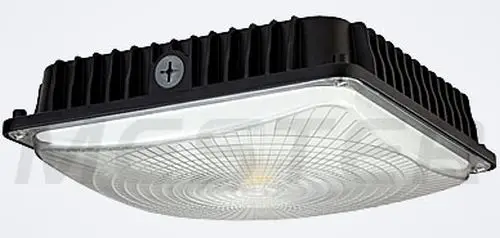
U-LPCN
Brand: LightingX
Low profile canopy lighting; IP67; DLC
Up to 11,880 lumens; 28/40/60/90W;
Prices start at $85.
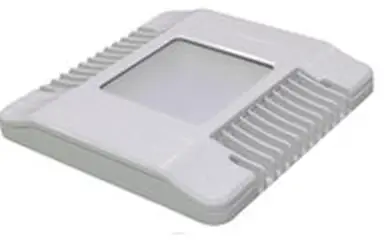
LS-NCPV4
Brand: Ledsion
Low profile lighting for covered walkways, IP65; DLC
Up to 19,500 lumens; 150W;
Prices start at $200.
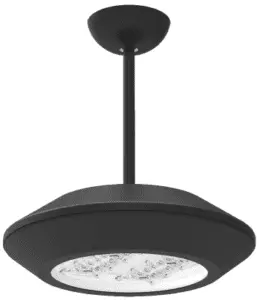
5001
Brand: Crystal
16″ round ceiling or pendant mount parking garages, covered walkways, IP65 rated for wet locations; Up to 9,986 Lumens; 35/45/55/65/75W;
Prices start at $400.
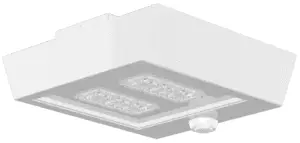
Century
Brand: Crystal
17″ square ceiling or pendant mount parking garages, underground space, IP65 rated for wet locations.
Up to 14,640 Lumens;
35/45/55/65/75/85/105W;
Prices start at $400.
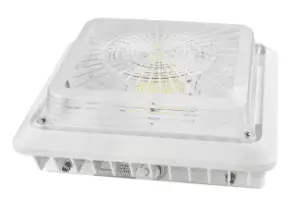
LS-NCP55WV2
Brand: Ledsion
Small, 9″ low profile canopy lighting
bus stations, gas stations,
IP65 rated for wet locations;
Up to 6,000 lumens; 55W.
Prices start at $200.
What Is LED Canopy Lighting?
LED canopy lighting consists of flat-profile luminaires designed to be mounted on ceilings or overhead structures such as fuel station canopies, loading docks, entryways, toll booths, and covered walkways. These fixtures provide uniform, glare-controlled illumination over specific activity areas while maximizing energy efficiency. Unlike general area lights, canopy LEDs are engineered to deliver high lumen output with even coverage under an overhead surface, improving visibility for safety, security, and functional task performance in both commercial and industrial environments.
For broader property illumination beyond covered walkways, explore our commercial outdoor lighting systems designed for parking areas, building perimeters, and open spaces.
Where Is Commercial Canopy Lighting Used?
LED canopy luminaires are specified when illumination is needed under overhead structures or sheltered areas with frequent activity or traffic. Typical use cases include:
-
Covered retail entrances
-
Apartment breezeways
-
Hotel drop-off zones
-
Commercial building overhangs
-
Outdoor corridors
-
Hospital and campus walkways
-
Loading docks
-
Drive-through awnings
-
Municipal transit shelters
These applications benefit from downward-focused, evenly distributed light that enhances visibility and minimizes glare on vehicles and work surfaces.
For fueling applications, visit our dedicated gas station canopy lighting solutions engineered specifically for fuel island environments.
Technical Standards & Compliance Resources
Selecting LED canopy lighting involves ensuring compliance with applicable electrical and energy codes as well as environmental exposure ratings. Important considerations include:
✔ UL/ETL listings for wet locations
✔ High IP ratings for moisture and dust resistance
✔ Correlated color temperature standards for specific applications (e.g., 4000K–5000K)
✔ Optional control compatibility with photocells or scheduling systems
Ensuring that canopy fixtures meet the proper performance and safety standards supports reliable operation in outdoor and semi-outdoor spaces. For detailed guidance on matching lighting formats to site requirements, refer to our broader lighting design and classification resources.
Core Specifications & Performance Characteristics
When selecting LED canopy lighting, consider these key performance attributes:
✔ Lumen output: sufficient for task and safety requirements (often 6,000–20,000+ lumens)
✔ CRI and CCT: appropriate color temperature and rendering for visibility and comfort
✔ Optical distribution: optimized for downward and wide coverage
✔ Ingress protection (IP): designed for outdoor exposure
✔ Impact resistance (IK): guards against physical contact
✔ Mounting and wiring flexibility: surface or recessed options
LED canopy lighting systems deliver significant energy savings and lower maintenance compared with legacy HID systems like metal halide and high-pressure sodium while enhancing uniform illumination under overhead structures.
For vertical surface mounting applications, consider LED wall pack lighting to enhance building perimeter visibility and security.
Planning & Selection Considerations
When designing LED canopy lighting:
✔ Assess the height of the overhead structure to determine lumen requirements
✔ Ensure optical distribution meets uniformity goals across the coverage area
✔ Consider IP and IK ratings for outdoor elements
✔ Coordinate with adjacent lighting systems for seamless transitions
✔ Evaluate controls such as motion sensors or dimming for energy optimization
Proper planning balances illumination performance and energy efficiency while enhancing user safety and experience.
Learn how canopy fixtures integrate into layered site illumination in our full commercial lighting specification guide.
Comparison Table — Canopy vs Flood vs Area Lighting
| Attribute / Use | Canopy Lighting | Flood Lights | Area Lighting |
|---|---|---|---|
| Primary Coverage | Downward under overhead | Broad open areas | General site illumination |
| Typical Mounting Height | 8–20 ft | 20–60 ft | 15–50 ft |
| Optical Focus | Downward narrow/wide | Wide flood | Medium/wide |
| Best Use Cases | Fuel stations, docks | Perimeter or yard | Parking & outdoor spaces |
| Ingress Protection | High (wet locations) | Outdoor rated | Outdoor rated |
| Environmental Exposure | Outdoor/covered | Open outdoor | Open outdoor |
If you’re replacing aging fuel station lighting, our Gas Station Canopy LED Retrofit Guide explains how to select the proper mounting configuration, optics, and fixture output for commercial fueling facilities.
Key Performance Features
✔ Even Light Distribution
Reduces shadows in pedestrian areas.
✔ Surface or Recessed Mount
Ideal for finished soffits and architectural ceilings.
✔ Wet-Location Rated (IP65+)
Engineered for rain, humidity, and dust exposure.
✔ DLC Listed Options
Supports energy rebate qualification.
✔ Long Service Life
50,000+ hour rated performance.
Inline Buyer Q&A
How do I choose the right LED canopy light for a commercial property?
Start with the location and purpose of the lighting.
Consider the canopy dimensions, mounting height, required illumination, fixture spacing, ceiling construction, pedestrian or vehicle activity, environmental exposure, existing electrical system, controls, and appearance.
A retail entrance, apartment breezeway, loading area, and covered drive-through can require different fixture outputs and distributions even when all use canopy-mounted lighting.
How much light output does a commercial canopy fixture need?
There is no universal lumen output for commercial canopy lighting.
Required output depends on mounting height, fixture spacing, area dimensions, required illumination, surface reflectance, pedestrian or vehicle activity, surrounding light levels, and fixture distribution.
Selecting solely by fixture lumens can result in excessive brightness, glare, or insufficient illumination between fixtures.
Do I need wet-location-rated canopy fixtures?
It depends on the installation.
Canopies and overhangs can still expose fixtures to wind-driven rain, humidity, condensation, cleaning, and other environmental conditions.
Determine whether the specific location is considered dry, damp, or wet under the applicable requirements and select a fixture rated for that environment.
An IP rating can provide additional information about ingress protection but should not be treated as the only measure of outdoor suitability.
Can existing HID or fluorescent canopy lights be replaced one-for-one with LED fixtures?
Often, but one-for-one replacement should not be assumed.
The existing fixture locations may be reusable if the proposed LED fixtures provide appropriate output and distribution from those positions.
Compare mounting height, fixture spacing, existing wattage and technology, LED output, optical distribution, voltage, controls, and required illumination before deciding whether the existing layout should remain unchanged.
What controls are useful with LED canopy lighting?
Depending on the property and fixture, useful options can include:
- Photocells
- Occupancy or motion sensors
- Dimming
- Scheduling
- Networked lighting controls
- Bi-level operation
Controls can reduce unnecessary operating hours while allowing appropriate illumination when pedestrian or vehicle activity is present.
Verify control compatibility with the specific fixture and application.
What information should I provide when requesting commercial canopy lighting?
Useful project information includes:
- Type of property
- Canopy or covered-area dimensions
- Mounting height
- Existing fixture quantity and spacing
- Existing fixture type and wattage
- Voltage
- Desired controls
- Environmental exposure
- Photographs or drawings
- Required illumination or project criteria
- New construction or retrofit
For larger or more complex covered areas, a lighting layout can help evaluate fixture quantity, placement, and performance.
Build the Canopy Lighting Around the Covered Space
Effective canopy lighting requires more than choosing an outdoor-rated fixture.
Mounting height, fixture spacing, optical distribution, illumination requirements, environmental exposure, ceiling construction, pedestrian and vehicle activity, controls, and existing electrical conditions should all be considered.
Our lighting specialists can help evaluate LED canopy fixtures for commercial entrances, breezeways, covered walkways, loading areas, apartment and multifamily properties, retail facilities, service areas, and other covered exterior spaces.
Call 1-844-533-7767 to discuss your commercial LED canopy lighting project.
Frequently Asked Questions About Outdoor Canopy Light Fixtures
What is commercial LED canopy lighting used for?
Commercial LED canopy lighting provides overhead illumination beneath covered exterior or semi-enclosed areas.
Common applications include:
- Building entrances
- Apartment and condominium breezeways
- Covered pedestrian walkways
- Retail entrances
- Loading and service areas
- Covered drive lanes
- Building overhangs
- Commercial entry canopies
The appropriate fixture depends on the dimensions, mounting conditions, environmental exposure, and lighting requirements of the space.
Can LED canopy lights be used outdoors?
Yes, when the specific fixture is rated for the environmental conditions of the installation.
Outdoor canopy locations can involve moisture, humidity, temperature changes, wind-driven rain, dust, and other exposure.
Verify the fixture’s wet- or damp-location suitability and applicable environmental ratings rather than assuming every canopy fixture provides the same protection.
Do all outdoor canopy lights need an IP65 rating?
No.
There is no universal IP65 requirement for every canopy-lighting application.
The appropriate ingress protection depends on the fixture location and expected exposure to water, dust, cleaning, and other environmental conditions.
IP ratings and applicable wet- or damp-location ratings should be evaluated according to the project.
What mounting options are available for canopy lighting?
Depending on the fixture and structure, canopy luminaires can be available in configurations such as:
- Surface mounted
- Recessed
- Pendant mounted
The appropriate mounting method depends on canopy construction, available ceiling space, desired appearance, environmental exposure, and fixture design.
How bright should commercial canopy lighting be?
There is no single lumen output or illumination level appropriate for every canopy.
Required lighting depends on the application, mounting height, fixture spacing, pedestrian or vehicle activity, surrounding conditions, and applicable project criteria.
Fixture output should be selected as part of the overall lighting layout rather than from a generic lumen range.
Why is uniformity important under commercial canopies?
Good uniformity helps maintain useful visibility across walkways, entrances, drive lanes, loading areas, and other covered spaces.
Fixture spacing, mounting height, optical distribution, ceiling geometry, columns, walls, and other structural elements can affect how evenly the area is illuminated.
Can canopy lighting create glare?
Yes.
Excessive fixture output, unsuitable optics, exposed light sources, low mounting heights, or poor placement can create uncomfortable glare.
Selecting appropriate output and distribution is particularly important for pedestrian areas and locations where drivers approach or pass beneath a canopy.
Are LED canopy lights energy efficient?
LED canopy fixtures can use less energy than many older HID or fluorescent systems while providing useful optical control and compatibility with lighting controls.
Actual energy savings depend on the existing system, replacement fixture wattage, operating hours, controls, and project design.
A fixed percentage of savings should not be assumed for every retrofit.
How long do LED canopy lights last?
Service life varies by fixture.
LED and driver quality, operating temperature, electrical conditions, operating hours, moisture exposure, thermal management, and other environmental factors can affect longevity.
Compare manufacturer-specific lifetime, warranty, and operating-condition information when evaluating fixtures.
Can LED canopy lights replace metal halide fixtures?
Yes, in many applications.
The appropriate LED replacement should be selected from required lighting performance rather than simply matching the existing metal-halide wattage.
Fixture output, optical distribution, mounting height, spacing, voltage, and controls should be evaluated.
Can LED canopy lights replace fluorescent fixtures?
Often.
LED fixtures can be used to replace fluorescent canopy and breezeway lighting, but the proposed fixture should be evaluated for output, distribution, environmental suitability, dimensions, mounting, and electrical compatibility.
What is the difference between canopy lighting and wall pack lighting?
Canopy fixtures are generally mounted overhead beneath covered structures and direct illumination into the area below.
Wall packs are mounted on building walls and typically illuminate exterior perimeter areas, walkways, service areas, or spaces adjacent to the building.
A commercial property can use both fixture types as part of a coordinated exterior lighting system.
What is the difference between canopy lighting and parking garage lighting?
The applications can overlap, but they are not identical.
Canopy lighting generally addresses covered exterior areas such as entrances, breezeways, overhangs, and drive-through structures.
Parking garage lighting is designed around enclosed or partially enclosed parking structures where vehicle circulation, pedestrian activity, ramps, ceiling heights, structural obstructions, and continuous operating conditions can affect the lighting design.
Can motion sensors be used with canopy lights?
Yes, when compatible with the fixture and application.
Occupancy or motion sensors can support bi-level lighting or other control strategies in areas where activity varies throughout the night.
Sensor placement and operation should account for pedestrian and vehicle movement.
Can photocells be used with LED canopy fixtures?
Yes.
Photocells can provide dusk-to-dawn operation for compatible canopy lighting systems.
Some fixtures can also combine photocells with occupancy sensing or dimming controls.
Verify available control options for the specific fixture.
Are LED canopy lights suitable for apartment breezeways?
They can be.
Canopy-style fixtures can provide overhead illumination for multifamily breezeways, covered corridors, stairs, entrances, and common areas when their output, distribution, mounting, appearance, and environmental ratings fit the application.
Are canopy lights suitable for loading docks?
They can be used in covered loading and service areas when properly selected.
Loading applications can require consideration of mounting height, trucks and trailers, dock equipment, shadows, pedestrian activity, environmental exposure, and required illumination.
Other fixture types may also be needed to illuminate portions of the loading operation not effectively covered by overhead canopy fixtures.
Do canopy-lighting projects require a photometric layout?
Not every project requires one.
For larger canopies, vehicle areas, irregular structures, or projects with specific illumination and uniformity criteria, photometric analysis can help evaluate fixture quantity, placement, output, and distribution before installation.
Stay Connected with Our Lighting Resources
Add IndustrialLightingFixtures.org as a Preferred Source on Google to see more of our lighting guides and technical resources across Google Search experiences.

Related Commercial Canopy Lighting Resources
- LED Parking Garage Lighting — Explore lighting for covered parking structures where vehicle circulation, pedestrian areas, ramps, and structural obstructions affect fixture selection and layout.
- Outdoor LED Wall-Mount Fixtures — Compare wall-mounted exterior lighting with overhead canopy fixtures for entrances, service areas, walkways, and building perimeters.
- LED Wall Pack Lighting — Explore commercial wall-mounted fixtures for building exteriors, perimeter areas, entrances, and service locations.
- Commercial Site Lighting Design Guide — Learn how canopy, building-mounted, parking, pedestrian, and area lighting can work together across a commercial property.
- Outdoor LED Lighting Guide — Review fixture selection, mounting, controls, glare, environmental exposure, and other considerations for commercial exterior lighting.