Commercial LED façade lighting is designed to illuminate building exteriors and architectural features with controlled, high-quality illumination. Engineered for energy efficiency, weather resistance, and aesthetic impact, these fixtures enhance building presence, improve safety, and elevate nighttime visibility for retail storefronts, corporate campuses, hotels, entertainment venues, and institutional properties. Featuring precision optics and durable housings, LED façade systems deliver uniform accent lighting that complements architectural design while minimizing light trespass.
LED Façade Lighting Fixtures
In comprehensive exterior lighting solutions, LED façade lighting is often used alongside perimeter security, site area, and accent luminaires to create a cohesive nighttime presence that highlights architectural character while enhancing safety.
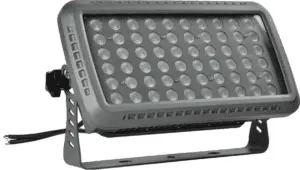
LSL
Brand: Beyond
3 single colors – Warm White, Blue, or Green; narrow-beam floodlight for objects up to 98 feet away and up to 49ft (36W); for flags, monuments, steeples, bridges; available in 8°/ 30°/ 36°
Prices start at $250.
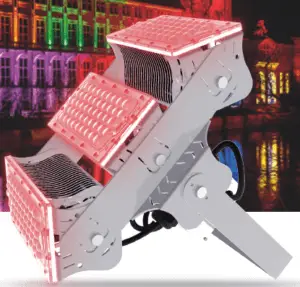
T400A
Brand: G-Comin
RGBW Flood Lights, Wall Washer
features Remote and APP controls
Multiple modes, flash, timing,
music color change mode;
50/100/150/200/300/400/600W.
LED Pros Choice;
Prices start at $300
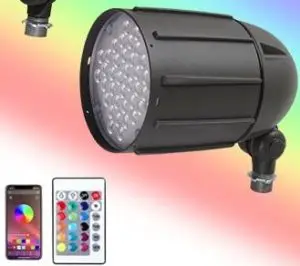
5BF
Brand: Green Inova
RGB Wall washer and Landscape
lighting; Color and brightness
controlled through the app
DC12V/ DC24V/ AC12V;
Available at 22°, 35°, and 57°
½” NPT threaded arm with
locking swivel; 6/12/30W;
Prices start at $180.
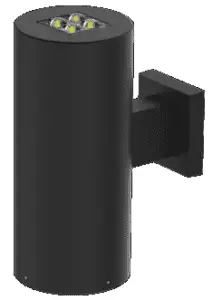
3099-R
Brand: Crystal
Round Wall Mount features up and down light; accent and wall wash lighting; with a wide light distribution, up to 6,120 lumens;
Available in 12/15/20/30/50W.
Prices start at $550.

3099-SQ
Brand: Crystal
Square Wall Mount features up and down light; sleek, versatile cylinder profile, 3 optional mountings
Wall, Ceiling, and Pendant Mount;
architectural lighting; up to 6,120
lumens; 18/20/25/35/55W.
Prices start at $550.
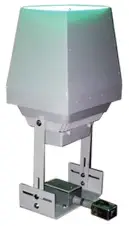
TFL series
Brand: Ledreit
Special Holiday Inn-Green Wall Washer; Building uplighting;
up to 7800 Lumens; 30/60W;
Red, White, Blue, Amber,
Green; Prices start at $300.
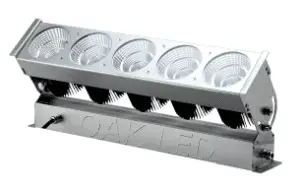
Oak-200W
Brand: Oakled
RGB Wall Washer, Features CREE LEDs; IP66; Color Chips; Red, Blue, Green; 20/40/50/80/100/200W;
Prices start at $250.
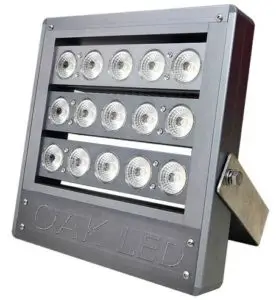
Oak-300
Brand: Oakled
RGB modular; IP66 waterproof; for indoor and outdoor use; 100/120/240/300/400/480/
500/600/720/900/1000W.
Prices start at $300.
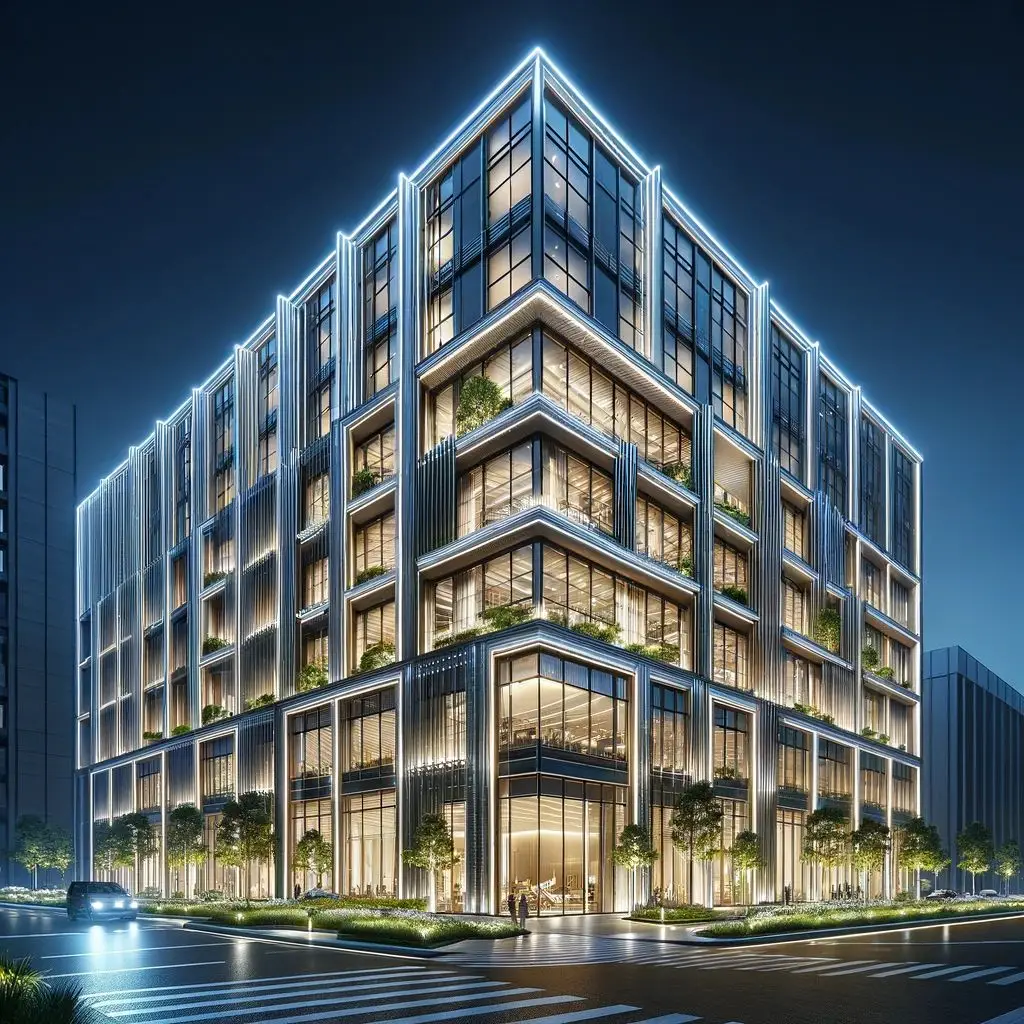
What Is LED Facade Lighting?
LED façade lighting refers to exterior luminaires specifically intended to wash or accentuate vertical surfaces, textures, and contours of a building’s architecture. Unlike general floodlights, façade fixtures provide precise beam control and color options to deliver balanced illumination, create visual drama, or reinforce brand presence on commercial properties.
For applications that require dynamic exterior effects and architectural accents, facilities often integrate RGB LED lights to create programmable color scenes that enhance building façades during events or seasonal displays.
Façade lighting is one element of a complete exterior lighting strategy. Our Commercial Building Exterior Lighting Guide shows how façade lighting integrates with parking lots, pathways, landscaping, and building entrances to create a cohesive nighttime appearance.
When Should LED Façade Lighting Be Used?
LED façade lighting is specified when architectural emphasis, brand identity, or nighttime visual prominence is a priority. It is commonly used to:
• Highlight building entrance features
• Accentuate vertical planes or textures
• Illuminate signs or architectural branding
• Provide visual depth to public or civic structures
• Enhance security while preserving aesthetics
Typical applications include commercial office buildings, retail centers, hospitality properties, museums, corporate campuses, and civic landmarks. Façade lighting improves visual interest after dark while also contributing to wayfinding and perimeter safety.
Façade lighting and LED wall pack lighting work together to provide consistent illumination on vertical surfaces as well as perimeter security lighting.
Key Features & Performance
Precision Optics for Uniform Wall Wash
Beam spreads designed to evenly illuminate vertical surfaces and eliminate hotspots.
Color Temperature Options
Warm and cool white options (2700K–5000K) to complement façade materials and design intent.
Weather-Rated Construction
IP65+ or higher enclosures to withstand moisture, dust, and harsh exterior conditions.
Energy Efficiency
LED technology cuts energy use and maintenance costs compared to legacy HID systems.
Long Life & Low Maintenance
50,000+ operational hours for reduced service requirements.
Architectural lighting does more than illuminate buildings—it strengthens branding, improves customer experiences, and increases property value. Learn more in our How LED Façade Lighting Improves Commercial Buildings guide.
Industrial & Commercial Applications
LED façade lighting is used to elevate the aesthetic presence of buildings and structures, including:
• Office building exteriors
• Hotels and resorts
• Retail and entertainment venues
• Museums and cultural institutions
• University and campus buildings
• Parking structure faces
• Stadium and arena exteriors
These luminaires not only enhance nighttime visual appeal but also play a role in safe circulation, visibility, and architectural storytelling. Tall façade applications may integrate architectural lighting with engineered commercial light poles to support elevated fixtures and improve overall exterior visibility.
Planning & Selection Considerations
When specifying LED façade lighting, designers should assess:
✔ Architectural geometry and surface conditions
✔ Desired visual effect (wall wash, grazing, accent)
✔ Mounting height and aiming angles
✔ Control systems for dimming and scene setting
✔ Fixture durability and maintenance access
✔ Compliance with local lighting ordinances
Effective façade lighting balances artistic intent with energy efficiency and local code compliance.
Architectural illumination should be evaluated alongside other site elements discussed in our commercial lighting system guide.
Comparison Table — Façade vs Flood vs Wall Wash Lighting
| Attribute / Use | Façade Lighting | Flood Lighting | Wall Wash Lighting |
|---|---|---|---|
| Primary Purpose | Architectural emphasis | General illumination | Even surface illumination |
| Typical Mounting Height | 8–30+ ft | 20–60 ft | 10–30 ft |
| Optical Focus | Precision beams | Broad beam spread | Wide, smooth washes |
| Typical Environments | Building faces | Yards & perimeters | Vertical surfaces |
| Visual Effect | Artistic, textured | Functional, broad | Even uniform glow |
| Control Options | Tunable/RGB | Basic dimming | Basic dimming |
Considering an architectural lighting upgrade? Our LED Façade Lighting Energy Savings & ROI Guide explains how modern LED technology reduces operating costs while enhancing the appearance of commercial buildings.
Technical Standards & Compliance Resources
Specifying LED façade lighting requires awareness of outdoor lighting standards, energy codes, and safety practices. Important considerations include:
✔ UL/ETL listings for outdoor fixtures
✔ IP ratings for moisture and dust
✔ Color temperature consistency across product runs
✔ Control systems for dimming and scheduling
✔ Light trespass and glare ordinances
Ensuring that façade luminaires meet both performance and code requirements supports long-term reliability and reduces operational risk.
For broader context on aligning lighting formats with architectural design objectives, refer to our lighting design and classification resources.
Inline Buyer Q&A
How do I choose the right LED fixtures for a building facade?
Start with the architectural effect you want to create rather than fixture wattage alone.
Important considerations include:
- Building height and dimensions
- Architectural features to emphasize
- Surface material, texture, and color
- Fixture mounting locations
- Setback from the facade
- Beam angle and distribution
- Required light output
- Color temperature
- Color rendering
- Glare and spill-light control
- Dimming or control requirements
- RGB or RGBW effects where appropriate
- Environmental exposure
- Maintenance access
For larger or more complex projects, lighting layouts, photometric information, or mockups can help evaluate the intended effect before installation.
Should I use floodlights, wall washers, or linear fixtures for facade lighting?
It depends on the architecture and desired effect.
Floodlights can illuminate larger surfaces or architectural features from a distance. Wall-washing fixtures can provide broader, more uniform vertical illumination, while linear fixtures can emphasize edges, columns, reveals, and other architectural details.
Many facade projects use more than one fixture type.
How do I determine the correct beam angle?
Beam angle should be selected according to fixture distance, mounting position, target dimensions, building height, and the desired lighting effect.
Narrow beams can emphasize individual architectural elements, while wider distributions can illuminate larger surfaces.
The correct distribution should be evaluated with the actual building geometry rather than selected from a universal beam-angle rule.
Should I use white light or RGB/RGBW facade lighting?
White LED lighting is appropriate when the objective is primarily architectural illumination, visibility, or highlighting building materials.
RGB and RGBW systems can add programmable color for hospitality, entertainment, retail, civic, corporate, and other properties where dynamic architectural effects are part of the design.
RGBW can also provide a dedicated white-light channel in addition to color-changing capability.
How can I reduce glare and unwanted light around a facade?
Fixture location, aiming, beam control, shielding, mounting height, output, and surrounding site conditions all affect glare and spill light.
The goal is to place light on the intended architectural surfaces without unnecessarily directing it toward windows, neighboring properties, roadways, the sky, or normal viewing positions.
What information should I provide when requesting facade lighting?
Useful project information includes:
- Building elevations or drawings
- Photos of the property
- Building dimensions
- Surface materials and colors
- Features to be highlighted
- Proposed mounting locations
- Fixture setback distances
- Desired white-light or color-changing effects
- Voltage
- Control requirements
- Environmental conditions
- Applicable local lighting requirements
- Project renderings or design intent, if available
These details help determine fixture type, distribution, output, quantity, and placement.
Bring the Architecture to Life After Dark
Effective facade lighting is created by coordinating the fixtures with the architecture—not simply by installing brighter exterior lights.
Building dimensions, surface materials, architectural details, mounting positions, beam distributions, color temperature, controls, glare, surrounding properties, and the desired nighttime appearance all influence the final design.
Our lighting specialists can help evaluate LED floodlights, wall-washing fixtures, linear architectural lighting, and RGB/RGBW systems for commercial buildings, hospitality properties, retail developments, campuses, municipal facilities, and other architectural applications.
For larger projects, send building elevations, photographs, dimensions, and your desired lighting effect when available.
Call 1-844-533-7767 to discuss your facade lighting project.
Frequently Asked Questions About LED Facade Lighting
What is facade lighting used for?
Facade lighting is used to illuminate architectural surfaces and features after dark.
It can emphasize columns, entrances, walls, rooflines, textures, signage areas, and other elements while contributing to the overall nighttime appearance of a commercial property.
For a deeper look at fixture placement, beam angles, mounting, and architectural design considerations, see our Comprehensive Guide to Facade Lighting.
Can LED facade lighting be used on different building materials?
Yes, LED facade lighting can be applied to many building materials, including concrete, brick, stone, metal panels, glass, and stucco.
However, different surfaces reflect and absorb light differently.
Surface color, texture, reflectance, gloss, mounting conditions, and architectural geometry should be considered when selecting fixture output, color temperature, beam distribution, and placement.
Does surface color affect facade lighting?
Yes.
Light-colored surfaces generally reflect more light than dark surfaces, while different materials and finishes can substantially change the perceived brightness and appearance.
Fixture selection should therefore consider the actual facade rather than relying only on lumen output.
How do I choose LED facade lighting color temperature?
Color temperature should support the architecture, materials, surrounding lighting environment, and desired appearance.
Warmer white light can complement some stone, brick, wood, and traditional architecture, while neutral or cooler white light can create a different appearance on contemporary materials.
There is no single correct color temperature for every facade.
Local requirements or project standards can also influence the appropriate choice.
Can facade lighting change the appearance of building materials?
Yes.
Color temperature, color rendering, beam direction, intensity, and surface characteristics can change how materials and colors appear after dark.
For appearance-sensitive projects, samples, mockups, renderings, or on-site testing can be useful before finalizing the system.
What is wall washing?
Wall washing uses lighting positioned and distributed to create relatively broad illumination across a vertical surface.
The appropriate fixture setback, spacing, beam distribution, and output depend on the wall height, texture, mounting conditions, and desired uniformity.
What is facade grazing?
Grazing places light relatively close to a textured surface so that shadows emphasize material depth and architectural texture.
Brick, stone, columns, and other dimensional surfaces can respond strongly to grazing light.
Fixture position and beam control are important because small changes can substantially alter the effect.
Are LED facade lights weather-rated?
Facade fixtures intended for exterior use are available with environmental ratings appropriate for outdoor conditions.
There is no universal IP rating that applies to every facade-lighting project.
Verify wet-location suitability, ingress protection where relevant, operating-temperature range, materials, corrosion resistance, and other manufacturer specifications for the actual installation.
Is IP65 required for facade lighting?
Not universally.
The appropriate environmental protection depends on fixture location, exposure to precipitation and moisture, mounting orientation, cleaning conditions, and project requirements.
Use the product’s actual listings and environmental ratings to determine suitability.
Can facade lighting be installed on coastal buildings?
Yes, provided the equipment is suitable for the environment.
Coastal installations can require additional attention to corrosion resistance, finishes, fasteners, seals, mounting hardware, and maintenance because of salt and moisture exposure.
Can LED facade lighting use RGB or RGBW color changing?
Yes.
RGB and RGBW fixtures can create programmable architectural color effects for appropriate commercial applications.
RGBW adds a dedicated white-light channel, which can provide greater flexibility when both dynamic color and white illumination are desired.
How are RGB and RGBW facade lights controlled?
Control systems vary according to the fixtures and desired effects.
Architectural color-changing systems can use technologies such as DMX512 or other compatible lighting-control platforms for color selection, scenes, dimming, sequencing, and coordinated effects.
The fixtures, drivers, controllers, addressing, wiring, and programming should be planned as one system.
Can facade lighting be dimmed?
Many commercial LED facade fixtures are available with dimming or control capabilities, but compatibility depends on the specific driver, fixture, control protocol, and electrical design.
Verify the required control method before selecting equipment.
How bright should facade lighting be?
There is no universal lumen or foot-candle target for every building facade.
Appropriate output depends on building dimensions, surface reflectance, fixture distance, ambient light, surrounding properties, desired visual prominence, local requirements, and the architectural effect being created.
More output is not automatically better.
How do I prevent facade lighting from shining into windows?
Careful fixture placement, aiming, beam selection, shielding, output control, and mounting can reduce unwanted light entering windows.
Windows and occupied spaces should be considered during the initial design rather than after fixtures are installed.
Can facade lighting create light pollution?
Poorly controlled exterior lighting can contribute to spill light, uplight, glare, and unnecessary nighttime illumination.
Beam control, shielding, aiming, output, curfews, dimming, and controls can help limit light outside the intended architectural surfaces.
Applicable local requirements should also be considered.
Should facade lighting be included in the overall site-lighting design?
Yes.
Facade lighting should be coordinated with entrances, walkways, parking areas, landscape lighting, signage, post-top lighting, and other exterior systems.
Coordination helps manage brightness relationships, glare, visual hierarchy, controls, and the overall nighttime appearance of the property.
Does facade lighting improve security?
Facade lighting can improve nighttime visibility around illuminated building surfaces, but it should not be treated as a standalone security system.
Security lighting objectives should be evaluated with entrances, pedestrian areas, parking, surveillance, site layout, and other property considerations.
Do LED facade lights reduce energy use?
LED fixtures can use less energy than many older architectural-lighting technologies, particularly when combined with appropriate fixture selection, dimming, scheduling, or other controls.
Actual savings depend on the existing system, replacement equipment, operating hours, output, and control strategy.
How long do LED facade lights last?
There is no universal service life for LED facade lighting.
LEDs, drivers, thermal management, operating hours, electrical conditions, environmental exposure, fixture construction, and maintenance all affect long-term performance.
Use manufacturer-specific rated-life and warranty information when comparing products.
Do LED facade lights qualify for utility rebates?
Potentially.
Rebate eligibility varies by utility program, location, product category, qualifying-product requirements, project type, and program availability.
DLC qualification can be relevant to some commercial lighting incentive programs, but not every facade fixture or project is eligible.
Verify current program requirements before assuming an incentive applies.
Do I need a lighting layout for facade lighting?
Not every small project requires a formal lighting study, but layouts, photometric information, renderings, or mockups can be valuable for larger or appearance-sensitive projects.
They can help evaluate fixture quantity, placement, beam distribution, brightness, uniformity, and potential spill light before installation.
Stay Connected with Our Lighting Resources
Add IndustrialLightingFixtures.org as a Preferred Source on Google to see more of our lighting guides and technical resources across Google Search experiences.
Related Facade & Architectural Lighting Resources
- Comprehensive Guide to Facade Lighting — Explore fixture placement, architectural features, beam angles, mounting positions, and other design considerations for commercial facade lighting.
- LED Architectural Lighting — Review architectural LED lighting solutions for commercial buildings, campuses, hospitality properties, and other designed environments.
- LED Architectural Area Lighting — Explore architectural exterior lighting for surrounding site areas where fixture appearance and nighttime performance are both important.
- RGB LED Lights — Learn about commercial RGB and RGBW lighting for programmable architectural color and dynamic exterior effects.
- DMX512 Architectural Lighting Guide — Understand how DMX512 controls are used to coordinate commercial RGBW facade and architectural lighting systems.