
LED heliport and helipad lighting systems provide the visual guidance required for safe helicopter approach, landing, touchdown, and departure operations. Commercial heliport installations may use inset or elevated perimeter lights, FATO and TLOF lighting, floodlights, approach and aiming-point lights, illuminated windsocks, beacons, visual guidance systems, and lighting controls.
LED PROS supplies heliport lighting equipment for hospital and rooftop helipads, commercial and industrial facilities, emergency landing areas, offshore applications, and private heliports. Equipment can be selected around FAA, ICAO, project-specific, environmental, mounting, power, and control requirements.
Planning a Heliport or Helipad Lighting System?
LED PROS can help identify heliport lighting equipment based on the landing-area configuration, project location, applicable aviation requirements, inset or elevated mounting, power availability, control requirements, environmental conditions, and required visual guidance.
Explore Heliport Lighting Equipment Below | Request a Quote
Or call 1-844-533-7767 for heliport lighting and product-selection assistance.
Heliport Lighting Fixtures
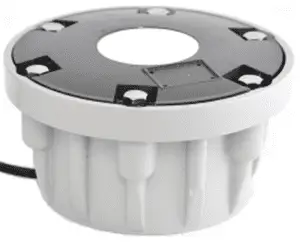
HL-50
Brand: Plusafe
Flush-mounted LED heliport perimeter light for marking TLOF and FATO boundaries with omnidirectional illumination; Prices start at $485.
The low-profile design extends only approximately 15 mm above grade after installation, making the HL-50 well suited to rooftop, ground-level, helideck, and other installations where fixture projection should be minimized.
Available with AC or DC power configurations and selected control, dual-color, and NVG options. IP68 construction for exposed aviation environments. View HL-50 Specifications | Request Project Pricing | Call 1-844-533-7767 for application assistance.

HL-51
Brand: Plusafe
LED Raised/Elevated Heliport Perimeter Light; marking edge of FATO area or TLOF area; Prices start at $425.

HL-100
Brand: Plusafe
LED 8″ Flush Heliport FATO & Aiming Point Light; omnidirectional LED fixture for FATO edge, aiming-point, flight-path alignment, and approach-lighting applications; IP68 rated.; Prices start at $450.

HL-200
Brand: Plusafe
Elevated LED floodlight designed to illuminate TLOF and helipad operating surfaces during nighttime operations while minimizing glare to pilots and ground personnel; Prices start at $450.
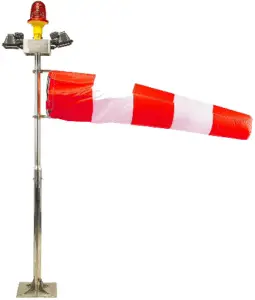
HLLW
Brand: Plusafe
Airport Windsock – The lighted vane can indicate the wind direction
External Illumination and
Internal Illumination models;
Prices start at $1400.

LP1
Brand: Plusafe
LED Raised Helipad Landing Perimeter Light; omnidirectional green perimeter light to illuminate the heliport; TLOF/FATO edge area.
Prices start at $375.

LF100
Brand: Plusafe
Portable Helipad Landing Floodlight; The lens hood reduces the glare to pilots; Optical: Color: White steady
burning. Prices start at $400.

HL-2500
Brand: Plusafe
LED Heliport Beacon. where long-range visual guidance is considered necessary, Prices start at $600.

PSL-100
Brand: Plusafe
LED 8’’ Flush Heliport
Perimeter Inset Light;
Illuminate heliport TLOF/FATO
edge area; Prices start at $450.

PAPI/CHAPI
Brand: Plusafe
PAPI/CHAPI system is unique designed to provide the pilot with
safety and accurate glide slope on final approach path to the
heliport; Prices start at $5000.

VASI 100
Brand: Plusafe
Visual Approach Slope Indicator
landing aid for helicopter flights.
The VASI-100 is an alternate solution to the PAPI; Only 1 pcs. needed; Prices start at $2200.

HL Series LED Heliport Beacon Light
Brand: Plusafe
heliport where long-range visual guidance is necessary; Prices start at $650.

HLCP2
Brand: Plusafe
helipad light system controller;
From 1 output circuit to 6;
circuits can be customized;
Prices start at $2500.

SAGA
Brand: Plusafe
Azimuth Guidance System for Approach; Please contact us for specific project;

PAL series
Brand: Plusafe
Portable Airfield and Heliport Lighting; temporary or movable lighting systems; Contact us for project pricing.

AH-HP-E1
Brand: Anhang
Helipad Elevated Light;
Infrared LED for pilots using NVG (Night Vision Goggles) option;
Ultra-high intensity LED;
Green, Yellow, White, Red, Blue;
Steady burning; Compliance;
Prices start at $200.

AH-HP-I
Brand: Anhang
flush mount helipad lights; used as an aiming point light, perimeter light of FATO / TLOF NVG (Night Vision Goggles) option; Prices start at $385.

AH-HP-F1
Brand: Anhang
Surface Heliport Flood Light; provides glare-free, uniform, surface lighting for landing and loading activities;
Prices start at $400.
AH-HP-L
Brand: Anhang
Helipad Landing Lights
Approach Flashing Light system
Prices start at $350.

AH-HP-C
Brand: Anhang
Inset bidirectional helipad light used as Center Line Light, RunwayThreshold/End Light, Runway Edge Lighting, etc. Priced at $350.
AH-HP-CHAPI
Brand: Anhang
LED CHAPI Heliport Approach
Path Indicators (CHAPI) provides the pilot an accurate glide slope on the final approach; Prices start at $1850.

AH-HP-H
Brand: Anhang
Helideck Circle-H Light; Heliport Marking light; marking “H” and the circle; Priced at $900.

AH-HP-R3
Brand: Anhang
Airport Rotating Beacon 12 RPM rotation, 36 flashes/min; One white color, another yellow color, the third is green color; Priced at $500.

AH-HP-PAPI
Brand: Anhang
Precision Approach Path Indicator
guides aircraft to approach the runway at an appropriate alt; LED colors Red/White; Priced at $2200.

AH-PA-EMC
Brand: Anhang
Portable Airfield Light temporary helipad, ideal for medivac and other emergencies. Prices start at $500.

AH-HP-G-VHF
Brand: Anhang
Heliport Light Radio Controller
permits pilots to turn on airfield
lights. utilizing their existing
aircraft VHF – offshore helipads;
Prices start at $800.

AH-HP-G
Brand: Anhang
The Heliport Light Controller turns on and off Heliport lights Compliance ICAO, FAA, CAP437 (offshore helipads); Prices start at $1250.

AH-HP-W1
Brand: Anhang
Internally Illuminated Heliport
Wind Cone; The flood light for
illumination is inside the windsock,
will rotate together with windsock.
one obstruction light on top for
aircraft warning. Compliance FAA;
Prices start at $1400.

What Is LED Heliport Lighting?
LED heliport lighting refers to aviation-specific luminaires designed to define landing areas, approach paths, perimeter boundaries, and touchdown zones for helicopter operations. These fixtures provide consistent beam distribution, high-intensity output, and environmental durability required for rooftop, ground-level, and offshore installations.
In addition to perimeter and touchdown zone lighting, certain installations may require obstruction marking using specialized aviation obstruction lighting systems, including LED aircraft warning lights for towers and elevated equipment.
Modern heliport installations combine perimeter lighting, touchdown-area illumination, windsocks, floodlighting, visual guidance, and control systems into an integrated landing environment.
Types of Helipad & Heliport Lighting Systems
Perimeter Lighting
Defines landing zone boundaries with green omnidirectional fixtures. For flush-mounted perimeter applications, the HL-50 LED heliport perimeter inset light provides low-profile green illumination for defining TLOF and FATO boundaries on rooftop, ground-level, and other heliport installations.
Proper perimeter lighting helps define the usable landing area and provides pilots with critical visual guidance during nighttime operations. See our Helipad Perimeter Lighting Guide for fixture placement, visibility, and nighttime landing considerations.
Approach Lighting
Guides pilots during descent and final alignment. Heliports with restricted approach corridors, surrounding obstacles, or defined approach headings may also require a SAGA visual azimuth guidance system to provide pilots with directional alignment cues during approach.
Where a defined flashing approach sequence is required, the AH-HP-L heliport approach flashing light provides high-intensity visual guidance for final approach and can be configured with options including NVG-compatible infrared LEDs and pilot-controlled VHF operation.
Flood & Surface Lighting
Heliport floodlights provide supplemental illumination across TLOF, FATO, loading, and operating surfaces while controlling glare for approaching pilots and ground personnel. The HL-200 LED Heliport Floodlight provides elevated white-light illumination for rooftop, ground-level, helideck, and other heliport operating surfaces.
Elevated vs. Inset Heliport Lights
Elevated perimeter lights provide visible landing-area definition and are generally easier to access for inspection and maintenance. Inset or flush-mounted fixtures minimize projection above the operating surface and can be particularly useful for rooftop, obstruction-sensitive, and other low-profile installations.
For flush perimeter marking, the HL-50 LED Heliport Perimeter Inset Light provides low-profile TLOF/FATO boundary illumination. For elevated perimeter applications, review available LED Raised Helipad Landing Perimeter Light based on the project requirements.
Core Performance Features
✔ High-intensity LED output
✔ FAA / ICAO visibility standards
✔ IP67+ weather protection
✔ Corrosion-resistant housing
✔ Low-profile aerodynamic design
✔ Long-life LED modules (50,000+ hours)
✔ Low power consumption
Typical Heliport LED Lighting Specifications
Definition Lights: High-intensity perimeter or threshold illumination
Color Standards: Aviation-specific color requirements (e.g., green for threshold, white for perimeter)
Mounting Options: Surface mounted, recessed, or elevated fixtures
Optical Control: Precise beam shaping for glare reduction and pilot guidance
Voltage & Control: Low-voltage AC or DC options with centralized control systems
Certifications / Ratings: Compliance with FAA, ICAO, or local aviation authority recommendations
Environmental Ratings: IP66+ for weather and exposure resistance.
Heliport lighting must provide consistent visual guidance while meeting applicable requirements for touchdown, perimeter, approach, and identification lighting. Review our Heliport Lighting Standards Guide for additional guidance on designing safer helicopter landing environments.
Heliport installations often incorporate surrounding outdoor lighting systems to illuminate rooftop access areas, service corridors, and nearby structures.
LED technology improves every part of a heliport lighting system. Explore how perimeter lights, approach lighting, windsocks, and other visual aids work together in our Helipad Lighting Systems Guide.
Heliport Lighting Planning & Selection
Why is precise optical control important?
Precise optical control helps minimize glare for pilots while maintaining recognizable light cues from approach distances. Well-designed optics allow lighting to appear consistent and uniform without overwhelming adjacent structures or creating distracting reflections.
How are LED heliport systems integrated with controls?
Modern heliport lighting systems often include central controllers that manage dimming, sequencing, and monitoring. Control systems may be integrated with airport management systems or operate as standalone units, depending on facility requirements.
When should heliport lighting be inspected?
Routine inspection is recommended to verify lens clarity, fixture alignment, and electrical continuity. Inspection frequency often aligns with operational cadence, weather exposure, and regulatory compliance schedules.
Learn more about aviation lighting systems and helicopter landing area illumination in our Aircraft Warning & Aviation Lighting Guide.
What determines the layout of a heliport lighting system?
Heliport lighting layouts are defined by approach paths, landing zones, and surrounding obstacles. The configuration provides visual references for pilots during approach, touchdown, and departure. Perimeter, threshold, and flood lighting are arranged to ensure proper contrast and depth perception in both day and night operations.
Well-designed heliport lighting does more than define the landing area. Proper perimeter, approach, flood, and visual guidance lighting improves nighttime visibility, helps pilots identify critical landing-zone boundaries, and supports safer helicopter operations. Explore the benefits of LED heliport lighting for commercial, hospital, industrial, and emergency landing facilities.
| Function | Color | Use |
|---|---|---|
| Threshold | Green | Landing boundary |
| Perimeter | White | Pad outline |
| Flood | White | Surface illumination |
Floodlighting provides supplemental surface illumination for TLOF/FATO areas during nighttime operations while fixture placement and optical control help minimize glare for pilots and ground personnel. The HL-200 LED heliport floodlight provides elevated white-light illumination for helipads, rooftop facilities, helidecks, winching areas, and other operational surfaces.
Applications
-
Hospital rooftop helipads
-
Trauma centers
-
Industrial plants
-
Offshore oil & gas platforms
-
Private corporate heliports
-
Government facilities
-
Emergency response facilities
FATO & Aiming Point Lighting
FATO and aiming point lights help pilots identify designated landing-area references during approach and nighttime operations. For installations requiring a low-profile fixture, the HL-100 LED flush heliport FATO and aiming point light provides omnidirectional illumination while extending only 15 mm above grade.
Heliport Lighting Buyer Questions
What heliport lights are typically required for a complete installation?
A complete heliport lighting system may include TLOF and FATO perimeter lights, approach lights, floodlights, illuminated windsocks, aiming-point lights, and control equipment. The exact configuration depends on heliport type, location, governing standard, and operational requirements.
Should I choose elevated or inset heliport lights?
Elevated fixtures are commonly used where ease of maintenance and visibility are priorities. Inset or flush-mounted fixtures are better suited to rooftop heliports and other installations where protruding fixtures could create an obstruction.
How do I know whether my heliport should follow FAA or ICAO requirements?
The applicable standard depends primarily on project location, jurisdiction, heliport classification, and local aviation authority requirements. U.S. projects generally reference FAA guidance, while international projects may follow ICAO standards or national regulations derived from them.
Can heliport lighting systems be designed for hospitals and rooftop installations?
Yes. Rooftop and hospital heliports often require low-profile or inset fixtures, reliable perimeter definition, illuminated windsocks, appropriate approach guidance, and lighting designed to minimize glare and obstruction hazards.
What information should I provide when requesting heliport lighting?
Provide the project location, heliport or helipad type, applicable FAA, ICAO, or other project requirements, TLOF/FATO dimensions when available, required fixture types, quantity, inset or elevated mounting preferences, available voltage or solar-power requirements, control requirements, and environmental conditions. Drawings, fixture schedules, photographs, or project specifications can also help identify the appropriate lighting equipment.
Specify the Heliport Lighting Equipment for Your Project
Heliport lighting should be selected around the landing-area configuration, applicable aviation requirements, perimeter and approach needs, fixture mounting, power and control requirements, environmental conditions, and required visual guidance.
Send us your available project information—including location, heliport type, TLOF/FATO dimensions, fixture requirements, quantity, voltage, mounting, controls, and applicable standards—and we’ll help identify appropriate heliport and helipad lighting equipment.
Request a Quote or call 1-844-533-7767 for heliport lighting and project assistance.
FAQs About Heliport Lights
What is LED heliport lighting used for?
LED heliport lighting is used to define helicopter landing zones, approach paths, and perimeter boundaries to ensure safe aircraft operations during day and night conditions.
Are LED helipad lights FAA compliant?
Many commercial heliport lighting systems are designed to meet FAA and ICAO visibility and intensity standards. Always confirm specification requirements for your installation.
What is the difference between elevated and flush-mount helipad lights?
Elevated fixtures are raised above the surface for easy servicing and higher visibility. Flush-mounted lights sit level with the surface and are ideal for rooftop installations where obstructions must be minimized.
Can heliport lighting be used in harsh environments?
Yes. Commercial LED heliport lights are engineered with IP67+ protection and corrosion-resistant materials for use in coastal, offshore, and industrial environments.
How long do LED helipad lights last?
Most commercial LED heliport fixtures are rated for 50,000+ operational hours, reducing maintenance frequency and operational downtime.
Do heliport lights require special installation?
Installation should follow aviation authority guidelines and local electrical codes. Coordination with aviation engineers or compliance authorities is recommended.
Stay Connected with Our Lighting Resources
Add IndustrialLightingFixtures.org as a Preferred Source on Google to see more of our lighting guides and technical resources across Google Search experiences.
Related Heliport Lighting Equipment & Resources
-
HL-50 LED Heliport Perimeter Inset Light — Review the flush-mounted perimeter fixture for low-profile TLOF and FATO boundary lighting.
-
HL-100 LED Heliport FATO & Aiming Point Light — Review flush lighting for FATO edge, aiming-point, flight-path alignment, and related applications.
-
HL-200 LED Heliport Floodlight — Explore elevated white-light illumination for TLOF and helipad operating surfaces.
-
FAA Heliport Lighting Requirements — Review FAA-oriented guidance for perimeter lighting, FATO/TLOF illumination, windsocks, approach considerations, and related heliport requirements.
-
Heliport Perimeter vs. Approach Lights — Compare perimeter boundary lighting with approach guidance when planning a heliport lighting system.