LED explosion-proof vapor-tight jelly jar fixtures are compact, sealed hazardous location luminaires engineered for environments where flammable vapors, combustible dust, moisture, or corrosive conditions may be present. Designed with reinforced housings, sealed driver compartments, and impact-resistant lenses protected by metal guards, these fixtures are built to contain internal ignition sources while preventing environmental intrusion.
Unlike standard vapor-tight lights, explosion-proof jelly jar fixtures combine hazardous location certification with environmental sealing, making them suitable for Class I, Division 1 and Division 2 areas where both explosion containment and moisture resistance are required.
These fixtures are commonly specified within comprehensive explosion-proof lighting systems for industrial facilities that require localized, low-mount illumination in classified areas.
Looking for a Compact Explosion-Proof Lighting Solution?
LED PROS can help select Class I Division 1 or Class I Division 2 vapor-tight LED fixtures for confined spaces, service areas, low mounting heights, and wet or corrosive environments. Selection can be based on hazardous-location classification, voltage, mounting method, required light output, and environmental conditions.
Request a Quote or call 844-533-7767 for product selection, pricing, and application assistance.
Explosion-Proof Vapor-Tight Fixtures
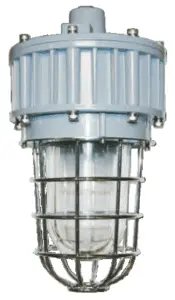
G series
Brand:
Spherical Glass Diffuser and Wire Guard, Surface, Wall, Pendant or Light Pole Mount; Up to 5400 lumens; ETL/ UL1598 / UL1598A / UL844 / CSA C22.2; Class 1 Div 1; Class 1 Div 2; 30/40W; Prices start at $345

What Is an LED Explosion-Proof Vapor-Tight Jelly Jar Light?
An LED explosion-proof vapor-tight jelly jar light is a compact hazardous location luminaire designed for wall, ceiling, or low-level mounting in classified industrial environments. The term “jelly jar” refers to the traditional rounded lens enclosure protected by a heavy-duty cage — a design originally developed for durability and impact resistance in demanding service areas.
Modern LED versions incorporate:
-
Explosion-proof enclosures engineered to contain internal sparks or heat
-
Sealed vapor-tight construction to resist moisture, dust, and washdown exposure
-
Corrosion-resistant housings for chemical or marine environments
-
Long-life LED modules to reduce maintenance in restricted-access areas
These fixtures are selected not for high-bay illumination, but for dependable, localized lighting in confined or transitional hazardous spaces.
For a complete technical overview of hazardous location classifications, certification standards, and fixture selection methodology, refer to our Explosion-Proof Lighting Standards & Selection Guide.
Where Explosion-Proof Jelly Jar Fixtures Are Used
Explosion-proof vapor-tight jelly jar fixtures are typically installed in:
-
Equipment rooms within classified facilities
-
Oil and gas processing units
-
Chemical storage and pump rooms
-
Grain handling and dust-prone facilities
-
Wastewater treatment plants
-
Marine and offshore platforms
-
Stairwells and service corridors in hazardous zones
Global oil and gas facilities often require hazardous location fixtures carrying regional certifications. Explore the differences between ATEX and UL844 hazardous location lighting standards used in industrial environments worldwide.
Because of their compact form factor, these fixtures are ideal for:
-
Low ceiling applications
-
Wall-mounted service lighting
-
Access doors and entry points
-
Washdown areas with high humidity
In many facilities, vapor-tight jelly jar lights operate alongside explosion-proof high bays, linear fixtures, and floodlights as part of a layered hazardous lighting strategy.
Core Performance Considerations
When specifying explosion-proof vapor-tight jelly jar lighting, key factors include:
-
Hazardous location rating (Class/Division or Zone classification)
-
Ingress Protection (IP65+ or higher for washdown areas)
-
Corrosion resistance for chemical or marine exposure
-
Ambient temperature rating
-
Mounting configuration (wall, ceiling, pendant)
-
Voltage compatibility (120–277V, 347V, etc.)
Proper fixture selection is determined by classification requirements and environmental exposure — not wattage alone.
Inline Buyer Q&A
How do I choose the correct explosion-proof jelly jar light?
Start with the complete hazardous-location classification for the installation, including Class and Division or Zone requirements, gas or dust group where applicable, temperature classification, and required certifications.
Then evaluate lumen output, voltage, mounting configuration, ambient temperature range, environmental ratings, fixture dimensions, and the amount of localized illumination required.
When should I use an explosion-proof jelly jar instead of a larger hazardous-location fixture?
Jelly jar fixtures are well suited to compact spaces and localized lighting applications where a high-output high bay, flood light, or linear fixture would be unnecessary or difficult to install.
Typical applications include equipment areas, access points, corridors, stairways, processing spaces, utility areas, and other locations requiring compact hazardous-location illumination.
What is the difference between explosion-proof and vapor-tight lighting?
Vapor-tight construction protects a fixture against moisture, dust, humidity, and other environmental contaminants. Explosion-proof certification addresses the additional hazards associated with ignitable gases, vapors, or combustible materials in classified locations.
A vapor-tight fixture is not automatically explosion-proof. Fixtures installed in classified hazardous locations must carry the appropriate certification for that environment.
What environmental ratings should I consider in addition to hazardous-location certification?
Consider the presence of water, washdown, dust, corrosion, chemicals, extreme temperatures, vibration, and other environmental conditions at the installation.
IP and other environmental ratings should be evaluated separately from the fixture’s hazardous-location classification to ensure the luminaire is appropriate for both the classified hazard and the physical operating environment.
What information should I provide when requesting explosion-proof jelly jar fixtures?
Provide the complete hazardous-location classification, required certification, gas or dust group if applicable, temperature classification, ambient temperature range, voltage, mounting method, required light output, environmental conditions, and fixture quantity.
Photos, existing fixture information, facility drawings, or project specifications can also help identify an appropriate lighting solution.
Get Help Selecting the Right Vapor-Tight Fixture
Explosion-proof vapor-tight jelly jar fixtures provide compact illumination for classified locations where moisture, dust, humidity, washdown conditions, or limited installation space may also be present.
Selecting the correct fixture requires matching the luminaire to both the hazardous-location classification and the physical operating environment.
👉 Request a Quote or call 1-844-533-7767 for help selecting certified lighting for your hazardous-location application.
Frequently Asked Questions
Are explosion-proof jelly jar lights suitable for wet environments?
Yes, when the fixture carries the appropriate environmental rating for the application. Vapor-tight jelly jar fixtures are designed to resist moisture and contaminants, but the required IP or other environmental rating should be verified for the specific wet-location, washdown, or high-humidity conditions of the installation.
What hazardous classifications do jelly jar fixtures support?
Models are available for Class I Division 1, Class I Division 2, and equivalent Zone classifications depending on certification.
Why use a jelly jar fixture instead of a high bay?
Jelly jar fixtures are compact and designed for localized or low-level lighting where large high-output luminaires are impractical.
Are LED jelly jar fixtures maintenance-friendly?
Yes. Long-life LED modules significantly reduce relamping frequency compared to legacy incandescent hazardous fixtures.
Stay Connected with Our Lighting Resources
Add IndustrialLightingFixtures.org as a Preferred Source on Google to see more of our lighting guides and technical resources across Google Search experiences.
Related Explosion-Proof & Hazardous Location Lighting Resources
Continue evaluating lighting for classified and demanding industrial environments with these related hazardous-location resources:
- LED Explosion-Proof Lighting — Explore certified LED lighting solutions for hazardous industrial locations, including multiple fixture types and application requirements.
- Explosion-Proof Lighting Guide — Review hazardous-location classifications, fixture selection considerations, certifications, and lighting requirements for industrial environments.
- Class 1 Division 1 LED Lighting — Learn about lighting requirements and fixture selection for locations where flammable gases or vapors may be present under normal operating conditions.
- UL844, IECEx & ATEX Certifications — Compare major hazardous-location lighting certification systems and understand how certification requirements affect fixture specification.
- LED Explosion-Proof Linear Lighting — Compare linear hazardous-location fixtures when broader or more continuous illumination is required than a compact jelly jar fixture can provide.