Solar flood lights provide powerful wide-area illumination for building security, parking areas, construction zones, and outdoor spaces without requiring electrical wiring or grid power connections. These lighting systems combine photovoltaic solar panels, high-efficiency LED flood luminaires, and rechargeable battery storage to deliver reliable nighttime lighting.
During daylight hours, solar panels collect sunlight and convert it into electrical energy that is stored in onboard batteries. When darkness falls, the stored energy powers LED flood lights that illuminate large outdoor areas with bright, wide-angle light coverage.
Because solar flood lights operate independently from electrical infrastructure, they can be installed quickly in locations where trenching power lines would be expensive or disruptive. This makes them especially useful for commercial facilities, remote job sites, and security lighting applications.
For a broader overview of off-grid solar lighting systems used in infrastructure and commercial environments, explore our Solar Lighting Systems resource:
Solar Flood Lights
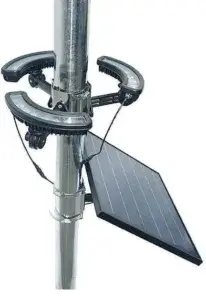
Apollo
Brand: Beyond
solar flag pole light; Unique curved appearance, Automatic Day & Night Detection; Up to 1890 Lumens; 10W; Prices start at $350.
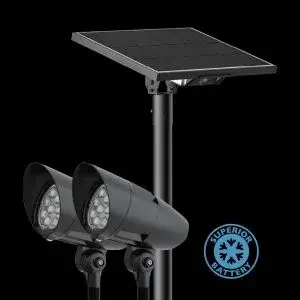
Spotline
Brand: SolTech
two piece design for signs, flags, windsocks, landscape accents.; 15/30W; Prices start at $400.
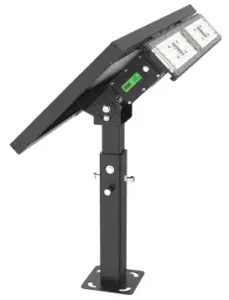
Focus
Brand: SolTech
all-in-one design, monument signs, signage, billboard signs, landscaping,
and architectural features; 10/20W; Prices start at $500.
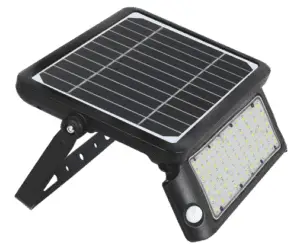
Solpad
Brand: SolTech
compact, integrated solar flood; features 3 operating modes; Photo and motion sensors, wide-angle 180° detection; battery capacity of 7200mAh; 10W. Prices start at $400.
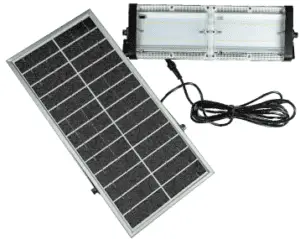
Cosmo
Brand: SolTech
Highly Versatile Design; both indoor and outdoor spaces offers a two-piece design extending the solar panel from the light module; up to 11.3 ft;
20/50W; Prices start at $500.
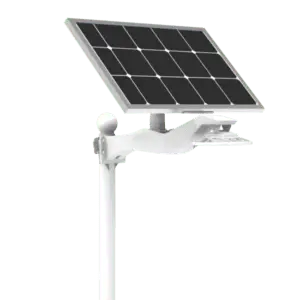
Cegonia
Brand: SolTech
Super Cold-Tolerant; 360-degree downward light disbursement; and a 270-degree rotating solar panel; 6,000 lumens; Prices start at $500.
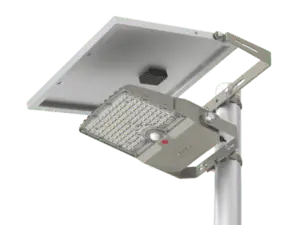
Flux
Brand: SolTech
360 adjustable solar panel; adjustable light module; round pole and wall pack applications; 6/20W; Prices start at $500.
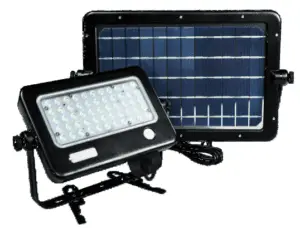
Soltab
Brand: SolTech
flexible solar floodlight; features a double-sided solar panel; Prices start at $400.
What Are Solar Flood Lights?
Solar flood lights are outdoor lighting fixtures designed to provide broad, high-intensity illumination across large areas. Unlike directional lighting fixtures that focus light on specific pathways, flood lights distribute light over wide zones to improve visibility and safety.
A typical solar flood lighting system includes:
-
photovoltaic solar panel
-
LED flood light fixture
-
rechargeable battery storage
-
charge controller
-
mounting hardware and brackets
-
optional motion sensors or timers
Solar panels generate electricity during the day and store energy in rechargeable batteries. At night, the batteries power the LED flood light to illuminate surrounding areas.
Because LED technology provides high brightness while consuming minimal power, solar flood lights can illuminate large areas efficiently using stored solar energy.
The technology used in solar flood lighting systems is often adapted for solar billboard lighting applications requiring broad sign-face illumination.
Why Solar Flood Lighting Is Widely Used
Solar flood lights are widely used for commercial and security lighting because they combine strong illumination with flexible installation.
Wide-Area Illumination
Flood lights are designed to provide broad light coverage that improves visibility across large outdoor spaces such as yards, parking areas, and construction sites.
Improved Security
Bright flood lighting helps illuminate dark areas and deter potential intruders by increasing visibility around buildings and property boundaries.
Off-Grid Installation
Solar flood lights do not require electrical wiring or trenching, allowing them to be installed quickly in locations where grid power is unavailable or costly to extend.
Outdoor solar lighting systems can last several years depending on component quality and maintenance. Learn more about performance expectations in our article on the longevity of outdoor solar lights and how long they really last.
Energy Cost Savings
Because solar lighting uses renewable energy, these systems eliminate electricity costs associated with traditional flood lighting systems.
Key Components of Solar Flood Lighting Systems
Solar Panels
Photovoltaic panels collect sunlight during the day and convert it into electricity used to power the lighting system.
LED Flood Light Fixtures
High-efficiency LED luminaires produce bright illumination while consuming minimal power, making them ideal for solar lighting systems.
Rechargeable Battery Storage
Battery systems store solar energy generated during daylight hours and power the flood lights during nighttime operation.
Lighting Control Systems
Many solar flood lights include smart lighting features such as:
-
dusk-to-dawn sensors
-
motion detection activation
-
programmable timers
-
adaptive dimming controls
These features help optimize battery usage while maintaining reliable illumination.
Applications for Solar Flood Lights
Solar flood lighting is used across many commercial and infrastructure environments.
Solar flood lighting is frequently used to illuminate billboards, monument signs, and commercial displays. For a deeper explanation of how these systems work, explore our complete guide to solar sign lights.
Building Security Lighting
Flood lights are commonly installed on buildings to illuminate entrances, loading docks, and facility perimeters.
Parking Areas and Yards
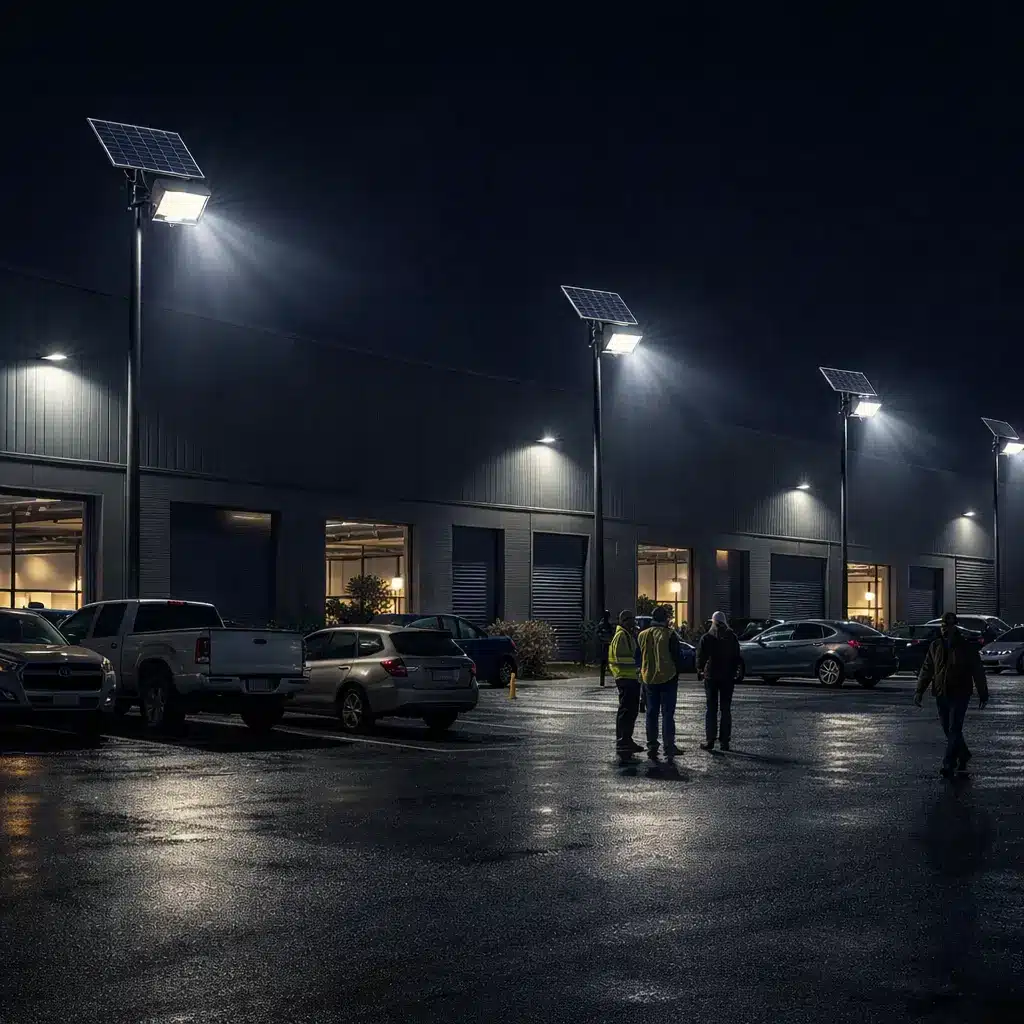
Solar flood lights provide illumination for parking lots, equipment yards, and outdoor storage areas.
Construction Sites
Portable solar flood lighting is frequently used at construction sites where electrical infrastructure may not yet be available.
Parks and Recreational Facilities
Parks departments use solar flood lighting to illuminate athletic areas, playgrounds, and outdoor gathering spaces.
Event and Temporary Lighting
Solar flood lights are often used for outdoor events and temporary installations where portable lighting is required.
Solar Flood Lighting Design Considerations
When selecting solar flood lighting systems, several factors should be evaluated.
Lighting Output
Brightness is typically measured in lumens. Flood lights designed for larger areas may require higher lumen output to provide adequate illumination.
Solar Exposure
Solar panels must receive adequate sunlight during the day to ensure reliable battery charging.
Mounting Location
Flood lights should be positioned to maximize coverage while minimizing shadows and glare.
Environmental Durability
Outdoor lighting systems must be designed to withstand rain, temperature changes, and other environmental conditions.
Inline Buyer Q&A
How do I know if solar flood lighting will work at my location?
Start with the available solar exposure, required operating hours, area to be illuminated, mounting location, desired light level, seasonal conditions, and expected nighttime usage. The solar panel, battery, LED fixture, and controls should be sized as a complete system for the project.
How bright can commercial solar flood lights be?
Available output varies significantly by system. The appropriate fixture depends on the size of the target area, mounting height and position, beam distribution, operating schedule, and required illumination rather than simply selecting the highest available lumen package.
How many nights can a solar flood light operate without full sun?
Autonomy depends on battery capacity, system load, control strategy, solar-panel sizing, weather, temperature, battery condition, and the amount of solar energy collected during preceding days. Required backup autonomy should be identified during system design.
Can solar flood lights replace hardwired flood lights?
In suitable applications, yes. Solar can be particularly useful where extending utility power would require trenching, conduit, or substantial electrical infrastructure. The site must still provide sufficient solar exposure and space for the required solar equipment.
What information should I provide for a solar flood-lighting quote?
Provide the project location, photographs, area dimensions, mounting location and height, desired operating schedule, required illumination, potential solar-panel locations, and any concerns about shading or seasonal weather.
Design the Solar System Around the Lighting Requirement
A commercial solar flood light is more than an LED fixture connected to a panel and battery. Reliable performance depends on properly coordinating the lighting load, solar array, battery storage, controls, mounting configuration, available sunlight, and required operating schedule.
Our lighting specialists can help evaluate:
- Commercial properties and facilities
- Building perimeters
- Equipment and storage yards
- Remote work areas
- Parks and recreation areas
- Construction and temporary sites
- Sign and feature lighting
- Areas where utility power is difficult or costly to extend
- Required operating schedules
- Solar-panel placement and available sunlight
- Battery-storage requirements
- Motion sensing, dimming, and other controls
- New off-grid lighting projects
For project assistance, have the installation location, photographs, approximate area dimensions, mounting height, operating schedule, and desired illumination available when possible.
Call 1-844-533-7767 to discuss your commercial solar flood-lighting project.
FAQs About Solar Flood Lights
How do solar flood lights work?
Solar flood-lighting systems use photovoltaic panels to generate electricity during daylight hours. That energy is stored in batteries and used to operate LED fixtures after dark according to the system’s programmed control strategy.
Are solar flood lights bright enough for commercial applications?
They can be. Commercial solar flood-lighting systems are available in different output levels and configurations. Suitability depends on the required illumination, area dimensions, mounting geometry, operating schedule, solar resource, battery capacity, and overall system design.
Can solar flood lights be used for perimeter or security lighting?
Solar flood lights can improve nighttime visibility around perimeters, entrances, equipment areas, and other monitored locations. Effective security lighting also depends on fixture placement, glare control, shadows, cameras, site design, and the facility’s broader security strategy.
Do solar flood lights require electrical wiring?
Solar flood-lighting systems do not require a connection to utility power when designed as fully off-grid systems. However, system components may still require electrical cabling between the solar panel, battery, controller, and LED fixture depending on the system configuration.
Do solar flood lights work during cloudy weather?
Yes, properly designed systems can continue operating when solar production is reduced, using energy stored in the battery. The amount of available backup operation depends on battery capacity, system load, solar-panel sizing, weather conditions, controls, and previous solar charging.
How much sunlight do solar flood lights need?
The required solar exposure depends on the lighting load, operating schedule, panel capacity, battery storage, geographic location, seasonal conditions, and system efficiency. Shading from buildings, trees, signs, or other structures should be considered during planning.
Can solar flood lights operate all night?
Some systems can be designed for dusk-to-dawn operation, while others use reduced output, scheduled operation, or motion activation to manage energy consumption. The appropriate operating strategy depends on the application and available solar and battery capacity.
Can solar flood lights use motion sensors?
Yes. Many commercial solar systems can incorporate motion sensing or programmed dimming. Reducing output when full illumination is unnecessary can extend available battery capacity and help optimize system performance.
Where are solar flood lights typically installed?
Applications include building perimeters, remote facilities, equipment yards, construction sites, parks, recreation areas, signs, pathways, storage areas, and other locations where directional outdoor illumination is needed and extending utility power may be impractical.
Are solar flood lights suitable for temporary construction sites?
They can be useful for some temporary and remote work areas because utility infrastructure may not be required. Suitability depends on required illumination, operating hours, relocation needs, available sunlight, mounting arrangements, and applicable jobsite requirements.
How are solar flood lights sized for a project?
System sizing considers the required lighting output and operating hours along with solar availability, panel capacity, battery storage, fixture efficiency, controls, environmental conditions, and desired backup autonomy.
How long do solar flood-light batteries last?
Battery service life varies with battery chemistry, depth of discharge, charge cycles, temperature, system sizing, operating conditions, and battery-management strategy. Manufacturer specifications should be reviewed for the system being considered.
Stay Connected with Our Lighting Resources
Add IndustrialLightingFixtures.org as a Preferred Source on Google to see more of our lighting guides and technical resources across Google Search experiences.

Related Solar Lighting Systems
- Solar Lighting — Explore the broader range of off-grid commercial solar lighting systems and the solar-panel, battery, fixture, and control considerations involved in system selection.
- Solar Parking Lot Lights — Review off-grid lighting systems designed for parking facilities and other large commercial outdoor areas.
- Solar Street Lights — Explore solar-powered roadway and street-lighting systems for municipal, commercial, campus, and infrastructure applications.
- Solar Wall Pack Lights — Review building-mounted solar lighting for entrances, exterior walls, service areas, and locations where extending utility power may be difficult.
- Solar Billboard Lighting — Explore off-grid lighting systems designed specifically for billboards and outdoor advertising where grid-power installation may be impractical.
- Solar Bollard Lights — Review solar-powered low-level lighting for pathways, pedestrian areas, landscapes, campuses, and commercial properties.