Hazardous Location Classifications, Certifications & Fixture Selection for Industrial Facilities
What Is Explosion-Proof Lighting?
Explosion-proof lighting refers to luminaires engineered for installation in hazardous environments where flammable gases, vapors, combustible dust, or ignitable fibers may be present. Unlike conventional lighting fixtures, explosion-proof systems are designed to contain internal electrical arcs, sparks, or thermal events, preventing ignition of surrounding atmospheres.
These specialized fixtures use reinforced housings, sealed electrical compartments, and certified construction methods to ensure safe operation in classified industrial environments. Explosion-proof LED lighting plays a critical role in maintaining operational continuity while protecting personnel, infrastructure, and regulatory compliance.
Explosion-proof lighting systems are commonly deployed across oil and gas facilities, chemical processing plants, manufacturing environments, marine platforms, grain handling operations, and energy infrastructure.
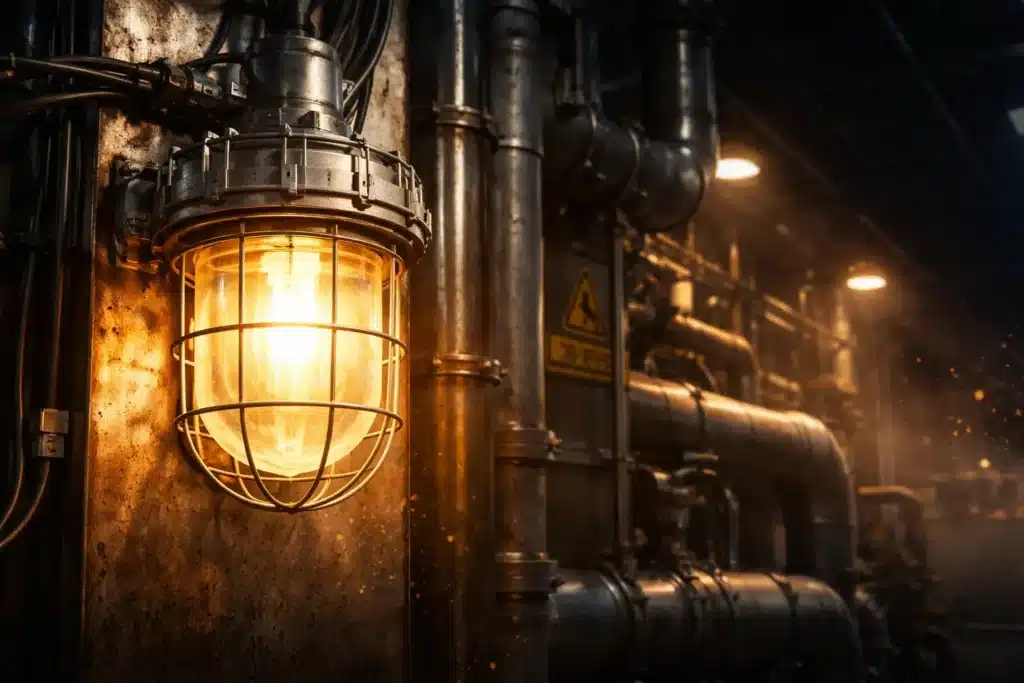
Explosion-proof lighting systems installed in hazardous industrial environments must comply with certified protection standards.
Understanding Hazardous Location Classifications
Hazardous environments are categorized according to the likelihood and type of explosive material present. Proper classification determines which lighting equipment may be safely installed.
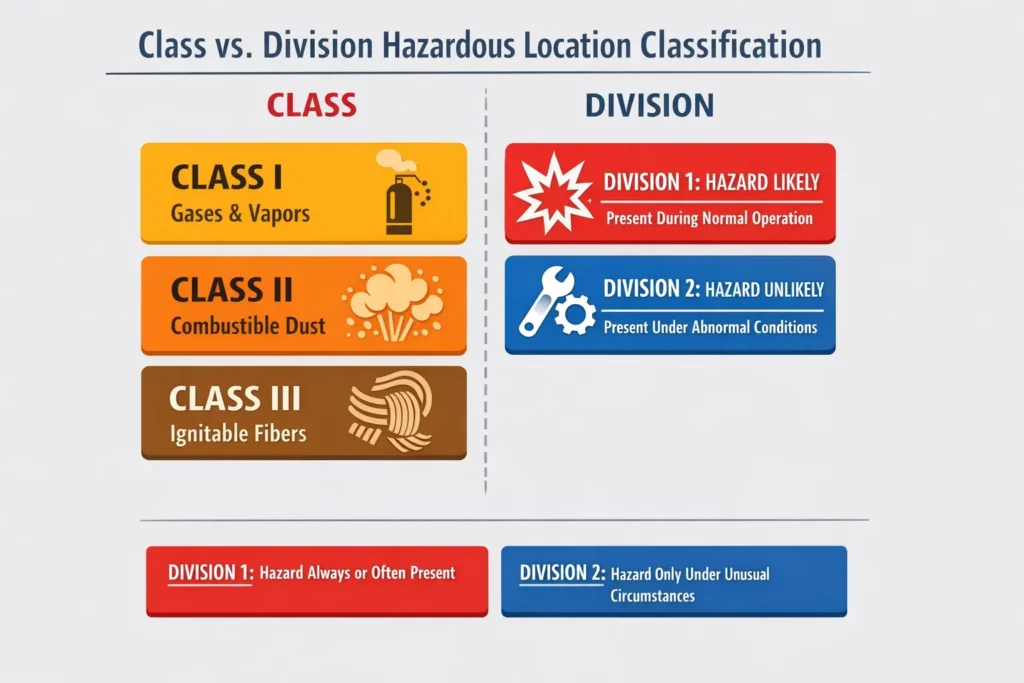
Class / Division System (North America)
Class I — Flammable Gases or Vapors
Examples: refineries, fuel storage, solvent processing
-
Division 1: Hazard present during normal operation
-
Division 2: Hazard present only under abnormal conditions
Explore compliant solutions for:
-
Class 1 Division 1 hazardous environments
-
Class 1 Division 2 classified industrial locations
Class II — Combustible Dust
Examples: grain facilities, food processing, metal dust operations
Class III — Ignitable Fibers
Examples: textile manufacturing and woodworking facilities
Zone Classification System (International)
Used globally under ATEX and IECEx frameworks:
| Zone | Risk Level |
|---|---|
| Zone 0 | Continuous explosive atmosphere |
| Zone 1 | Likely during normal operation |
| Zone 2 | Infrequent or abnormal presence |
| Zone 20–22 | Combustible dust environments |
International projects frequently require ATEX-certified explosion-proof lighting aligned with these zone definitions.
Explosion-Proof Certification Standards
Lighting fixtures must comply with recognized certification systems verifying safe operation in hazardous environments.
| Certification | Region | Purpose |
|---|---|---|
| UL844 | United States | Class & Division compliance |
| ATEX | European Union | Equipment for explosive atmospheres |
| IECEx | International | Global hazardous certification |
| CSA | Canada | Electrical safety validation |
Certification confirms that fixtures prevent ignition through enclosure strength, thermal limitation, and controlled electrical design.
Explosion-Proof Fixture Types by Application
Hazardous facilities rarely rely on a single luminaire format. Instead, lighting systems combine multiple fixture types to support operational tasks.
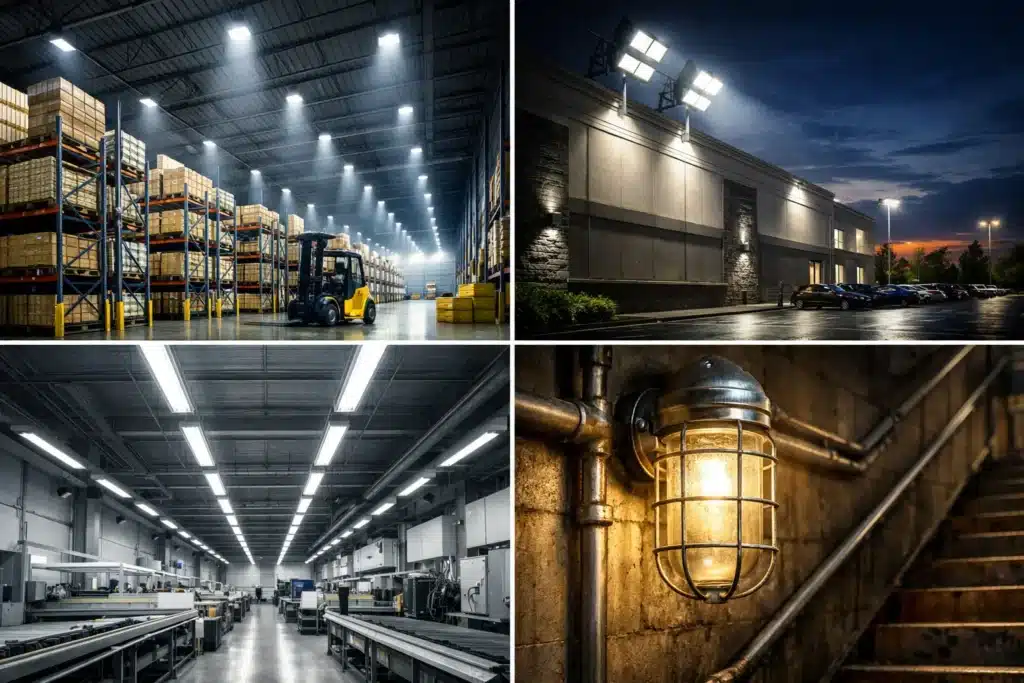
High-Bay Lighting
Used in tall processing halls and industrial production spaces requiring wide overhead illumination.
Facilities operating in classified environments typically specify explosion-proof high bay lighting designed for elevated mounting heights and wide optical distribution.
Linear Lighting
Ideal for corridors, walkways, conveyor systems, and equipment rows needing continuous coverage.
In hazardous locations, engineers often deploy explosion-proof linear lighting systems to maintain uniform illumination across extended runs.
Flood Lighting
Provides wide-area illumination across tank farms, yards, loading zones, and exterior process areas.
For exterior classified zones, explosion-proof flood lighting fixtures deliver high-output, glare-controlled coverage.
Street & Area Lighting
Installed along hazardous roadways and facility circulation routes.
Perimeter access routes frequently incorporate explosion-proof street lights rated for classified environments.
Vapor-Tight Jelly Jar Fixtures
Compact fixtures used in stairwells, maintenance rooms, and confined service locations.
Service areas and transitional spaces commonly rely on explosion-proof vapor-tight jelly jar fixtures for localized illumination.
Explosion-Proof Exit Signs
Life-safety luminaires ensuring visible emergency egress within classified environments.
Emergency pathways must integrate explosion-proof exit signs compliant with hazardous location and life-safety standards.
Helideck & Aviation Lighting
Used for helicopter landing areas within hazardous industrial facilities.
Offshore and refinery installations require certified LED helideck explosion-proof lighting systems to meet both aviation and hazardous location criteria.
How Engineers Select Explosion-Proof Lighting
Proper fixture selection involves more than brightness. Engineers evaluate multiple operational and environmental factors.
Hazard Classification
Fixture certification must match the specific gas, vapor, or dust classification present.
Mounting Height & Coverage
Higher mounting heights require increased lumen output and optimized optical distribution.
Temperature Class (T-Rating)
Fixtures must maintain surface temperatures below ignition thresholds of surrounding substances.
Environmental Exposure
Consider corrosion, vibration, washdown conditions, salt spray, or extreme temperatures.
Maintenance Accessibility
Reliable LED systems reduce maintenance entry into hazardous zones, improving safety.
Compliance Workflow for Hazardous Lighting Projects
Industrial lighting design typically follows a structured process:
-
Hazardous area classification performed
-
Applicable certification standard identified
-
Fixture type selected by application
-
Photometric layout completed
-
Installation verified against compliance codes
-
Inspection and commissioning performed
Following this workflow ensures both operational safety and regulatory acceptance.
LED Advantages in Explosion-Proof Applications
Modern LED technology significantly improves hazardous location lighting performance:
-
Reduced heat generation lowers ignition risk
-
Long service life minimizes maintenance exposure
-
Instant start performance in extreme temperatures
-
Improved optical control and uniformity
-
Lower energy consumption across continuous operations
These advantages make LED systems the preferred solution for modern hazardous facilities.
Frequently Asked Questions
What makes a light explosion proof?
Explosion-proof fixtures contain internal ignition sources and prevent sparks or heat from igniting surrounding hazardous atmospheres.
What is the difference between Class/Division and Zone systems?
Class/Division is primarily used in North America, while Zone classifications are applied internationally under ATEX and IECEx standards.
Can standard LED fixtures be used in hazardous areas?
No. Only certified explosion-proof lighting approved for the specific classification may be installed.
When is Class 1 Division 1 lighting required?
When flammable gases or vapors are present during normal operating conditions.
Is ATEX required in the United States?
ATEX is typically required for EU or internationally regulated projects but may be specified for multinational facilities.
How long must emergency explosion-proof exit signs operate?
Most life-safety standards require a minimum of 90 minutes of battery backup operation.
Selecting the Right Explosion-Proof Lighting System
Choosing compliant lighting requires balancing hazard classification, operational needs, environmental exposure, and long-term reliability. Properly engineered explosion-proof LED lighting improves safety, reduces downtime, and supports regulatory compliance across demanding industrial environments.
For application-specific solutions, explore our full range of explosion-proof LED lighting systems engineered for hazardous locations worldwide.