
LED in-ground lighting provides discreet, flush-mounted illumination for landscapes, walkways, architectural elements, and commercial outdoor spaces. Installed directly into the ground surface, these fixtures remain nearly invisible during the day while delivering dramatic lighting effects at night.
As part of a comprehensive Outdoor LED Lighting Solutions strategy, inground fixtures help designers highlight trees, columns, facades, and pathways while maintaining a clean architectural appearance.
Unlike traditional surface-mounted fixtures, recessed in-ground luminaires allow light to emerge from ground level, creating upward illumination that enhances depth, texture, and visibility throughout outdoor environments.
LED in-ground luminaires are often integrated with other exterior lighting systems such as pathway lights, flood lights, and architectural fixtures. For a broader overview of exterior fixture types and lighting design strategies, see our Outdoor LED Lighting Guide
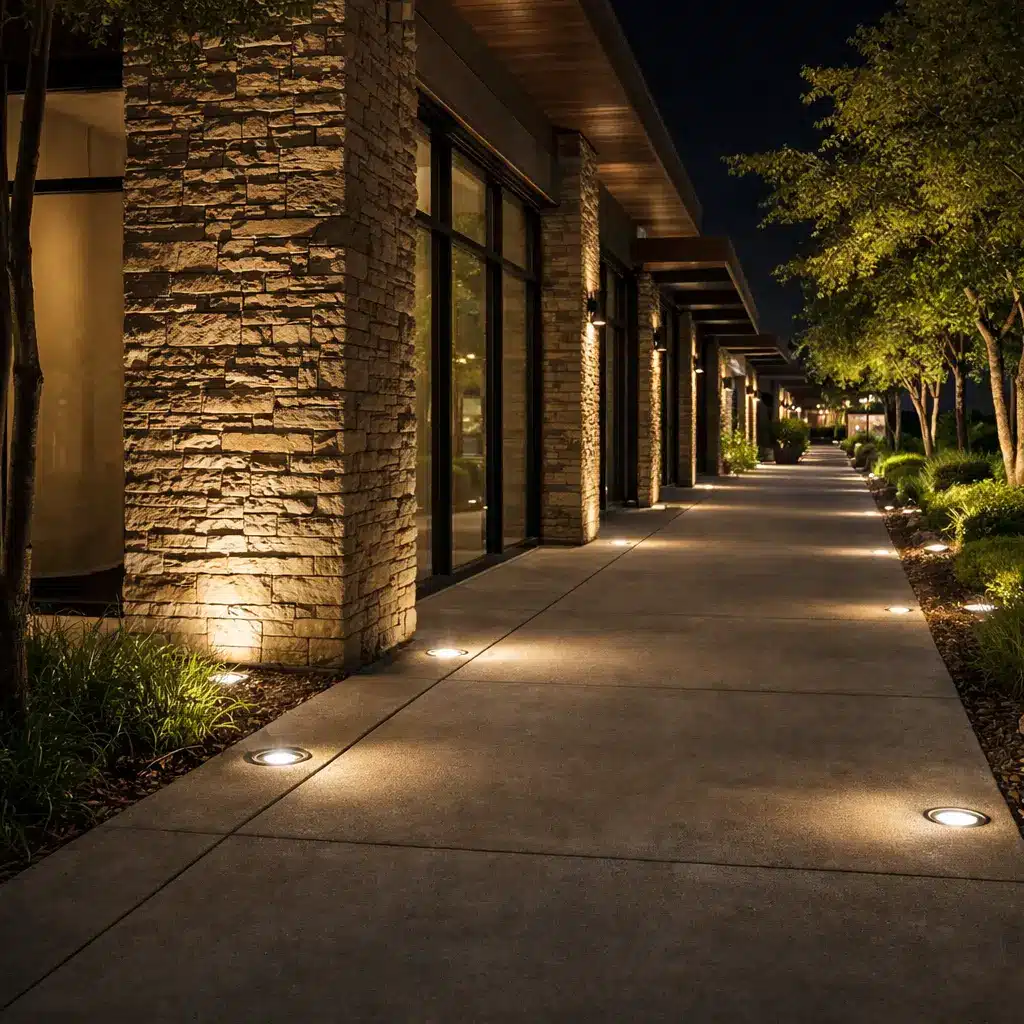
What Is LED In-Ground Lighting?
LED in-ground lighting—often referred to as well lights—consists of recessed luminaires installed flush with the surrounding surface such as soil, concrete, stone, or decking. These fixtures direct light upward or outward to illuminate landscape features, architectural elements, and pedestrian pathways.
Because the fixture housing is recessed into the ground, the light source remains subtle and unobtrusive while still providing effective illumination. This design makes inground fixtures popular for uplighting trees, highlighting building facades, guiding pathways, and accenting landscape features.
Modern LED inground luminaires typically incorporate sealed housings, tempered glass lenses, and corrosion-resistant materials such as stainless steel or die-cast aluminum. These features allow them to withstand outdoor environments, including moisture, soil contact, and pedestrian traffic.
LED in-ground fixtures are often used together with LED Flood Lights for broader area illumination and LED Wall Pack Lights for building perimeter security lighting.
When Is In-Ground Lighting Used?
LED inground fixtures are commonly specified for projects requiring low-profile architectural lighting with minimal visual impact.
Typical applications include:
• Tree uplighting in landscaped plazas and commercial campuses
• Architectural façade illumination
• Pathway and walkway edge lighting
• Driveway and entrance lighting
• Monument and signage illumination
• Courtyard and public plaza lighting
• Poolside and water feature accent lighting
Inground luminaires are particularly effective when designers want the lighting effect to be visible without seeing the fixture itself.
Key Performance Features of LED In-Ground Lighting
Flush Architectural Integration
Fixtures sit level with surrounding surfaces, maintaining clean landscape design while delivering powerful uplighting effects.
Weather-Resistant Construction
Outdoor inground luminaires commonly feature IP65–IP68 ingress protection, allowing them to operate reliably in rain, irrigation exposure, and wet conditions.
High Durability
Robust housings constructed from stainless steel or aluminum protect the fixture from soil pressure, foot traffic, and environmental wear.
Energy-Efficient LED Technology
LED light sources consume significantly less energy while delivering long service life and consistent brightness for outdoor lighting installations.
Directional Beam Control
Available optics allow designers to create narrow uplighting for trees, wide beams for architectural walls, or pathway illumination.
Typical Technical Specifications
| Specification | Typical Range |
|---|---|
| Wattage | 3W – 36W |
| Voltage | 12V / 24V / 120-277V |
| Lumen Output | 300 – 4000 lumens |
| Color Temperature | 2700K / 3000K / 4000K / RGB |
| Beam Angles | 10° – 60° |
| IP Rating | IP65 – IP68 |
| Housing Material | Stainless steel / die-cast aluminum |
| Lifespan | 50,000+ hours |
Available LED In-Ground Lighting

COB LED Inground Light
Brand:
features COB LED; a unique structure; waterproof; premium, artistic design, wide application; IP67; aluminum + stainless steel cover + tempered glass lens; Beam angles: 15°/30°/45°/60°; available in 10W/20W/30W; Prices start at $200.
In-Ground vs Flood vs Landscape Uplighting
| Lighting Type | Fixture Position | Best For | Visibility of Fixture | Typical Applications |
|---|---|---|---|---|
| LED In-Ground Lights | Recessed flush with ground | Architectural and landscape uplighting | Very low | Trees, columns, monuments, facades |
| LED Flood Lights | Surface mounted on walls or poles | Wide-area illumination | Visible | Parking lots, building exteriors, security lighting |
| Landscape Uplights | Ground mounted above surface | Accent lighting and plant illumination | Visible but discreet | Gardens, shrubs, small trees |
| Pathway Lights | Short post or bollard | Pedestrian navigation | Visible | Walkways, courtyards, landscape paths |
Design Tip:
Many professional lighting projects combine these fixture types. For example, LED in-ground lights highlight architectural features, while LED flood lights provide wide-area illumination for parking and security.
Common Commercial Applications
Landscape Accent Lighting
Used to highlight trees, shrubs, sculptures, and planting beds.
Architectural Facade Lighting
Creates dramatic upward lighting effects for building exteriors.
Pathway and Plaza Lighting
Guides pedestrian movement in courtyards, plazas, and commercial walkways.
Driveway and Entry Lighting
Provides low-profile illumination along vehicle approaches and entrances.
Monument and Sign Lighting
Illuminates building signage, monuments, and feature structures.
FAQs
What is LED in-ground lighting?
LED in-ground lighting refers to recessed outdoor luminaires installed flush with the ground surface. Often called well lights, these fixtures direct light upward to illuminate trees, architectural facades, columns, signage, and landscape features while remaining visually discreet during the day.
Where are LED in-ground lights typically used?
LED in-ground lights are commonly used in:
-
Commercial plazas
-
Building entrances
-
Landscape gardens
-
Architectural facade lighting
-
Tree uplighting
-
Pathway and walkway illumination
-
Monument and signage lighting
Because the fixture housing is recessed below grade, the lighting effect becomes the visual focus rather than the fixture itself.
Are LED in-ground lights waterproof?
Most commercial LED in-ground fixtures are engineered with high ingress protection ratings such as IP65, IP67, or IP68, allowing them to operate in wet environments including rain, irrigation zones, and landscaped areas. Durable housings and sealed lenses help protect internal components from moisture, dirt, and debris.
Can LED in-ground lights support foot traffic?
Yes. Many professional-grade in-ground luminaires are designed with load-bearing housings and tempered glass lenses that can withstand pedestrian traffic. Some models are also rated for light vehicle loads when installed in driveways or paved surfaces.
What beam angles are available for in-ground lighting?
LED in-ground fixtures are available with several beam angles depending on the lighting effect required:
-
Narrow beam (10°–20°) for tall trees and columns
-
Medium beam (25°–40°) for general landscape uplighting
-
Wide beam (45°–60°) for building facades and walls
Selecting the appropriate beam angle ensures effective illumination while minimizing glare.
Upgrade Your Outdoor Lighting with Professional LED Solutions
Whether illuminating landscapes, highlighting architectural features, or enhancing pedestrian pathways, LED in-ground lighting provides a discreet and durable solution for commercial outdoor environments.
Explore our full selection of commercial-grade LED lighting fixtures designed for reliability, performance, and long-term energy efficiency.