Worker safety is the primary reason hazardous location classifications exist. In environments where flammable gases or vapors may be present during normal operations, lighting systems must be specifically designed and certified to prevent ignition sources from creating catastrophic incidents.
Class 1 Division 1 (C1D1) environments represent some of the most demanding industrial conditions, requiring lighting fixtures that meet strict safety and certification requirements. Understanding these requirements helps facility owners, engineers, safety managers, and maintenance personnel select compliant lighting systems that protect workers and support operational reliability.
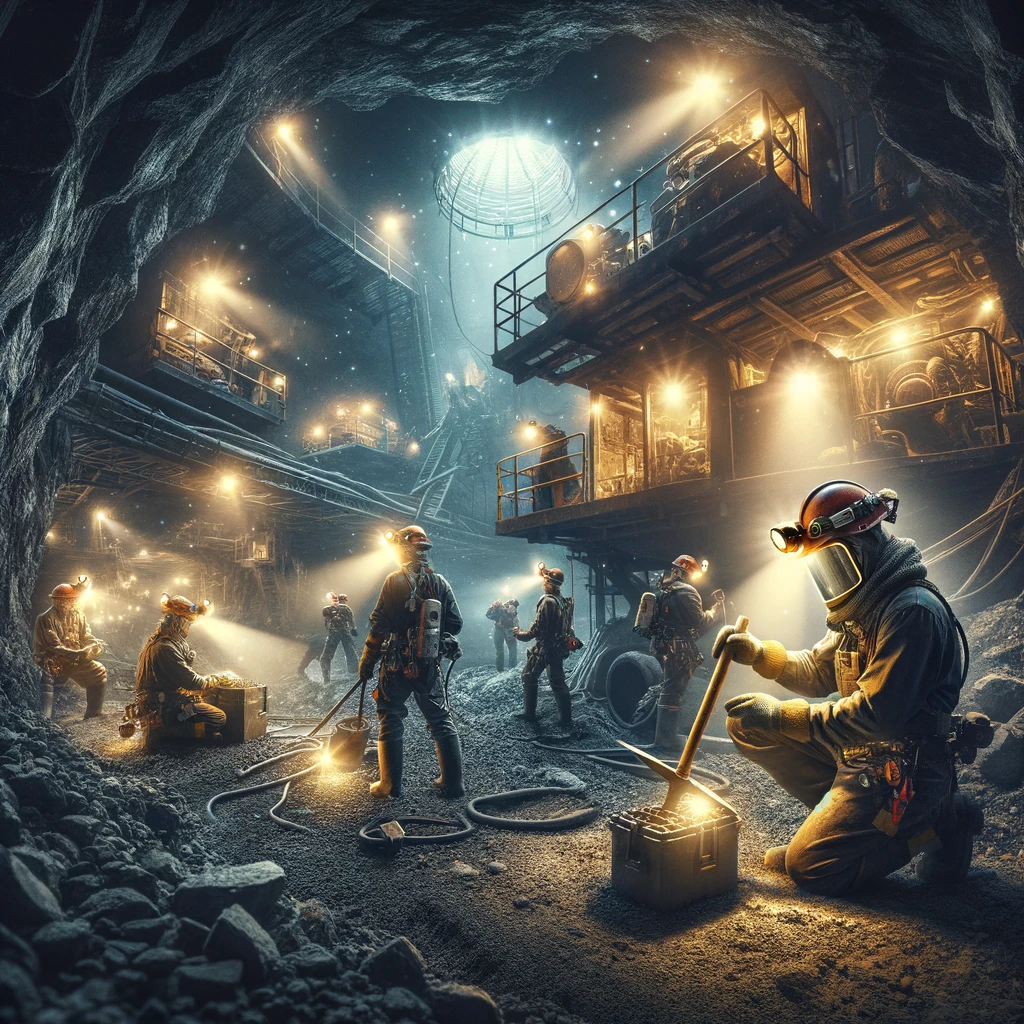
Class 1 Division 1 lighting fixtures help protect personnel by safely operating in areas where flammable gases or vapors may be present during normal operations.
Need Class I Hazardous-Location LED Lighting?
LED PROS can help identify Class I Division 1 and Class I Division 2 LED lighting based on the hazardous-location classification, gas group, temperature code, environmental conditions, mounting requirements, and application.
Explore Class I Division 1 Lighting | Explore Class I Division 2 Lighting | Request a Quote
Or call 1-844-533-7767 for hazardous-location lighting assistance.
What Is a Class 1 Division 1 Environment?
Class 1 Division 1 locations contain flammable gases or vapors that may be present continuously, frequently, or periodically during normal operating conditions.
Examples include:
- Oil and gas production facilities
- Refineries
- Fuel storage terminals
- Chemical processing plants
- Solvent handling operations
- Petrochemical facilities
- Aviation fueling areas
- Offshore drilling platforms
Because explosive atmospheres may exist during normal operations, equipment installed in these areas must meet the highest hazardous location protection requirements.
For a complete overview of hazardous location classifications, certifications, and standards, explore our Hazardous Location Lighting Guide.
Why Worker Protection Is Critical
Workers operating within hazardous environments face risks that are not present in conventional industrial facilities.
Potential hazards include:
- Vapor ignition
- Gas explosions
- Flash fires
- Equipment failures
- Process disruptions
- Facility shutdowns
Properly certified lighting helps eliminate one potential ignition source within these environments.
Looking for a detailed comparison of hazardous area ratings? Review Class I Division 1 vs Division 2 Lighting to understand the differences between these commonly specified environments.
Class I Division 1 vs Division 2 Lighting Equipment
Once the hazardous-location classification has been established, lighting equipment must be selected for the applicable Division and operating conditions.
Class I Division 1 LED Lighting is designed for locations where ignitable concentrations of flammable gases or vapors may exist under normal operating conditions or under other conditions defined by the applicable classification requirements.
Class I Division 2 LED Lighting applies to locations where hazardous concentrations are not normally present under ordinary operating conditions but may occur under abnormal conditions such as equipment failure, leakage, or process disruption.
Review lighting equipment specifically rated for the Division established for the project before narrowing the selection by fixture type and application.
Understanding the Primary Safety Objective
A common misconception is that explosion proof fixtures prevent explosions from occurring.
In reality, explosion proof fixtures are designed to:
- Contain internal ignition events
- Prevent flame propagation
- Limit external temperatures
- Protect surrounding atmospheres
- Reduce ignition risk
This protective design helps maintain safe operation even if an internal fault occurs.
Key Class 1 Division 1 Lighting Safety Requirements
Certified Hazardous Location Construction
Fixtures must be specifically certified for Class 1 Division 1 use.
Typical certifications include:
- UL844
- CSA
- ETL
- ATEX
- IECEx
Certification markings should clearly indicate approved hazardous location ratings.
Proper Hazardous Location Classification
Before selecting lighting equipment, facilities must accurately classify the environment.
Important factors include:
- Type of hazardous material
- Frequency of exposure
- Ventilation conditions
- Process equipment locations
- Potential leak sources
Improper classification may result in selecting inadequate equipment.
Need a foundational understanding of hazardous environments? Visit What Is Class 1 Division 1 LED Lighting to learn how hazardous locations are classified and where these requirements apply.
Temperature Code Compliance
Surface temperature control is a critical safety requirement.
Fixtures are assigned temperature codes indicating maximum operating temperatures.
| Temperature Code | Maximum Surface Temperature |
|---|---|
| T1 | 450°C |
| T2 | 300°C |
| T3 | 200°C |
| T4 | 135°C |
| T5 | 100°C |
| T6 | 85°C |
The selected fixture must remain below the ignition temperature of hazardous materials present within the environment.
Typical Safety Features of C1D1 Lighting
Modern Class 1 Division 1 fixtures commonly include:
- Heavy-duty cast aluminum housings
- Threaded flame paths
- Sealed electrical compartments
- Reinforced lenses
- Corrosion-resistant finishes
- Impact-resistant construction
- Vibration-resistant components
- High ingress protection ratings
These features help maintain safe operation under demanding industrial conditions.
Common Class I Division 1 Lighting Fixture Types
Once the hazardous-location classification and certification requirements are established, the appropriate fixture type depends on the application, mounting height, coverage requirements, environment, and required light levels.
Explosion-Proof Linear Lighting can serve process lines, equipment areas, corridors, walkways, and lower-profile industrial installations.
Explosion-Proof High Bay Lighting is suited to processing and production areas requiring higher mounting heights and greater light output.
Explosion-Proof Flood Lighting provides directional illumination for tank farms, loading areas, process equipment, industrial yards, and other outdoor hazardous locations.
For coating and finishing environments, Explosion-Proof Paint Spray Booth Lighting provides fixture options for classified areas associated with paint spray and industrial finishing operations.
Common Hazardous Materials Found in C1D1 Locations
| Material | Typical Industry |
| Hydrogen | Chemical Processing |
| Methane | Natural Gas Facilities |
| Propane | Oil & Gas |
| Gasoline Vapors | Fuel Storage |
| Ethanol Vapors | Biofuel Processing |
| Solvents | Chemical Manufacturing |
Each material presents unique ignition characteristics requiring proper fixture selection.
Safe Installation Practices
Even certified fixtures require proper installation.
Best practices include:
- Following applicable electrical codes
- Using approved conduit systems
- Maintaining enclosure integrity
- Following manufacturer instructions
- Conducting routine inspections
- Verifying certification markings
Improper installation can compromise fixture performance and compliance.
Benefits of LED Technology for Worker Safety
Modern LED hazardous location fixtures provide several safety advantages.
Reduced Maintenance
Fewer maintenance interventions reduce worker exposure within hazardous environments.
Improved Visibility
Higher quality illumination helps improve task visibility and situational awareness.
Lower Operating Temperatures
LED technology often operates cooler than older HID technologies.
Instant Startup
LED fixtures achieve full output immediately without warm-up delays.
Increased Reliability
Long operating life supports continuous facility operations.
Common Worker Safety Mistakes
Using Non-Certified Fixtures
Standard industrial fixtures are not suitable for Class 1 Division 1 environments.
Ignoring Hazardous Location Ratings
Not all explosion proof fixtures are approved for every hazardous classification.
Overlooking Temperature Codes
Temperature limitations are frequently misunderstood during equipment selection.
Delaying Fixture Replacement
Damaged or improperly maintained fixtures should be addressed promptly.
Worker Safety Inspection Checklist
| Inspection Item | Verify |
| Hazardous Location Rating | Yes |
| Certification Markings Present | Yes |
| Temperature Code Matches Application | Yes |
| Fixture Housing Intact | Yes |
| Lens Condition Acceptable | Yes |
| Conduit Connections Secure | Yes |
| Maintenance Records Current | Yes |
Routine inspections help maintain compliance and support worker safety.
Inline Buyer Q&A
Why is Class 1 Division 1 considered a higher-risk environment?
Because flammable gases or vapors may be present during normal operating conditions.
Can standard industrial LED fixtures be used in C1D1 areas?
No. Fixtures must be specifically certified for the hazardous location classification.
Are LED explosion proof fixtures safer than older technologies?
Certified LED fixtures often provide improved reliability, lower maintenance, and better visibility.
How often should hazardous location lighting be inspected?
Inspection frequency depends on facility procedures, environmental conditions, and regulatory requirements.
How do I know whether I need Class I Division 1 or Division 2 lighting?
The hazardous-location classification should be established from the conditions within the specific area and applicable electrical requirements before lighting equipment is selected. If the location has already been classified, provide the Class, Division, gas group, temperature code, and any required certifications when requesting fixtures.
What information should I provide when requesting Class I hazardous-location lighting?
Provide the Class and Division, gas group, temperature code, fixture type, quantity, voltage, mounting requirements, ambient conditions, required certifications, and application details when available. Drawings, fixture schedules, photographs, or information about existing equipment can also help evaluate appropriate LED lighting options.
Specify the Right Class 1 Division 1 LED Lighting
Class I Division 1 lighting should be selected for the specific hazardous-location classification, gas group, temperature code, operating environment, fixture application, mounting requirements, and required certifications.
Send us your available project information—including classification, fixture type, quantity, voltage, mounting, environmental conditions, and certification requirements—and we’ll help identify appropriate Class I Division 1 LED lighting options.
Request a Quote or call 1-844-533-7767 for C1D1 product-selection and application assistance.
FAQ
What does Class 1 Division 1 mean?
It identifies locations where flammable gases or vapors may be present during normal operating conditions.
Why are special lighting fixtures required?
Standard fixtures may create ignition sources capable of igniting hazardous atmospheres.
What certification should I look for?
Many North American installations utilize UL844-certified fixtures.
Are all hazardous locations Class 1 Division 1?
No. Hazardous locations may be classified as Class I, II, or III and Division 1 or Division 2 depending on conditions.
Can explosion proof fixtures improve workplace safety?
Properly selected and installed fixtures play an important role in supporting overall facility safety programs.
Stay Connected with Our Lighting Resources
Add IndustrialLightingFixtures.org as a Preferred Source on Google to see more of our lighting guides and technical resources across Google Search experiences.
Related Class I Hazardous-Location Lighting
-
Class I Division 1 LED Lighting — Explore certified lighting equipment for Class I Division 1 hazardous locations.
-
Class I Division 2 LED Lighting — Review lighting equipment for Class I Division 2 hazardous locations.
-
Explosion-Proof Linear Lighting — Explore linear fixtures for process lines, equipment areas, walkways, corridors, and other hazardous-location applications.
-
Explosion-Proof High Bay Lighting — Review higher-output fixtures for processing, production, and higher-mounting applications.
-
Explosion-Proof Flood Lighting — Explore directional lighting for process equipment, tank farms, loading areas, yards, and outdoor hazardous locations.