Class 1 Division 1 LED lighting is specifically designed and certified for hazardous locations where flammable gases or vapors are present under normal operating conditions. These fixtures are engineered to prevent sparks, arcs, or excessive temperatures from igniting explosive atmospheres and are commonly used in oil and gas facilities, chemical plants, fuel storage terminals, refineries, and industrial processing environments.
Understanding Class 1 Division 1 (C1D1) requirements is critical for maintaining facility safety, meeting regulatory requirements, and selecting the proper hazardous location lighting solution.
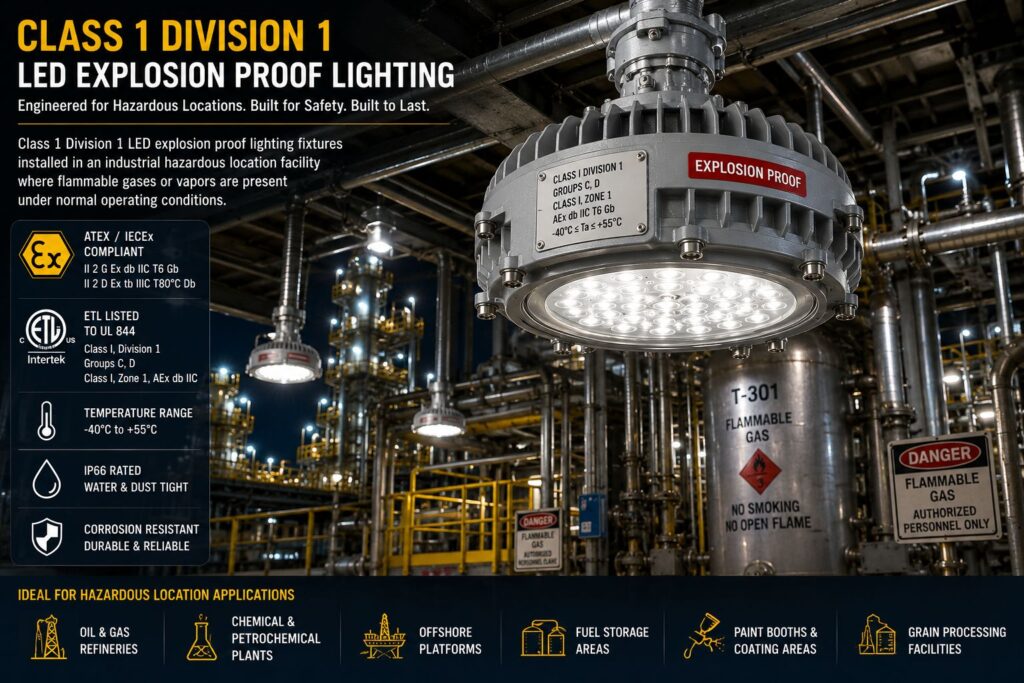
Class 1 Division 1 LED lighting fixtures are designed for hazardous environments where flammable gases or vapors may be present during normal operating conditions.
Need Class 1 Division 1 LED Lighting?
C1D1 applications require fixtures specifically rated for hazardous locations where flammable gases or vapors may be present during normal operations. Gas or vapor group, temperature code, ambient conditions, mounting requirements, and applicable certifications should all be verified before selecting a fixture.
Explore our Class 1 Division 1 LED Lighting solutions or call 844-533-7767 for help selecting properly rated fixtures for your hazardous location.
What Does Class 1 Division 1 Mean?
Hazardous locations are classified according to the type and frequency of potentially explosive materials present in an environment.
Class 1
Class 1 locations contain:
- Flammable gases
- Flammable vapors
- Combustible liquid vapors
Examples include:
- Natural gas
- Propane
- Hydrogen
- Gasoline vapors
- Ethanol vapors
Before selecting hazardous location fixtures, explore Where Is Explosion Proof Lighting Needed? to understand how different industries utilize certified lighting systems.
Division 1
Division 1 indicates the hazardous substance is present during normal operating conditions.
This means explosive gases or vapors may be:
- Continuously present
- Frequently present
- Periodically present during normal operations
Because hazardous materials are routinely present, lighting fixtures installed in these environments must provide the highest level of protection.
Looking for certified hazardous location fixtures? Explore our complete range of LED Explosion Proof Lighting solutions for industrial and commercial applications.
Common Class 1 Division 1 Applications
Class 1 Division 1 lighting is commonly used in:
- Oil and gas production facilities
- Refineries
- Offshore drilling platforms
- Fuel loading terminals
- Chemical processing plants
- Solvent storage facilities
- Paint manufacturing facilities
- Aviation fuel storage areas
- Petrochemical plants
These environments require lighting systems specifically certified for hazardous location operation.
For a broader overview of hazardous area requirements, review our Hazardous Location Lighting Guide covering Classes, Divisions, Groups, and temperature codes.
Why Standard Industrial Fixtures Cannot Be Used
Many facility owners mistakenly assume that a durable industrial LED fixture can be installed in hazardous locations.
This is not the case.
Standard fixtures may contain:
- Electrical arcs
- Switching components
- Internal sparks
- High-temperature surfaces
In a hazardous atmosphere, these ignition sources can create serious safety risks.
Class 1 Division 1 fixtures are engineered to contain internal ignition events and prevent them from igniting surrounding gases or vapors.
Before specifying hazardous location equipment, explore Flameproof vs Explosion Proof Lighting to understand how protection methods and compliance requirements vary by region.
How Class 1 Division 1 Fixtures Work
Explosion proof lighting fixtures do not prevent internal ignition.
Instead, they are designed to:
- Contain internal explosions
- Prevent flame propagation
- Maintain sealed electrical compartments
- Control external surface temperatures
- Protect surrounding atmospheres
Heavy-duty housings, threaded flame paths, reinforced lenses, and sealed conduit entries are common design features.
Before selecting lighting for hazardous locations, explore Class 1 Division 1 Safety Requirements to learn how certified fixtures help protect personnel and support regulatory compliance.
Class 1 Division 1 vs Class 1 Division 2
A common source of confusion involves the difference between Division 1 and Division 2 environments.
| Classification | Hazard Presence |
|---|---|
| Class 1 Division 1 | Hazardous gases or vapors present during normal operation |
| Class 1 Division 2 | Hazardous gases or vapors present only under abnormal conditions |
Division 1 environments require more stringent protection because the hazard is expected to exist during routine operations.
For a detailed comparison, see our Class I Division 1 vs Division 2 Lighting Guide.
Typical Features of Class 1 Division 1 LED Fixtures
Modern Class 1 Division 1 fixtures typically include:
- UL844 certification
- Heavy-duty cast aluminum housings
- Corrosion-resistant finishes
- Impact-resistant lenses
- Vibration resistance
- High ingress protection ratings
- Long-life LED technology
- Wide operating temperature ranges
These features support reliable operation in demanding industrial environments.
Facilities comparing North American and international hazardous location requirements should review UL844, IECEx, and ATEX Certifications Explained before selecting lighting equipment for compliance-sensitive projects.
Benefits of LED Technology in Hazardous Locations
LED technology has become the preferred lighting solution for many hazardous facilities.
Improved Energy Efficiency
LED fixtures consume significantly less energy than traditional HID technologies.
Reduced Maintenance
Long operating life reduces lamp replacement frequency.
Improved Visibility
Higher-quality illumination improves worker visibility and operational safety.
Instant Operation
LED fixtures provide full brightness immediately upon startup.
Better Environmental Performance
LED systems eliminate mercury and reduce overall energy consumption.
Common Certifications for Class 1 Division 1 Lighting
When selecting a fixture, look for certifications appropriate for the installation location.
Common certifications include:
- UL844
- CSA
- ETL
- ATEX
- IECEx
Certification markings should clearly indicate approved hazardous location classifications.
Typical Hazardous Materials Found in C1D1 Areas
| Hazardous Material | Common Industry |
| Hydrogen | Chemical Processing |
| Propane | Oil & Gas |
| Methane | Natural Gas Facilities |
| Gasoline Vapors | Fuel Storage |
| Ethanol Vapors | Biofuel Processing |
| Solvents | Paint and Chemical Manufacturing |
Understanding the specific materials present helps determine proper fixture selection.
Inline Buyer Q&A
Is Class 1 Division 1 the same as explosion proof lighting?
Most Class 1 Division 1 lighting fixtures use explosion proof construction methods designed for hazardous gas and vapor environments.
Can Class 1 Division 2 fixtures be used in Division 1 areas?
No. Division 2 fixtures are generally not approved for installation in Division 1 environments.
Are LED fixtures safer than metal halide fixtures in hazardous locations?
LED fixtures typically generate less heat, require less maintenance, and provide more reliable operation when properly certified.
Does every oil and gas facility require Class 1 Division 1 lighting?
Not necessarily. Classification depends on the specific area and frequency of hazardous material exposure.
Related Industries Requiring Class 1 Division 1 Lighting
Many industrial sectors rely on Class 1 Division 1 lighting for safe operation:
- Oil and gas production
- Refineries
- Chemical manufacturing
- Petrochemical processing
- Fuel distribution
- Aviation fueling facilities
- Offshore platforms
- Solvent storage facilities
Each environment requires proper hazardous location evaluation before fixture selection.
FAQ
What does Class 1 mean?
Class 1 identifies locations containing flammable gases or vapors.
What does Division 1 mean?
Division 1 indicates hazardous materials are present during normal operating conditions.
Are all explosion proof fixtures Class 1 Division 1 rated?
No. Explosion proof fixtures may be certified for various classes, divisions, groups, or zones.
Why are Class 1 Division 1 fixtures more expensive?
These fixtures require specialized construction, testing, and certification to meet hazardous location standards.
How do I verify a fixture is Class 1 Division 1 certified?
Review hazardous location markings, certification labels, and manufacturer documentation.
Selecting the proper Class 1 Division 1 lighting fixture is critical for worker safety, regulatory compliance, and long-term facility reliability. Whether you operate an oil and gas facility, refinery, chemical plant, fuel terminal, or hazardous manufacturing environment, our team can help identify the appropriate certified lighting solution.
Browse our complete selection of hazardous location fixtures:
https://industriallightingfixtures.org/led-explosion-proof-lighting/
Or explore all industrial lighting solutions on our homepage: