
Solar turtle friendly lighting provides environmentally responsible illumination designed to protect sensitive coastal ecosystems while maintaining safe nighttime visibility for people and infrastructure. These specialized lighting systems use amber LED technology and controlled light distribution to minimize disruption to sea turtles and other wildlife in coastal nesting habitats.
Unlike traditional lighting systems that can disorient hatchling sea turtles, turtle friendly lighting limits blue and white light wavelengths that interfere with natural navigation cues. When combined with solar-powered lighting systems, turtle-safe lighting also eliminates the need for trenching electrical infrastructure in fragile coastal environments.
Solar turtle friendly lighting is widely used by coastal municipalities, beachfront resorts, parks departments, wildlife conservation areas, and marine research facilities seeking to balance environmental protection with necessary nighttime illumination.
For a broader overview of off-grid solar infrastructure lighting, explore our Solar Lighting Systems resource.
Turtle Friendly Solar Area Lights
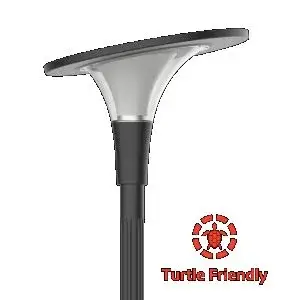
Moraga Turtle Friendly Solar Area Light
Brand: SolTech
Turtle Friendly Waveband 580–590nm; off-grid solar lighting solution; adjustable color temperature-30K and 40K; 18W; Prices start at $1285
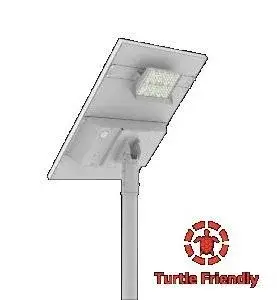
Sunlike 50W Turtle Friendly Solar Area Light
Brand: SolTech
Turtle Friendly Waveband 580–590nm; off-grid solar lighting solution; adjustable color temperature-30K and 40K; 18W; Prices start at $1900
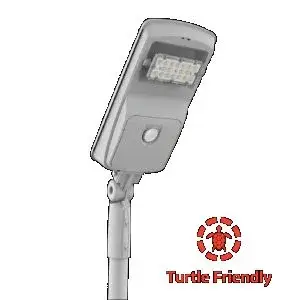
Sunlike Turtle Friendly Solar Area Light
Brand: SolTech
Turtle Friendly Waveband 580–590nm; off-grid solar lighting solution; adjustable color temperature-30K and 40K; 8/20/30W; Prices start at $1395
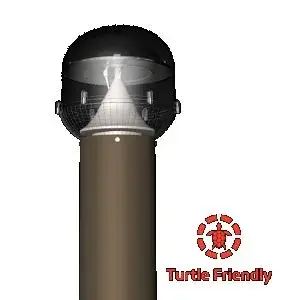
Sundial Turtle Friendly Solar Bollard Light
Brand: SolTech
Marine-Life-Friendly Bollard uses custom LED chips that only emit long 580-595 nanometer amber-colored light; choose from three heights; features a full 360 design to track full sunlight source; 300 lumens; IK10; Prices start at $750.
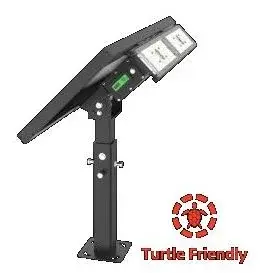
Focus Turtle Friendly Solar Monument Sign Light
Brand: SolTech
Off-grid solar lighting solution; all-in-one design, monument signs, signage, billboard signs, landscaping, and architectural features;10/20W; Prices start at $850
What Is Turtle Friendly Solar Lighting?
Turtle friendly solar lighting refers to lighting systems designed to reduce the impact of artificial illumination on sea turtle nesting habitats. These systems typically use amber LED light sources with narrow spectral output that minimizes wavelengths known to disrupt sea turtle behavior.
Solar turtle friendly lighting systems generally include:
• Amber LED luminaires designed for wildlife protection
• Photovoltaic solar panels for off-grid energy generation
• Battery storage systems for nighttime operation
• Smart lighting controls or dimming systems
• Directional optics that limit upward light spill
Because solar lighting systems operate independently from electrical infrastructure, they are particularly well suited for coastal environments where trenching electrical lines may disturb fragile habitats.
Why Turtle Friendly Lighting Is Important
Artificial lighting can significantly impact sea turtle nesting and hatchling survival. Hatchling turtles naturally orient themselves toward the brightest horizon, which historically was the reflection of moonlight over the ocean.
Artificial lighting near beaches can cause hatchlings to move inland rather than toward the water, increasing mortality risks.
Turtle friendly lighting solutions help mitigate these risks by controlling the spectral output and direction of artificial light.
Key benefits include:
Wildlife Protection
Amber LED lighting minimizes wavelengths that interfere with sea turtle navigation while still providing functional illumination.
Reduced Environmental Impact
Solar-powered turtle friendly lighting eliminates trenching electrical infrastructure and reduces environmental disturbance in protected coastal areas.
Sustainable Coastal Infrastructure
Solar lighting systems operate using renewable energy, reducing electrical consumption and supporting sustainability initiatives for coastal communities.
Compliance with Coastal Lighting Regulations
Many coastal regions enforce lighting regulations designed to protect sea turtle habitats. Turtle friendly lighting helps municipalities and property owners comply with these environmental standards.
Key Components of Solar Turtle Friendly Lighting Systems
Amber LED Light Sources
Turtle friendly lighting typically uses amber LEDs with wavelengths above 560 nm, which are less disruptive to sea turtle navigation.
Directional Lighting Optics
Shielded fixtures direct light downward toward walking paths, roadways, or building entrances while minimizing horizontal and upward light spill.
Solar Panels
Photovoltaic panels generate electricity during daylight hours and eliminate the need for grid-connected electrical systems.
Battery Storage
Solar turtle friendly lighting systems include battery storage to power fixtures throughout nighttime hours.
Smart Lighting Controls
Motion sensors or adaptive dimming features can further reduce unnecessary nighttime illumination while maintaining safety.
Applications for Turtle Friendly Solar Lighting
Solar turtle friendly lighting is used across a variety of coastal and conservation environments.
Coastal Walkways and Beach Access
Public beach access points and coastal walkways frequently require lighting for safety while minimizing ecological impact.
Beachfront Resorts and Hotels
Hospitality properties located along nesting beaches must comply with environmental lighting regulations while maintaining guest safety.
Coastal Parks and Nature Reserves
Parks departments often deploy turtle safe lighting to illuminate trails, observation areas, and visitor facilities.
Marine Research and Conservation Facilities
Wildlife conservation areas and marine research centers rely on turtle friendly lighting to protect sensitive habitats.
Solar Turtle Friendly Lighting Design Considerations
Designing turtle safe lighting requires balancing illumination needs with wildlife protection requirements.
Light Spectrum Control
Lighting fixtures must use appropriate amber wavelengths that minimize disruption to sea turtle navigation.
Light Direction
Fixtures should be shielded to direct light downward and prevent illumination of the beach or ocean horizon.
Solar Exposure
Solar panels should be positioned to maximize sunlight exposure while avoiding shading from surrounding structures or vegetation.
Environmental Durability
Coastal lighting systems must be designed to withstand salt exposure, wind loads, and humid marine environments.
Buyer Q&A: Selecting Solar Turtle Friendly Lighting
How do I determine whether a solar light is appropriate for a turtle-sensitive coastal property?
Start with the applicable local sea turtle lighting requirements. Fixture selection should consider light source wavelength or color, shielding, mounting height, fixture orientation, brightness, visibility from the beach, and the location of nesting habitat. The solar power system must then be sized for the required nightly runtime and local solar conditions.
What should I look for in a turtle friendly solar light?
Look for a fixture designed to minimize short-wavelength light and unnecessary light spill toward nesting beaches. Amber light sources, shielding, controlled distribution, appropriate mounting height, and careful fixture placement are important considerations. The complete installation—not simply the LED color—determines how effectively the lighting minimizes impacts on sea turtles.
What information should I provide when requesting solar turtle friendly lighting pricing?
Provide the project location, application, approximate fixture quantity, mounting height, required operating hours, desired illumination area, and any applicable local wildlife-lighting requirements. For larger projects, site plans or photographs can also help identify suitable fixture types and placement.
Can solar turtle friendly lighting provide enough illumination for commercial properties?
Yes. Properly designed systems can provide useful illumination for pathways, pedestrian areas, parking areas, property entrances, parks, resorts, and other coastal applications. The objective is to provide the light needed for safety and navigation while controlling brightness, direction, and spill toward sensitive habitat.
Do I need a lighting layout for a coastal turtle friendly lighting project?
For larger beachfront properties, resorts, parks, parking areas, and municipal projects, a lighting layout can help evaluate fixture locations, mounting heights, spacing, and light distribution. This can help provide useful illumination while reducing unnecessary light spill toward nesting areas and surrounding habitat.
Need Help Selecting Solar Turtle Friendly Lighting?
Coastal lighting requires balancing nighttime visibility with the protection of sensitive wildlife habitat. Solar turtle friendly lighting combines controlled amber illumination with off-grid operation, eliminating the need for extensive underground electrical infrastructure in many applications.
We can help evaluate fixture type, light distribution, mounting, solar capacity, runtime, and project requirements for beachfront properties, resorts, coastal parks, walkways, municipal facilities, and conservation areas.
👉 Explore Solar Turtle Friendly Lighting Solutions or call 1-844-533-7767 to discuss your coastal lighting project.
FAQs About Solar Turtle Friendly Lighting
What makes lighting turtle friendly?
Turtle friendly lighting generally uses long-wavelength light sources, controlled fixture output, shielding, and careful placement to reduce artificial light visible from nesting beaches. Requirements can vary by jurisdiction, so local wildlife-lighting regulations should always be reviewed.
Why are amber lights used for sea turtle protection?
Longer-wavelength amber lighting is commonly used because it can reduce the disruptive effects of artificial nighttime illumination on nesting sea turtles and hatchlings compared with shorter-wavelength light sources. Color alone, however, does not make an installation turtle friendly; shielding, intensity, orientation, and placement are also important.
Can solar lighting be used in turtle nesting areas?
Yes. Solar lighting can be particularly useful in coastal environments because it can eliminate trenching, conduit, and utility connections. However, the fixtures must still comply with applicable wildlife-lighting requirements and be positioned to minimize illumination toward nesting habitat.
Are turtle friendly lights required by law?
Lighting requirements vary by location. Many coastal jurisdictions have ordinances or regulations intended to reduce artificial lighting impacts during sea turtle nesting and hatching seasons. Property owners and project designers should verify the requirements applicable to the specific project location.
Where is turtle friendly lighting typically installed?
Turtle friendly lighting is commonly used at beachfront properties, hotels and resorts, coastal condominiums, walkways, parks, parking areas, marine facilities, and other developments near sea turtle nesting habitat.
Stay Connected with Our Lighting Resources
Add IndustrialLightingFixtures.org as a Preferred Source on Google to see more of our lighting guides and technical resources across Google Search experiences.

Related Turtle Friendly & Solar Lighting Resources
Continue planning coastal and off-grid lighting with these related resources covering turtle friendly illumination, solar outdoor lighting, and environmentally sensitive applications:
- Turtle Friendly Amber Lighting — Learn how amber LEDs, shielding, fixture placement, and controlled light distribution can help reduce artificial lighting impacts in coastal environments.
- Commercial Solar Lighting — Explore off-grid solar lighting systems for commercial, municipal, roadway, parking, pedestrian, and environmentally sensitive applications.
- Solar Parking Lot Lights — Review off-grid parking area lighting solutions for properties where trenching, utility connections, or conventional electrical infrastructure may be undesirable.
- Solar Flood Lights — Explore directional solar lighting for commercial properties, perimeter areas, signage, infrastructure, and other applications requiring controlled off-grid illumination.