What Are LED Tunnel Lights?
LED tunnel lights are specialized luminaires designed to provide uniform, glare-controlled illumination along long, enclosed passageways that present unique visual and safety challenges. These fixtures typically feature elongated optical distributions and shielding to reduce reflected glare from adjacent surfaces while ensuring consistent visibility throughout the pathway. LED tunnel lighting is widely used in traffic tunnels, underpasses, parking structures, service corridors, and other linear zones where traditional area lighting would produce hotspots, flickering shadows, or visual discomfort over extended distances.
Linear passage environments represent a specialized component of integrated industrial lighting systems.
LED Tunnel Lighting Fixtures
In facilities with long passageways or covered corridors, LED tunnel lighting is often combined with adjacent low-bay or linear lighting systems to create a seamless illumination strategy that ensures consistent visibility from entry to exit points.
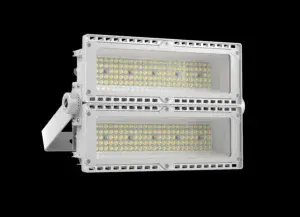
TUL-A
Brand: Seven Rainbow
Deep anti-glare structural design, UGR<19, ETL, CE, IP65, Modular Design, Up to 48,000 lumens. 60/100/120/180/200/
240/300/420W. Prices start at $200.
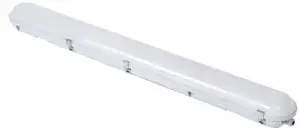
VP
Brand: Nebulite
Wattage, CCT Select; 30W/40W/50W;
Up to 5750 lumens; Waterproof, Dust-proof
OP. Temp -22°F – 122°F; DLC, ETL;
Prices start at $200.
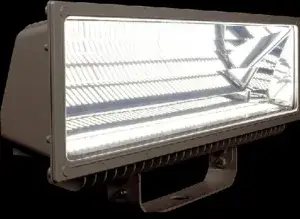
U-HFL
Brand: LightingX
low profile, high-performance Flood Light; Trunion, Knuckle mount; up to 24,300 lumens; 15/30/60/90/120/150W.
Prices start at $225.
When Should LED Tunnel Lighting Be Used?
Tunnel luminaires are specified when a space exhibits characteristics such as continuous longitudinal pathways, fixed boundaries, limited natural light, and safety requirements for moving vehicles or pedestrians. Typical applications include:
• Transportation tunnels (road, rail, utilities)
• Underpasses and subways
• Long interior corridors in large facilities
• Parking structures with elongated aisles
• Freight and logistics transfer pathways
In these environments, optical precision, uniformity, and visual comfort are critical — LED tunnel lighting systems are engineered to address these requirements efficiently and consistently.
In transportation hubs or entry corridors that require wet-location rated solutions, consider pairing tunnel luminaires with NSF-Certified LED Lighting or LED Vapor Tight Fixtures where cleanliness and moisture resistance are needed.
Want to understand why tunnel lighting is designed differently from standard roadway lighting? Read our Understanding the Purpose of Tunnel Lighting guide to learn about visual adaptation, safety, and modern LED technologies.
Core Specifications & Performance Characteristics
Key specification criteria for LED tunnel lighting include:
✔ Lumen output and distribution: optimized for longitudinal uniformity without glare
✔ Optical control: cutoff and shielding to reduce plume and reflected glare
✔ Color temperature and CRI: balanced for driver and pedestrian comfort
✔ Ingress protection (IP) rating: resistance to dust, moisture, and particulates
✔ Thermal management: ensuring LED lifespan in confined or ventilated spaces
✔ Mounting versatility: options for suspended, wall-mount, or ceiling-mount installations
Typical LED tunnel luminaires range in output from mid-range to high-output configurations, depending on mounting height and corridor width. Beam spreads are calibrated to minimize luminance contrasts and improve consistency across surfaces.
Industrial & Commercial Applications
LED tunnel lighting is appropriate wherever continuous confined spaces require consistent illumination, such as:
• Urban underpasses and municipal tunnels
• Industrial process tunnels
• Extended service corridors within facilities
• Covered transport lanes at ports and terminals
• Parking garages with long travel aisles
For service tunnels or industrial corridor lighting where hazards are present, see our LED Explosion-Proof Lighting selection built for classified environments.
In these contexts, LED tunnel lights improve visibility without creating harmful reflection or shadow artifacts, enabling safer navigation for vehicles and pedestrians alike. Their energy efficiency and long service life also contribute to lower operational and maintenance costs compared to fluorescent or HID alternatives.
Planning & Selection Considerations
Selecting LED tunnel lighting involves careful assessment of:
✔ Corridor length and travel path
✔ Mounting height and spacing ratios
✔ Surface reflectivity and ambient conditions
✔ Required uniformity and glare limitations
✔ Control options (dimming, motion triggers)
✔ Applicable safety codes and standards
Designers often model illumination patterns using lighting simulation software to ensure consistent light levels throughout the tunnel. Coordination with traffic engineers or facility planners may also guide placement, aiming angles, and control strategies to ensure both safety and efficiency objectives are met.
Planning a roadway or infrastructure project? Our Tunnel Lighting Design Guide explains photometric planning, fixture spacing, optical selection, adaptive controls, and engineering considerations for modern LED tunnel lighting systems.
Comparison Table — Tunnel vs Linear vs Area Lighting
| Attribute / Use | Tunnel Lighting | Linear Strip Lights | Area/General Lighting |
|---|---|---|---|
| Primary Coverage | Long, confined pathways | Continuous interior zones | Wide, open interior/exterior areas |
| Typical Mounting Height | 8–20 ft | 8–25 ft | 10–50+ ft |
| Optical Focus | Longitudinal uniformity | Linear distribution | Broad or medium spread |
| Best Use Cases | Tunnels, underpasses | Service aisles, conveyors | Open sites, yards, courts |
| Visual Comfort Priority | High (glare control) | Medium | Variable |
| Typical Environments | Urban/industrial tunnels | Plant corridors | Warehouses, outdoor spaces |
Technical Standards & Compliance Resources
Selecting LED tunnel lighting requires familiarity with applicable electrical and safety standards that guide enclosed path illumination, glare control, and fixture suitability. For commercial and industrial installations, this includes evaluating fixture listings (UL, ETL), ingress protection classifications, photometric performance norms, and energy code compliance. While tunnel applications are not typically hazardous location projects, coordination with structural engineers and safety planners can ensure lighting designs meet navigation, comfort, and code requirements. For more detailed context on how tunnel lighting fits into broader industrial lighting strategies, refer to our lighting design and classification guides.
Benefits of LED Tunnel Lighting
Improved Safety & Visibility
Optimized optics and lumen distribution enhance pedestrian and vehicle sightlines.
Energy Efficiency
LED technology reduces operating costs compared to legacy fluorescent or HID tunnel lighting.
Durability in Harsh Environments
High ingress protection and long lifespans minimize relamping and maintenance disruptions.
Reduced Glare & Visual Fatigue
Engineered distributions provide consistent light without excessive brightness spikes.
Inline Buyer Q&A
How do I choose the right LED tunnel light?
Start with the tunnel type, dimensions, traffic conditions, mounting height, required illumination levels, and operating environment.
Then compare fixture lumen output, optical distribution, glare control, ingress protection, corrosion resistance, operating temperature, controls, and mounting configuration. Tunnel lighting should provide consistent visibility throughout the space rather than simply maximizing fixture brightness.
How are tunnel light fixtures spaced?
Fixture spacing depends on mounting height, tunnel width, fixture output, optical distribution, required light levels, and uniformity targets.
Because tunnels are long, confined environments, a photometric layout can help determine fixture quantity and spacing while identifying dark zones, excessive brightness, and abrupt changes in illumination.
Why is lighting uniformity especially important in tunnels?
Drivers and pedestrians need consistent visibility as they move through the tunnel. Large differences between bright and dark areas can make visual adaptation more difficult and reduce the ability to identify vehicles, pedestrians, obstacles, and roadway conditions.
Proper fixture spacing and optical distribution help maintain more consistent illumination throughout the tunnel.
What environmental ratings should I look for in a tunnel light?
Consider moisture, dust, exhaust, vibration, cleaning procedures, temperature, and corrosion exposure when selecting fixtures.
Commercial and transportation tunnel luminaires often require sealed construction, appropriate IP ratings, corrosion-resistant materials, durable mounting hardware, and components designed for demanding infrastructure environments.
What information is needed for a tunnel lighting quote or photometric layout?
Provide the tunnel length, width and height, fixture mounting locations, available voltage, existing fixture information, desired illumination levels, operating schedule, and whether the application serves vehicles, pedestrians, bicycles, or industrial traffic.
Drawings, photographs, existing pole or mounting locations, and project specifications can help determine fixture output, optics, quantity, and spacing.
Illuminate Infrastructure with Precision LED Tunnel Lights
From transportation tunnels and underpasses to service corridors and industrial passageways, effective tunnel lighting requires controlled light distribution, consistent uniformity, durable fixture construction, and reliable long-term performance.
Need help selecting fixture output, optics, spacing, mounting, or controls for your tunnel lighting project?
👉 Contact our lighting specialists or call 1-844-533-7767 to discuss your tunnel dimensions, lighting requirements, and photometric planning.
Frequently Asked Questions
What color temperature is best for tunnel lighting?
For safe and comfortable tunnel illumination, 4000K–5000K is a common range, balancing visibility and glare control.
How do tunnel lights differ from standard area lights?
LED tunnel lights are engineered for long linear runs with asymmetric optics and high uniformity, whereas outdoor area lighting is designed for open spaces without confined wall structures.
Can LED tunnel lighting be dimmed or controlled?
Yes. Many tunnel lighting installations incorporate dimming or control systems to adjust output based on traffic conditions or ambient light levels.
Are LED tunnel lights suitable for pedestrian passages?
Yes. LED tunnel luminaires provide uniform coverage ideal for pedestrian and bicycle pathways as well as vehicular tunnels.
Stay Connected with Our Lighting Resources
Add IndustrialLightingFixtures.org as a Preferred Source on Google to see more of our lighting guides and technical resources across Google Search experiences.
