LED grow lights are specialized horticultural lighting systems designed to support plant growth in controlled agricultural environments. These lighting systems deliver specific wavelengths of light that promote photosynthesis, plant development, and crop productivity when natural sunlight is insufficient or unavailable.
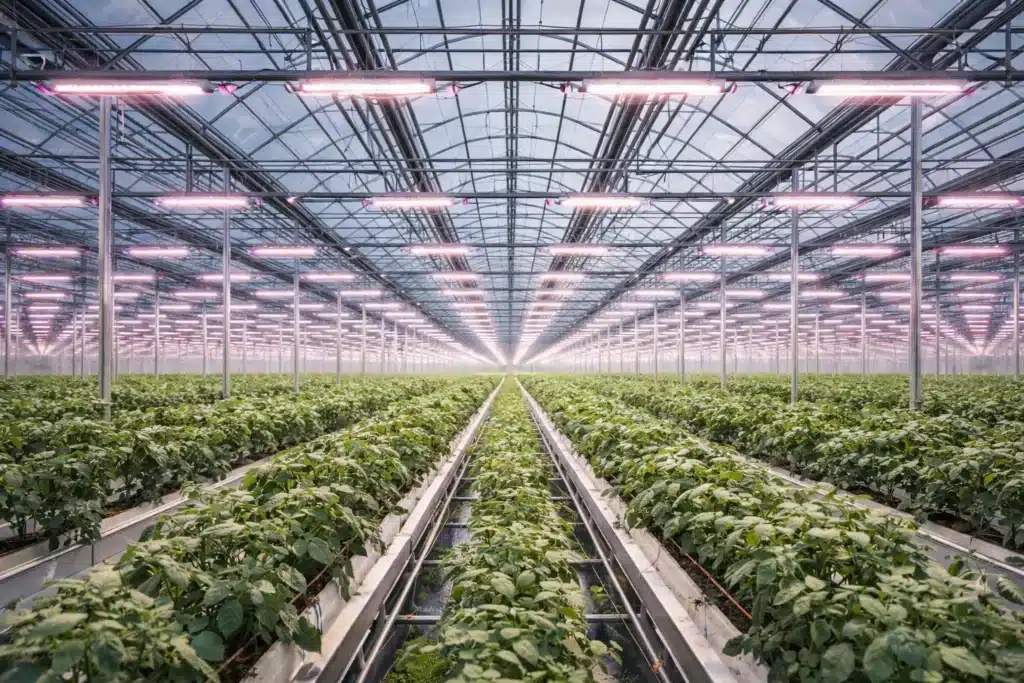
Grow lighting is commonly used in commercial greenhouses, indoor farms, research laboratories, and vertical agriculture facilities where lighting conditions must be precisely managed to optimize plant growth cycles.
Horticultural lighting represents a specialized category within specialty LED lighting systems designed for high-performance applications and unique environmental conditions.
For a broader overview of engineered lighting solutions used in specialized environments, see our Specialty LED Lighting Systems Guide:
LED Grow Lights
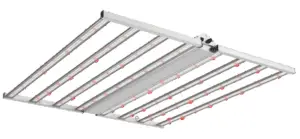
MB2
Brand: Ledsion
Full Spectrum LED Grow Light; features a rack lighting solution designed for single or multi-tier growers; 660/720W; Prices start at $500.
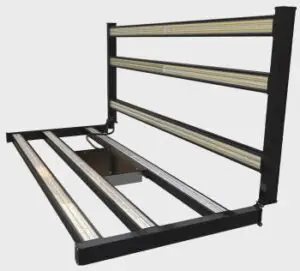
GL1140
Brand: Nebulite
Foldable Grow Light- the fixture is for advanced growers and their need for
extremely high output; offers multiple spectral distributions; The main control box controls 500 units
400/600/640//720/1000W;
Prices start at $450.
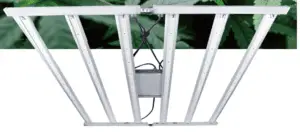
GL
Brand:
Perfect for all growth stages; Customizable Full Spectrum, Large Footprint, Bluetooth, Timing Capability, Dimmable; Available in 320/640W; Prices start at $550.
What Are LED Grow Lights?
LED grow lights are lighting systems engineered to replicate the spectral output of sunlight while delivering specific wavelengths that stimulate plant growth.
Plants rely on light energy for photosynthesis, the process through which they convert light into chemical energy used for growth. Grow lights provide the light spectrum needed to support this biological process when natural sunlight is limited.
Unlike traditional horticultural lighting technologies such as high-pressure sodium or metal halide lamps, LED grow lights allow precise control of light wavelengths and energy output.
This enables growers to optimize lighting conditions for different plant species and growth stages.
How LED Grow Lights Work
Plants absorb specific wavelengths of light during photosynthesis. LED grow lights are designed to emit these wavelengths in carefully engineered combinations.
Important spectral ranges include:
Blue Light (400-500 nm)
Blue wavelengths promote vegetative growth, leaf development, and plant structure.
Red Light (600-700 nm)
Red wavelengths stimulate flowering and fruit production.
Full Spectrum Lighting
Full-spectrum LED systems combine multiple wavelengths to simulate natural sunlight conditions across the plant growth cycle.
Modern horticultural lighting systems allow growers to adjust spectral output to support different plant stages, including seedling growth, vegetative development, and flowering.
Key Features of LED Grow Lights
Modern LED grow lighting systems incorporate advanced technologies designed for controlled agricultural environments.
Full Spectrum Lighting
Advanced LED arrays deliver a balanced light spectrum optimized for plant growth.
Energy Efficiency
LED grow lights consume significantly less energy than traditional horticultural lighting technologies.
Long Service Life
Many LED grow lighting systems operate for 50,000 hours or more before requiring replacement.
Thermal Management
Efficient heat dissipation reduces plant stress and improves lighting performance.
Adjustable Lighting Strategies
Some horticultural lighting systems allow growers to adjust intensity or spectral output to match crop requirements.
Common Applications
LED grow lights are widely used across commercial agriculture and plant research environments.
Greenhouse Cultivation
Supplemental grow lighting extends daylight hours for greenhouse crops.
Indoor Vertical Farming
Indoor farms rely on LED lighting systems to support plant growth without natural sunlight.
Commercial Horticulture
Large-scale cultivation facilities use grow lights to improve yield and crop quality.
Research Laboratories
Plant science laboratories use grow lighting to study plant growth and genetics.
Cannabis Cultivation
Regulated cannabis cultivation facilities commonly use LED horticultural lighting systems.
LED Grow Light Technology Comparison
| Feature | LED Grow Lights | HPS Grow Lights |
|---|---|---|
| Energy Efficiency | High | Moderate |
| Heat Output | Low | High |
| Service Life | 50,000+ hours | 10,000–20,000 hours |
| Spectrum Control | Excellent | Limited |
| Maintenance | Minimal | Lamp replacement required |
LED systems offer superior energy efficiency, spectral control, and operational lifespan compared with traditional horticultural lighting technologies.
Installation Considerations
Proper lighting installation is critical for maximizing crop productivity.
Mounting Height
Grow lights should be positioned at appropriate heights depending on plant species and light intensity.
Lighting Uniformity
Even light distribution across plant canopies helps maintain consistent growth.
Environmental Control
Grow lighting systems often integrate with climate control systems including ventilation and humidity management.
Electrical Requirements
Commercial horticulture installations may require dedicated electrical circuits for lighting systems.
Performance Considerations
Selecting the correct grow lighting system depends on several operational factors.
Important considerations include:
• plant species
• growth stage
• facility size
• light intensity requirements
• energy efficiency goals
• cooling requirements
Careful lighting design helps maximize crop yield while minimizing energy consumption.
Inline Buyer Q&A
How do I choose an LED grow light for a commercial horticultural project?
Start with the crop, growth stage, cultivation area, target PPFD and DLI, photoperiod, mounting height, available electrical service, environmental conditions, and whether the lighting will supplement or replace sunlight. Fixture efficacy and spectral output should then be evaluated against those requirements.
How much light do my plants need?
Plant-light requirements vary by species, cultivar, growth stage, production objective, photoperiod, and cultivation method. Rather than selecting fixtures by lumens alone, commercial horticultural systems are typically evaluated using plant-relevant measurements such as photosynthetic photon flux and PPFD.
Do I need full-spectrum or targeted-spectrum LED grow lights?
That depends on the crop and production strategy. Broad-spectrum systems can support many horticultural applications, while systems with different spectral distributions may be selected for specific crops, growth stages, research objectives, or production goals.
How many LED grow lights will my facility need?
Fixture quantity depends on the cultivation footprint, target PPFD, mounting height, fixture output and distribution, spacing, obstructions, and required uniformity. A lighting layout is more useful than selecting a fixture count from square footage alone.
What information should I provide for a horticultural-lighting quote?
Provide the crop type, cultivation dimensions, growing method, mounting height, target PPFD or DLI when known, photoperiod, voltage, environmental conditions, and whether the project uses supplemental or sole-source lighting.
Design the Grow Lighting System Around the Crop
Commercial horticultural lighting should be selected around plant requirements rather than fixture wattage or visible brightness alone. Crop type, growth stage, PPFD, DLI, spectrum, photoperiod, mounting geometry, uniformity, environmental conditions, and electrical requirements all influence system design.
Our lighting specialists can help evaluate:
- Indoor farms
- Greenhouses
- Vertical farming systems
- Controlled-environment agriculture
- Research and cultivation facilities
- Supplemental and sole-source lighting
- PPFD and lighting uniformity
- Spectral requirements
- Mounting height and fixture spacing
- Photoperiod and lighting controls
- Existing HID-to-LED conversions
- New horticultural lighting projects
For project assistance, have your cultivation dimensions, crop information, mounting height, voltage, growing method, and target lighting requirements available when possible.
Call 1-844-533-7767 to discuss your commercial LED horticultural lighting project.
Frequently Asked Questions
What are LED grow lights used for?
LED grow lights provide photosynthetically active radiation for plants in greenhouses, indoor farms, vertical farms, research facilities, and other controlled-growing environments. They may supplement available sunlight or serve as the primary lighting source.
Are LED grow lights better than traditional horticultural lighting?
LED systems can provide advantages such as higher photon efficacy, controllability, spectral options, and potentially lower energy and maintenance requirements compared with some legacy horticultural technologies. Actual benefits depend on the LED system being compared, operating conditions, crop requirements, and lighting design.
Can LED grow lights completely replace sunlight?
In controlled-environment agriculture, properly designed electric-lighting systems can provide the light plants require without natural sunlight. Successful sole-source cultivation still depends on providing the appropriate intensity, spectrum, photoperiod, environmental conditions, irrigation, nutrients, and other crop requirements.
Do LED grow lights work for all plants?
LED lighting can support a wide range of crops, but plants do not all require the same intensity, spectrum, photoperiod, or daily light integral. The lighting system should be designed around the particular crop, growth stage, and production objectives.
What is PPFD in horticultural lighting?
Photosynthetic Photon Flux Density, or PPFD, measures the amount of photosynthetically active radiation reaching a surface each second and is commonly expressed in micromoles per square meter per second. It is an important measurement when evaluating the light delivered to the plant canopy.
What is DLI and why does it matter?
Daily Light Integral, or DLI, represents the total quantity of photosynthetically active photons received over a 24-hour period. Because DLI combines light intensity with photoperiod, it helps growers evaluate the total light delivered to a crop each day.
Are lumens useful when selecting horticultural lighting?
Lumens measure light according to human visual sensitivity and are therefore not the primary metric for evaluating plant lighting. Horticultural systems are better evaluated using plant-relevant measurements such as photon output, PPFD, DLI, spectral distribution, and photon efficacy.
What spectrum is best for LED grow lights?
There is no single spectrum that is optimal for every crop or production objective. Spectral requirements can vary with plant species, cultivar, growth stage, morphology objectives, and cultivation strategy.
How does mounting height affect grow-light performance?
Mounting height influences intensity, coverage, uniformity, fixture spacing, and the amount of light reaching the canopy. It should be coordinated with fixture output and optical distribution rather than treated as a fixed distance for all grow lights.
Are LED grow lights energy efficient?
Modern horticultural LED systems can provide high photon efficacy and may reduce electricity consumption compared with less-efficient legacy lighting systems. Actual energy savings depend on the equipment being replaced, fixture efficacy, lighting levels, photoperiod, controls, and overall system design.
Can LED grow lights replace HPS or metal halide systems?
Yes, many commercial horticultural facilities can transition from HPS, metal halide, or other legacy technologies to LED. Replacement systems should be designed around crop-level lighting requirements rather than using wattage equivalency alone.
Can LED grow lights be dimmed and controlled?
Many commercial horticultural LED systems support dimming and automated controls. Controls can be used to coordinate light intensity and photoperiod with crop requirements, available daylight, production schedules, and other environmental systems.
Should a lighting layout be created for a commercial grow facility?
For larger commercial projects, a lighting layout can help evaluate predicted PPFD, uniformity, fixture quantity, spacing, mounting height, and coverage across the cultivation area before installation.
Stay Connected with Our Lighting Resources
Add IndustrialLightingFixtures.org as a Preferred Source on Google to see more of our lighting guides and technical resources across Google Search experiences.

Related Horticultural & Specialty Lighting Resources
- Specialty LED Lighting Systems — Explore specialized commercial and industrial lighting systems designed for applications with requirements beyond conventional general illumination.
- Commercial Lighting Guide — Review broader considerations for specifying LED lighting systems, including fixture performance, controls, electrical requirements, operating conditions, and project planning.
- Industrial Lighting Guide — Learn about lighting design and fixture-selection considerations for demanding industrial and production environments.
- LED High Bay Lighting — Explore high-output LED lighting for facilities with elevated mounting heights and large production or operational spaces.
- LED Drivers — Learn how LED drivers regulate power, support dimming and controls, and influence the operation of commercial LED lighting systems.