LED Indoor Swimming Pool Lighting Fixtures for Safety, Performance & Efficiency
Indoor Pool Lighting Overview
Indoor swimming pool lighting fixtures are specialized LED luminaires engineered for natatorium environments where moisture, chemical exposure, and elevated humidity create demanding operating conditions. These systems must deliver uniform, glare-controlled illumination across water surfaces, deck areas, and spectator zones while maintaining long-term durability in corrosive environments.
Unlike standard interior fixtures, natatorium lighting requires corrosion-resistant housings, sealed optical assemblies, and moisture-rated components designed to withstand condensation and airborne chloramines. Properly specified indoor swimming pool lighting improves swimmer visibility, enhances lifeguard monitoring, reduces surface glare, and supports compliance with competitive and recreational facility standards.
Indoor swimming pool lighting fixtures are part of broader indoor lighting systems designed for commercial and institutional environments, where visual comfort and environmental durability must be carefully balanced.
This guide explains when indoor swimming pool lighting fixtures are required, key performance considerations, and how LED systems are selected to meet environmental, safety, and efficiency requirements.
Indoor Swimming Pool Lighting Fixtures
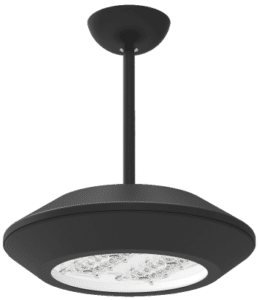
5001
Brand: Crystal
16″ round, architectural luminaire,
ceiling or pendant mount, modified with marine powder coating and 304 stainless steel hardware; IP65
up to 9,986 Lumens;
35/45/55/65/75W;
Prices start at $450.
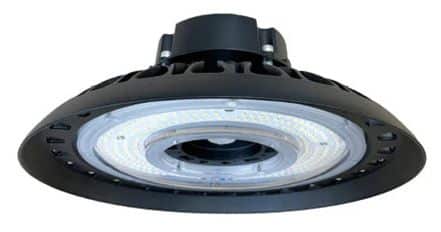
TUHB
Brand: LightingX
Corrosion-resistant Marine Grade Powder Coating, 304 stainless steel hardware, IP67, Tunable 100W to 320W. up to 54,000 lumens;
Prices start at $300.
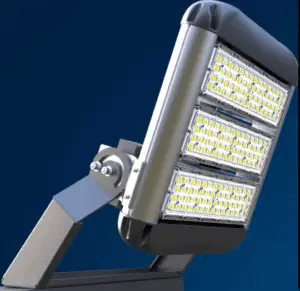
Edge
Brand: E-Lite
low profile, high performance, IK10, IP67, 75/100/150/200/240/
300/450W. up to 63,000 lumens;
Prices start at $325.
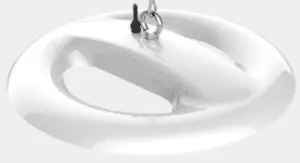
Halo-F
Brand: G-Comin
Whole Aluminum body + Nano-coating surface; IP66; corrosion resistant; High waterproof level, suitable for swimming pool; Curve body + Nano-coating surface prevents water, and dust accumulation; Anti-glare design;
50/80/100/150/200/240W;
Prices start at $250.
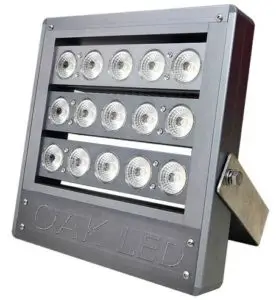
Oak-FL-300
Brand: Oakled
Stainless Steel (304/316) Bracket;
Highest Ingress Protection Rating:
IP67; Anti-glare Design; high-quality silicone & sealing gasket; COB LEDs prevent the infiltration of water and dust; 80/100/150/200/300
400/500/600/720W;
Prices start at $400.
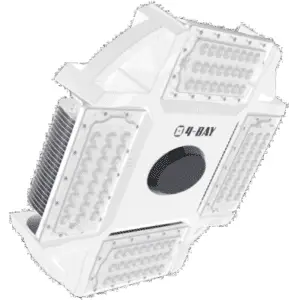
4 Bay
Brand: G-Comin
Choose as an Indirect, Uplight, or
Downlight; the four rotatable modules allow for different beam angles; Good corrosion-resistant properties; IP65;
100/150/200/240/300/400/480W. Prices start at $350
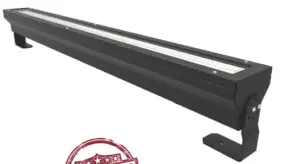
CLW-SL4
Brand: Crystal
Corrosion-resistant Marine Grade Coating; Made in USA; 48″ Length; 40/80W. Prices start at $395.
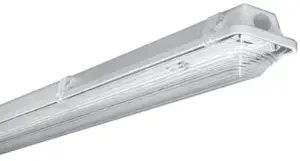
Daisy14
Brand: Crystal
LED Vapor Tight 4ft; Op. temp. -30°C to +60°C; IP67; waterproof, dustproof;
5,545 lumens; DLC; Made in USA; 45/56W; Prices start at $195.
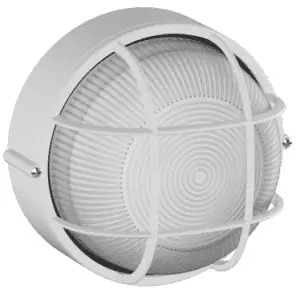
Marine
Brand: Crystal
LED Bulkhead Lights;
Grid frame LED wall pack fixture, Round or Oblong shaped, ceiling or wall mounted; white frosted glass; 9 5/8″ Diameter; 10-year warranty;
10/20W. Prices start at $225.
When to Use Indoor Swimming Pool LED Lighting
Indoor swimming pool lighting fixtures are specified in environments where safety, visual clarity, and environmental durability are critical. Typical applications include:
-
Competitive aquatic facilities requiring uniform horizontal and vertical illumination
-
Recreational natatoriums prioritizing swimmer comfort and glare reduction
-
Training and therapy pools with extended operating hours
-
Commercial fitness centers seeking balanced, occupant-focused lighting
-
Municipal and community aquatic facilities with regulatory compliance requirements
Indoor pool lighting systems are selected based on uniformity ratios, glare control, vertical and horizontal illuminance levels, and resistance to humidity and chemical exposure — not lumen output alone.
Because natatorium environments experience persistent moisture and condensation, many installations incorporate vapor-tight LED lighting systems designed for high-humidity conditions to protect internal components and extend service life.
Indoor Swimming Pool Wall Lights & Perimeter Illumination
In many aquatic facilities, indoor swimming pool wall lights are used to supplement overhead luminaires and improve vertical illumination along pool enclosures. Wall-mounted fixtures enhance swimmer visibility, reduce shadowing at water edges, and support balanced light distribution throughout the space.
These fixtures must be constructed with corrosion-resistant materials and sealed components capable of withstanding high humidity and chemical vapor. Proper placement ensures even perimeter lighting without creating excessive glare on the water’s surface or reflective tile finishes.
When integrated with overhead high bay or suspended systems, indoor swimming pool wall lights contribute to a cohesive natatorium lighting strategy that prioritizes safety and visual clarity.
Choosing the correct fixture is only one part of a successful aquatic lighting project. Our Natatorium Lighting Design Guide explains how photometric layouts, glare control, mounting locations, marine-grade finishes, 316 stainless steel hardware, controls, and maintenance access work together across the complete facility.
Indoor Swimming Pool Lighting Performance Criteria
Effective natatorium lighting must address both optical performance and environmental resilience. Key considerations include:
-
Light Output: Calibrated to mounting height and pool dimensions
-
Optical Control: Beam shaping to reduce water-surface reflections and visual hotspots
-
Color Quality: CCT and CRI selected for swimmer visibility and accurate perception
-
Ingress Protection: Typically IP65 or higher to resist moisture and chlorinated air
-
Corrosion Resistance: Materials designed to withstand high humidity and airborne chloramines
-
Mounting Configuration: Recessed, suspended, or wall-mounted systems suited to natatorium architecture
-
Control Integration: Scheduling and dimming aligned with facility use patterns
Final specification is driven by pool geometry, ceiling height, reflectance values, and illumination targets established through photometric modeling.
Indoor aquatic facilities expose lighting equipment to humidity, condensation, and airborne chloramines. Review our Indoor Pool Lighting for Swim Schools Guide for application-specific recommendations.
Learn More About Indoor Lighting Design
Indoor aquatic facilities require carefully engineered lighting systems that balance illumination performance, glare control, corrosion resistance, and long-term operational reliability. Lighting designers must also evaluate ceiling height, reflective surfaces, and humidity exposure when selecting fixtures for natatorium environments.
For a broader overview of commercial interior lighting strategies, fixture categories, and performance considerations, explore our Indoor LED Lighting Guide for Commercial & Industrial Spaces.
Indoor Pool Lighting Planning & Design Approach
Indoor pool lighting systems are developed using photometric analysis to confirm fixture spacing, aiming angles, and uniformity across both horizontal and vertical planes. Proper vertical illuminance supports lifeguard monitoring and spectator visibility, while controlled horizontal levels improve swimmer clarity and deck safety.
Precise optical distribution is essential to minimize glare and disruptive reflections on the water’s surface. Fixture placement and beam control must be coordinated with ceiling height and structural layout to ensure consistent illumination without visual distraction.
Because natatorium environments contain high humidity and chemical vapor, environmental durability is equally important. Sealed optics, corrosion-resistant housings, and appropriate material selection significantly extend service life and reduce maintenance interruptions.
Integrated control systems may be incorporated to align lighting output with facility schedules, reduce energy consumption during low-occupancy periods, and support long-term operational efficiency.
Pool Geometry & Lighting Reference
| Pool Type | Recommended Illumination Focus |
|---|---|
| Lap/Competition | Uniform horizontal and vertical illuminance |
| Therapy/Training | Glare-controlled distributed lighting |
| Recreational | Balanced ambient and accent lighting |
| Warm Water Pool | Adjusted CCT for comfort and visibility |
Vertical vs Horizontal Illuminance Notes
-
Horizontal illuminance improves general visibility across deck and water surface
-
Vertical illuminance supports lifeguard visual tasks and spectator comfort
-
Balanced values help meet safety and regulatory expectations
Corrosion & Moisture Performance Considerations
-
Choose housings with corrosion resistance
-
Specify IP65+ sealed optics
-
Avoid dissimilar metals near pool chemicals
-
Consider maintenance access for high-humidity zones
Glare & Surface Reflection Mitigation
-
Position optics to minimize direct reflections
-
Use diffusers or louvers where needed
-
Adjust mounting height to balance coverage and comfort
Natatorium Lighting Performance Considerations
Indoor pool environments introduce performance requirements beyond standard interior lighting:
-
Corrosion Resistance: Protection against chloramine exposure and humidity
-
Ingress Protection (IP Ratings): Moisture and condensation resistance
-
Glare Control: Minimizing reflected brightness on water surfaces
-
Uniformity Ratios: Supporting lifeguard monitoring and competitive play
-
Mounting Height & Airflow: Avoiding condensation accumulation
-
Long-Term Maintenance Access: Reducing disruption in high-use facilities
Proper natatorium lighting design balances optical performance with environmental durability.
Indoor swimming pool lighting fixtures are often integrated into broader indoor lighting systems designed for commercial buildings.
Inline Buyer Q&A
What makes a lighting fixture suitable for an indoor swimming pool or natatorium?
Fixture selection should account for persistent humidity, airborne chloramines, corrosion potential, mounting location, moisture exposure, operating temperature, and maintenance access. The appropriate construction and environmental ratings depend on where and how the fixture will be installed.
Should natatorium lighting be mounted over the pool or from the perimeter?
Both approaches may be used depending on the facility. Wall-mounted, perimeter-mounted, indirect, and overhead systems can each provide effective illumination when fixture placement, optics, glare, maintenance access, and pool geometry are considered during design.
How do I reduce glare and reflections from the water surface?
Fixture placement, optical distribution, aiming, mounting height, surface reflectance, and viewing angles all influence glare. This is especially important for swimmers, lifeguards, coaches, spectators, and competitive aquatic facilities.
Can existing indoor pool lighting be converted to LED?
Often, yes. A retrofit evaluation should consider the existing fixture locations, electrical system, mounting conditions, required illumination, environmental exposure, controls, and whether existing equipment has experienced corrosion or moisture-related deterioration.
What information is needed for a natatorium lighting quote?
Provide facility drawings or dimensions, pool dimensions, ceiling height, fixture mounting locations, photographs, voltage, existing fixture information, environmental conditions, and the facility’s primary use, such as recreation, instruction, competition, or training.
Specify Lighting for the Natatorium Environment, Not Just the Room
Indoor swimming pools present lighting conditions that ordinary commercial spaces do not. Persistent humidity, airborne chloramines, reflective water surfaces, difficult maintenance locations, and corrosion potential should all influence fixture selection and layout.
Our lighting specialists can help evaluate:
- Commercial indoor swimming pools
- Natatoriums and aquatic centers
- Swim schools and training facilities
- Competition and recreational pools
- Wall- and perimeter-mounted lighting
- Overhead and indirect lighting approaches
- Corrosion-resistant fixture requirements
- Glare and water-surface reflections
- Pool deck and spectator-area illumination
- Existing HID and fluorescent-to-LED conversions
- Controls and dimming
- Photometric lighting layouts
For project assistance, have facility dimensions or drawings, pool dimensions, ceiling height, photographs, voltage, existing fixture information, and proposed mounting locations available when possible.
Call 1-844-533-7767 to discuss your commercial indoor swimming pool or natatorium lighting project.
Specify Lighting for the Natatorium Environment, Not Just the Room
Indoor swimming pools present lighting conditions that ordinary commercial spaces do not. Persistent humidity, airborne chloramines, reflective water surfaces, difficult maintenance locations, and corrosion potential should all influence fixture selection and layout.
Our lighting specialists can help evaluate:
- Commercial indoor swimming pools
- Natatoriums and aquatic centers
- Swim schools and training facilities
- Competition and recreational pools
- Wall- and perimeter-mounted lighting
- Overhead and indirect lighting approaches
- Corrosion-resistant fixture requirements
- Glare and water-surface reflections
- Pool deck and spectator-area illumination
- Existing HID and fluorescent-to-LED conversions
- Controls and dimming
- Photometric lighting layouts
For project assistance, have facility dimensions or drawings, pool dimensions, ceiling height, photographs, voltage, existing fixture information, and proposed mounting locations available when possible.
Call 1-844-533-7767 to discuss your commercial indoor swimming pool or natatorium lighting project.
Frequently Asked Questions About Indoor Swimming Pool Lighting
What type of lighting is best for indoor swimming pools?
Commercial LED fixtures designed or specified for natatorium conditions can provide efficient, controllable illumination while addressing the humidity and corrosion challenges found around indoor pools. Fixture construction, materials, optics, mounting, and environmental suitability should match the specific facility.
Why are standard indoor fixtures not always suitable for natatoriums?
Indoor pool environments can expose lighting equipment to persistent humidity and airborne chloramine compounds. Fixtures not designed for these conditions may experience accelerated corrosion or deterioration of housings, hardware, coatings, seals, and electrical components.
What IP rating is recommended for indoor swimming pool lighting fixtures?
There is no single IP rating appropriate for every natatorium fixture location. Required protection depends on moisture and water exposure at the installation point and applicable requirements. An IP rating addresses ingress protection but does not by itself establish resistance to chloramines or suitability for a natatorium environment.
Why is corrosion resistance important in a natatorium?
Chloramine-containing air, humidity, condensation, and other environmental conditions can be aggressive toward metals and electrical equipment. Fixture materials, coatings, fasteners, seals, and overall construction should therefore be evaluated for the intended pool environment.
How do indoor swimming pool wall lights improve visibility?
Properly designed wall-mounted lighting can contribute vertical and horizontal illumination while providing an alternative to placing every fixture directly over the water. Performance depends on mounting position, optics, aiming, facility geometry, and the overall lighting layout.
Can LED fixtures be installed directly above an indoor swimming pool?
Fixtures may be installed above pool areas when the equipment, location, mounting method, electrical installation, and maintenance approach meet applicable project and code requirements. Accessibility for future maintenance should be considered during design.
How can glare from indoor pool lighting be reduced?
Glare can be addressed through fixture placement, optical distribution, aiming, shielding where appropriate, mounting height, output selection, and consideration of reflections from the water surface. Viewing conditions for swimmers, lifeguards, spectators, and staff should be evaluated.
Does indoor pool lighting need to illuminate the pool deck as well as the water?
A complete natatorium lighting design generally considers multiple visual areas, including the pool surface, deck, circulation areas, entrances, spectator spaces, and other occupied zones. Required illumination depends on the facility and activities taking place within it.
Are lighting requirements different for competition pools and recreational pools?
They can be. Competition, training, recreation, instruction, spectator use, and video or broadcast requirements can create different lighting objectives. Applicable governing-body, code, or project requirements should be identified before finalizing the system.
Can indoor swimming pool lighting be dimmed or controlled?
Many commercial LED systems can incorporate dimming and lighting controls. Different operating scenes may be useful for competition, training, recreation, cleaning, maintenance, or periods when portions of the facility are unoccupied.
Should photometric modeling be used for a natatorium?
For larger or performance-sensitive aquatic facilities, photometric modeling can help evaluate predicted illumination, uniformity, fixture placement, glare considerations, and coverage across the pool, deck, and surrounding spaces before installation.
Stay Connected with Our Lighting Resources
Add IndustrialLightingFixtures.org as a Preferred Source on Google to see more of our lighting guides and technical resources across Google Search experiences.

Related Natatorium & Indoor Pool Lighting Resources
- Natatorium Lighting — Explore the broader lighting considerations for commercial aquatic centers and indoor swimming pool environments.
- Natatorium Lighting Design Guide — Review fixture placement, illumination, glare, corrosion, controls, maintenance access, and other factors involved in planning an indoor aquatic lighting system.
- Indoor Lighting — Explore the broader range of commercial and industrial indoor LED lighting applications and fixture categories.