
LED street lights provide reliable illumination for roadways, highways, parking corridors, and municipal infrastructure. These outdoor lighting systems are engineered to deliver consistent roadway visibility while improving energy efficiency and long-term operating performance.
Unlike older lighting technologies such as high-pressure sodium or metal-halide fixtures, LED street lights use semiconductor light sources that convert electricity directly into light. This technology produces brighter, more uniform illumination while reducing energy consumption and maintenance requirements.
Modern LED street lighting fixtures are designed with specialized optics that direct light toward the roadway surface. This directional control improves visibility for drivers and pedestrians while reducing glare and unnecessary light spill into surrounding areas.
For municipalities, commercial developments, and transportation infrastructure, LED roadway lighting provides dependable illumination that enhances traffic safety while lowering operating costs.
Roadway luminaires represent a primary infrastructure layer within municipal and commercial outdoor lighting systems.
LED Street Lights
Street lighting systems are typically part of larger outdoor lighting designs used across commercial properties and municipal environments.
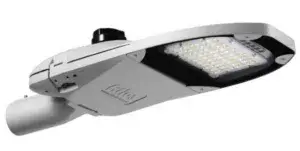
Constitution Series
Brand: Atlas
2nd Gen. Roadway Light,
Up to 18,352 Lumens; 56/107/148W. Prices start at $495.
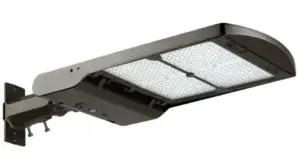
ORASEL
Brand: Atlas
Fully Selectable Area Light
Watts and CCT; 100/120/150W and 200/240/300W; Up to 46,111 Lumens; Prices start at $495.
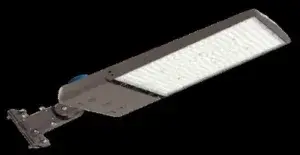
BeamPro+
Brand: Beyond
Area Lighting, BeamPro, All In One LED Area Light/Street Light/Flood Light, Adjustable CCT, Up to 49, 500 Lumens; 100/150/200/240/300W. Prices start at $495.
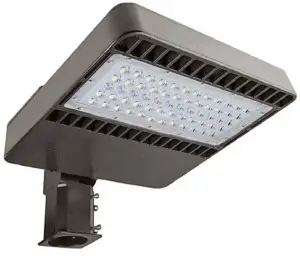
NBAL
Brand: Nebulite
architectural low-profile; LED Area Light comes in both low power (50w – 150w) and high power (200w – 500w) versions; 25W-48W-80W (Watt &CCT Selectable); 100W-150W-200W (Watt &CCT Selectable); 200W-240W-300W (Watt &CCT Selectable); 400W, 500W, 600W(Watt &CCT FIXED)
Prices start at $300.
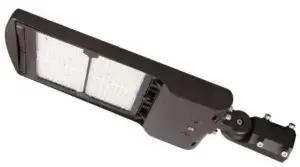
SBC -12 Shoebox
Brand: Ledsion
DLC Listed; Selectable (80/100/150W), (200/240/300W);
up to 45,000 lumens; Prices start at $295.
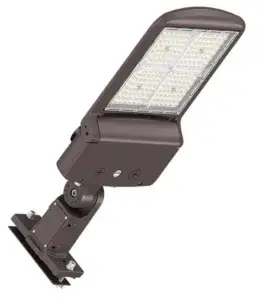
Zoho, 6th Gen
Brand: Beyond
DLC Listed; Selectable (100/120/150W), (200/240/300W);
up to 48,000 lumens; Prices start at $300.
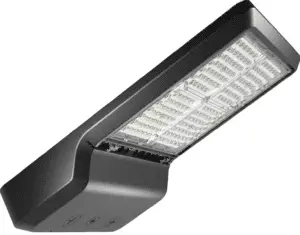
Archer G2
Brand: ATG
DLC Listed; Selectable (60/80/100W),
(100/120/150W), (200/240/300W);
up to 49,088 lumens; Prices start at $300.

ISL
Brand: LightingX
street lighting with multiple optical distributions; IP67; up to 22,500 lumens; 30/60/90/120/ 150/W;
Prices start at $230.
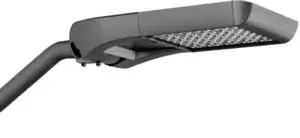
ALFA
Brand: Arrlux
street lighting with multiple optical distributions; IP67; up to 40,300 lumens; 30/60/90/120/ 150/180/210/
240/270/300/320W;
Prices start at $330.
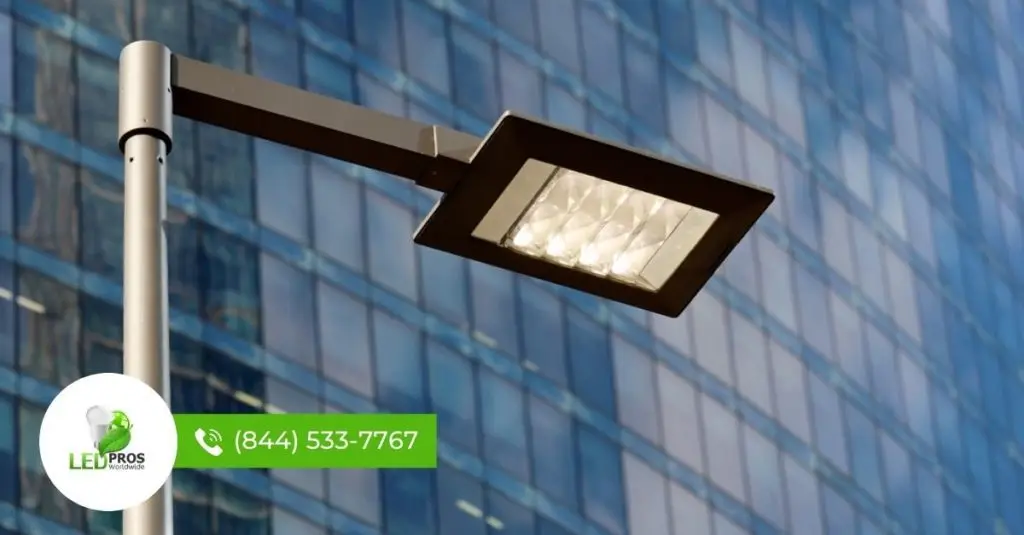
What Are LED Street Lights?
LED street lights are outdoor luminaires that use light-emitting diode (LED) technology as the primary light source to illuminate roads, streets, and transportation corridors. In most modern fixtures, the LED modules, optics, heat sink, and driver are integrated into a single luminaire designed specifically for roadway illumination.
Compared with traditional street lighting technologies, LED fixtures provide several advantages, including improved energy efficiency, longer service life, and better light distribution. Their directional optics allow light to be focused on the roadway rather than scattered into surrounding areas, which improves nighttime visibility and reduces light pollution.
Because of these performance benefits, many cities and commercial developments are transitioning to LED street lighting as part of broader infrastructure modernization and energy-efficiency initiatives.
Common Applications for LED Street Lighting
LED street lighting systems are used across a wide range of transportation and outdoor infrastructure environments.
Typical installations include:
-
Municipal streets and residential roads
-
Highways and major traffic corridors
-
Commercial developments and business parks
-
Industrial facility roadways
-
University campuses; Pedestrian environments such as plazas and campuses may also include LED Post Top Fixtures to illuminate walkways and gathering areas.
-
Parking lot access roads
-
Logistics centers and transportation hubs
Parking areas and large exterior spaces often use LED Area Lights to provide uniform illumination across parking lots and open sites.
These environments require lighting systems that provide uniform roadway visibility while minimizing glare and maintenance requirements.
Key Design Considerations
Selecting LED street lighting for commercial or municipal projects involves evaluating several important factors.
Mounting Height
Street lights are typically installed on poles ranging from 20 to 40 feet, depending on roadway width and lighting requirements.
Optical Distribution
Specialized roadway optics distribute light evenly across the driving surface to reduce dark spots and glare.
Energy Efficiency
LED street lights consume significantly less electricity than traditional lighting technologies, which can dramatically reduce operating costs.
Longevity
Many LED roadway fixtures are designed to operate for 50,000 hours or more, reducing maintenance and replacement costs.
Smart Lighting Controls
Modern street lighting systems may include smart controls, sensors, or networked systems that allow brightness adjustments and energy monitoring.
LED Street Lights vs Area Lights vs Flood Lights
| Feature | LED Street Lights | LED Area Lights | LED Flood Lights |
|---|---|---|---|
| Primary Purpose | Roadway illumination | Parking lot and site lighting | Directional high-output lighting |
| Mounting Location | Street poles along roads | Parking lot poles | Poles or building mounts |
| Light Distribution | Roadway-focused optics | Wide area distribution | Adjustable beam patterns |
| Typical Applications | Roads, highways, campuses | Parking lots, commercial sites | Security zones and large areas |
Large commercial properties often combine LED Street Lights with LED Area Lights to illuminate both roadways and parking areas.
Technical Specifications
Typical commercial LED street lighting fixtures include:
Wattage Range
40W – 300W
Lumen Output
5,000 – 40,000 lumens
Voltage Options
-
120–277V
-
277–480V commercial installations
Color Temperature
-
3000K (residential streets)
-
4000K (urban roadways)
-
5000K (highways and industrial roads)
Color Rendering Index
70+ standard
Optical Distribution Types
-
Type II – narrow roadway lighting
-
Type III – general roadway lighting
-
Type IV – wide area distribution
-
Type V – symmetrical distribution
Ingress Protection
IP65 or higher
Housing Construction
-
Die-cast aluminum housing
-
Integrated heat sink cooling
-
Corrosion-resistant powder coating
Control Options
-
Photocells
-
Motion sensors
-
Smart lighting networks
-
Dimming controls
Rated Lifespan
50,000 – 100,000 hours
Advantages of LED Street Lighting
LED street lighting systems offer several advantages for commercial and municipal infrastructure:
-
Improved roadway visibility and safety
-
Energy-efficient LED technology
-
Long operational lifespan
-
Reduced maintenance costs
-
Lower environmental impact
-
Better light distribution and reduced glare
These benefits make LED technology the preferred solution for modern roadway lighting projects.
Municipalities looking to reduce electrical infrastructure costs can benefit from Commercial Solar Street Lights for roadways, parking areas, and public infrastructure projects.
Inline Buyer Q&A
How do I choose the right LED street light for a roadway project?
Start with the roadway type, width, traffic conditions, existing or planned pole locations, mounting height, pole spacing, and required illumination levels.
Then evaluate fixture lumen output, wattage, optical distribution, mounting configuration, voltage, color temperature, controls, environmental ratings, and applicable municipal or roadway-lighting requirements.
How much light output does an LED street light need?
Required lumen output depends on roadway width, mounting height, pole spacing, fixture optics, traffic conditions, surrounding ambient light, and required illumination and uniformity levels.
Higher lumen output alone does not guarantee better roadway lighting. Proper optical distribution and fixture spacing are critical for achieving consistent coverage without excessive glare or wasted light.
Which optical distribution should I use for street lighting?
Street-light optics should direct illumination along the roadway rather than distributing light equally in every direction.
The appropriate distribution depends on roadway width, pole setback, mounting height, lane configuration, pole spacing, and whether fixtures are installed on one or both sides of the roadway.
Can existing street light poles be reused for an LED conversion?
Often, yes. Existing poles may be suitable for an LED retrofit if their condition, mounting height, arm or tenon configuration, structural capacity, spacing, and electrical system are compatible with the replacement fixtures.
Existing pole locations should also be evaluated to determine whether the new LED optics will provide the required roadway coverage and uniformity.
What information should I provide when requesting an LED street lighting quote or layout?
Provide the roadway width and length, number of lanes, pole locations, mounting heights, pole spacing, voltage, existing fixture information, desired light levels, and project quantity.
Site plans, photographs, pole drawings, municipal specifications, and information about existing lighting can help determine appropriate fixture output, optics, mounting, and spacing.
Plan Your LED Street Lighting Project
Effective street lighting requires the right combination of fixture output, roadway optics, mounting height, pole spacing, uniformity, glare control, and environmental performance.
Whether you are upgrading municipal roadways, commercial developments, campuses, industrial roads, or private transportation corridors, our lighting specialists can help evaluate fixture selection and layout requirements.
Need help selecting LED street lights or planning a roadway lighting project?
👉 Explore Commercial Outdoor Lighting Solutions or call 1-844-533-7767 to discuss your roadway lighting requirements.
Frequently Asked Questions About LED Street Lights
What are LED street lights used for?
LED street lights are used to illuminate roads, highways, and transportation corridors to improve nighttime visibility and safety.
Why are cities switching to LED street lighting?
LED street lighting consumes less energy and lasts longer than traditional lighting technologies, reducing operating and maintenance costs.
What color temperature is used for street lighting?
Common color temperatures include 3000K, 4000K, and 5000K, depending on roadway conditions and visibility requirements.
How long do LED street lights last?
Many LED street lights are rated for 50,000 hours or more of operation.
Can LED street lights be used for parking lots?
Street lights are designed primarily for roadways, while parking lots typically use LED Area Lights for broader illumination coverage.
Stay Connected with Our Lighting Resources
Add IndustrialLightingFixtures.org as a Preferred Source on Google to see more of our lighting guides and technical resources across Google Search experiences.

Related Street & Roadway Lighting Resources
Continue planning roadway and exterior lighting systems with these related resources covering pole height, fixture layout, site design, outdoor lighting, and Dark Sky considerations:
- Area Lighting Pole Height Guide — Learn how mounting height influences fixture coverage, pole spacing, light distribution, uniformity, and visibility across outdoor lighting applications.
- LED Area Lighting Layout Guide — Explore how fixture placement, mounting height, spacing, optical distribution, and site conditions work together when developing an outdoor LED lighting layout.
- Commercial Site Lighting Design Guide — Learn how roadways, parking areas, pedestrian routes, building approaches, and other exterior spaces can be incorporated into a coordinated commercial site lighting plan.
- Outdoor LED Lighting Guide — Review fixture selection, light distribution, environmental considerations, controls, and other factors involved in commercial outdoor LED lighting.
- Dark Sky Outdoor Lighting Guide — Learn how shielding, fixture selection, color temperature, placement, and lighting controls can reduce glare, uplight, light trespass, and unnecessary nighttime illumination.