
LED post top lanterns combine traditional lantern-style design with modern LED lighting technology to illuminate outdoor environments such as plazas, walkways, parks, and commercial campuses. These pole-mounted fixtures provide balanced illumination while enhancing the architectural character of outdoor spaces.
Unlike purely utilitarian lighting fixtures, post top lanterns are often selected for both lighting performance and visual appeal. Their classic lantern-style housings complement architectural landscapes while delivering consistent illumination for pedestrian areas and public spaces.
Modern LED post top lantern fixtures provide improved energy efficiency, longer operational life, and reduced maintenance compared with traditional metal-halide or high-pressure sodium lanterns. These fixtures help property owners maintain attractive outdoor environments while ensuring reliable nighttime visibility.
Because of their decorative appearance and functional lighting performance, LED post top lanterns are widely used in commercial developments, municipal streetscapes, hospitality environments, and landscaped outdoor areas.
Need decorative post top lighting that combines architectural style with commercial-grade performance?
LED PROS supplies LED post top lanterns for municipalities, campuses, parks, hospitality properties, multifamily developments, pedestrian areas, and commercial streetscapes.
We can help match fixture style, pole height, lumen output, optical distribution, color temperature, controls, and project requirements to your application.
Request a Quote or call 1-844-533-7767 for fixture selection, specifications, availability, and project pricing.
LED Post Top Lantern Fixtures
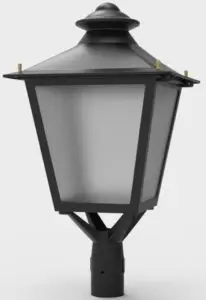
NB-LNT
Brand: Nebulite
Colonial, historic design; CCT switchable; 13,200 lumens; 30/60/80/100/120W; Prices Start at $350.
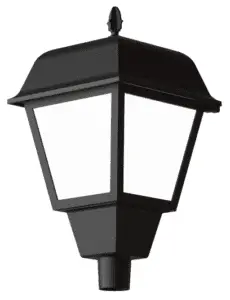
Santa Fe
Brand: Crystal
Tall antique style streetlight; 32.5″ height; Comfort White Acrylic Lens ; Dark Sky ; up to 16,012 lumens; 20/40/50/60/80/100/120W;
Prices Start at $750.
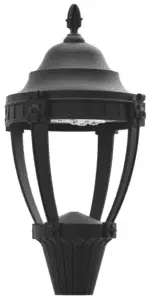
CLP-X43
Brand: Crystal
A premium architectural luminaire; up to 9,986 lumens; 33″ Height; 20/40/60/70W; Prices Start at $800.
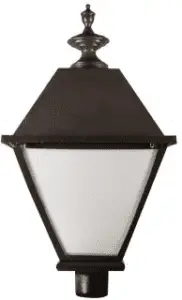
CLP-X50
Brand: Crystal
combining a classic design with cutting-edge LED technology; 2,200 lumens; Dark Sky;
35/54/70/108W; Prices start at $700.
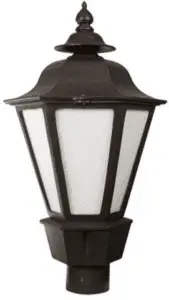
M67
Brand: Crystal
Large 37″ fixture; 10,841 lumens;
Dark Sky compliant; 25/45/65/85W;
Prices start at $600.
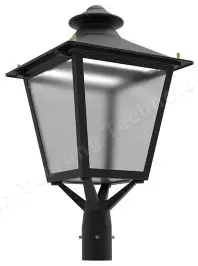
YR-TP890
Brand: YaoRong
Antique style street lamps; classic design elements from colonial America; Tunable color temperature
14,600 lumens; 30/60/120W.
Prices start at $325.
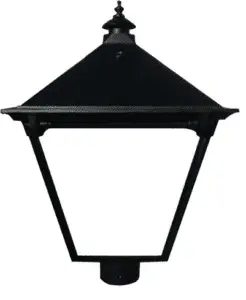
CLP-TC
Brand: Crystal
Antique style streetlight; 24″ height; up to 14,100 lumens; 40/50/60/100W; Prices Start at $500.
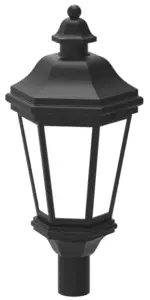
CLP-257
Brand: Crystal
premium Architectural luminaire; 24″, 35″ and 40″; up to 20,680 lm; 15/25/35/45/65/85/105/125/155W;
Prices Start at $600.
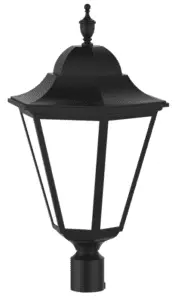
CLA-D323
Brand: Crystal
Architectural LED Luminaire in a historical design; wide light distribution; Dark Sky; 2 sizes – 18″ and 29″ Wall, Pendant Mount; 5/10/20/30/35/40W; Prices start at $600
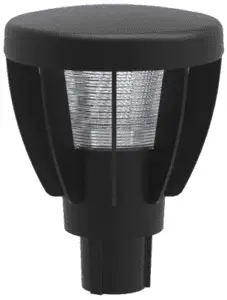
CLP-M58
Brand: Crystal
Small modern, Lantern style; premium luminaire; school; campus
outdoor lighting; 16″ height; up to 9,590 lumens; 30/40/55/80W;
Prices Start at $550.

Commercial LED post top lanterns combine decorative architectural styling with efficient, reliable illumination for streetscapes, parks, campuses, pedestrian areas, hospitality properties, and commercial developments.
What Are LED Post Top Lantern Lights?
LED post top lantern lights are outdoor luminaires mounted on top of poles that provide illumination for pedestrian pathways, parks, plazas, and other outdoor environments. These fixtures typically feature lantern-style housings designed to enhance the visual character of the surrounding landscape.
Pedestrian pathways and landscaped environments may also incorporate LED Courtyard Post Lighting to provide additional pathway illumination.
Post top lantern fixtures combine architectural styling with practical outdoor lighting performance. Their elevated mounting position allows them to distribute light evenly across pathways and gathering areas while improving nighttime visibility and safety.
Post-mounted luminaires play an important role in improving safety and visibility in pedestrian environments. Learn more about their benefits in our article on keeping customers safe with LED post top lanterns.
In modern installations, LED technology has replaced traditional lamp sources in many lantern fixtures, providing greater energy efficiency, longer service life, and more consistent illumination across outdoor environments.
These lighting systems are commonly used in areas where both decorative lighting design and functional illumination are important.
Many outdoor environments such as parks, campuses, and commercial properties rely on LED post top lighting to provide consistent illumination while enhancing architectural design.
Common Applications for LED Post Top Lantern Lighting
LED post top lantern fixtures are frequently installed in outdoor environments that require attractive pedestrian lighting.
Typical applications include:
-
Municipal streetscapes and downtown districts
-
Parks and landscaped walkways; Decorative lantern fixtures are widely used to illuminate parks, pedestrian walkways, and commercial landscapes. Learn more about the technology behind these fixtures in our guide on how post top lights work.
-
Hospitality properties and resorts
-
Commercial plazas and shopping centers
-
University campuses and pedestrian corridors
-
Residential communities and HOAs
-
Courtyards and outdoor gathering areas
These environments benefit from lighting that provides both visual appeal and comfortable pedestrian illumination.
LED Post Top Lanterns for Commercial & Municipal Properties
LED post top lanterns are used by small businesses, commercial properties, municipalities, campuses, hospitality facilities, parks and mixed-use developments where outdoor lighting must provide both functional illumination and an architectural appearance.
For facility operators and contractors, fixture selection can include more than lantern style. Mounting configuration, pole compatibility, lumen output, optical distribution, CCT, controls, project quantities and delivery requirements should be reviewed before fixtures are ordered.
LED PROS WorldWide works with commercial buyers, contractors and facility operators to identify post top lanterns for new construction, streetscape projects and replacement applications. For larger projects, provide the fixture quantity, existing or proposed pole information, project location and any photometric or specification requirements when requesting a quote..
Key Design Considerations
Selecting LED post top lantern lighting involves evaluating several important factors.
Fixture Design
Lantern-style fixtures may feature traditional, heritage, or contemporary architectural designs that complement surrounding buildings.
Mounting Height
Post top lanterns are typically installed on poles between 10 and 16 feet, allowing even illumination across pedestrian areas.
Light Distribution
Optical systems help distribute light evenly across walkways and plazas while reducing glare.
Environmental Durability
Outdoor lantern fixtures require weather-resistant housings designed to withstand rain, dust, and temperature changes.
Energy Efficiency
LED technology provides higher efficiency and longer lifespan compared with traditional lighting technologies.
LED Post Top Lanterns vs Post Top Fixtures vs Area Lights
| Feature | LED Post Top Lanterns | LED Post Top Fixtures | LED Area Lights |
|---|---|---|---|
| Primary Purpose | Decorative pedestrian lighting | Functional pathway lighting | Large-area illumination |
| Lighting Style | Lantern-style architectural design | Modern post-top fixture | High-output site lighting |
| Mounting Height | 10–16 ft poles | 10–16 ft poles | 20–40 ft poles |
| Typical Applications | Parks, plazas, streetscapes | Walkways and campuses | Parking lots and industrial sites |
Large parking areas and commercial campuses that require higher illumination levels often rely on LED Area Lights mounted on taller poles.
Technical Specifications
Typical commercial LED post top lantern fixtures include:
Wattage Range
30W – 120W
Lumen Output
3,000 – 15,000 lumens
Voltage Options
-
120–277V
-
277–480V (commercial installations)
Color Temperatures
-
2700K – warm architectural lighting
-
3000K – hospitality environments
-
4000K – commercial properties
Color Rendering Index
70+ standard
80+ optional
Ingress Protection
IP65 or higher
Housing Construction
-
Die-cast aluminum
-
Powder-coated architectural finishes
-
Tempered glass or polycarbonate lenses
Control Options
-
Photocells
-
Motion sensors
-
Smart lighting systems
Rated Lifespan
Up to 50,000 – 100,000 hours
Advantages of LED Post Top Lantern Lighting
LED post top lantern fixtures offer several benefits for commercial and municipal environments:
-
Decorative architectural lighting
-
Energy-efficient LED technology
-
Long operational lifespan
-
Reduced maintenance requirements
-
Comfortable pedestrian illumination
-
Improved safety and visibility
Architectural environments frequently use LED Architectural Post Top Lighting to complement decorative lantern-style fixtures.
These fixtures help create visually appealing outdoor environments while maintaining reliable illumination for pedestrians and visitors.
Inline Buyer Q&A
How do I choose the right LED post top lantern?
Start with the architectural style of the property, application, mounting height, desired illumination level, pole configuration, and surrounding pedestrian environment.
Then compare fixture dimensions, lumen output, optical distribution, color temperature, glare control, voltage, controls, environmental ratings, and compatibility with the proposed or existing pole.
How much light should an LED post top lantern produce?
The appropriate lumen output depends on mounting height, fixture spacing, optical distribution, surrounding ambient light, and the function of the space.
Pedestrian areas generally benefit from controlled, uniform illumination rather than simply maximizing fixture brightness. Photometric planning can help determine appropriate output and spacing for larger projects.
How do I match post top lanterns with the architecture of a property?
Consider the building architecture, pole design, fixture shape, proportions, finish, lens style, and surrounding landscape or streetscape.
Traditional lantern designs often complement historic, hospitality, municipal, and residential-style developments, while more contemporary designs may be appropriate for modern campuses, mixed-use properties, and commercial developments.
Can existing lamp posts be reused with new LED lantern fixtures?
Often, yes, provided the existing poles are structurally sound and the new lantern is compatible with the pole-top mounting configuration.
Verify pole dimensions, tenon or fitter size, fixture weight, mounting method, electrical requirements, and overall proportions before selecting replacement luminaires.
What information should I provide when requesting commercial post top lanterns?
Provide the project type, desired architectural style, pole height and dimensions, mounting configuration, voltage, fixture quantity, preferred color temperature, required light levels, and any requirements for controls, glare reduction, or Dark Sky performance.
Site plans, photographs, architectural renderings, and information about existing poles can also help with fixture selection and project planning.
Plan Your LED Post Top Lantern Lighting Project
LED post top lanterns combine pedestrian-scale illumination with decorative architectural styling for parks, plazas, campuses, streetscapes, hospitality properties, HOA communities, and commercial developments.
Selecting the right lantern requires coordinating fixture style, pole height, lumen output, optical distribution, color temperature, controls, and the architectural character of the property.
👉 Call 1-844-533-7767 for help selecting LED post top lanterns, coordinating fixtures with existing or new poles, or planning photometric requirements for your project.
Frequently Asked Questions About LED Post Top Lanterns
What are LED post top lantern lights used for?
LED post top lantern lights are commonly used to illuminate parks, plazas, campuses, streetscapes, and pedestrian walkways.
What is the difference between post top lanterns and area lights?
Post top lanterns provide decorative pedestrian lighting, while area lights deliver higher illumination levels for large spaces such as parking lots.
Are LED post top lanterns energy efficient?
Yes. LED lantern fixtures use significantly less energy than traditional lighting technologies while delivering longer service life.
What height are post top lantern lights installed?
Commercial post top lanterns are commonly installed on poles approximately 10 to 16 feet high, although mounting height varies according to the application, fixture output, optical distribution, spacing, and desired lighting effect.
Can LED post top lantern lights be used in commercial environments?
Yes. These fixtures are widely used in commercial developments, municipal streetscapes, and hospitality environments.
Stay Connected with Our Lighting Resources
Add IndustrialLightingFixtures.org as a Preferred Source on Google to see more of our lighting guides and technical resources across Google Search experiences.
Related Post Top Lantern & Architectural Lighting Resources
Continue planning your commercial post top lantern system with these related architectural and pedestrian lighting resources:
- LED Post Top Fixtures — Explore the broader range of commercial LED post top fixtures for pedestrian walkways, plazas, parks, campuses, streetscapes, and landscaped environments.
- LED Architectural Post Top Lighting — Explore architectural post top luminaires designed to coordinate outdoor illumination with the visual character of commercial properties, campuses, HOA communities, and mixed-use developments.
- Outdoor Lamp Post Fixture Retrofit Guide — Learn how to evaluate existing lamp posts, determine fixture compatibility, and replace older HID or conventional post top luminaires with LED fixtures.
- Dark Sky Compliant Post Lights — Review post top lighting approaches that emphasize controlled illumination, reduced glare, lower uplight, and responsible nighttime lighting.
- Outdoor LED Lighting Guide — Review how post top lanterns and other exterior fixture types fit into a coordinated commercial outdoor lighting system.