
LED courtyard post lighting provides pedestrian-scale illumination for outdoor environments such as courtyards, plazas, gardens, and landscaped gathering areas. These pole-mounted luminaires combine functional outdoor lighting with decorative fixture design, helping create safe and visually inviting spaces after dark.
Unlike high-output area lighting systems designed for large parking facilities, courtyard lighting operates at a lower mounting height to produce comfortable illumination for pedestrian environments. Carefully designed optics distribute light evenly across walkways, seating areas, and landscaped spaces while minimizing glare.
In commercial developments, hospitality properties, and mixed-use environments, courtyard post lighting helps define outdoor spaces while supporting safety and visibility. These fixtures contribute to both the functional lighting system and the architectural character of the property.
Courtyard Lighting
These systems are often used alongside other outdoor lighting fixtures to create layered illumination across commercial properties.
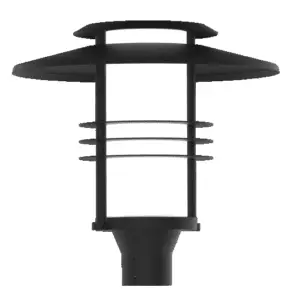
ODIN
Brand: Crystal
modern, sophisticated design transforms any outdoor space. 4 shade styles, up to 12,000 lumens; 10 yr warranty; 25/45/55/65/80/100W;
Prices Start at $600.
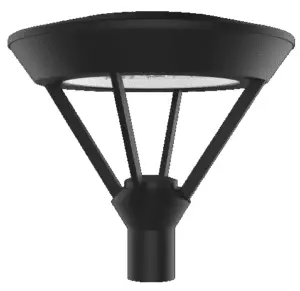
Pulsar
Brand: Crystal
Architectural Post Mount Luminaire; Perfect for lighting up Walkways, Parking Lots; Dark Sky; 10 Yr warr. 20/40/50/70/85/100/150/200W.
Prices Start at $450.
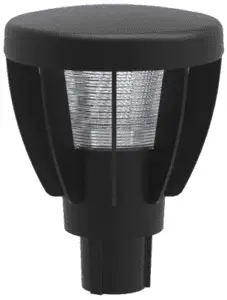
M58
Brand: Crystal
Small modern, Lantern style; premium luminaire; used as school campus outdoor lighting; 16″ height;
up to 9,590 lumens;
30/40/55/80W; 10-year warranty.
Prices Start at $400.
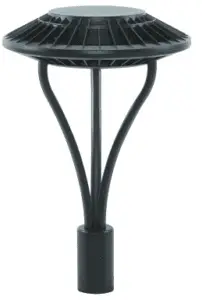
LS-RMS-PT
Brand: Ledsion
Contemporary design, up to 13,000 Lumens; 25″ in height; DLC Listed;
available in 30/50/75/100W;
Prices start at $350.
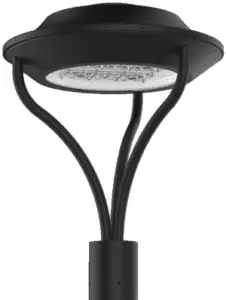
5001
Brand: Crystal
Dark Sky; 10-year warranty;
up to 9,590 lumens; 30/45/65/80W,
Prices start at $408.
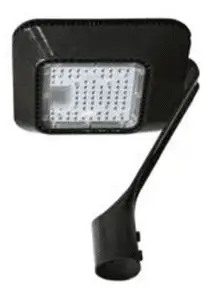
TP325
Brand: YaoRong
Post Top LED area light for parking lots, plaza lighting, shopping mall, garden, roadway, DLC Listed; up to 11,327 lumens; Dimmable; 20/35/50/100W; Prices start at $350..
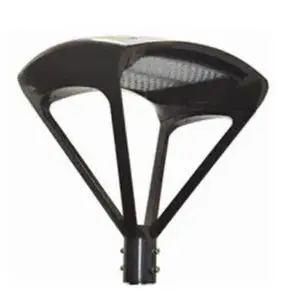
TP500
Brand: YaoRong
Post Top LED area light for parking lots, plaza lighting, shopping mall, garden, roadway,DLC; IP65;
up to 30,250 lumens; Dimmable;
50/100/150/200/300W.
Prices start at $328.
What Is LED Courtyard Post Lighting?
LED courtyard post lighting refers to outdoor luminaires mounted on poles that illuminate pedestrian-focused environments such as courtyards, plazas, pathways, and landscaped outdoor areas. These fixtures are designed to provide balanced illumination while maintaining visual comfort in outdoor gathering spaces.
Pedestrian pathways and landscaped environments commonly incorporate LED Post Top Fixtures to provide consistent pathway illumination.
Courtyard lighting systems are typically installed at moderate pole heights and feature decorative or architectural fixture designs that complement surrounding buildings and landscape features. By combining energy-efficient LED technology with refined optical systems, these luminaires provide consistent illumination while minimizing light spill and glare.
Because of their balanced light distribution and architectural appearance, courtyard lighting fixtures are commonly used in hospitality environments, campuses, parks, and commercial properties where both aesthetics and safety are important.
Architectural outdoor environments may also utilize LED Architectural Post Top Lighting to complement courtyard lighting with decorative fixture designs.
Common Applications for Courtyard Post Lighting
LED courtyard lighting systems are commonly installed in outdoor environments designed for pedestrian activity and public gathering.
Typical applications include:
-
Commercial plazas and shopping centers
-
Hotel courtyards and resort landscapes
-
Corporate campuses and office parks
-
Restaurants and outdoor dining areas
-
University campuses and pedestrian pathways
-
Parks and landscaped public spaces
-
Residential communities and HOAs
These environments require lighting that maintains comfortable visibility while supporting the visual design of the outdoor space.
For help balancing pedestrian visibility, fixture placement, glare control, and the visual character of outdoor gathering spaces, see our Commercial Courtyard Lighting Design Guide for Safety, Comfort & Ambiance.
Planning a courtyard lighting renovation? Before replacing your entire lighting system, explore our Outdoor Lamp Post Fixture Retrofit Guide to see how existing poles can often be reused with modern LED post top fixtures.
Key Design Considerations
Selecting courtyard post lighting requires evaluating several important factors.
Mounting Height
Courtyard fixtures are typically installed on poles ranging from 8 to 14 feet, providing balanced illumination for pedestrian environments. Courtyard pole locations should be planned together with fixture output and mounting height rather than using an arbitrary distance between poles. Our post top pole spacing guide explains the factors that determine appropriate spacing for pedestrian and commercial outdoor areas.
Fixture Style
Decorative housings are often chosen to complement the architectural character of the surrounding property.
Light Distribution
Optical systems are designed to distribute light evenly across pathways and seating areas while minimizing glare.
Environmental Durability
Outdoor luminaires must withstand rain, dust, wind, and temperature fluctuations.
Energy Efficiency
LED technology significantly reduces energy consumption while delivering long operational lifespan.
Want to learn more about the technology behind today’s outdoor lighting systems? Read our How Commercial LED Post Top Lights Work guide to explore LED drivers, optics, thermal management, smart controls, and other features that improve performance and efficiency.
When planning courtyard illumination, fixture selection is only part of the design. Our LED Courtyard Lighting: Advantages & Disadvantages guide examines the benefits, potential limitations, placement considerations, and practical factors involved in lighting commercial courtyards and outdoor gathering spaces.
Courtyard Post Lighting vs Post Top Fixtures vs Area Lights
| Feature | LED Courtyard Post Lighting | LED Post Top Fixtures | LED Area Lights |
|---|---|---|---|
| Primary Purpose | Decorative pedestrian lighting | Pathway and campus lighting | Large-area site lighting |
| Mounting Height | 8–14 ft poles | 10–16 ft poles | 20–40 ft poles |
| Lighting Style | Architectural / decorative | Pedestrian scale | High-output site lighting |
| Typical Environments | Courtyards, gardens, plazas | Parks, campuses, walkways | Parking lots, industrial yards |
Large parking areas and commercial campuses requiring higher illumination levels typically rely on LED Area Lights mounted on taller poles.
Technical Specifications
Typical commercial LED courtyard post lighting fixtures include:
Wattage Range
20W – 120W
Lumen Output
2,000 – 15,000 lumens
Voltage Options
-
120–277V
-
277–480V (commercial installations)
Color Temperatures
-
3000K (architectural environments)
-
4000K (commercial properties)
-
5000K (high visibility areas)
Color Rendering Index
70+ standard
80+ optional
Ingress Protection
IP65 or higher
Housing Construction
-
Die-cast aluminum
-
Architectural powder-coat finishes
-
UV-resistant polycarbonate lenses
Control Options
-
Photocells
-
Motion sensors
-
0-10V dimming
-
Smart lighting systems
Rated Lifespan
Up to 100,000 hours
Advantages of LED Courtyard Post Lighting
LED courtyard lighting offers several benefits for commercial and hospitality environments:
-
Enhanced outdoor aesthetics
-
Comfortable pedestrian illumination
-
Energy-efficient LED performance
-
Reduced maintenance requirements
-
Durable construction for outdoor environments
-
Improved safety and visibility in gathering areas
These fixtures help create welcoming outdoor environments while maintaining reliable illumination for visitors and pedestrians.
Wondering why so many commercial properties are replacing traditional outdoor lighting? Read our Why Choose Commercial LED Post Top Lighting? guide to learn how modern LED technology improves energy efficiency, lighting quality, maintenance, and long-term performance.
Inline Buyer Q&A
How do I choose LED post lighting for a commercial courtyard?
Start with the size and layout of the courtyard, pedestrian activity, mounting height, fixture spacing, desired light levels, architectural style, color temperature, optical distribution, and surrounding buildings or landscaping.
Courtyard lighting should provide useful pedestrian-scale illumination while complementing the architecture and nighttime character of the property.
How tall should courtyard light poles be?
Mounting height depends on the dimensions of the space, fixture output, optical distribution, desired coverage, architectural scale, and surrounding environment.
Pedestrian-scale poles are commonly used in courtyards, but there is no single mounting height appropriate for every project. Fixture spacing and mounting height should be evaluated together rather than independently.
How far apart should courtyard post lights be placed?
Spacing depends on mounting height, lumen output, fixture optics, courtyard geometry, surrounding ambient light, landscaping, and desired illumination levels.
For larger courtyards, plazas, hospitality properties, campuses, and multifamily developments, a photometric layout can help determine appropriate fixture quantities and spacing before installation.
Should courtyard post lights match the building architecture?
They often should complement it. Courtyard fixtures are highly visible during both daytime and nighttime, so fixture shape, finish, pole style, scale, and light appearance can become part of the property’s architectural design.
Traditional lantern or decorative post tops may suit historic, hospitality, or residential environments, while contemporary architectural fixtures may better complement modern commercial developments.
What information should I provide when requesting courtyard lighting?
Helpful information includes courtyard dimensions or site plans, proposed or existing pole locations, mounting heights, voltage, desired fixture style, color temperature, control requirements, photographs, and any required light levels.
For retrofit projects, provide information about the existing poles, mounting configuration, wiring, and current fixtures whenever possible.
Ready to Plan Your Commercial Courtyard Lighting?
Courtyard lighting should balance pedestrian visibility, architectural appearance, comfortable illumination, energy efficiency, and long-term reliability. The right combination of fixture style, mounting height, optics, spacing, and controls can create an inviting nighttime environment without unnecessary glare or excessive illumination.
Whether you’re lighting a hotel courtyard, university campus, multifamily community, municipal plaza, park, restaurant patio, or commercial gathering space, our lighting specialists can help evaluate fixture styles, poles, output, optics, controls, and photometric requirements.
👉 Explore our LED Courtyard Post Lighting solutions or call 1-844-533-7767 to discuss your commercial courtyard lighting project.
Frequently Asked Questions
What is courtyard post lighting?
Courtyard post lighting uses pole-mounted outdoor luminaires to illuminate pedestrian-oriented spaces such as courtyards, plazas, walkways, gathering areas, patios, and landscaped commercial environments.
Fixtures are often selected for both their lighting performance and architectural appearance.
Where is courtyard lighting typically installed?
Courtyard post lighting is commonly used at hospitality properties, campuses, parks, multifamily and residential communities, municipal spaces, restaurants, mixed-use developments, commercial plazas, and other pedestrian gathering areas.
What height are courtyard post lights installed?
Courtyard post lights are generally installed at pedestrian-scale mounting heights, but the appropriate height varies by project.
Fixture output, optical distribution, spacing, courtyard dimensions, architectural scale, landscaping, and desired illumination should all be considered when determining pole height. A photometric layout can help establish an appropriate combination of mounting height and spacing for larger projects.
Are LED courtyard lights energy efficient?
LED courtyard fixtures can provide significant energy savings compared with many older HID lighting systems. Additional savings may be achieved through appropriate fixture sizing, photocells, scheduling, dimming, and other lighting controls.
Actual energy savings depend on the existing system, replacement fixture wattage, operating hours, and control strategy.
Can courtyard lighting be used in parking areas?
Yes, when the fixture provides suitable light output, optical distribution, mounting capability, and photometric performance for the parking environment.
Courtyard and decorative post-top fixtures are particularly useful where parking areas are integrated with pedestrian spaces or architectural developments. Larger parking facilities may benefit from purpose-designed area-lighting fixtures that provide broader coverage from higher mounting positions.
Can existing courtyard poles be reused for LED fixtures?
Often they can. Existing poles may be suitable for LED retrofit projects when their structural condition, mounting dimensions, electrical system, height, and configuration are compatible with the replacement fixtures.
Pole condition and fixture compatibility should be evaluated before ordering replacement luminaires.
Stay Connected with Our Lighting Resources
Add IndustrialLightingFixtures.org as a Preferred Source on Google to see more of our lighting guides and technical resources across Google Search experiences.
Related Courtyard & Pedestrian Lighting Resources
Continue planning a coordinated commercial courtyard and pedestrian lighting system with these related resources:
- Commercial LED Post Top Fixtures — Explore decorative and contemporary post-top fixtures for courtyards, campuses, plazas, parks, multifamily communities, and pedestrian environments.
- LED Architectural Area Lighting — Review architectural area fixtures that combine outdoor lighting performance with designs intended to complement commercial properties and landscaped spaces.
- LED Bollard Lighting Guide — Explore pedestrian-scale bollard lighting for walkways, courtyard edges, entrances, landscaped areas, and commercial gathering spaces.
- Decorative LED Post Top Lighting — Review architectural post-top options for properties where fixture appearance and daytime aesthetics are important parts of the outdoor environment.
- Outdoor LED Lighting Guide — Learn how fixture selection, mounting, optics, controls, and lighting design work together across commercial outdoor environments.