LED sports lighting fixtures are engineered to deliver high-intensity, uniform illumination for athletic fields, stadiums, and outdoor sports complexes. Designed for precision beam control and glare reduction, commercial-grade sports lighting systems enhance player visibility, spectator experience, and broadcast clarity while significantly reducing energy consumption and maintenance costs. Whether illuminating football fields, baseball diamonds, soccer pitches, or multi-purpose athletic facilities, modern LED sports lighting provides dependable performance in demanding outdoor environments.
LED Sports Lighting Fixtures
In complex facility designs, LED sports lighting is often coordinated with adjacent perimeter, parking lot, and site lighting systems to ensure both athletic performance and overall site safety throughout event hours.
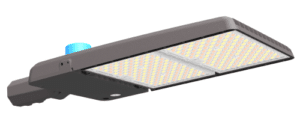
ACE Tennis Court Sport Light
Brand: ATG
Power & CCT Selectable; up to 78,000 lumens; 400/450/500W; Prices start at $500.
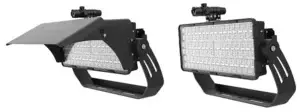
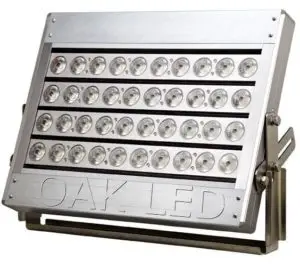
OAK-SMD-FL
Brand: OakLED
High Mast LED Sport Lights; Customized light shield; Providing laser locator optionally; up to 288,000 lumens; 300/600/900/1200/1800W Prices start at $600.
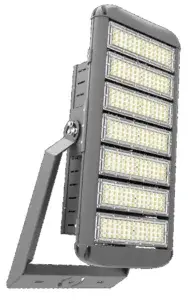
Edge Sports
Brand: E-Lite
used in sports arenas and high mast applications; meets international broadcasting standards, up to 192,000 lumens; 120/200/300/400/600/800/960/1200W; Prices start at $350.
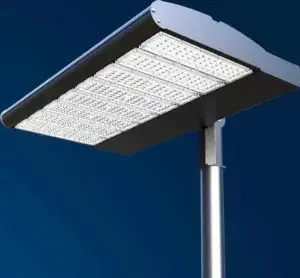
Edge Tennis
Brand: E-Lite
Glare-free lens design; recommended for recreational, club, and competition levels up to 90,000 lumens; 240/400/600W; Prices start at $450.
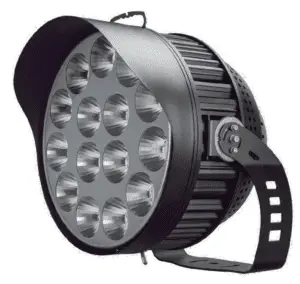
STU
Brand: Ledsion
Features COB LEDs; Glare and Spill Light Control; UL, CE, IP68; Made in USA; up to 156,000 lumens;
600/1200W; Prices start at $675.
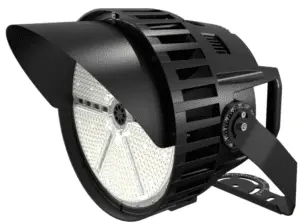
AST-SPO8
Brand: Ledsion
Anti-glare module; professional reflector; UL, cUL DLC;
up to 75,000 lumens;
500W; Prices start at $900.
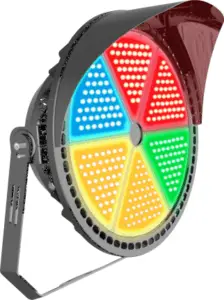
BB-LD
Brand: BBier
RGB Stadium Light; High Power Color
Changing sports lighting; stadiums, amusement parks, theme parks, carnivals; 400/500/600W.
Prices start at $400.
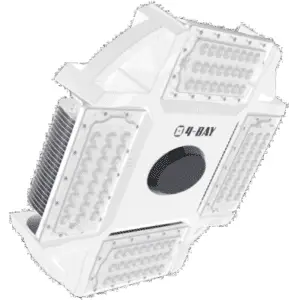
4 Bay
Brand: G-Comin
Indoor Tennis Courts Lighting;
Direct and Indirect lighting
Modules rotate up to 200 degrees;
up to 76,800 lumens;
100/150/200/240/300/400/480W.
Prices start at $300.
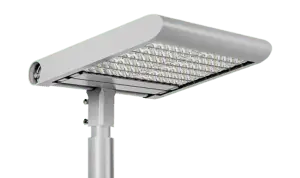
Aurora
Brand: Arrlux
slim profile design; corrosion-resistant finish; UL, cUL, CE, DLC; CREE LEDs;
up to 115,680 lumens; IP67; 450/600/750/900W.
Prices start at $850.
What Are LED Sports Lighting Fixtures?
LED sports lighting fixtures are high-output area luminaires specifically designed for large-scale athletic venues. Mounted on tall poles or stadium structures, these systems use precision optics to direct light across expansive playing surfaces while minimizing spill light and glare. Commercial sports lighting solutions are selected based on field dimensions, competition level, and required illumination standards.
Planning a tennis court project? Visit our Outdoor Tennis Court Lighting Guide for sport-specific recommendations on pole heights, glare control, spill light, and court layouts.
When Should LED Sports Lighting Be Used?
LED sports lighting is specified when illumination must:
✔ Support athletic performance and spectator visibility
✔ Meet governing body lighting standards (e.g., NFHS, NCAA, FIFA)
✔ Provide uniform field coverage
✔ Minimize glare and spill light
✔ Enable broadcast-quality lighting for media capture
Common applications include:
• Outdoor athletic fields (soccer, football, baseball)
• Indoor arenas and gymnasiums; Indoor tennis facilities require carefully planned illumination to maintain ball visibility, control glare, and provide consistent lighting across the court. See our indoor tennis court lighting guide for recommended light levels and design considerations.
• Tennis and pickleball courts
• Multi-purpose recreational fields
• Track & field facilities
• Community and municipal sports complexes
These luminaires support competitive play, safety, and visual comfort while enhancing the spectator experience. Large athletic complexes frequently integrate LED parking lot lighting systems to provide consistent visibility across spectator parking areas.
Key Performance Characteristics
H3: High Lumen Output
Sports lighting fixtures can range from 40,000 to 150,000+ lumens depending on mounting height and venue requirements. Mounting height is one of the variables that determines how effectively a sports luminaire can distribute light across the playing surface. Our Sports Field Lighting Pole Height Guide explains how pole height interacts with fixture optics, aiming, uniformity, glare, and field dimensions.
H3: Precision Beam Control
Customizable optics ensure light is focused on the playing surface, improving uniformity and reducing light trespass.
H3: Glare Reduction Technology
Advanced shielding and optical design reduce discomfort glare for athletes and spectators. Sports-lighting performance depends not only on illumination across the playing surface but also on controlling light outside the intended target.
H3: Energy Efficiency
LED sports lighting significantly lowers power consumption compared to traditional metal halide stadium lighting.
H3: Long Service Life
50,000+ hour rated lifespan reduces lift equipment and maintenance expenses.
Selecting the right fixture is only one part of a successful athletic lighting project. Our LED Sports Lighting Guide explains photometric layouts, glare control, lighting controls, maintenance planning, and application-specific design for fields, courts, stadiums, and recreation facilities.
Core Specifications & Performance Characteristics
Key performance features of LED sports lighting include:
✔ Lumen output & field uniformity: high lumens with balanced coverage
✔ Photometric precision: asymmetric optics to reduce glare
✔ CCT & CRI: appropriate color temperature and color rendering for accurate perception
✔ Flicker-free performance: suitable for high-speed video capture
✔ Mounting flexibility: supports high-mast poles and rigging points
✔ Control compatibility: dimming, zoning, and scheduling
Sports lighting designs achieve lux levels that vary by sport and competition level, with broadcast events demanding the highest performance and uniformity.
Beyond field illumination, facilities often implement broader commercial outdoor lighting solutions to enhance campus-wide visibility and safety.
Common Applications
-
High school athletic fields; School athletic facilities often combine football, soccer, baseball, softball, track, practice fields, and spectator areas within one campus. Our High School Athletic Field Lighting Guide explains how these different applications affect light levels, pole placement, glare, controls, retrofits, and photometric planning.
-
College stadiums
-
Municipal sports complexes
-
Soccer and football fields
-
Baseball and softball diamonds
-
Tennis courts
-
Track & field venues;
-
Multi-use recreation facilities
Track and field facilities require coordinated illumination across the running track, event areas, and frequently a football or soccer field within the same complex. Our LED Track & Field Lighting Guide explains how light levels, uniformity, pole placement, optics, glare control, and photometric design work together for these facilities.
Outdoor athletic facilities require careful coordination of fixture output, mounting height, beam angles, uniformity, and glare control. Our Outdoor Sports Lighting Guide explores these considerations for fields, courts, stadiums, and recreational facilities.
Planning & Selection Considerations
When specifying LED sports lighting, designers should assess:
✔ Field size & geometry: to determine fixture count and aiming
✔ Mounting height & pole configuration: for optimal beam reach
✔ Required lux and uniformity: based on governing sports standards
✔ Glare control: to avoid spill into adjacent properties
✔ Control and zoning: for energy efficiency and event flexibility
Photometric modeling is often used in sports lighting design to validate uniformity ratios, border spill, and vertical illuminance — ensuring performance meets both playability and regulatory expectations.
Ready to move from product selection to system design? Visit our Sports Field Lighting Guide to learn how photometric layouts, pole placement, optics, and smart controls come together in a successful lighting project.
Comparison Table — Sports Lighting vs Flood vs High Mast
| Attribute / Use | Sports Lighting | Flood Lighting | High Mast Lighting |
|---|---|---|---|
| Primary Coverage | Uniform field illumination | Wide open area | Very broad site coverage |
| Typical Mounting Height | 40–100 ft | 20–60 ft | 60–120 ft |
| Optical Focus | Asymmetric precision | Broad flood pattern | High-angle wide coverage |
| Best Use Cases | Athletic playfields | Yards & perimeters | Large sites like ports |
| Visual Requirements | Uniformity & glare control | Visibility | General illumination |
| Typical Environments | Stadiums, arenas | Storage yards | Docks, logistic hubs |
Selecting the right fixture is only the beginning. Our Stadium Lighting Design Guide explains how professional venues combine photometric planning, optics, controls, and architectural lighting to create world-class athletic facilities.
For stadiums and athletic complexes that also require large-area illumination for parking lots, entrance plazas, pedestrian circulation, service roads, and other surrounding areas, see our Sports Stadium & Athletic Complex High Mast Lighting Guide.
Technical Standards & Compliance Resources
Design and selection of LED sports lighting fixtures must align with applicable lighting standards and performance criteria established by governing bodies such as:
✔ NFHS (National Federation of State High School Associations)
✔ NCAA (College athletic standards)
✔ FIFA / FIFA Quality Programme for Football Turf and Floodlighting
✔ IES (Illuminating Engineering Society) sports lighting recommendations
Additionally, compliance with local codes and utility rebate programs often involves verification of driver efficiency, glare control, and energy use. Reviewing both performance standards and code expectations supports safe, high-quality illumination suitable for both competition and community use.
Large indoor athletic facilities introduce different mounting, glare, and vertical-visibility requirements from outdoor fields. Our Indoor Field House & Sports Dome Lighting Guide explains direct, indirect, and direct/indirect LED lighting strategies for these facilities.
Design & Planning Considerations
✔ Field dimensions and layout
✔ Mounting height and pole placement
✔ Uniformity ratios
✔ Spill light control
✔ Local light pollution ordinances
✔ Broadcast requirements (if applicable)
✔ Electrical infrastructure capacity
✔ Photometric analysis
Proper planning ensures compliance with competition-level illumination standards.
High-output sports luminaires require properly engineered commercial light poles designed to withstand wind loads, mounting height demands, and long-term outdoor exposure.
Temporary lighting is frequently used during field maintenance, tournament setup, and facility improvements. Learn more in our Commercial LED Work Lights Guide.
Inline Buyer Q&A
How do I choose the right LED sports lighting fixtures?
Start with the sport, field or court dimensions, competition level, mounting height, existing pole locations, and required illumination levels.
Then compare fixture lumen output, wattage, optical distribution, glare control, aiming capabilities, environmental ratings, controls, and mounting requirements. The goal is not simply maximum brightness, but uniform illumination across the playing surface with controlled glare and light spill.
How many LED sports lights will my field or court need?
Fixture quantity depends on field dimensions, mounting height, pole quantity and location, fixture output, beam distribution, aiming angles, and required foot-candle levels.
A photometric layout is the best way to determine fixture quantity and placement before purchasing equipment.
Can existing sports-lighting poles be reused for an LED retrofit?
Often, yes. Existing poles may be suitable for LED fixtures if their height, condition, structural capacity, mounting configuration, and locations support the proposed lighting design.
Pole condition and wind loading should be evaluated before installing replacement fixtures, particularly when fixture size, weight, or EPA differs from the existing equipment.
How important are optics and beam angles in sports lighting?
Optical distribution is critical because sports facilities often require light to travel significant distances from perimeter poles to specific areas of the playing surface.
Selecting the appropriate beam distributions helps improve uniformity, reduce dark areas, control spill light, and minimize glare for athletes and spectators.
What information should I provide for a sports-lighting quote or photometric layout?
Provide the sport or application, field or court dimensions, pole locations, mounting heights, available voltage, existing fixture quantity and wattage, desired light levels, and whether the project is new construction or an LED retrofit.
Site plans, photographs, pole drawings, and existing photometric information can help produce a more accurate fixture recommendation and lighting layout.
Plan Your LED Sports Lighting Project
From recreational courts and community fields to competitive athletic facilities, effective sports lighting requires the right combination of fixture output, optics, mounting height, pole placement, glare control, and uniformity.
Need help selecting LED sports lighting fixtures or planning a new installation or retrofit?
👉 Review Our Sports Field Lighting Design Guide or call 1-844-533-7767 to discuss your athletic facility and photometric requirements.
FAQs About LED Sports Lighting
1️⃣ How bright should LED sports lighting be?
Brightness requirements vary by sport and competition level. High school and recreational fields require lower foot-candle levels than collegiate or broadcast-level venues.
2️⃣ What mounting height is used for sports lighting?
Sports lighting fixtures are typically mounted between 40 and 100 feet depending on field size and lighting objectives.
3️⃣ Are LED sports lights better than metal halide?
Yes. LED sports lighting offers improved energy efficiency, instant-on capability, longer lifespan, and superior light uniformity compared to metal halide systems.
4️⃣ How long do LED sports lighting fixtures last?
Most commercial LED sports fixtures are rated for 50,000 hours or more, reducing maintenance frequency and operational downtime.
5️⃣ Can sports lighting reduce glare?
Modern LED sports lighting systems incorporate precision optics and shielding to reduce glare and limit light spill into surrounding areas.
6️⃣ Do sports lighting systems require photometric planning?
Yes. Professional photometric layouts are essential to ensure proper uniformity, light levels, and compliance with local regulations.
Stay Connected with Our Lighting Resources
Add IndustrialLightingFixtures.org as a Preferred Source on Google to see more of our lighting guides and technical resources across Google Search experiences.
Related Sports Field & Court Lighting Resources
Continue planning your athletic facility with these related sports lighting design resources:
- Outdoor Tennis Court Lighting — Review court lighting considerations including fixture placement, visibility, glare control, and illumination performance for tennis facilities.
- Stadium Lighting Design Guide — Explore lighting design considerations for larger athletic venues where mounting height, high-output fixtures, optics, uniformity, and spectator visibility become critical.
- Outdoor Sports Lighting — Explore lighting requirements across outdoor courts, athletic fields, recreational facilities, and specialized sports applications.
-
High School Athletic Field Lighting Guide — LED lighting for football, soccer, baseball, softball, track, and school athletic complexes.
-
LED Track & Field Lighting Guide — lighting design for running tracks, field events, and shared athletic facilities.
-
Sports Stadium & Athletic Complex High Mast Lighting Guide — high mast site lighting for parking, entrances, circulation, and surrounding athletic-complex areas.