
LED marine navigation lights are energy-efficient signal fixtures installed on vessels to meet maritime visibility regulations. They display required red, green, and white light patterns to indicate direction and prevent collisions in low-visibility conditions.
LED marine navigation lights are maritime safety luminaires designed to indicate a vessel’s position, direction, and operational status in accordance with international navigation regulations. These fixtures provide clear, high-visibility signaling in low-light and nighttime conditions while consuming significantly less energy than traditional incandescent systems.
Marine-grade LED navigation lighting is engineered for corrosion resistance, vibration durability, and long service life in harsh saltwater environments. Compared to legacy lighting, LED systems improve reliability, reduce maintenance intervals, and enhance onboard electrical efficiency.
This guide explains when LED marine navigation lights are required, how they comply with maritime safety standards, and how to select the appropriate configuration for commercial and industrial vessels.
Waterfront and dock operations often extend the reach of industrial lighting systems into marine safety applications.
LED Marine Navigation Lighting Fixtures
In industrial waterfront environments, marine navigation lighting is often coordinated with perimeter, area, and explosion-proof safety lighting to support comprehensive visibility strategies for vessels and on-site personnel.
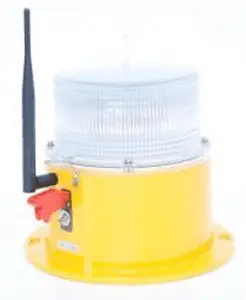
ML10
Brand: Yuan Sheng
Solar LED Based Marine Navigation; fully charged, it can work for up to 200 hours;
Intensity 10 Candela; IP68;
features a night range of > 3 nautical miles; Red, Yellow, Blue, White; Prices start at $300.
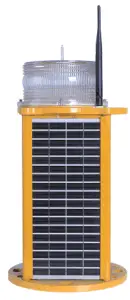
ML50
Brand: Yuan Sheng
Solar LED Marine Navigation; Intensity 50 Candela; features a night range of > 5 nautical miles;
Prices start at $450.
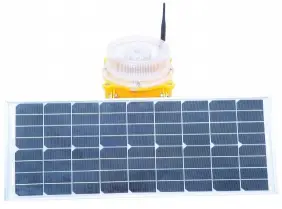
ML2000
Brand: Yuan Sheng
Solar Powered Marine Navigation port Light; Self-contained LED lantern for buoys and beacons; Intensity 2000 Candela; LED Red, Green, Yellow, White, Blue;
Prices start at $400.
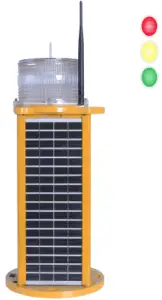
ML50-M
Brand: Yuan Sheng
Solar Powered Marine Navigation port Light; ML50-M the three colors, Red, Yellow, and Green can be changed by the wireless handheld: Prices start at $400.
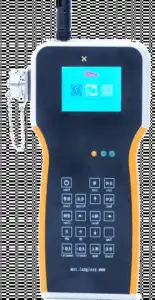
YSHD
Brand: Yuan Sheng
Wireless Handheld Control; Wirelessly control signal’s solar airfield lights system or Helipad lights from up to 4km away;
Enables remote operation of an airfield lighting system
Priced at $900.
What Are LED Marine Navigation Lights?
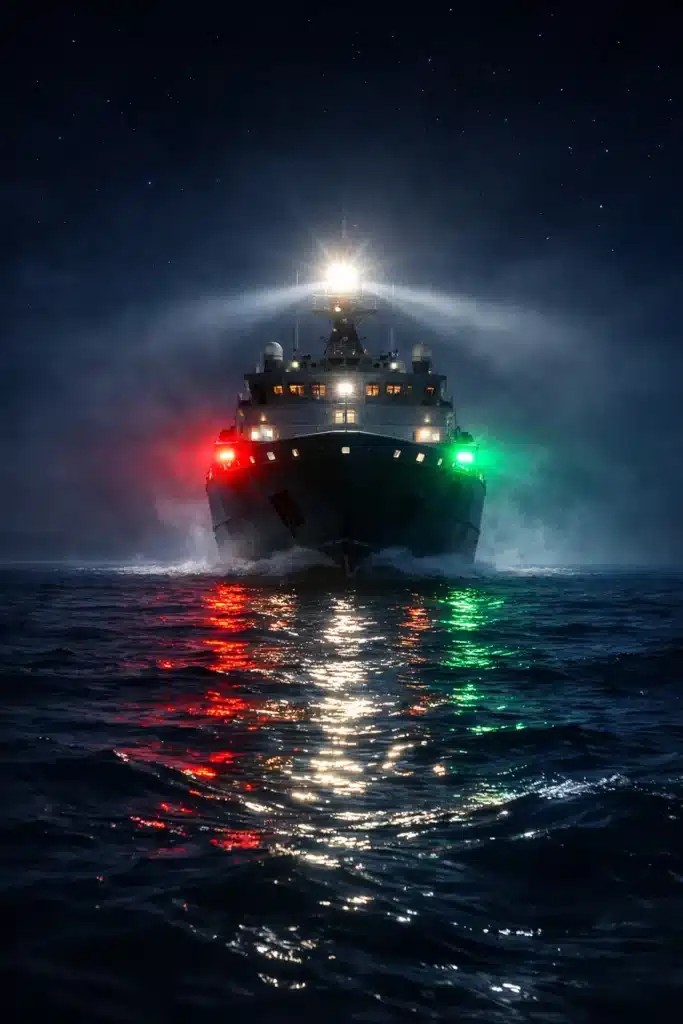
LED marine navigation lights are specialized signal lights installed on vessels to comply with maritime regulations such as COLREGs. They display specific colors and visibility ranges to communicate a vessel’s direction and status to other boats, improving safety and collision prevention.
When Are Marine Navigation Lights Required?
Marine navigation lights are required whenever a vessel operates:
-
Between sunset and sunrise
-
During restricted visibility conditions
-
In navigable waterways regulated by maritime authorities
Commercial and industrial vessels must meet specific visibility distance and color requirements depending on vessel size and classification.
In offshore platforms or hazardous marine zones where flammable vapors may be present, certified LED Explosion-Proof Lighting may be required.
Core Specifications & Performance Characteristics
LED marine navigation lights are engineered around several key performance elements:
✔ Optical intensity & distribution — meets or exceeds COLREG/USCG requirements
✔ Color coding compliance — red/green/white combinations per heading and vessel status
✔ Hazardous location ratings — UL844, ATEX/IECEx where required
✔ Ingress protection — IP66/67 for immersion and splash resistance
✔ Corrosion resistance — marine-grade materials (aluminum, stainless, powder-coat)
✔ Thermal management — LED longevity in variable temperatures and marine exposure
Marine lights are specified with defined candela output ranges to ensure visibility at required distances under fog, rain, and night conditions. Corrosion protection and rugged seals help resist salt spray and environmental degradation.
Industrial & Marine Applications
Marine navigation lights serve critical roles in both purely maritime environments and industrial waterfront installations. Typical scenarios include:
• Industrial docks adjacent to hazardous material storage
• Offshore platforms where marine and process lighting overlap
• Ferry terminals operating near process facilities
• Port berths near flammable liquid handling zones
• Maritime service corridors with land-mounted hazardous lighting
In these contexts, marine navigation lighting often integrates with site control systems (radar, PLCs, safety interlocks) and complements terrain/yard lighting to support personnel, vehicles, and vessels in and around the hazard perimeter.
Planning & Selection Considerations
When selecting LED marine navigation lighting for industrial waterfront or hazardous zones, consider:
✔ required maritime certification (COLREG / USCG)
✔ mounting location (vessel mast vs fixed structure)
✔ optical intensity and visibility distance
✔ hazardous classification of installation area
✔ power supply and backup requirements
✔ environmental exposure (salt air, moisture, UV)
For regulated industrial facilities, confirm that navigation lighting meets both maritime illumination requirements and local hazardous location certifications if deployed in atmospheres with flammable gases or vapors. Coordination with naval or port operations specialists often ensures proper sight lines, spacing, and redundancy.
Comparison Table — Marine Navigation vs Waterfront Area vs Perimeter Lighting
| Attribute / Use | Marine Navigation Lights | Flood / Area Lights | Perimeter Security Lighting |
|---|---|---|---|
| Primary Focus | Vessel marking & guidance | Site area illumination | Security & boundary visibility |
| Certifications | COLREG / USCG | UL / Hazardous ratings | UL / Hazardous ratings |
| Optical Distribution | Defined directional beams | Wide flood patterns | Medium / wide pattern |
| Hazard Compatibility | Optional hazardous rated | Common hazardous models | Common hazardous models |
| Best Application Zones | Marine channels / docks | Yards / loading zones | Perimeter fence lines |
| Environmental Exposure | Marine spray / salt air | Outdoor industrial | Outdoor industrial |
Technical Standards & Compliance Resources
Marine navigation lighting must comply with both maritime illumination standards and any applicable hazardous location certification requirements. International marine navigation norms such as COLREG (International Regulations for Preventing Collisions at Sea) or regional standards (USCG, local port authority codes) govern color, candela output, and positioning. For industrial environments with flammable atmospheres, hazardous classification standards (UL844, ATEX/IECEx) determine explosion-proof or non-incendive fixture selection.
For more detail on hazardous location classifications and how they influence fixture choice, see our overview of explosion-proof lighting classes. For certification comparisons across regions, refer to our international hazardous standards guide.
Inline Buyer Q&A
How do I determine which navigation lights my vessel requires?
Navigation-light requirements depend on factors such as vessel type, length, operating condition, and applicable maritime regulations.
Depending on the vessel and operation, required lights can include sidelights, masthead lights, sternlights, towing lights, all-round lights, and other configurations.
The lighting system should be selected from the requirements applicable to the particular vessel rather than from a standard package assumed to fit every boat.
What information should I provide when requesting LED marine navigation lights?
Useful information includes:
- Vessel type
- Vessel length
- Commercial or other operating use
- Required navigation-light configuration
- Required visibility range
- Existing light locations
- Supply voltage
- Mounting requirements
- Applicable regulatory or approval requirements
- Saltwater or freshwater environment
- New construction or retrofit
For replacement projects, photographs and specifications from the existing navigation lights can also be helpful.
Can I replace existing incandescent or halogen navigation lights with LED lights?
Often, but the replacement should not be based solely on physical fit or electrical compatibility.
The LED navigation light must satisfy the applicable requirements for color, visibility, horizontal and vertical sectors, positioning, and other regulatory or approval criteria associated with its intended function.
Existing mounting locations and onboard electrical characteristics should also be evaluated.
Does a waterproof or marine-grade LED fixture qualify as a navigation light?
No.
Water resistance, corrosion resistance, and marine construction are important environmental characteristics, but they do not by themselves establish that a fixture is suitable for use as a regulated navigation light.
A navigation light should meet the applicable requirements for its specific function and vessel application.
Are all LED navigation lights suitable for commercial vessels?
No.
Requirements can vary according to vessel size, type, service, operating conditions, and jurisdiction.
Verify that the particular navigation light carries the approvals and performance characteristics required for the vessel on which it will be installed.
Can different navigation-light configurations be required for the same vessel?
Yes.
The lights a vessel must display can change according to its operating condition—for example, whether it is underway, at anchor, towing, or engaged in certain operations.
The complete navigation-light system should be designed around the vessel and its applicable operating requirements.
Specify Navigation Lights Around the Vessel and Its Operation
Marine navigation lighting is a regulated visibility system, not simply another form of exterior vessel lighting.
Vessel type, length, operating condition, required light configuration, color, visibility range, viewing sectors, mounting position, electrical system, environmental exposure, and applicable maritime requirements should all be considered when selecting navigation lights.
Our lighting specialists can help evaluate LED marine navigation lighting for commercial vessels, workboats, marine operations, and other applications requiring reliable navigation-light performance.
Specify Navigation Lights Around the Vessel and Its Operation
Marine navigation lighting is a regulated visibility system, not simply another form of exterior vessel lighting.
Vessel type, length, operating condition, required light configuration, color, visibility range, viewing sectors, mounting position, electrical system, environmental exposure, and applicable maritime requirements should all be considered when selecting navigation lights.
Our lighting specialists can help evaluate LED marine navigation lighting for commercial vessels, workboats, marine operations, and other applications requiring reliable navigation-light performance.
Call 1-844-533-7767 to discuss your LED marine navigation lighting requirements.
Frequently Asked Questions About LED Marine Navigation Lights
What are LED marine navigation lights used for?
Marine navigation lights communicate information about a vessel’s presence, orientation, movement, size, or operating condition to other vessels.
Different navigation lights serve different functions, and the required combination depends on the vessel and its operation.
Do COLREGs require LED navigation lights?
No.
The International Regulations for Preventing Collisions at Sea establish requirements governing navigation lights and shapes, including when particular lights must be displayed and applicable characteristics such as color, visibility, and positioning.
They do not require LED technology specifically.
LED navigation lights can be used when the equipment satisfies the applicable requirements for the vessel and installation.
Are navigation lights required on commercial vessels?
Applicable vessels must display navigation lights as required by the maritime rules governing their type, size, operating condition, and location.
Requirements should be determined from the regulations applicable to the particular vessel rather than assuming one configuration applies to all commercial vessels.
What colors are used for marine navigation lights?
Common navigation-light colors include:
- Red
- Green
- White
- Yellow
The color has a defined function within the navigation-light system and should not be selected simply for preference or visibility.
What is a port sidelight?
A port sidelight is red and is displayed on the vessel’s port side as part of the required navigation-light configuration.
Its visibility sector and installation must comply with the applicable requirements for the vessel.
What is a starboard sidelight?
A starboard sidelight is green and is displayed on the vessel’s starboard side.
As with the port sidelight, its required sector and visibility depend on the applicable navigation-light rules.
What is a masthead light?
A masthead light is a white navigation light with a defined horizontal arc of visibility.
Whether one or more masthead lights are required depends on factors such as vessel type, size, and operating condition.
What is a sternlight?
A sternlight is a white navigation light displayed toward the stern with a defined horizontal arc.
It forms part of the navigation-light configuration required for applicable vessels.
What is an all-round navigation light?
An all-round light is designed to display light through 360 degrees around the vessel.
Its required color and use depend on the navigation condition being communicated.
How far must marine navigation lights be visible?
There is no single visibility distance for every navigation light.
Required visibility ranges depend on factors including vessel length and the type of navigation light.
Select equipment that meets the applicable visibility requirement for its intended position and function.
Are LED navigation lights brighter than incandescent navigation lights?
LED technology can provide efficient and consistent light output, but greater brightness alone is not the objective.
Navigation lights must provide the required intensity, color, visibility range, and sectors without creating an incorrect navigation signal.
Compliance with the applicable performance requirements is more important than maximizing raw brightness.
Why are LEDs useful for marine navigation lighting?
Properly designed LED navigation lights can offer advantages such as:
- Lower power consumption
- Long rated operating life
- Reduced lamp-replacement requirements
- Instant illumination
- Compact optical systems
- Resistance to vibration when appropriately designed
Actual performance and service life depend on the specific product and operating environment.
How long do LED marine navigation lights last?
There is no universal service life for all LED navigation lights.
Rated life depends on the product, LED system, driver and electronics, thermal design, operating hours, electrical conditions, moisture exposure, vibration, corrosion, and other environmental factors.
Use manufacturer-specific lifetime and warranty information when comparing products.
Can LED navigation lights withstand saltwater environments?
Products designed for marine service can incorporate corrosion-resistant materials, sealed construction, protected electronics, UV-resistant components, and other features appropriate for demanding environments.
However, environmental suitability is product-specific.
Verify the fixture’s construction and ratings for the actual saltwater, spray, moisture, vibration, and weather exposure expected on the vessel.
Does an IP rating make a fixture a marine navigation light?
No.
An IP rating describes specified protection against ingress of solids and water.
It does not establish compliance with navigation-light requirements for color, intensity, visibility range, sectors, or positioning.
Can standard marine LED lights be used as navigation lights?
Not simply because they are designed for marine environments.
Deck lights, work lights, floodlights, searchlights, and other marine luminaires perform different functions from navigation lights.
Equipment used as a regulated navigation light should meet the applicable requirements for that navigation-light function.
Can LED navigation lights be retrofitted onto older vessels?
Often, provided the proposed lights meet the applicable requirements and are compatible with the vessel.
Evaluate mounting position, visibility sectors, electrical characteristics, voltage, wiring, required approvals, and physical installation before replacing the existing navigation lights.
Can existing navigation-light mounting positions be reused?
Potentially.
The existing location should still provide the positioning, visibility sectors, separation, and unobstructed viewing required for the replacement light and vessel configuration.
A physically compatible replacement does not automatically mean the installation remains compliant.
What voltage do LED marine navigation lights use?
Available voltage depends on the product and vessel electrical system.
Select equipment compatible with the onboard power supply and verify the manufacturer’s electrical specifications rather than assuming a universal marine voltage.
Do marine navigation lights require regular inspection?
Navigation lights should be maintained so they remain operational and provide their intended visibility.
Inspection and maintenance can include checking lenses, housings, mounting, wiring, corrosion, obstruction, physical damage, and proper operation.
Applicable vessel regulations and maintenance procedures should determine inspection requirements.
Are marine navigation lights the same as marine searchlights or work lights?
No.
Navigation lights communicate prescribed information about a vessel to other watercraft.
Searchlights provide concentrated directional illumination, while marine work lights illuminate decks, equipment, loading areas, and work zones.
These lighting systems serve different purposes and should not be substituted for one another.
Stay Connected with Our Lighting Resources
Add IndustrialLightingFixtures.org as a Preferred Source on Google to see more of our lighting guides and technical resources across Google Search experiences.

Related Marine and Specialty Lighting Resources
- LED Searchlights — Explore long-distance directional LED lighting for marine, security, search, and other applications requiring concentrated illumination.
- LED Portable Work Lights — Review portable lighting for maintenance, repair, inspection, and temporary work areas where mobility is required.
- LED Above-Water Fishing Lights — Explore above-water LED lighting designed for docks, piers, fishing areas, and commercial waterfront applications.
- LED Vapor-Tight Linear Lighting — Learn about sealed linear fixtures for wet, damp, moisture-prone, and demanding industrial environments.
- Specialty Lighting — Explore specialized commercial and industrial LED lighting solutions for applications that fall outside conventional indoor and outdoor lighting categories.