
Solar Area Lighting Overview
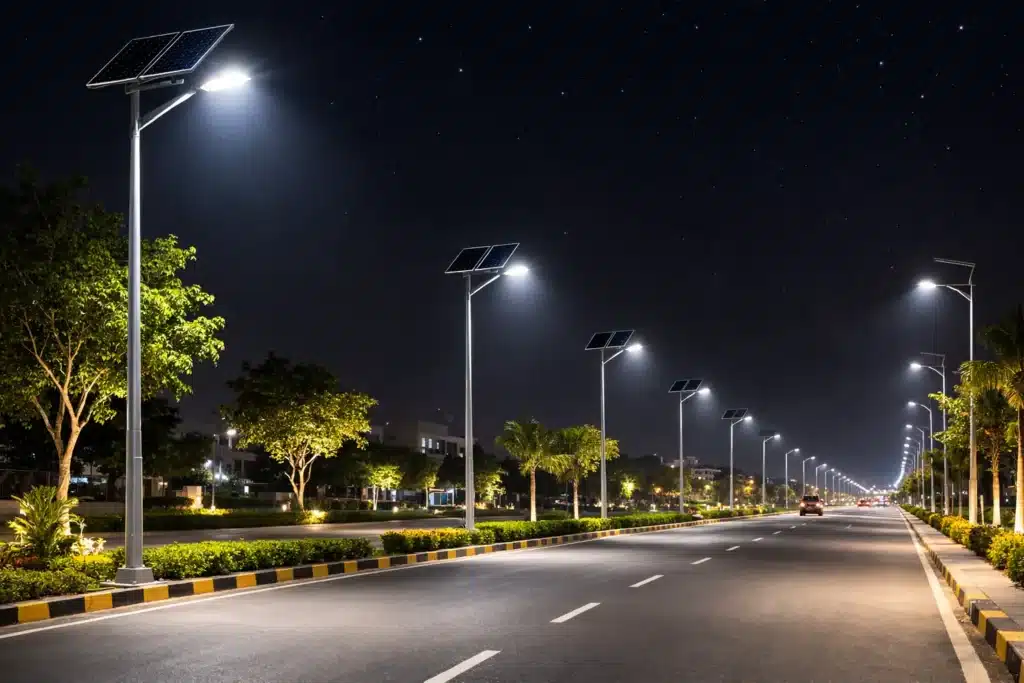
Solar street lights provide reliable roadway illumination without requiring electrical grid connections or underground wiring. These self-contained lighting systems integrate photovoltaic solar panels, high-efficiency LED luminaires, battery storage, and intelligent lighting controls to deliver dependable nighttime illumination for roads, pathways, parking areas, and public spaces.
Unlike traditional street lighting systems that depend on underground electrical infrastructure, solar street lights operate independently by collecting solar energy during daylight hours and storing it in onboard batteries for nighttime operation. This off-grid design allows solar street lighting systems to be installed quickly while avoiding the cost and complexity of trenching electrical conduits.
Solar street lighting is increasingly used by municipalities, commercial developments, parks departments, and transportation agencies seeking energy-efficient lighting solutions that reduce infrastructure costs and eliminate the risk of copper wire theft.
For a broader overview of off-grid solar lighting technologies and infrastructure applications, explore our Solar Lighting Systems resource.
What Are Solar Street Lights?
Solar street lights are outdoor lighting systems designed to illuminate roadways and public spaces using solar energy rather than electrical grid power. These systems combine several integrated components that allow them to operate independently.
A typical solar street lighting system includes:
• Photovoltaic solar panels
• LED street lighting fixtures
• Rechargeable battery storage systems
• Solar charge controllers
• Lighting poles or mounting structures
• Smart lighting controls or motion sensors
During daylight hours, solar panels capture sunlight and convert it into electrical energy that is stored in batteries. When night falls, the stored energy powers LED luminaires that provide roadway illumination.
Because LED technology consumes relatively little energy while producing high light output, solar street lights can deliver reliable nighttime illumination even with limited battery storage capacity.
Why Cities Are Installing Solar Street Lighting
Solar street lighting systems are increasingly used in municipal infrastructure projects due to several operational and economic advantages.
Elimination of Copper Wire Theft
Traditional street lighting systems rely on underground copper wiring that can become a target for theft. When copper wiring is stolen, entire sections of roadway lighting may fail until expensive repairs are completed.
Solar street lights eliminate this vulnerability because they do not rely on underground electrical wiring.
Reduced Installation Costs
Installing conventional street lighting often requires trenching electrical conduits, installing underground wiring, and connecting to utility power infrastructure. Solar street lights eliminate these steps, reducing installation time and costs.
Energy Independence
Solar street lighting systems generate their own electricity, eliminating ongoing energy expenses associated with grid-powered lighting.
Reliable Operation During Power Outages
Because solar lighting operates independently from the electrical grid, solar street lights continue functioning during power outages, improving safety and visibility in critical areas.
Key Components of Solar Street Lighting Systems
Solar Panels
Photovoltaic panels capture sunlight and convert it into electrical energy used to power the lighting system.
LED Street Lighting Fixtures
High-efficiency LED luminaires provide bright roadway illumination while consuming minimal power.
Battery Storage Systems
Rechargeable batteries store solar energy collected during the day and power the lighting system at night.
Lighting Control Systems
Modern solar street lights often include intelligent controls such as:
• dusk-to-dawn sensors
• adaptive dimming schedules
• motion detection
• remote monitoring systems
These controls help maximize battery autonomy while maintaining reliable illumination.
Applications for Solar Street Lights
Solar street lighting systems are used in a variety of public and commercial environments.
Municipal Roadways
Cities frequently install solar street lights along residential streets, rural roads, and transportation corridors where electrical infrastructure may be limited.
Parks and Recreational Trails
Solar street lighting helps illuminate park roads and pathways while minimizing environmental disturbance.
Commercial Developments
Retail centers, office parks, and industrial facilities often use solar street lighting for internal roadways and circulation areas.
University and Corporate Campuses
Campus roadways and pedestrian corridors benefit from solar street lighting systems that reduce energy costs and infrastructure complexity.
Solar Feasibility by Sun Exposure
| Site Condition | Planning Impact |
|---|---|
| High sun / open sky | Maximum charging reliability |
| Partial shading | May require larger panel or battery |
| Northern climates / winter | Extended autonomy planning recommended |
| Heavy tree cover | Detailed site study required |
Understanding Backup Operation
| Autonomy Level | Typical Purpose |
|---|---|
| 1–2 nights | Standard commercial sites |
| 3–5 nights | Security-sensitive locations |
| Extended autonomy | Remote or critical infrastructure |
Installation Strategy Comparison
| Factor | Solar Lighting | Wired Lighting |
|---|---|---|
| Trenching required | No | Yes |
| Utility bill | None | Ongoing |
| Installation speed | Faster | Dependent on electrical work |
| Site disruption | Minimal | Potentially significant |
| Upfront design effort | Higher | Lower |
Environmental Influences
-
Avoid shade from trees or buildings
-
Consider seasonal sun angle
-
Prevent debris accumulation on panels
-
Allow access for maintenance
| Method | Result |
|---|---|
| Dusk-to-dawn | Predictable operation |
| Motion activation | Extended battery life |
| Scheduled dimming | Balanced performance |
| Adaptive profiles | Responds to usage |
What Requires Attention
-
Battery health over time
-
Panel cleanliness
-
Physical alignment
-
Wiring integrity
-
Controller function
Available Solar Street Lights
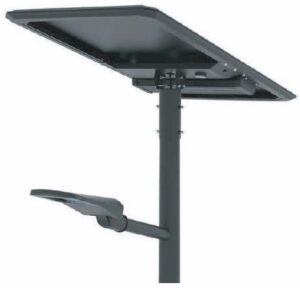
Natron
Brand: Beyond
Solar powered area light with separate panel; up to 15,000 lumens; 30/40/60/80/100W and 2x50W; Prices start at $1500.
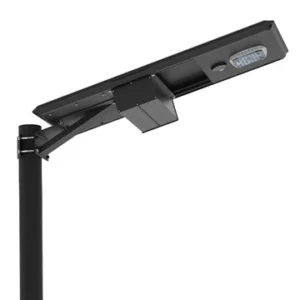
Evo
Brand: Beyond
Integrated, all in one solar area light; up to 23,5200 lumens; 50/120W; Prices start at $850.
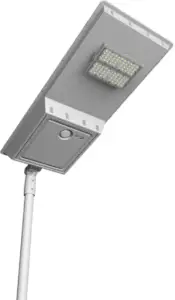
Hyper
Brand: SolTech
Integrated, all in one solar area light; up to 13,000 lumens; 25/45/65W; Prices start at $895.
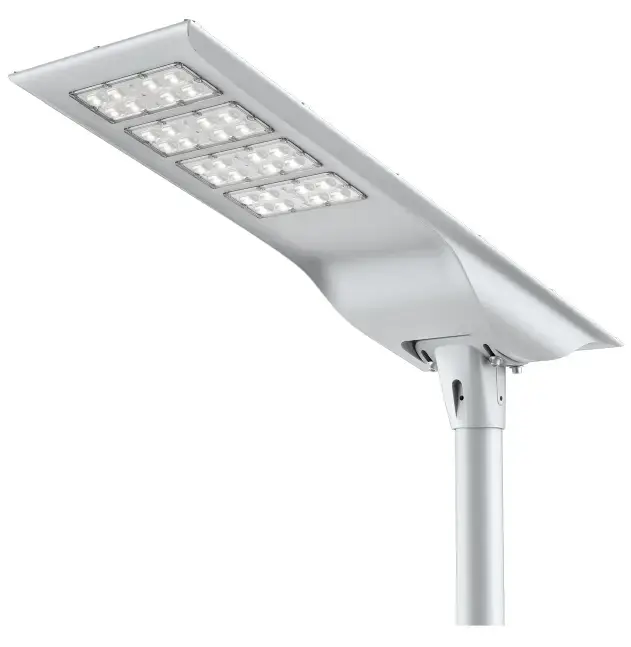
SLS
Brand: Ledsion
Integrated, all in one solar area light; up to 9,00 lumens; 100W; Prices start at $550.
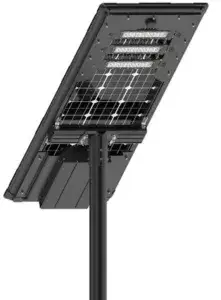
Athens
Brand: Beyond
Integrated, all in one solar area light; up to 18,000 lumens; with Bifacial Solar Panel and Rotatable LED Module; 80/100W; Prices start at $1140.

Talos
Brand: E-Lite
Integrated, all in one solar area light; up to 18,900 lumens; 1 or 2 modules;
20/30/40/50/60/80/90W; Prices start at $475.
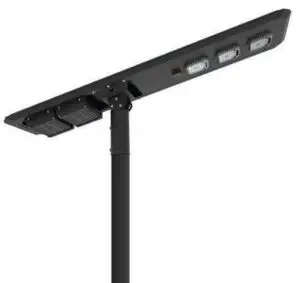
Pollux
Brand: Beyond
Off-Grid Solar Light; 20/40/60/80/100/120W; Up to 16,800 Lumens; Call for special pricing.
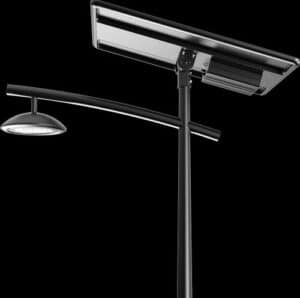
Solis
Brand: E-Lite
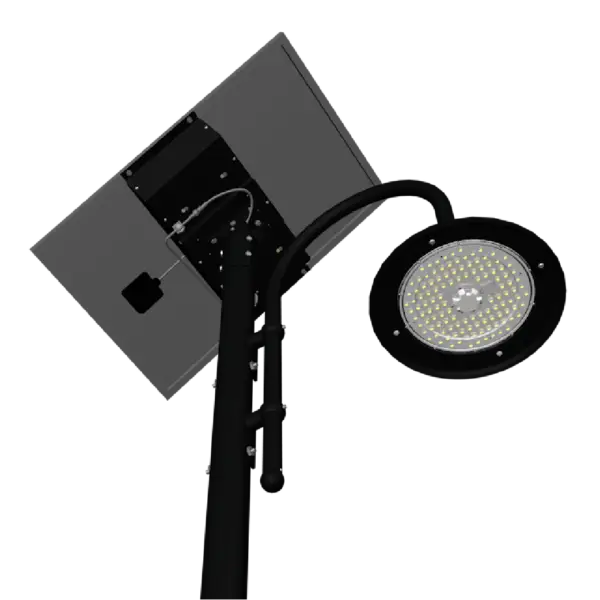
Decorative Solar Street Light; 20″ and 24″: 80W; up to 12,800 lumens; intelligent dimming with PIR motion detection; Installation Hts: 15 to 25 ft; Prices start at $575.
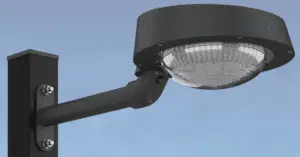
Orinda
Brand: SolTech
20″ and 24″: 25/50W; up to 9,000 lumens; Operation Mode; Remote
control and 1-key setting Installation Hts: 15 to 25 ft; Prices start at $1800.
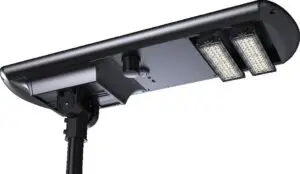
Gecko
Brand: Solway
versatile solar lighting can be mounted on the wall as a wall light or mounted on a pole as a courtyard or street light; 1500 lumens;
Prices start at $400.
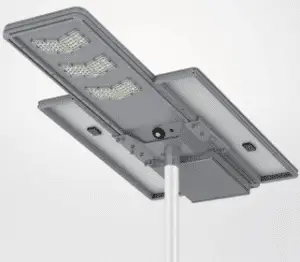
Triton
Brand: E-Lite
foldable solar panel extension; large battery capacity; 28,500 lumens; working temperature is -30°C to +80°C; 30/40/50/60/70/80
90/120/150W; Prices start at $500.
AC
Brand: Solway
featuring 5050 LEDs to produce up to 25,000 lumens; working temperature is -15°C to +70°C; 50/90/120W;
Prices start at $600.
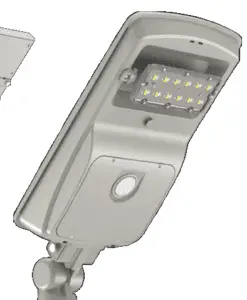
Sunlike
Brand: SolTech
off-grid lighting solution, low-profile, all-in-one, fully-integrated design
operating temperature -4 °F to 122 °F; IP65; 9,000 Lumens; 8/20/30/50W
Prices start at $950.
Sunlike PRO
Brand: SolTech
ideal for regions with colder climates and harsher conditions: it can overcome freezing temps with its unique battery-heating technology. can withstand extreme temperatures from
-40°F to 140°F. 30W; Prices start at $1400.
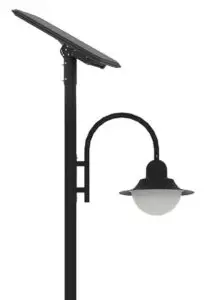
Cape
Brand: Beyond
Two-piece, Bell area light with Gooseneck arm; Prices start at $1200.
Solar Street Lighting Design Considerations
Proper design ensures reliable solar street lighting performance.
Solar Exposure
Solar panels must receive adequate sunlight to generate sufficient energy for nighttime operation.
Pole Height and Lighting Coverage
Pole height and LED optics determine how evenly light is distributed across roadways and pedestrian areas.
Battery Autonomy
Solar street lighting systems are typically designed with several nights of battery autonomy to ensure reliable operation during cloudy conditions.
Environmental Conditions
Lighting systems must be designed to withstand wind loads, temperature changes, and other outdoor environmental conditions.
Related Solar Lighting Systems
Solar street lighting may be deployed alongside other solar infrastructure lighting systems.
Related solar lighting solutions include:
These solar lighting systems help municipalities and commercial facilities create comprehensive off-grid outdoor lighting networks.
FAQs About All In One Solar Street Lights
How do solar street lights work?
Solar street lights use photovoltaic panels to capture sunlight during the day and store the energy in batteries that power LED lighting fixtures at night.
Are solar street lights bright enough for roads?
Yes. Modern LED solar street lights can provide illumination levels comparable to traditional roadway lighting when properly designed.
Do solar street lights work during cloudy weather?
Solar street lighting systems include battery storage designed to operate for several nights without direct sunlight.
Why are cities installing solar street lights?
Cities are increasingly installing solar street lights because they reduce installation costs, eliminate underground wiring, and prevent copper theft.
How long do solar street lights last?
High-quality solar street lighting systems can operate for many years depending on component quality, battery lifespan, and environmental conditions.
Improve Roadway Safety with Solar Street Lighting
Solar street lights provide dependable roadway illumination without requiring electrical infrastructure. By eliminating trenching, reducing installation costs, and removing the risk of copper wire theft, solar street lighting offers a practical solution for municipal infrastructure, parks, campuses, and commercial developments.
Whether you are planning lighting for a roadway project, park facility, or commercial property, solar street lighting systems provide reliable off-grid illumination with long-term energy savings.
Explore our full range of solar lighting systems designed for commercial and municipal applications.