What Is NSF-Certified LED Lighting?
NSF-certified LED lighting refers to luminaires engineered and certified for hygienic, washdown, and contamination-sensitive environments where cleanability, material safety, and long-term durability are critical. These fixtures are specifically designed for use in food processing facilities, commercial kitchens, cold storage environments, pharmaceutical manufacturing spaces, and other regulated areas where strict sanitation standards must be maintained.
Unlike standard lighting, NSF-certified fixtures are constructed with smooth, sealed housings, corrosion-resistant materials, and shatter-resistant components that prevent contamination risks and withstand frequent washdown procedures. In these environments, conventional luminaires may be difficult to sanitize, degrade under exposure to moisture and cleaning chemicals, or introduce maintenance and hygiene concerns that regulated facilities cannot afford.
Properly specified NSF-certified LED lighting improves visibility, supports regulatory compliance, and ensures long-term performance in demanding operational conditions.
Need NSF-Certified Lighting for a Food or Sanitary Facility?
LED PROS supplies NSF-certified LED lighting for food processing, commercial kitchens, refrigerated facilities, beverage production, washdown areas, and other sanitation-sensitive environments. We can help identify fixtures based on the required NSF certification, operating temperature, washdown exposure, moisture conditions, mounting height, light levels, and project specifications.
Explore NSF-Certified Fixtures Below | Request a Quote
Call 1-844-533-7767 for NSF lighting and project assistance.
NSF-Certified LED Lighting Fixtures
In facilities with both regulated washdown zones and more general production areas, NSF certified LED lighting is often incorporated alongside standard industrial luminaires to create a layered lighting strategy that supports both hygiene and operational efficiency.
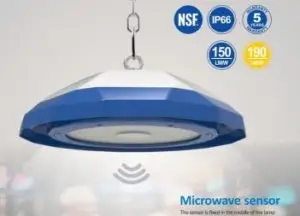
Diamond series
Brand: XSY
NSF certified for food processingNSF/cULus/DLC; 0-10V dimmable; IP69K; up to 38,000 lumens; 80/100/150/200W;
Prices start at $375.
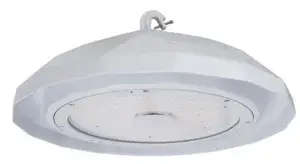
Lena
Brand: Beyond LED
NSF certified for food processing and food safe environments, commercial kitchens and manufacturing facilities, car washes; Op.Temperature of -40C ~55C; up to 30,000 lumens; 150/200W; Prices start at $375.
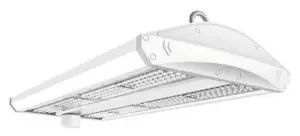
FY-HB
Brand: FY
NSF listing; Covers 3 Certifiable Zones-Food, Splash, Non-Food Zone; NEMA4X, IP69K, NSF,
1500 PSI Hose; Down, UL, CE, DLC; 80/120/160/200/300W.
Prices start at $300.
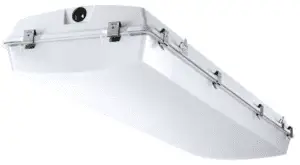
ILW
Brand: Atlas
NSF Industrial LED Linear
Wet Location; Made in USA
NEMA4X, IP65, IP66 & IP67,
IP69K (2ft only), NSF, 1500 PSI Hose Down, UL, cUL, DLC;
76/98/130/190W.
Prices start at $300.

Halo series
Brand: G-Comin
IP69K, food processing
pharmaceutical industries;
High-pressure, water-resistant,
Steam resistant; up to 38,400 lumens; 50/80/100/150/200/240W;
Prices start at $375.
NSF-certified LED lighting supports food-processing, commercial kitchen, refrigerated, and sanitation-sensitive environments where fixture cleanability, construction, moisture protection, and hygienic design are important specification considerations.

Selecting NSF-Rated LED Lighting for Your Facility
NSF certification is only one part of fixture selection. The appropriate luminaire also depends on where it will be installed, the sanitation procedures used in that area, exposure to moisture or high-pressure washdown, operating temperature, mounting height, required illumination, and other project requirements.
In food-processing and production areas with higher mounting heights, an NSF-certified food-grade high bay such as the Diamond can provide the elevated lumen output required for production floors while supporting sanitary facility requirements
Food-processing areas with higher ceilings may require NSF-certified high bays, while lower mounting heights, production lines, refrigerated rooms, and washdown areas may be better suited to sealed linear or other sanitary fixture designs. Cold-storage applications should also verify the fixture’s published minimum operating temperature, while high-pressure cleaning environments require appropriate environmental and ingress-protection ratings.
Verify the specific NSF certification, intended food-zone or non-food-zone application, and applicable project requirements for each fixture. NSF certification does not automatically establish washdown suitability, electrical listing, or temperature compatibility.
Learn the differences between vapor tight vs NSF fixtures for commercial cold storage, food processing, and sanitary industrial environments.
When Should NSF-Certified LED Lighting Be Used?
Typical applications include:
• Food processing lines
• Commercial kitchens and prep stations
• Cold storage and refrigerated warehouses
• Dairy and meat handling facilities
• Pharmaceutical compounding areas
• Beverage bottling and packaging plants
Refrigerated food-processing and storage facilities must consider both sanitation requirements and low-temperature performance. See our Cold Storage Lighting resources for additional guidance on temperature, condensation, moisture, and freezer applications.
Whether you’re modernizing an existing production line or designing a new processing plant, the Food Processing Facility Lighting Guide helps simplify fixture selection and lighting layout planning.
Inline Buyer Q&A
When should I consider NSF-certified LED lighting?
NSF-certified lighting should be considered when a facility, project specification, customer requirement, or applicable sanitation standard calls for lighting equipment evaluated for use in food-related or other hygiene-sensitive environments.
Applications can include food and beverage processing, commercial kitchens, refrigerated processing areas, packaging operations, and other facilities where fixture construction and cleanability are important.
The specific certification required should be confirmed for the application rather than assuming every food-related space has identical requirements.
Does NSF certification mean a fixture is suitable for washdown areas?
Not automatically.
NSF certification and environmental protection are separate specification considerations. A fixture intended for an area exposed to water, high-pressure cleaning, or sanitation procedures should also have construction and environmental ratings appropriate for those conditions.
Always verify the specific fixture’s certification, ingress-protection ratings, and manufacturer instructions against the cleaning procedures used in the facility.
Can NSF-certified fixtures be used in refrigerated or freezer environments?
Yes, when the particular fixture is also rated for the operating temperature and environmental conditions.
NSF certification alone does not establish cold-temperature performance.
For refrigerated warehouses, freezers, or processing rooms, verify the fixture’s minimum operating temperature along with moisture, condensation, sanitation, and cleaning requirements.
Are vapor-tight and NSF-certified fixtures the same thing?
No.
Vapor-tight describes fixture construction intended to protect internal components from certain environmental exposure. NSF certification addresses requirements associated with the applicable NSF standard and intended use.
A fixture can be vapor-tight without being NSF-certified, and NSF certification should not be assumed to establish suitability for every wet or washdown environment.
What information should I provide when requesting NSF-certified lighting?
Useful project information includes:
- Facility and application type
- Installation area and processes performed there
- Required NSF certification or project specification
- Cleaning and sanitation procedures
- Water or washdown exposure
- Operating temperature
- Moisture and condensation conditions
- Ceiling and mounting height
- Existing fixtures and wattages
- Available voltage
- Required illumination
- Controls or sensor requirements
These details help determine which fixture construction, certifications, environmental ratings, output, and mounting configuration should be considered.
Do all areas of a food-processing facility require the same lighting fixtures?
Not necessarily.
Production lines, preparation areas, refrigerated storage, dry storage, packaging areas, washdown zones, loading areas, and offices can have different environmental and sanitation requirements.
A facility may therefore use NSF-certified fixtures in certain areas and other appropriately rated industrial lighting elsewhere.
Specify NSF-Certified Lighting for Your Facility
NSF-certified lighting should be selected around the required certification, installation area, sanitation procedures, washdown exposure, moisture and condensation conditions, operating temperature, mounting height, required illumination, controls, and other project requirements.
Send LED PROS your facility type, required NSF certification or specification, cleaning procedures, operating conditions, fixture quantities, voltage, mounting information, drawings, or existing fixture schedule. We’ll help identify appropriate NSF-certified high bays, linear fixtures, washdown-rated options, and other lighting for food-processing and sanitation-sensitive environments.
Request a Quote or call 1-844-533-7767 for NSF-certified lighting assistance.
Frequently Asked Questions About NSF-Certified LED Lighting
What does NSF-certified LED lighting mean?
NSF-certified LED lighting refers to luminaires that have been evaluated and certified to applicable NSF requirements for their intended use.
Depending on the applicable standard and installation area, evaluation can address characteristics such as fixture construction, materials, cleanability, and suitability for particular food-related or sanitation-sensitive environments.
Always verify the specific certification associated with the fixture and project.
What NSF standards apply to LED lighting fixtures?
The applicable NSF requirements depend on the fixture, installation location, intended use, and project specification.
Rather than assuming that “NSF-certified” represents one universal set of requirements for every luminaire, buyers should verify the specific NSF standard, certification, and intended installation area associated with the product.
Are NSF-certified LED fixtures water resistant?
NSF certification should not by itself be treated as a water-resistance or washdown rating.
Some NSF-certified fixtures also have sealed construction and environmental ratings suitable for wet, damp, or washdown conditions, but these characteristics should be verified separately.
Review the complete fixture specifications, including applicable ingress-protection and location ratings, before selecting equipment for areas exposed to water or cleaning procedures.
How do NSF-certified LED lights differ from standard industrial LED fixtures?
NSF-certified fixtures have been evaluated to applicable NSF requirements for their intended use, while a standard industrial fixture may not carry that certification.
This does not mean every NSF-certified fixture has the same environmental, temperature, washdown, or performance capabilities.
Fixture selection should consider both the required certification and the actual operating environment.
Can NSF-certified LED lighting be used in cold storage?
Yes, if the particular fixture is also rated for the temperatures and environmental conditions involved.
NSF certification and cold-temperature suitability are separate considerations.
Refrigerated warehouses, walk-in coolers, freezers, and processing facilities should use fixtures whose operating-temperature range, moisture protection, construction, and certifications are appropriate for the application.
Are NSF-certified fixtures required in every commercial kitchen?
Not necessarily.
Lighting requirements can vary according to installation location, facility type, equipment, project specifications, sanitation requirements, and applicable regulations.
The requirements for fixtures located over food-preparation areas can differ from those in offices, storage rooms, corridors, or other portions of the same facility.
Can NSF-certified lighting be used in food-processing washdown areas?
Potentially, but NSF certification alone is not enough to establish washdown suitability.
The fixture should also be evaluated for the actual cleaning procedures, water exposure, environmental conditions, and applicable electrical or location requirements.
Does NSF certification mean a fixture resists bacterial growth?
NSF certification should not be interpreted as a blanket guarantee that a luminaire prevents or resists bacterial growth.
The relevant certification addresses specific requirements associated with the applicable standard and intended use.
Avoid substituting broader sanitation or antimicrobial claims for the actual scope of the fixture’s certification.
Can NSF-certified lighting be used with occupancy sensors and controls?
Yes, when compatible fixtures, drivers, sensors, and controls are selected.
Control components located within cold, wet, washdown, or other demanding environments should also be appropriate for those operating conditions.
Do NSF-certified fixtures need to be vapor-tight?
Not universally.
The appropriate fixture construction depends on moisture, cleaning procedures, sanitation requirements, temperature, and installation location.
Where sealed construction is required, verify both the environmental rating and the applicable NSF certification rather than assuming one establishes the other.
Stay Connected with Our Lighting Resources
Add IndustrialLightingFixtures.org as a Preferred Source on Google to see more of our lighting guides and technical resources across Google Search experiences.
Related Food Processing & Sanitary Lighting Resources
- Understanding Food Safety Lighting Requirements — Review lighting considerations for food-processing facilities where sanitation, cleanability, moisture, washdown exposure, and fixture construction affect specification.
- Cold Storage Lighting — Explore cold-rated LED fixtures for refrigerated warehouses, industrial cool rooms, walk-in coolers, freezers, and temperature-controlled processing areas.
- LED Vapor-Tight Lighting — Review sealed fixtures for moisture, condensation, dust, washdown, refrigerated spaces, and other demanding industrial environments.
- Walk-In Freezer Lighting — Learn how low temperatures, condensation, moisture, sanitation requirements, controls, and fixture placement affect walk-in cooler and freezer lighting.
- Refrigerated Warehouse Lighting — Explore fixture selection, high-bay applications, rack and aisle layouts, controls, temperature conditions, and photometric considerations for large refrigerated facilities.