
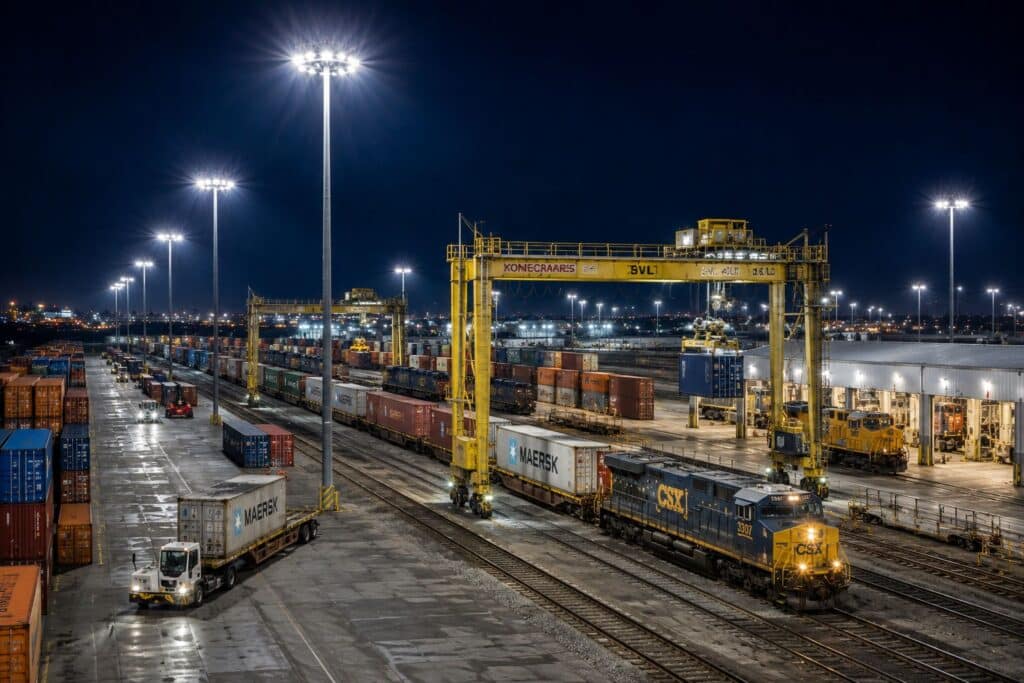
What Is Rail Yard High Mast Lighting?
Rail yards and intermodal terminals require lighting systems capable of illuminating expansive outdoor areas where trains, heavy equipment, trucks, cranes, and personnel operate around the clock.
LED high mast lighting uses powerful luminaires mounted on tall poles to provide broad, uniform illumination across large transportation facilities. Compared to conventional area lighting, high mast systems reduce the number of poles required while improving visibility for rail operations and freight handling.
These lighting systems are commonly installed throughout:
- Rail classification yards
- Intermodal terminals
- Container transfer facilities
- Locomotive maintenance areas
- Freight loading yards
- Equipment storage areas
- Truck circulation routes
- Rail maintenance facilities
Browse our complete selection of LED High Mast Lighting to compare commercial-grade fixtures engineered for transportation facilities, industrial sites, logistics hubs, and other large outdoor applications
LED high mast lighting provides dependable wide-area illumination for rail yards, intermodal terminals, locomotive service facilities, and freight operations where continuous visibility and safe cargo handling are essential.
Planning lighting for a rail yard, intermodal terminal, or freight facility?
Our lighting specialists can help design an LED high mast lighting system that improves visibility, reduces maintenance, and supports safe, efficient railroad operations.
Request a Free Lighting Consultation – – https://industriallightingfixtures.org/
Why Rail Facilities Choose High Mast Lighting
Modern freight terminals demand lighting that supports productivity, operational safety, and efficient logistics.
LED high mast lighting offers several advantages:
- Wide-area illumination
- Reduced pole quantities
- Improved visibility between rail lines
- Better color rendering for inspections
- Lower maintenance requirements
- Reduced energy consumption
- Long LED service life
- Compatibility with intelligent lighting controls
These benefits help improve operational efficiency while lowering long-term ownership costs.
Looking for a broader overview of high mast lighting applications? Explore the LED High Mast Lighting Applications Guide to compare how these systems are used across airports, rail yards, ports, correctional facilities, sports complexes, and industrial properties.
Rail Classification Yards
Classification yards contain multiple parallel tracks where railcars are assembled, inspected, and organized into outbound trains.
Lighting priorities include:
- Railcar identification
- Switch visibility
- Worker safety
- Vehicle circulation
- Equipment inspections
- Nighttime operations
High mast lighting helps minimize shadows created by locomotives and railcars while providing broad illumination across multiple tracks.
Intermodal Container Terminals
Intermodal facilities transfer freight between trains, trucks, and containers throughout the day and night.
Typical applications include:
- Container storage areas
- Rubber-tired gantry crane operations
- Reach stacker operating zones
- Truck loading areas
- Rail loading tracks
- Container inspection areas
Uniform lighting improves equipment visibility and supports efficient cargo handling.
Locomotive Service Facilities
Railroad maintenance operations often require dependable lighting around:
- Locomotive fueling
- Inspection pits
- Wash facilities
- Maintenance buildings
- Service tracks
- Equipment staging areas
LED high mast systems improve visibility while reducing maintenance interruptions.
Freight Loading Operations
Freight terminals frequently require lighting for:
- Bulk material loading
- Container transfers
- Trailer staging
- Warehouse interfaces
- Heavy equipment movement
- Employee work zones
Reliable illumination improves operational efficiency and workplace safety throughout loading activities.
Typical Pole Heights
Pole height depends on facility size, operating equipment, and required illumination levels.
| Rail Facility | Typical Pole Height |
|---|---|
| Freight Yard | 60–80 ft |
| Rail Classification Yard | 80–100 ft |
| Intermodal Terminal | 80–120 ft |
| Container Handling Areas | 100–150+ ft |
| Large Logistics Hubs | 100–150+ ft |
Lighting Design Considerations
Successful rail yard lighting projects should evaluate:
- Pole locations
- Track layout
- Container stacking heights
- Crane operations
- Truck circulation
- Fixture optics
- Lighting uniformity
- Glare control
- Wind loading
- Maintenance accessibility
Thoughtful lighting design improves visibility while minimizing obstructions and maintenance requirements.
Planning lighting for an airport or aviation support facility? Visit the Airport High Mast Lighting Guide to learn how high mast lighting supports aircraft aprons, cargo ramps, maintenance facilities, and airside operations.
Benefits of LED High Mast Lighting
Modern LED systems provide significant operational advantages for freight and rail facilities.
Benefits include:
- Lower electrical consumption
- Reduced maintenance
- Longer fixture life
- Improved visibility
- Better color rendering
- Instant-on operation
- Reduced relamping
- Compatibility with modern lighting controls
These advantages are especially valuable for facilities operating around the clock.
Marine terminals require dependable lighting capable of supporting cargo handling, container storage, and continuous waterfront operations. The Port & Container Terminal High Mast Lighting Guide explains how LED high mast lighting improves visibility, operational efficiency, and maintenance throughout modern port facilities.
Maintenance and Lowering Headframe Systems
Large rail yards and intermodal terminals often operate continuously, making efficient maintenance an important consideration when selecting high mast lighting systems.
Many installations incorporate lowering headframe systems, allowing luminaires to be lowered safely to ground level for inspection, cleaning, and servicing without requiring routine bucket truck access.
Benefits include:
- Improved worker safety
- Faster fixture maintenance
- Reduced lift equipment requirements
- Lower maintenance costs
- Less disruption to rail operations
- Simplified luminaire replacement
For busy freight terminals, minimizing maintenance downtime helps keep cargo moving while maintaining safe nighttime operations.
Energy Savings and Operating Costs
Railroad operators and logistics companies often manage hundreds of acres of outdoor lighting.
Replacing older metal halide or high-pressure sodium systems with LED high mast lighting can provide substantial operational improvements.
Potential benefits include:
- Lower electrical consumption
- Reduced relamping costs
- Longer fixture service life
- Improved nighttime visibility
- Better color rendering for inspections
- Lower maintenance labor
- Reduced equipment rental expenses
- Lower total cost of ownership
Because freight terminals frequently operate throughout the night, these savings can become significant over the life of the lighting system.
Transportation agencies rely on durable, efficient lighting systems for major roadways and public infrastructure. The Highway Interchange High Mast Lighting Guide provides practical guidance for selecting high mast lighting systems that improve long-term performance.
Common Specification Mistakes
Avoid these common design errors when planning rail yard lighting:
- Selecting pole heights without a photometric lighting study
- Choosing fixtures based only on wattage
- Ignoring container stacking heights
- Overlooking locomotive and crane clearances
- Failing to account for future terminal expansion
- Installing excessive pole quantities
- Ignoring glare affecting equipment operators
- Underestimating maintenance access requirements
Professional lighting layouts help optimize fixture placement while improving safety and reducing long-term operating costs.
Rail Yard Lighting Design Checklist
| Design Consideration | Recommendation |
|---|
| Pole Height | Determine through photometric analysis |
| Fixture Optics | Match rail yard, container yard, or freight application |
| Track Visibility | Minimize shadows between multiple rail lines |
| Container Stacking | Account for storage heights and equipment movement |
| Maintenance | Consider lowering headframe systems |
| Lighting Controls | Evaluate scheduling and dimming where appropriate |
| Wind Loading | Verify pole and foundation design |
| Energy Efficiency | Specify high-performance LED luminaires |
Inline Buyer Q&A
Why is high mast lighting commonly used in rail yards?
High mast lighting provides broad illumination across multiple tracks, container storage areas, and equipment operating zones while reducing the number of lighting poles required throughout the facility.
What areas of an intermodal terminal typically use high mast lighting?
Common applications include container storage yards, rail loading tracks, truck circulation areas, crane operating zones, maintenance yards, locomotive service facilities, and equipment staging areas.
Are lowering headframe systems recommended for rail facilities?
Yes. Lowering systems allow maintenance personnel to safely service fixtures from ground level, reducing maintenance time while minimizing disruption to rail operations.
Improve Visibility Across Rail Yards and Intermodal Facilities
Railroads, intermodal terminals, and freight logistics centers require lighting systems that support safe nighttime operations, efficient cargo movement, and dependable long-term performance. LED high mast lighting provides exceptional wide-area illumination while reducing maintenance, improving energy efficiency, and enhancing visibility across complex transportation facilities.
Whether you’re designing lighting for a rail classification yard, container terminal, locomotive maintenance facility, or intermodal logistics hub, our lighting specialists can help you determine the ideal pole heights, fixture optics, and lighting layouts for your project.
👉 Explore our complete selection of LED High Mast Lighting solutions engineered for rail yards, intermodal terminals, freight facilities, container handling operations, and other large transportation environments. Contact us today for a free photometric lighting layout and fixture recommendation.
Frequently Asked Questions
What pole heights are commonly used in rail yards?
Depending on the application, poles typically range from 60 feet to more than 150 feet, with larger intermodal terminals and container handling facilities often utilizing the tallest installations.
Can LED high mast lighting improve worker safety?
Yes. Improved visibility helps employees, locomotive operators, crane operators, truck drivers, and maintenance personnel safely perform nighttime operations throughout rail facilities.
Is high mast lighting suitable for container terminals?
Yes. High mast lighting is widely used in intermodal freight terminals and container storage areas because it provides uniform illumination across expansive outdoor operations.
Can LED systems reduce operating costs?
Modern LED high mast lighting generally reduces electrical consumption, maintenance, and fixture replacement costs compared to many legacy HID lighting systems.