
Commercial LED parking lot lighting provides reliable, uniform illumination for parking spaces, drive lanes, pedestrian areas, and building approaches. LED parking lot lights are available in multiple wattages, lumen outputs, optical distributions, mounting configurations, and control options for commercial and industrial properties.
Effective parking lot lighting depends on more than fixture brightness. Pole height, spacing, lumen output, Type II–V distribution, fixture location, and uniformity all affect performance. LED PROS supplies commercial LED parking lot lights for new construction, retrofit, and lighting upgrade projects.
Need Commercial LED Parking Lot Lights for Your Property?
Improve parking lot visibility, uniformity, and lighting performance with LED fixtures selected for your site rather than wattage alone.
LED PROS supplies commercial LED parking lot lights for businesses, industrial facilities, logistics properties, retail locations, data centers, municipal sites, and other outdoor parking areas.
We can help evaluate pole height, pole spacing, fixture quantity, lumen output, optical distribution, voltage, controls, existing fixtures, and project requirements.
Request a Parking Lot Lighting Quote for specifications, availability, and project pricing.
Call 1-844-533-7767 for assistance.
Commercial LED Parking Lot Light Fixtures
Compare LED parking lot lighting fixtures for commercial, industrial, retail, municipal, and other outdoor parking applications. Available wattages, lumen packages, optical distributions, mounting options, controls, and specifications vary by fixture.
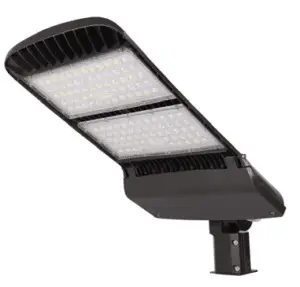
NBQL
Brand: Nebulite
Up to 46,204 lumens; DLC; 30/50/75/100/150/200/300W.
Prices start at $300.
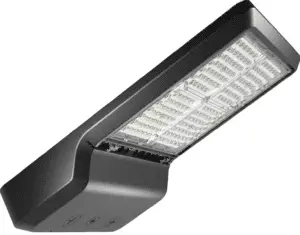
Archer G2
Brand: ATG
DLC; Selectable; (60/80/100W),
(100/120/150W), (200/240/300W);
up to 49,088 lumens;
Prices start at $300.
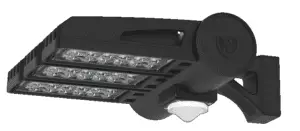
IRI-X
Brand: Crystal
Made in USA; superior quality; low Profile, architectural LED area light;
10-year war; up to 26,250 lumens
80/100/120/140/160/180W;
Prices start at $400.
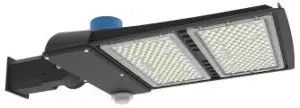
G6
Brand: YaoRong
power and cct selectable; compact design, DLC; up to 42,000 lumens;
50/100/150/200/260/300W;
Prices start at $250.
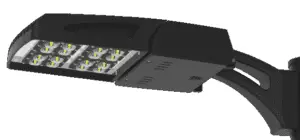
Eros
Brand: Crystal
Made in USA;
superior quality; low Profile,
architectural LED area luminaire;
10-year war; up to 25,995 lumens
50//80/100/120/180/180/200W;
Prices start at $400.
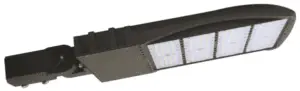
ESBV
Brand: Ledsion
low profile shoebox , area lighting;
UL, cUL, DLC; up to 41,000 lumens;
100/150/200/240/300/450W.
Prices start at $300.
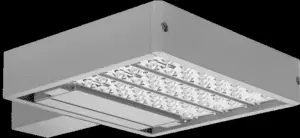
Gama
Brand: Arrlux
DLC; IP67; Dimming; CREE LEDs;
40/80/120/160/180/200/240/320W.
Prices start at $400.
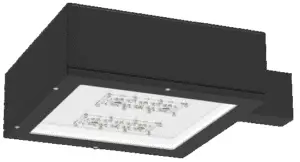
3040
Brand: Crystal
12″ (S), 16″ (M) or 23″ (L); shoebox fixture; spider mount, slip fitter,
up to 44,723 lumens;
10/20/30/40/50/60/80/100/120
150/200/250/300/400W.
Prices start at $400.
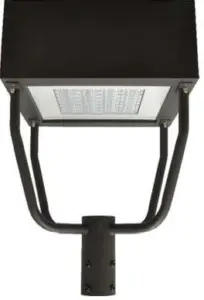
3040 Spider Mount
Brand: Crystal
square spider mount, up to 20,680 lumens; 40/50/60/80/100/120/150W.
Prices start at $400.
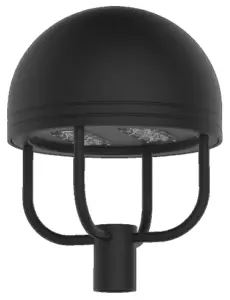
3072
Brand: Crystal
rounded top area light; Yoke, Arm and Spider Mount; Dark Sky compliant;
up to 16,512 lumens; 45/65/85/105/125W.
Prices start at $400.
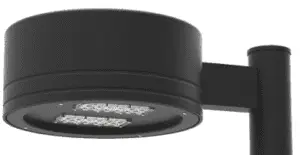
3075
Brand: Crystal
Architectural round flat top; Yoke, Arm, Spider Mount; up to 16,512 lumens; 20/45/65/85/105/125W.
Prices start at $420..
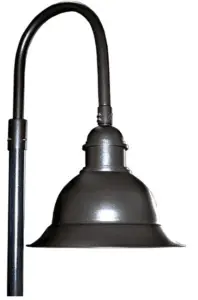
Bell
Brand: Crystal
Choose from 3 different style tops and shades; Choice of decorative arms; 20″ Medium and 25″ Large;
40/50/60/80/100/120/150/ 180W;
Prices start at $550.
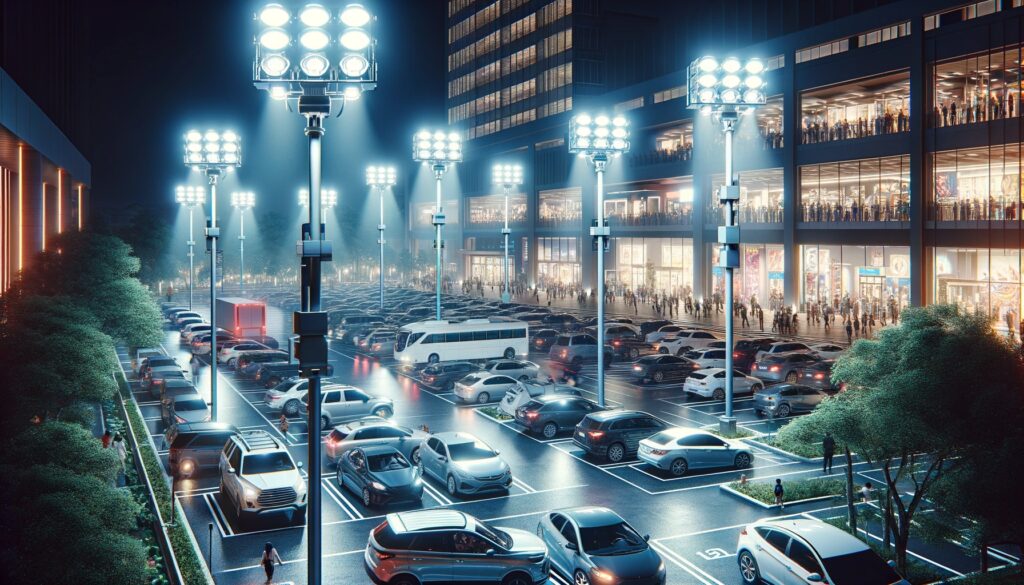
Commercial LED parking lot lighting combines proper pole height, fixture spacing, lumen output, and optical distribution to provide uniform illumination across parking spaces, drive lanes, and pedestrian areas.
Selecting Commercial LED Parking Lot Lights
Selecting parking lot lighting begins with the physical site rather than simply choosing the highest-output fixture. Pole height, pole locations, spacing, parking layout, vehicle circulation, pedestrian areas, surrounding properties, and required light levels should all be considered.
Pole Height and Fixture Spacing
Pole mounting height affects fixture coverage, spacing, glare, and the distribution of light across the parking surface. Taller poles can provide broader coverage, while lower mounting heights may require different spacing, output, or optical distributions.
Existing parking lots should be evaluated using their actual pole locations and mounting heights before replacement fixtures are selected.
Type II, III, IV and V Light Distribution
Parking lot fixtures are available with different optical distributions designed to direct light where it is needed.
Type II, III, IV, and V distributions produce different coverage patterns, making fixture location and parking-lot geometry important when selecting optics.
What Are LED Parking Lot Lights?
LED parking lot lights are outdoor area luminaires typically mounted on poles to distribute uniform illumination across open spaces. These fixtures use precision optics to direct light where it is needed, minimizing glare and reducing light trespass. Designed for durability and weather resistance, commercial-grade parking lot lights operate reliably in rain, wind, heat, and cold conditions.
Choosing the right LED parking lot fixture is only one part of a successful project. Our Commercial Parking Lot Lighting Guide explains how fixture selection, pole height, optical distribution, and lighting layouts work together to create a safe, efficient parking lot.
A brighter fixture does not necessarily produce a better parking lot lighting system. Excessive illumination directly beneath poles can coexist with dark areas between fixtures.
Effective parking lot lighting requires coordination of fixture output, optical distribution, mounting height, pole spacing, and layout to achieve useful illumination and appropriate uniformity.
LED Lighting for Single-Level Parking Lots
Single-level parking lots are open-air parking areas where pole-mounted fixtures typically provide illumination across parking spaces, drive lanes, pedestrian routes, entrances, and perimeter areas.
Lighting design should account for the size and shape of the lot, pole locations, mounting heights, fixture distribution, surrounding buildings, property boundaries, and pedestrian activity.
Because open parking lots vary considerably in geometry, fixture quantity and wattage alone are not reliable indicators of lighting performance. Pole placement, optics, and photometric performance should be considered together.
Key Performance Characteristics
High Lumen Output
Commercial LED parking lot lights range from 10,000 to 60,000+ lumens depending on mounting height and site requirements.
Optical Distribution Types
Available in Type II, Type III, IV, and V distributions to match lot geometry and spacing requirements.
Energy Efficiency
LED technology significantly lowers wattage consumption while maintaining superior illumination levels.
Energy costs can represent a significant portion of long-term parking lot lighting expenses, particularly for facilities operating fixtures throughout the night. See our guide to reducing costs with LED parking lot lighting for strategies involving fixture efficiency, controls, maintenance, and LED upgrades.
Environmental Protection
Most commercial fixtures are IP65+ rated for protection against dust and moisture.
Long Service Life
Rated for 50,000+ hours, reducing maintenance cycles and lift equipment costs.
Many parking lot lighting projects focus on energy savings, but achieving the proper illumination level is equally important. Our Parking Lot Foot Candle Requirements guide explains industry-recommended lighting levels for various property types.
When Should You Use LED Parking Lot Lights?
LED parking lot lighting is typically specified for projects involving:
-
Outdoor areas requiring broad, uniform illumination
-
Replacement of legacy metal halide or high-pressure sodium fixtures
-
Commercial properties prioritizing visibility and site safety
-
Long operating hours where energy efficiency is critical
-
Installations requiring DLC-listed fixtures for utility rebate programs
- For remote properties or projects seeking to eliminate trenching costs, solar parking lot lighting systems may provide an alternative off-grid solution.
Typical LED Parking Lot Light Specifications
Typical Wattage: 100W–600W
Lumen Output: High-output commercial ranges depending on application
Mounting Height: Commonly installed on poles ranging from 15–40 feet
Distribution Types: Type II, Type III, Type IV, Type V
Voltage Range: 100–277V or 277–480V
Fixture Ratings: IP65+, DLC-listed, UL or ETL certified
Government and public-sector projects may also include domestic sourcing or procurement requirements. For projects specifying the Trade Agreements Act, see our TAA-Compliant LED Parking Lot Lights for Government Projects guide for fixture selection, compliance, photometrics, controls, and RFQ considerations.
Explore how solar parking lot lighting combines commercial LED fixtures with renewable solar energy systems for efficient outdoor area illumination.
TAA-Compliant LED Parking Lot Lights for Government Projects
Government and public-sector parking lot projects may include procurement requirements such as Trade Agreements Act (TAA) compliance.
When TAA compliance is specified, eligibility should be verified for the particular fixture being quoted rather than assumed across an entire manufacturer’s product line or lighting category.
Review our TAA-Compliant LED Parking Lot Lights for Government Projects guide for additional procurement and fixture-selection information.
Commercial & Industrial Parking Lot Applications
LED parking lot lighting can be configured for a wide range of properties, including retail stores, shopping centers, restaurants, warehouses, manufacturing facilities, logistics centers, data centers, office properties, healthcare facilities, schools, municipal sites, and other commercial or industrial locations.
Each property presents different operating hours, traffic patterns, pedestrian activity, surrounding light levels, security considerations, and site geometry. Fixture selection should therefore reflect the actual property rather than relying on a one-size-fits-all lighting package.
| Pole Height | Common Use | Coverage Intent |
|---|---|---|
| 15–20 ft | Small lots / tight areas | Shorter throw, tighter control |
| 20–30 ft | Standard commercial parking | Balanced area coverage |
| 30–40 ft | Large lots / wider spacing | Broad distribution with fewer poles |
| Distribution | Typical Application |
|---|---|
| Type II | Narrow roadways, pathways |
| Type III | Parking rows, general lots |
| Type IV | Perimeter and forward throw |
| Type V | Open area coverage |
Wattage and lumen output are only part of selecting an area light. Our Parking Lot Light Distribution Guide compares Type II, Type III, Type IV and Type V optics and explains how pole location, mounting height and site geometry affect distribution selection.
Planning & Site Design Considerations
✔ Pole height and spacing
✔ Light distribution pattern
✔ Mounting configuration (slip fitter, trunnion, arm mount)
✔ Surge protection requirements
✔ Local lighting ordinances
✔ Dark-sky compliance
✔ Photometric layout analysis
Professional lighting plans ensure uniformity ratios and optimal performance. To enhance safety and maintain a clean finished appearance at ground level, many installations include protective clam shell pole base covers designed to shield anchor bolts and wiring.
Parking Lot vs. Parking Garage
Parking lot lighting is generally designed for open outdoor parking areas using pole-mounted area fixtures. Covered and multi-level parking structures present different mounting, distribution, structural, and control considerations.
For those applications, explore our Commercial LED Parking Garage Lighting solutions.
Inline Buyer Q&A
How do I choose the right LED parking lot lights for my property?
Start with lot dimensions, existing or proposed pole locations, mounting heights, required light levels, fixture spacing, surrounding properties, voltage, environmental conditions, and control requirements.
Fixture output and optical distribution should be selected together. A higher-lumen fixture is not automatically a better choice if its distribution does not match the geometry of the parking area.
What information should I provide when requesting parking lot lighting?
Helpful information includes a site plan or lot dimensions, pole locations, mounting heights, number of fixtures per pole, voltage, existing fixture type and wattage for retrofit projects, operating hours, required light levels, and any local lighting requirements.
Photos of the existing property and information about neighboring roads, buildings, or residential areas can also help with fixture and optical selection.
Can LED parking lot lights replace existing metal halide or high-pressure sodium fixtures?
Often, yes. LED area lights are commonly used to replace older metal halide and high-pressure sodium parking lot fixtures.
The replacement should be based on existing mounting height, fixture spacing, required illumination, optical distribution, existing fixture performance, and site conditions rather than simply matching the wattage of the old fixture.
How many LED parking lot lights will I need?
Fixture quantity depends on lot dimensions, pole locations, mounting heights, fixture output, optical distribution, required illumination, uniformity objectives, and surrounding conditions.
Existing pole locations can often be retained during an LED retrofit, but the existing fixture quantity and layout should not automatically determine the new LED design.
Do I need a photometric layout for a parking lot lighting project?
Photometric analysis is strongly recommended for larger commercial, municipal, industrial, campus, dealership, and multifamily parking areas.
A photometric layout can evaluate predicted light levels, uniformity, pole locations, fixture quantities, mounting heights, optical distributions, and potential spill light before equipment is installed.
Parking lot fixture selection should also consider glare, spill light and illumination beyond the property. Our Parking Lot Lighting Glare & Light Trespass Guide explains how optics, mounting height, fixture output, orientation, shielding and photometric design can help control unwanted light.
Request a Quote for Commercial LED Parking Lot Lighting
Planning a parking lot lighting retrofit, new construction project, or exterior lighting upgrade?
LED PROS supplies commercial LED parking lot lights and fixtures for retail properties, industrial facilities, logistics centers, data centers, restaurants, municipal properties, and other outdoor parking areas.
We can help evaluate pole height, pole spacing, fixture quantity, lumen output, optical distribution, voltage, controls, environmental requirements, and existing lighting conditions.
For the most accurate recommendation, provide available site dimensions, pole heights and locations, existing fixture information, photographs, drawings, fixture schedules, or photometric requirements.
Request a Commercial Parking Lot Lighting Quote for product specifications, availability, and project pricing.
Call 1-844-533-7767 to discuss your project.
Frequently Asked Questions About LED Parking Lot Lights
How bright should LED parking lot lights be?
There is no single lumen output appropriate for every parking lot fixture.
Required output depends on mounting height, pole spacing, fixture quantity, optical distribution, site geometry, required ground-level illumination, uniformity, surrounding ambient light, and local project requirements.
Rather than selecting fixtures from a generic lumen range, evaluate the complete lighting layout and the illumination delivered across the parking surface.
What is the best pole height for parking lot lighting?
The appropriate pole height depends on lot size, pole spacing, fixture output, optical distribution, required light levels, surrounding properties, local requirements, and structural considerations.
Commercial parking lots use a range of mounting heights. Taller poles can provide broader coverage, while lower mounting heights may require closer spacing or different fixture distributions.
For additional pole-selection considerations, see What Are the Best Outdoor LED Pole Lights?.
What distribution pattern is used for parking lot lights?
Parking lot area lights are available with multiple optical distributions, including Type II, Type III, Type IV, Type V, and manufacturer-specific variations.
The appropriate distribution depends on where the pole is positioned relative to the area being illuminated. Perimeter poles, interior poles, drive lanes, property boundaries, and irregular lot geometries may require different distributions within the same project.
Photometric modeling can help determine which optics provide appropriate coverage and uniformity.
Are LED parking lot lights energy efficient?
LED parking lot fixtures can provide substantial energy savings compared with many older metal halide and high-pressure sodium systems.
Actual savings depend on existing fixture wattage and quantity, replacement LED wattage, operating hours, required illumination, and control strategy. Photocells, scheduling, dimming, and other controls can provide additional savings where appropriate.
How long do LED parking lot lights last?
Commercial LED parking lot fixtures can provide long operating life, commonly measured in tens of thousands of hours, but published lifetime ratings vary by fixture and manufacturer.
Actual service life depends on driver and component quality, thermal management, operating hours, ambient temperature, electrical conditions, surge events, environmental exposure, and maintenance.
Rated LED life should not be interpreted as a guarantee that every fixture component will operate for the same number of hours.
Do parking lot lights need surge protection?
Surge protection is an important consideration for outdoor LED lighting because pole-mounted fixtures can be exposed to electrical disturbances associated with utility switching, nearby lightning events, and other transient voltage conditions.
The appropriate level of protection depends on the fixture, electrical system, site exposure, and project requirements. Built-in fixture protection and additional system-level surge protection may both be considered depending on the installation.
Can LED parking lot lights use photocells and lighting controls?
Yes. Many commercial LED area lights can support photocells, scheduling, 0–10V dimming, occupancy-based strategies, and networked lighting controls.
Control compatibility depends on the fixture, driver, sensor, and control system. Controls should be considered during fixture selection rather than added as an afterthought.
Can parking lot lighting be designed to reduce glare and light trespass?
Yes. Fixture optics, mounting height, pole location, output, aiming, shielding where appropriate, and overall layout can help control glare and unwanted illumination beyond the property.
Photometric analysis is especially useful near residential properties, roadways, property boundaries, and other areas where spill light may be a concern.
Stay Connected with Our Lighting Resources
Add IndustrialLightingFixtures.org as a Preferred Source on Google to see more of our lighting guides and technical resources across Google Search experiences.

Related Commercial Parking Lot Lighting Resources
- Parking Lot Security Lighting Guide — Learn how fixture placement, uniformity, glare control, dark areas, and surrounding conditions influence visibility across commercial parking properties.
- Parking Lot Light Pole Guide — Review pole height, placement, fixture configuration, and other considerations when planning parking lot lighting systems.
- LED Area Lighting Layout Guide — Learn how mounting height, pole spacing, fixture output, optical distribution, and photometric analysis work together in commercial area-lighting design.
- Area Lighting Pole Height Guide — Explore how pole height affects coverage, fixture selection, spacing, and outdoor lighting performance.
- TAA-Compliant LED Parking Lot Lights for Government Projects — Understand TAA procurement considerations and fixture selection for government and public-sector parking lot projects.
- Commercial LED Parking Garage Lighting — Explore lighting for covered and multi-level parking structures where mounting and distribution requirements differ from open parking lots.
- Outdoor LED Lighting Guide — Review broader commercial outdoor lighting considerations including fixture selection, controls, mounting, environmental conditions, and lighting-system design.