
Why Lighting Design Matters
Selecting high-quality LED fixtures is only one part of a successful cold storage lighting project. Proper lighting design determines how effectively those fixtures illuminate storage aisles, production areas, loading zones, and freezer rooms.
A professionally designed lighting system improves worker safety, enhances inventory visibility, reduces shadows, lowers operating costs, and supports efficient warehouse operations.
Lighting layouts should consider facility dimensions, ceiling heights, storage rack configurations, equipment movement, and long-term operational goals.
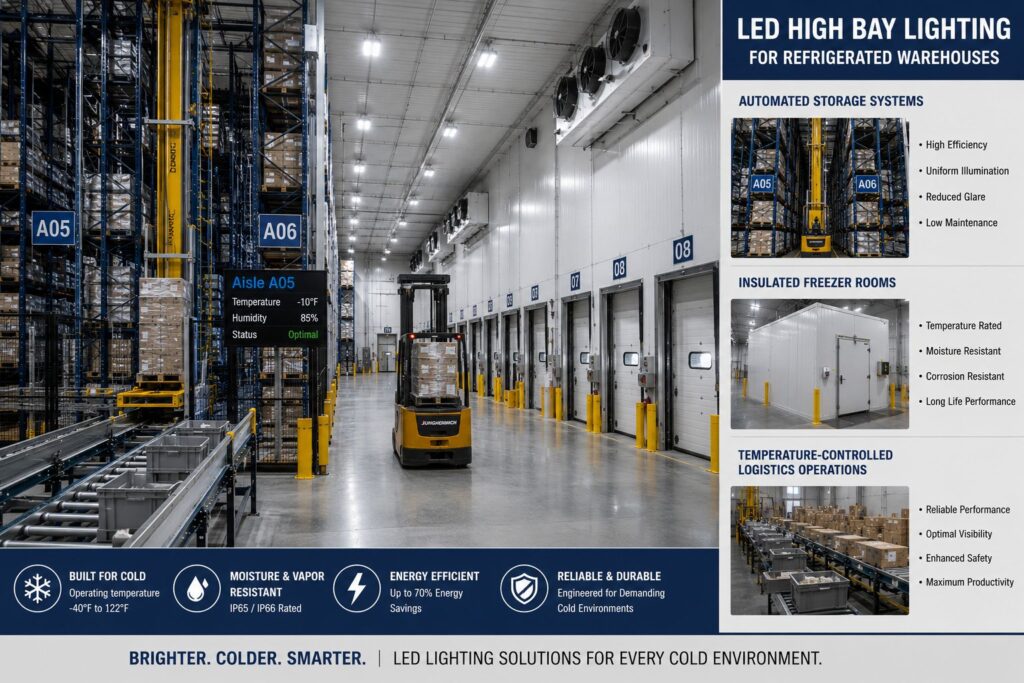
A well-designed cold storage lighting system improves visibility, energy efficiency, inventory management, and worker safety throughout refrigerated warehouses and freezer facilities.
Planning a new refrigerated warehouse or upgrading an existing freezer facility?
Our lighting specialists can develop a lighting layout that maximizes visibility, minimizes energy consumption, and delivers dependable performance in demanding cold environments.
Request a Free Lighting Consultation – – https://industriallightingfixtures.org/
Design Goals for Cold Storage Facilities
An effective lighting design should provide:
- Uniform illumination throughout storage areas
- Clear visibility for forklift operators
- Reduced glare
- Consistent lighting between aisles
- Reliable performance in low temperatures
- Lower maintenance requirements
- Maximum energy efficiency
- Compatibility with lighting controls
Each facility has unique operating requirements that influence fixture selection and layout.
Planning the Lighting Layout
Before selecting fixtures, evaluate:
- Building dimensions
- Ceiling height
- Rack height
- Aisle width
- Loading docks
- Cooler rooms
- Freezer rooms
- Inspection stations
- Traffic patterns
- Emergency exits
A professional photometric lighting layout predicts illumination levels before installation, helping avoid costly modifications after the project is complete.
Looking for a complete overview of refrigerated facility lighting? Visit the Cold Storage Facility Lighting Guide to compare fixture types, lighting applications, and best practices.
Recommended Fixtures by Area
| Facility Area | Recommended Lighting |
|---|---|
| Refrigerated Warehouse | LED High Bays |
| Warehouse Aisles | Linear High Bays |
| Freezer Rooms | Vapor Tight LED Fixtures |
| Food Processing Areas | NSF-Certified LED Fixtures |
| Loading Docks | LED Canopy or Vapor Tight Fixtures |
| Mechanical Rooms | Vapor Tight Fixtures |
| Inspection Areas | High-CRI LED Fixtures |
Operating a refrigerated warehouse? Explore Refrigerated Warehouse Lighting for Cold Storage Distribution Facilities for application-specific recommendations on aisle lighting, warehouse layouts, and distribution center illumination.
Fixture Spacing and Mounting Heights
Proper spacing improves lighting uniformity while minimizing unnecessary fixture counts.
Typical considerations include:
- Ceiling height
- Beam angle
- Required foot-candle levels
- Rack spacing
- Workstation locations
- Equipment clearances
Mounting fixtures too high, too low, or too close together may create glare, uneven illumination, or wasted energy.
Lighting Controls
Cold storage facilities benefit significantly from intelligent lighting controls.
Recommended systems include:
- Occupancy sensors
- Motion sensors
- Zoned lighting controls
- Wireless lighting management
- Time scheduling
- Building automation integration
Because refrigerated facilities often contain areas with intermittent occupancy, lighting controls help reduce unnecessary operating hours while maintaining safe illumination when workers are present.
Color Temperature Selection
Color temperature affects visibility, product identification, and employee comfort.
| Color Temperature | Typical Application |
| 4000K | Refrigerated storage |
| 5000K | Freezer warehouses and distribution centers |
| 5700K | Detailed inspection areas |
Many cold storage facilities prefer 5000K because it produces bright, daylight-like illumination that enhances visibility throughout warehouse aisles and storage areas.
Beam Angle Selection
Choosing the appropriate beam angle is just as important as selecting the fixture itself.
General recommendations include:
- Narrow beams for high mounting heights
- Medium beams for warehouse aisles
- Wide beams for open refrigerated spaces
Proper optics improve lighting uniformity while reducing dark spots and excessive overlap.
Maintenance and Reliability
Cold storage lighting systems should be designed for long-term reliability with minimal maintenance interruptions. Since servicing fixtures in refrigerated warehouses and freezer facilities often requires specialized equipment and temporary disruption of operations, selecting durable LED fixtures can significantly reduce maintenance costs over the life of the system.
Design considerations include:
- Long-life LED fixtures to reduce relamping
- Corrosion-resistant fixture housings
- Sealed optical compartments
- Durable polycarbonate or tempered glass lenses
- Easily accessible drivers for future servicing
- Fixtures rated for continuous low-temperature operation
Proper fixture selection helps minimize downtime while maintaining consistent lighting performance.
Want to understand the operational benefits of LED lighting? Read Why Cold Storage Lighting Matters to learn how modern LED fixtures improve safety, maintenance, and energy efficiency in refrigerated environments.
Condensation and Moisture Protection
Condensation is one of the most common environmental challenges in refrigerated facilities. Temperature changes caused by loading dock operations, door openings, and washdown procedures can introduce moisture that affects lighting performance if fixtures are not properly protected.
Lighting systems should incorporate fixtures with appropriate environmental protection for the application.
Recommended features include:
- Fully enclosed fixture construction
- Silicone sealing gaskets
- Corrosion-resistant hardware
- Moisture-resistant drivers
- Suitable IP ratings for the operating environment
Facilities exposed to frequent washdowns or high humidity often benefit from vapor tight or NSF-certified fixtures specifically designed for demanding industrial conditions.
Emergency Lighting
Emergency illumination should be incorporated into every cold storage lighting design to help maintain safe evacuation routes during power interruptions.
Typical emergency lighting components include:
- Emergency battery backup fixtures
- Exit signs
- Generator-supported lighting
- Emergency drivers
- Designated egress pathway lighting
Emergency lighting layouts should be coordinated with the overall facility life safety plan and applicable building requirements.
Energy-Efficient Lighting Strategies
An effective lighting design balances visibility with long-term operating efficiency.
Best practices include:
- Matching fixture output to ceiling height
- Selecting proper beam angles
- Using occupancy sensors in low-traffic areas
- Installing zoned lighting controls
- Utilizing daylight where practical
- Avoiding excessive lighting levels
- Performing photometric calculations before installation
These strategies help reduce lighting energy consumption while supporting efficient refrigerated operations.
Common Cold Storage Lighting Design Mistakes
Avoid these common specification and layout errors:
- Selecting fixtures without verifying low-temperature ratings
- Ignoring condensation and moisture exposure
- Installing incorrect beam angles
- Using uneven fixture spacing
- Overlooking aisle lighting requirements
- Omitting occupancy or motion sensors
- Failing to complete a professional photometric lighting layout
- Designing without considering future storage rack configurations
Thoughtful planning during the design phase helps reduce maintenance, improve visibility, and maximize long-term system performance.
Cold Storage Lighting Design Checklist
| Design Element | Recommendation |
|---|
| Ceiling Height | Match fixture output to mounting height |
| Rack Layout | Design for aisle visibility and uniformity |
| Beam Angle | Select optics based on mounting height and aisle width |
| Fixture Type | Choose high bays, linear high bays, vapor tight, or NSF fixtures as appropriate |
| Lighting Controls | Occupancy sensors, motion sensors, scheduling |
| Color Temperature | 4000K–5000K for most refrigerated applications |
| Emergency Lighting | Include emergency egress illumination |
| Photometric Layout | Complete before installation |
Planning lighting for freezer environments? Read Freezer Lighting Requirements for Commercial Cold Storage Facilities to understand fixture ratings, low-temperature operation, and environmental protection.
Inline Buyer Q&A
Why is a lighting layout important for refrigerated warehouses?
A lighting layout predicts illumination levels before installation, helping determine the proper fixture quantity, spacing, mounting height, and beam angles while reducing costly adjustments after the project is complete.
Should warehouse aisles use linear high bays?
In many refrigerated warehouses, linear high bay fixtures provide excellent illumination for long storage aisles because they distribute light efficiently across rectangular spaces.
Can occupancy sensors be used in freezer facilities?
Yes. Occupancy and motion sensors are commonly installed in refrigerated warehouses and freezer rooms to reduce unnecessary operating hours while maintaining safe illumination when personnel are present.
Design an Efficient Cold Storage Lighting System
A well-designed cold storage lighting system improves visibility, enhances worker safety, supports inventory accuracy, and reduces long-term operating costs. By combining properly selected LED fixtures with intelligent lighting controls, optimized layouts, and professional photometric planning, refrigerated warehouses and freezer facilities can achieve dependable illumination that performs reliably in demanding low-temperature environments.
Whether you’re designing a new cold storage facility or modernizing an existing operation, our lighting specialists can help you develop a lighting solution tailored to your building layout, operating temperatures, and performance goals.
👉 Explore our complete selection of Cold Storage Lighting solutions to compare LED high bays, linear high bays, vapor tight fixtures, and NSF-certified lighting engineered for refrigerated warehouses, freezer facilities, and food processing environments. Contact us today for a free lighting consultation.
Frequently Asked Questions
What is the best lighting layout for refrigerated warehouses?
The best layout depends on ceiling height, rack configuration, aisle spacing, and required illumination levels. Professional photometric lighting designs help optimize fixture placement for each facility.
What fixtures are commonly used in freezer rooms?
Vapor tight LED fixtures, NSF-certified fixtures, and low-temperature-rated high bays are commonly specified depending on the freezer application and mounting height.
Does fixture spacing affect energy efficiency?
Yes. Proper spacing improves lighting uniformity while avoiding excessive fixture quantities and unnecessary energy consumption.
Should lighting controls be included in new installations?
Yes. Occupancy sensors, wireless controls, and scheduling systems can significantly improve long-term operating efficiency while reducing maintenance and operating costs.
Related Cold Storage Lighting Resources
- Cold Storage Lighting
- Cold Storage Facility Lighting Guide
- Why Cold Storage Lighting Matters
- Refrigerated Warehouse Lighting for Cold Storage Distribution Facilities
- Freezer Lighting Requirements for Commercial Cold Storage Facilities
- Commercial Walk-In Freezer Lighting Guide
- Vapor Tight LED Lighting
- NSF Certified LED Lighting