
LED billboard lights are high-output outdoor luminaires designed to illuminate large signage, advertising displays, and roadside billboards. These fixtures provide controlled, uniform lighting that ensures advertising graphics remain clearly visible at night and under varying ambient lighting conditions.
Unlike standard outdoor lighting fixtures, billboard lighting systems are engineered specifically to illuminate wide vertical surfaces from a distance. Specialized optics direct light evenly across the sign face, minimizing glare while maintaining consistent brightness across the entire display.
Modern LED billboard lights provide significant improvements compared with traditional metal-halide or fluorescent sign lighting. LED technology delivers higher energy efficiency, longer operating life, and improved optical control, allowing advertisers and property owners to maintain bright, high-visibility signage while reducing energy consumption and maintenance requirements.
Effective billboard illumination does more than make signage visible after dark—it helps maintain consistent brand visibility and readability throughout the night. Learn how properly designed commercial billboard lighting helps businesses get noticed while improving illumination across the sign face.
In commercial environments, LED billboard lighting is widely used for roadside advertising, building signage, and large graphic displays where nighttime visibility is critical.
Sign and display illumination of this type is typically coordinated within the wider structure of outdoor lighting systems.
LED Billboard Light Fixtures
Ensure your outdoor advertising stands out day and night with our range of billboard lights and light fixtures. Our LED billboard lights and solar billboard light solutions provide brilliant, cost-effective illumination that enhances the visibility and impact of your billboard signs while reducing energy consumption and maintenance requirements.
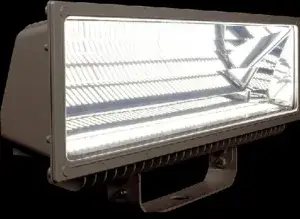
U-HFL
Brand: LightingX
low profile, high performance flood light, billboards, sports courts, parking lots; IP67, up to 24,300 lumens; 15/30/60/90/120/150WPrices start at $70.
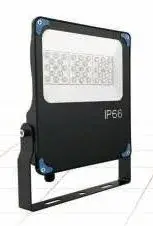
FL-D
Brand:
high performance flood light, billboard, sports courts, parking lots;
IP66, up to 64,000 lumens; 20/30/50/80/100/120/150/200
240/300/350/400W; Prices start at $150.
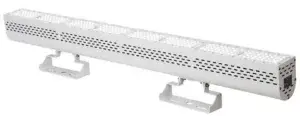
LT
Brand: Rio
low profile, linear flood light, billboard, sign lighting, wall washer;
IP67, up to 43,500 lumens; 50/100/150/200/300W.
Prices start at $250.
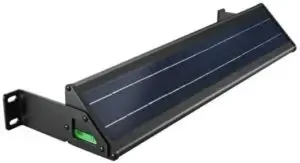
Broadway
Brand: SolTech
all-in-one solar design, up to 2,000 lumens; run time 2-3 days; operating
first 4 hours 100% brightness, 25% brightness till dawn; 10/20W;
Prices start at $350.
What Are LED Billboard Lights?
LED billboard lights are outdoor lighting fixtures designed to illuminate large advertising displays, signage structures, and promotional graphics. These fixtures typically use asymmetrical or directional optics that project light across wide vertical surfaces to ensure uniform visibility.
Proper billboard illumination also depends on mounting height, fixture position, beam angle, spacing, and the dimensions of the sign face. Our Billboard Lighting Mounting Heights, Fixture Placement & Design Guide explains how these factors work together to produce uniform illumination across large advertising displays.
Because billboards are often located in high-traffic areas such as highways or commercial districts, lighting systems must provide strong illumination that highlights the advertisement while minimizing glare for drivers and pedestrians.
Large parking areas surrounding advertising structures may use LED Area Lights to provide uniform site illumination.
LED technology has become the preferred solution for billboard lighting due to its energy efficiency and long service life. Many commercial LED billboard fixtures can operate for 50,000 to 100,000 hours, significantly reducing maintenance compared with older lighting technologies.
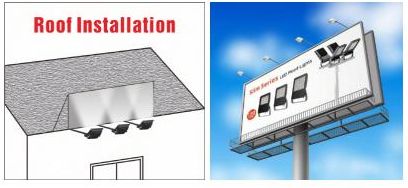
These fixtures are commonly installed along the top or bottom of billboard structures to deliver balanced illumination across the entire sign surface.
Proper maintenance helps preserve fixture performance, aiming, uniform illumination, and long-term system reliability. See our Commercial Billboard Lighting Maintenance Guide for inspection schedules and preventive maintenance recommendations.
Common Applications for LED Billboard Lighting
LED billboard lighting systems are used across a variety of commercial advertising and signage environments.
Typical applications include:
-
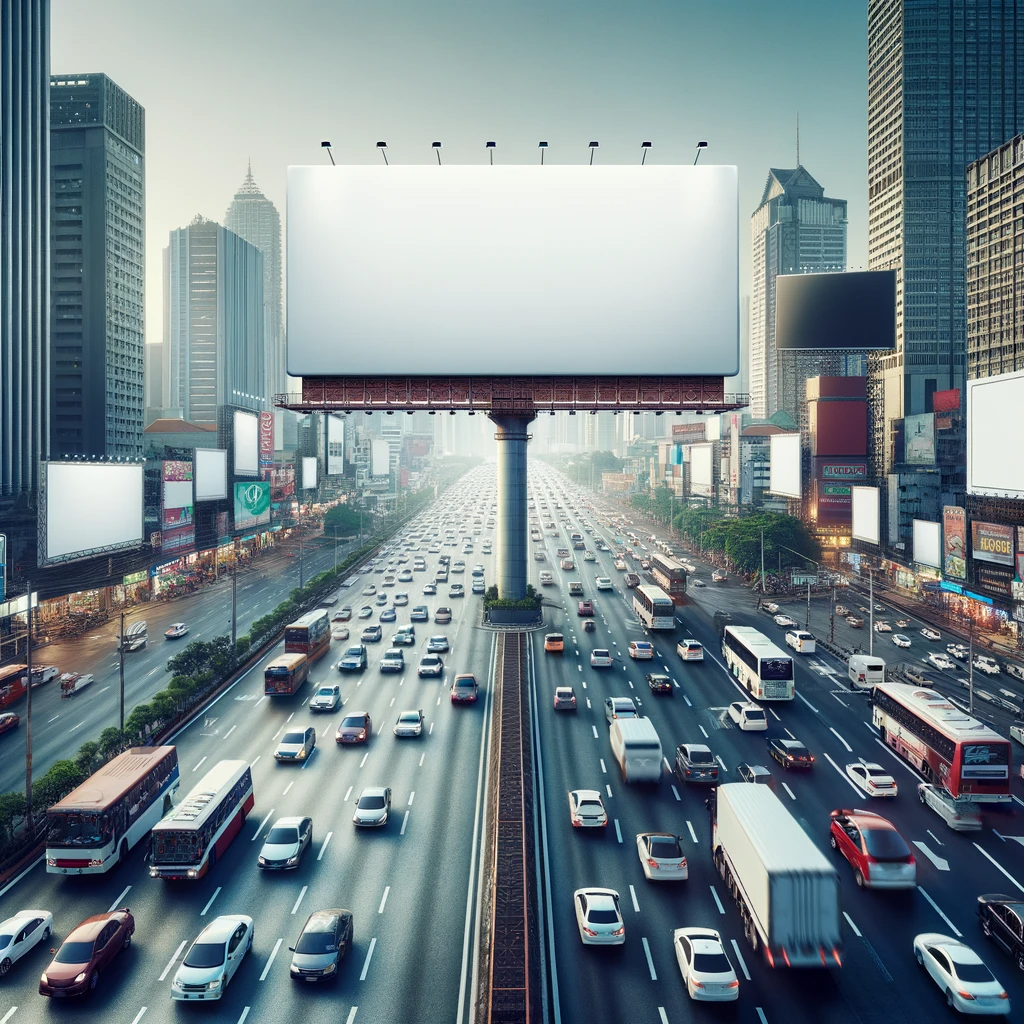
Highway and roadside billboards
-
Outdoor advertising displays
-
Commercial building signage
-
Shopping center signage
-
Stadium and arena advertising panels
-
Transit station advertising displays
-
Large promotional graphics on building façades
Architectural environments that highlight building branding may also incorporate RGB LED Lights to create dynamic lighting effects.
These installations require lighting systems that maintain clear visibility from long viewing distances while preserving the colors and contrast of the displayed graphics.
| Billboard Face Width | Typical Lumen Package (Per Fixture Row)* |
|---|---|
| Up to 20 ft | 12,000 – 20,000 lumens |
| 20 – 40 ft | 20,000 – 40,000 lumens |
| 40 – 60 ft | 30,000 – 60,000 lumens |
| 60 ft and above | Project-specific photometric evaluation recommended |
Planning a billboard lighting project? Learn how fixture placement, beam angles, mounting positions, and illumination levels affect visibility in our guide to making the most of commercial billboard lighting.
| Mounting Height | Typical Aiming Consideration |
|---|---|
| 2 – 4 ft above sign | Short throw, wider spread optics |
| 4 – 8 ft above sign | Balanced distribution for mid-range coverage |
| 8 ft or higher | Narrower beam control for long throw and uniformity |
| Objective | Best Practice |
|---|---|
| Reduce hotspots | Use overlapping beam patterns |
| Improve readability | Maintain consistent vertical illumination |
| Limit spill light | Use precision optics and careful tilt angles |
| Avoid glare to drivers | Shield fixtures from direct line of sight |
| Maintain visual consistency | Match output across the full sign width |
Required light output varies with billboard dimensions, mounting height, fixture placement, beam distribution, and surrounding ambient light. See How Many Lumens Does a Billboard Need? for guidance on determining appropriate illumination levels for commercial signs.
Key Design Considerations
Selecting the appropriate billboard lighting system requires evaluating several design factors.
Uniform Light Distribution
Billboard lighting must distribute light evenly across the entire sign surface to avoid bright spots or shadowed areas.
Mounting Location
Fixtures are commonly mounted at the top or bottom of the billboard frame, depending on structure design and lighting requirements.
For additional guidance on fixture selection, placement, coverage, and effective billboard illumination, see our LED Billboard Lighting Guide.
Lumen Output
Higher lumen output ensures the billboard remains visible against surrounding ambient lighting conditions.
Color Rendering
Good color rendering helps preserve the accuracy and vibrancy of advertising graphics.
Environmental Durability
Billboard lighting fixtures must withstand wind, rain, dust, and temperature variations in outdoor environments.
Photometric calculations and billboard foot candle requirements are essential for selecting the proper LED billboard lighting fixture package.
LED Billboard Lights vs Flood Lights vs Architectural Lighting
| Feature | LED Billboard Lights | LED Flood Lights | Architectural Lighting |
|---|---|---|---|
| Primary Purpose | Sign and advertisement illumination | Large-area directional lighting | Decorative façade lighting |
| Light Distribution | Asymmetrical sign lighting | Wide beam flood lighting | Accent or architectural lighting |
| Typical Mounting | Billboard frames or sign structures | Poles or building mounts | Walls, poles, or architectural structures |
| Common Applications | Advertising billboards | Yards, sports fields, security lighting | Building façades and plazas |
Large exterior spaces surrounding advertising structures may also use LED Flood Lights to illuminate surrounding areas.
Technical Specifications
Typical commercial LED billboard lighting fixtures include:
Wattage Range
80W – 300W depending on sign size
Lumen Output
10,000 – 30,000 lumens
Voltage Options
-
120–277V
-
277–480V commercial installations
Color Temperature
-
4000K
-
5000K
Color Rendering Index
70+ standard
Beam Distribution
-
Asymmetrical sign lighting optics
-
Flood or directional beam patterns
Ingress Protection
IP65 or higher
Housing Construction
-
Die-cast aluminum
-
Weather-sealed optics
-
Corrosion-resistant powder coating
Control Options
-
Photocells
-
Smart lighting controls
-
Dimming compatibility
Rated Lifespan
50,000 – 100,000 hours
Understanding the differences between LED and metal halide technology helps billboard owners make informed upgrade decisions.
Advantages of LED Billboard Lighting
LED billboard lighting systems offer several benefits for commercial advertising environments:
-
High visibility for nighttime advertising
-
Energy-efficient LED technology; For facilities comparing operating costs, LED systems can substantially reduce wattage and maintenance requirements compared with older billboard lighting technologies. See our Billboard Lighting Energy Savings Guide for additional considerations.
-
Long operational lifespan
-
Reduced maintenance requirements
-
Consistent illumination across large sign surfaces
-
Durable construction for outdoor environments
These advantages make LED lighting the preferred solution for modern billboard and outdoor advertising illumination.
Effective billboard illumination depends on fixture placement, beam distribution, mounting distance, and aiming angle working together to provide uniform light across the sign face. Learn more about how billboard lights work and the factors that influence visibility and lighting performance.
Inline Buyer Q&A
How do I choose the right LED lights for a billboard?
Start with the billboard dimensions, fixture mounting location, setback from the sign face, available mounting positions, and the distance the light must travel across the advertising surface.
Important considerations include:
- Billboard width and height
- Single- or double-sided configuration
- Fixture mounting above or below the sign
- Fixture setback from the billboard face
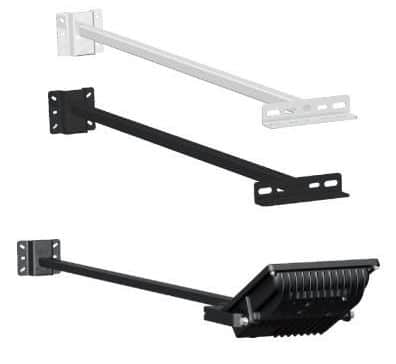
- Mounting-arm dimensions
- Beam distribution
- Fixture output
- Aiming angle
- Sign-face material and reflectance
- Glare and spill-light control
- Voltage
- Environmental exposure
- Existing fixture locations for retrofit projects
Billboard lighting should be selected around the geometry of the sign rather than fixture wattage alone.
How many LED fixtures do I need for my billboard?
There is no universal fixture quantity based solely on billboard size.
A 14 × 48 foot billboard, for example, can require different fixture quantities depending on fixture output, beam distribution, mounting position, setback, aiming, sign-face characteristics, and desired uniformity.
Photometric data or a project-specific lighting layout is the better way to determine fixture quantity and spacing.
Should billboard lights be mounted above or below the sign?
Either configuration can be used depending on the billboard structure, available mounting locations, fixture design, and project requirements.
The mounting position changes the distance and angle at which light reaches the advertising face, so fixture optics and aiming need to be selected accordingly.
The objective is to illuminate the display evenly while limiting excessive brightness, dark areas, glare, and unnecessary spill light.
Can existing HID billboard lights be replaced with LED fixtures?
Often, yes.
Existing metal halide or other HID billboard lighting can frequently be replaced with LED fixtures, but the replacement should not be selected by wattage equivalency alone.
Evaluate:
- Existing fixture wattage
- Fixture quantity
- Mounting-arm locations
- Setback
- Voltage
- Wiring
- Mounting hardware
- Existing aiming
- Condition of the electrical system
- Desired illumination and uniformity
A lower-wattage LED fixture may provide the required illumination when its optics and placement are appropriate for the billboard.
What color temperature should I use for billboard lighting?
There is no single color temperature appropriate for every billboard.
The advertising graphics, surrounding nighttime environment, fixture characteristics, local requirements, and desired appearance can all influence the selection.
Color rendering and spectral characteristics should also be considered where accurate presentation of advertising colors is important.
What information should I provide when requesting LED billboard lights?
When possible, provide:
- Billboard width and height
- Photos of the sign and existing lighting
- Single- or double-sided configuration
- Fixture mounting above or below the display
- Number and location of existing fixtures
- Mounting-arm length or fixture setback
- Existing fixture wattage
- Voltage
- Billboard height above grade
- Existing mounting hardware
- Project location
- Applicable lighting or sign requirements
For retrofit projects, photographs showing the entire billboard and close-ups of the existing fixtures and mounting arms can be especially helpful.
Frequently Asked Questions
What are LED billboard lights used for?
LED billboard lights are used to illuminate outdoor advertising displays, roadside billboards, and large commercial signage.
How many lights are required for a billboard?
A standard 14 × 48 foot billboard typically uses two to four fixtures depending on brightness requirements and mounting configuration.
Are LED billboard lights energy efficient?
Yes. LED fixtures consume significantly less energy than traditional HID billboard lighting while providing longer service life.
What color temperature is used for billboard lighting?
Many installations use 4000K to 5000K lighting to maintain accurate color visibility on advertising graphics.
How long do LED billboard lights last?
Most commercial LED billboard fixtures are rated for 50,000–100,000 hours of operation.
Light the Advertising Surface, Not the Surrounding Sky
Effective billboard lighting depends on placing the right amount of light across the advertising face with appropriate uniformity and control.
Fixture output is only part of the design. Beam distribution, mounting position, setback, aiming, billboard dimensions, sign-face characteristics, and surrounding conditions determine how effectively the light reaches the display.
Whether you’re replacing older HID billboard fixtures, upgrading an existing advertising structure, or specifying lighting for a new billboard, our lighting specialists can help evaluate:
- Commercial LED billboard lights
- Large-format advertising displays
- HID-to-LED conversions
- Fixture quantity and spacing
- Beam distribution
- Mounting-arm and setback requirements
- Above- and below-sign mounting
- Fixture aiming
- Glare and spill-light control
- Single- and double-sided billboards
- New construction and retrofit projects
For project assistance, have your billboard dimensions, photographs, existing fixture information, mounting-arm dimensions, voltage, and project location available when possible.
Call 1-844-533-7767 to discuss your LED billboard lighting project.
Frequently Asked Questions About LED Billboard Lights
What are LED billboard lights used for?
LED billboard lights are designed to illuminate outdoor advertising displays, roadside billboards, commercial signs, and other large-format exterior graphics during nighttime hours.
The fixture and optical distribution should be selected specifically for the dimensions and mounting geometry of the display.
How many lights are required for a billboard?
There is no fixed number of fixtures for a particular billboard size.
Fixture quantity depends on:
- Billboard dimensions
- Fixture output
- Beam distribution
- Mounting position
- Fixture setback
- Spacing
- Aiming
- Sign-face characteristics
- Desired illumination and uniformity
Even billboards with identical dimensions can require different layouts when the fixtures or mounting geometry differ.
How many LED lights are needed for a 14 × 48 foot billboard?
A 14 × 48 foot billboard should not automatically be assigned a specific number of fixtures.
The required quantity depends on the selected fixture’s photometric distribution, output, mounting-arm setback, fixture spacing, aiming, and the illumination objectives for the sign face.
A project-specific layout is preferable to using a universal two-, three-, or four-fixture rule.
Are LED billboard lights energy efficient?
LED billboard fixtures can use less lighting energy than many older HID billboard systems.
Actual energy savings depend on the existing fixture wattage, LED replacement wattage, fixture quantity, operating hours, controls, and lighting requirements.
Can LED billboard lighting reduce maintenance requirements?
It can reduce routine lamp-replacement requirements compared with many traditional HID systems.
Actual maintenance requirements depend on fixture quality, LED modules, drivers, electrical conditions, operating hours, environmental exposure, mounting accessibility, and other project conditions.
Maintenance accessibility can be particularly important for elevated billboard structures.
How long do LED billboard lights last?
There is no universal service life for LED billboard fixtures.
LED modules, drivers, thermal management, operating hours, electrical conditions, environmental exposure, fixture construction, and maintenance can all influence long-term performance.
Compare manufacturer-specific rated-life information and warranty terms when evaluating fixtures.
What color temperature is best for LED billboard lighting?
There is no single color temperature appropriate for every billboard.
The advertising graphics, desired nighttime appearance, surrounding environment, fixture performance, and applicable local requirements can influence the selection.
Color rendering should also be considered where maintaining the intended appearance of advertising graphics and brand colors is important.
Is CRI important for billboard lighting?
It can be.
Color rendering is one factor in how illuminated advertising graphics appear after dark. It should be considered together with color temperature, spectrum, output, distribution, sign-face materials, and the colors used in the advertising artwork.
Should billboard lights be mounted above or below the display?
Both configurations are possible.
The appropriate mounting position depends on billboard construction, available mounting locations, fixture optics, setback, maintenance access, and project requirements.
The fixture distribution and aiming should match the selected mounting configuration.
Why is fixture setback important for billboard lighting?
Setback affects the angle and distance over which the fixture must distribute light across the billboard face.
A fixture mounted close to the display behaves differently from one mounted farther away.
Setback should therefore be considered together with beam distribution, fixture spacing, mounting height relative to the sign, and aiming.
Why is beam angle important for billboard lights?
The optical distribution determines how light spreads across the advertising surface.
A distribution that is too narrow can create bright areas and leave portions of the billboard under-illuminated, while an inappropriate wide distribution can send unnecessary light beyond the sign.
The optics should be matched to the billboard dimensions and mounting geometry.
Does higher wattage provide better billboard lighting?
Not necessarily.
Higher wattage does not guarantee better coverage or uniformity.
Optical distribution, fixture placement, setback, aiming, and fixture efficiency can be as important as total output. The goal is to place appropriate illumination on the billboard face rather than simply maximize wattage or lumens.
Why is uniformity important on a billboard?
Large differences between bright and dark areas can affect the appearance and readability of illuminated advertising.
Appropriate fixture spacing, distribution, setback, and aiming help spread illumination across the display more consistently.
Can billboard lighting create glare?
Yes.
Poor fixture selection or aiming can direct high brightness toward motorists, neighboring properties, or other unintended viewing positions.
Fixture distribution, mounting, aiming, shielding where appropriate, and surrounding conditions should be considered during design.
Can LED billboard lighting reduce light spill?
Properly selected LED optics can provide greater control over where light is directed compared with some older lighting systems.
However, LED technology alone does not eliminate spill light. Fixture distribution, mounting position, setback, aiming, output, and installation determine how effectively the system contains light on the intended advertising surface.
Are LED billboard lights suitable for outdoor environments?
Commercial billboard fixtures are available for exterior installations, but environmental suitability should be verified from the actual product specifications and listings.
Wet-location requirements, ingress protection where relevant, operating temperature, wind exposure, corrosion conditions, mounting orientation, and other site conditions should be considered.
Can billboard lights use photocells or timers?
Yes, when compatible with the selected equipment and project requirements.
Photocells, timers, scheduling systems, and other controls can manage when billboard lighting operates and may help reduce unnecessary operating hours.
Local sign or lighting requirements should also be considered.
Can existing billboard mounting arms be reused?
Potentially.
Existing mounting arms and hardware should be evaluated for physical condition, dimensions, fixture compatibility, weight, wind exposure, aiming capability, and mounting requirements before reuse.
The existing arm length may also affect whether the selected LED fixture can distribute light appropriately across the billboard.
Do LED billboard lighting projects need photometric layouts?
Photometric evaluation can be particularly useful for large-format billboards, unusual dimensions, new mounting configurations, HID-to-LED conversions, or projects where fixture quantity and uniformity need to be determined before installation.
Photometric data can help evaluate fixture output, beam distribution, spacing, setback, and aiming across the advertising surface.
Stay Connected with Our Lighting Resources
Add IndustrialLightingFixtures.org as a Preferred Source on Google to see more of our lighting guides and technical resources across Google Search experiences.

Related Billboard & Outdoor Lighting Resources
- Outdoor LED Lighting Guide — Review broader commercial exterior-lighting considerations including fixture selection, optics, layouts, glare control, environmental exposure, and controls.
- LED Sign Lighting — Explore LED lighting considerations for commercial signs and exterior illuminated displays.
- LED Flood Lights — Review directional outdoor LED fixtures and optical considerations for illuminating large exterior targets and commercial properties.
- Commercial Site Lighting Design Guide — Learn how exterior fixtures, mounting locations, glare, spill light, surrounding properties, and photometric performance can be coordinated across commercial sites.
- Dark Sky Friendly Lighting — Review strategies for controlling uplight, glare, excessive illumination, and unwanted light beyond the intended area.