LED gas station lights are engineered to deliver bright, uniform illumination across fuel canopies, pump islands, and forecourt areas. Designed for high-traffic commercial environments, these fixtures enhance visibility, improve safety, and support 24/7 operations at convenience stores and petroleum fueling stations. With advanced optics, weather-resistant construction, and long operational life, commercial LED gas station lighting systems reduce maintenance demands while significantly lowering energy consumption compared to legacy HID fixtures.
For fuel retailers and petroleum contractors, upgrading to LED canopy lighting improves customer experience, security, and operational efficiency.
Fueling canopy luminaires are a specialized yet integral part of modern commercial lighting systems.
LED Gas Station Lighting Fixtures
In comprehensive site lighting plans, LED gas station lights are often coordinated with perimeter area lights, canopy accent lights, and security luminaires to create seamless visibility from pump islands to adjacent parking and access zones.
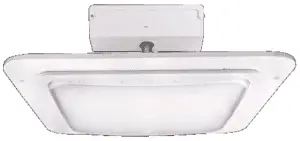
Vail
Brand: Beyond
20 x 20 inch; surface or pendant; IP65 (NEMA 4X); Dust & Water Tight
UL, DLC; Up to 26,301 lumens
at 180W; Prices start at $250.
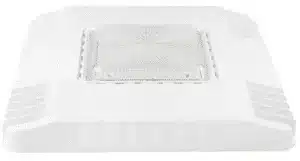
LS-NCPV4
Brand: Ledsion
Gas Station, Service Stations; 15″ x 15″; up to 19,500 lumens; Pendant / Surface Mount; DLC, UL; Prices start at $250.
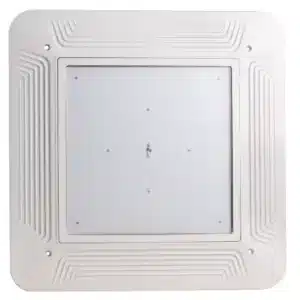
BB-CSD
Brand: Bbier
Low profile, streamlined form, Gas stations, Petroleum canopy; CNG fueling stations; up to 23,815 lumens; 160/ 200W; Prices start at $225.
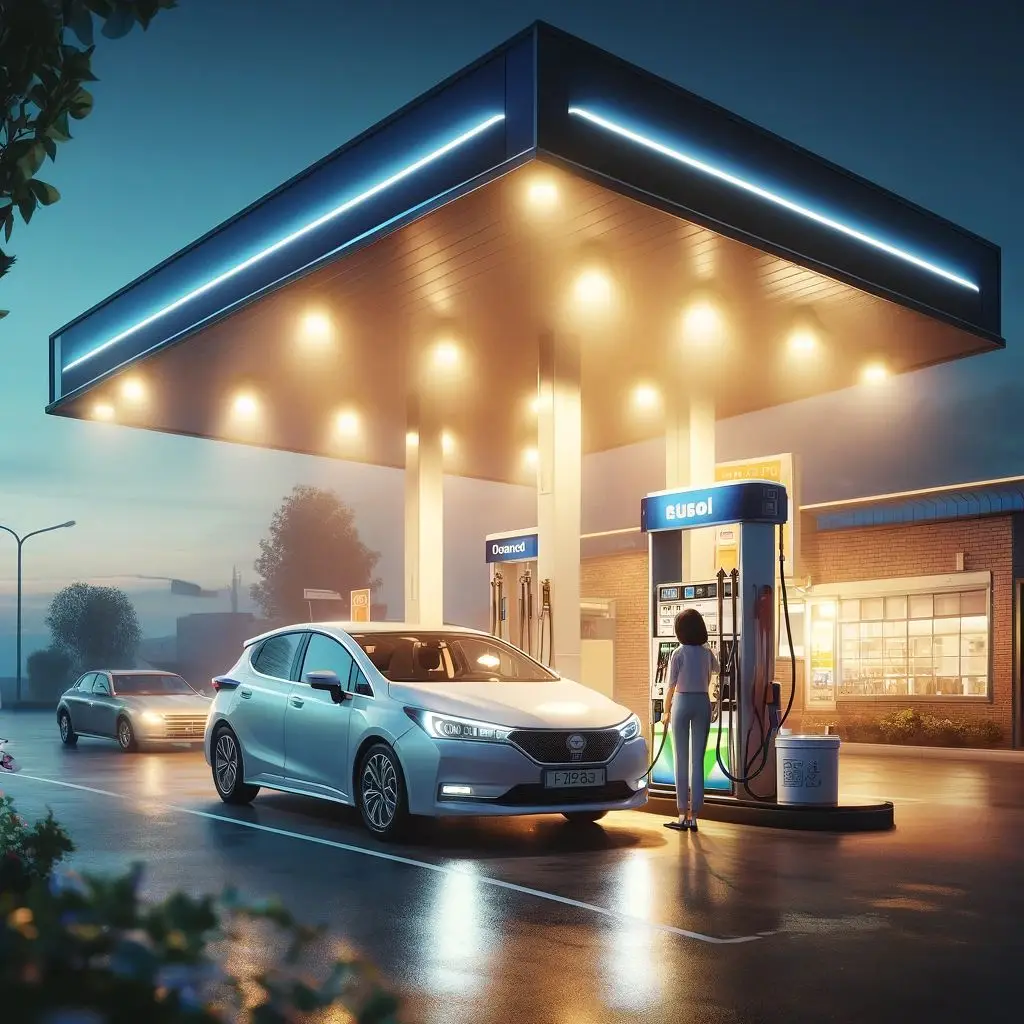
What Are LED Gas Station Lights?
LED gas station lights are commercial-grade luminaires designed specifically for canopy-mounted and exterior forecourt installations at fueling facilities. These fixtures provide wide, glare-controlled illumination to ensure pump visibility, safe vehicle movement, and clear product branding.
Unlike general canopy lights, gas station lighting systems are engineered for continuous operation in demanding outdoor environments.
Upgrading existing canopy lighting is one of the most cost-effective improvements a fueling station can make. Read our Gas Station Canopy LED Retrofit Guide to compare retrofit options, mounting styles, lighting layouts, and energy-saving technologies.
When Should Gas Station LED Lighting Be Used?
LED gas station lights are specified when:
✔ Uniform, safety-oriented illumination is needed
✔ Energy efficiency and reduced maintenance are key goals
✔ Canopy areas must be evenly lit without glare
✔ Elevated visibility increases transaction safety and customer comfort
✔ Compliance with lighting codes and fuel canopy standards is required
They are ideal for:
• Fuel pump canopies
• Self-service forecourts
• Gas station parking and entrance zones
• Electric vehicle charging stations adjacent to fuel dispensers
These fixtures improve visibility for vehicle operators and pedestrians while enhancing site security around fueling stations.
In areas where fuel vapors or classified electrical zones are present, facility designers may reference applicable hazardous location requirements outlined in our explosion-proof lighting standards guide to ensure proper fixture selection.
Key Performance Features
High Lumen Output
Designed to provide bright, even illumination across pump islands and fueling areas.
Glare Control
Optimized optics reduce discomfort glare for drivers and pedestrians.
Wet-Location Rated Construction
IP65+ rated housings protect against rain, humidity, and environmental exposure.
Energy Efficiency
LED technology lowers energy consumption compared to metal halide canopy fixtures.
Long Service Life
50,000+ hour rated lifespan reduces lift equipment and maintenance costs.
Retrofit & New Construction Compatibility
Available for both canopy retrofits and new installations. For covered areas beyond pump islands, facilities may integrate broader commercial LED canopy lighting solutions for entrances and walkways.
Core Specifications & Performance Characteristics
Key performance factors for LED gas station lighting include:
✔ Lumen output: typically optimized for canopy illumination
✔ Optical distribution: designed for downward uniformity
✔ Color temperature: 4000K–5000K common for service areas
✔ CRI (Color Rendering Index): mid-range for good color perception
✔ Ingress protection: high IP rating for outdoor exposure
✔ Mounting flexibility: recessed, surface, or canopy-integrated
LED gas station fixtures are engineered to match the unique lighting geometry of canopy structures, delivering uniform foot-candles across pump islands and walkways with minimal spill light.
Fuel canopy illumination should align with broader exterior lighting planning outlined in our commercial lighting design guide.
Planning & Selection Considerations
When planning gas station LED lighting, evaluate:
✔ Mounting height and spacing: to achieve consistent coverage
✔ Optical distribution patterns: to reduce glare and spill light
✔ Ingress protection: for weather and moisture resistance
✔ Corrosion resistance: for coastal or exposed environments
✔ Energy code compliance: for outdoor lighting efficiency regulations
Fuel stations often coordinate canopy upgrades with LED parking lot lights to provide consistent illumination across the entire property. Proper planning ensures that all fueling areas meet safety, operational, and code expectations while minimizing energy use and maintenance costs.
Comparison Table — Gas Station vs Canopy vs Flood Lighting
| Attribute / Use | LED Gas Station Lights | LED Canopy Lights | LED Flood Lights |
|---|---|---|---|
| Primary Coverage | Downward pump & forecourt | Downward under overhead | Broad outdoor area |
| Mounting Height | Typically 8–20 ft | Typically 8–20 ft | 20–60 ft+ |
| Optical Focus | Downward uniform | Downward uniform | Wide flood pattern |
| Best Use Cases | Fuel pump stations | Canopies, overhangs | Yards, perimeter, courts |
| Ingress Protection | High (Outdoor) | High (Outdoor) | High (Outdoor) |
| Visual Impact | Safety and clarity | Safety and branding | Broad site lighting |
While gas station canopies focus on pump island illumination, commercial LED wall pack fixtures help ensure consistent visibility along building exteriors and customer walkways.
Technical Standards & Compliance Resources
Selecting LED gas station lighting requires adherence to applicable outdoor and safety standards, including:
✔ UL/ETL listings for outdoor luminaires
✔ High IP ratings for moisture and dust resistance
✔ Energy code compliance (IECC/ASHRAE local standards)
✔ Local zoning ordinances controlling light trespass and glare
Ensuring LED gas station lights meet performance and safety standards protects customer experience, reduces maintenance costs, and supports code compliance. For broader lighting strategy and classification guidance, refer to our lighting design resources.
Commercial & Industrial Applications
LED gas station lights are widely deployed across:
• Fuel station canopies
• Convenience store forecourts
• Commercial fueling depots
• Transportation hubs with fixed fueling islands
• Fleets and truck terminals
• Marinas with fuel docks
They are also used in multi-use commercial sites where lighting must support both fueling operations and adjacent retail or service zones.
Inline Buyer Q&A
How do I choose LED lighting for a gas station canopy?
Start with the canopy dimensions, mounting height, existing fixture locations, desired illumination, and the electrical and environmental conditions at the site.
Important considerations include:
- Canopy height and dimensions
- Existing fixture spacing
- Fixture output and distribution
- Recessed or surface mounting
- Voltage
- Wet-location and environmental requirements
- Glare control
- Existing HID fixtures for retrofit projects
- Controls and operating hours
- Applicable electrical and hazardous-location requirements
For larger projects, a photometric layout can help evaluate fixture quantity, placement, illumination, and uniformity before equipment is selected.
Does every light at a gas station need to be explosion proof?
No.
A gas station or fueling facility can contain different electrical-location classifications depending on the equipment, location, and potential presence of flammable vapors.
A fixture installed outside a classified hazardous location should not automatically be treated the same as equipment installed within a classified area.
The applicable location classification should be established from the project design, applicable electrical requirements, and authority having jurisdiction before fixtures are specified.
Can existing HID gas station canopy lights be converted to LED?
Often, yes.
Depending on the existing fixture and canopy construction, a project may use LED retrofit equipment or complete replacement fixtures.
Before deciding on a retrofit, evaluate the existing housings, wiring, mounting openings, voltage, physical condition, heat damage, corrosion, and compatibility with the proposed LED equipment.
How do I determine how much light a gas station canopy needs?
There is no single lumen or foot-candle value appropriate for every fueling facility.
Canopy dimensions, mounting height, fixture distribution, spacing, surface reflectance, surrounding lighting, branding requirements, local requirements, and desired illumination all influence the design.
Photometric modeling can help compare fixture quantities and layouts before installation.
Should gas station canopy lights be recessed or surface mounted?
Either configuration can be appropriate.
Recessed fixtures can integrate into compatible canopy construction, while surface-mounted fixtures may be appropriate for other canopy designs or retrofit conditions.
The decision should consider the existing canopy, mounting space, wiring, environmental exposure, maintenance access, fixture construction, and project requirements.
What information should I provide when requesting gas station lighting?
When possible, provide:
- Canopy dimensions
- Canopy height
- Photos of the existing installation
- Existing fixture quantity and spacing
- Existing lamp or fixture wattage
- Voltage
- Recessed opening dimensions, if applicable
- Fixture mounting method
- Site or canopy drawings
- Desired illumination
- Retrofit or new-construction requirements
- Project location
- Applicable specifications or electrical classifications
For retrofit projects, photographs of the existing fixtures and equipment labels can be especially helpful.
Build the Fuel Canopy Lighting Around the Site Conditions
Gas station lighting requires more than selecting a bright canopy fixture. Canopy height, fixture spacing, optical distribution, mounting configuration, environmental exposure, electrical requirements, existing equipment, and the location of fixtures relative to classified areas all need to be considered.
Whether you’re upgrading an existing service station, converting older HID canopy fixtures to LED, renovating a convenience-store fueling area, or designing a new fuel canopy, our lighting specialists can help evaluate:
- LED gas station canopy fixtures
- Recessed and surface-mounted canopy lighting
- HID-to-LED retrofit options
- Fixture output and distribution
- Canopy fixture spacing
- Photometric layouts
- Wet-location and environmental requirements
- New construction and retrofit projects
For project assistance, have your canopy dimensions, mounting height, existing fixture information, voltage, photographs, and project specifications available when possible.
Call 1-844-533-7767 to discuss your gas station or fuel canopy lighting project.
Frequently Asked Questions About LED Gas Station Lights
What are LED gas station lights used for?
LED gas station lights are commonly used to illuminate fuel canopies, pump islands, forecourt areas, convenience-store entrances, and other exterior areas of fueling facilities.
Different areas of the property can require different fixture types, distributions, mounting configurations, and electrical considerations.
Are LED gas station lights energy efficient?
LED canopy fixtures can use less energy than many older HID systems.
Actual energy savings depend on the existing fixture wattage, replacement fixture wattage, fixture quantity, operating hours, controls, and overall lighting design.
Can gas station lighting be retrofitted to LED?
Often, yes.
Existing HID canopy lighting may be upgraded with compatible LED retrofit equipment or complete replacement fixtures.
The appropriate approach depends on the condition and construction of the existing fixtures, mounting configuration, wiring, voltage, canopy construction, and compatibility with the proposed LED equipment.
Is an LED retrofit always better than replacing the complete canopy fixture?
No.
A retrofit can make sense when the existing housing and associated components remain suitable for continued service.
Complete fixture replacement may be preferable when existing equipment is deteriorated, damaged, incompatible with the proposed retrofit, difficult to service, or no longer appropriate for the desired lighting design.
How bright should gas station canopy lighting be?
There is no universal brightness level for every gas station canopy.
Fixture output should be evaluated together with canopy height, spacing, optical distribution, surface reflectance, surrounding lighting, property requirements, and applicable local criteria.
More light is not automatically better; excessive brightness can create glare and unnecessarily high contrast with surrounding areas.
Why is uniformity important under a fuel canopy?
Appropriate uniformity can reduce abrupt bright and dark areas across the fueling environment and improve visual conditions around pumps, vehicles, and pedestrian circulation areas.
Uniformity depends on fixture distribution, output, spacing, mounting height, canopy geometry, and surrounding illumination.
Are LED gas station canopy lights weather-rated?
Fixtures intended for exterior canopy applications are available with environmental ratings appropriate for outdoor and wet locations.
Suitability should be verified from the actual fixture listings and manufacturer specifications, including wet-location rating, ingress protection where relevant, operating-temperature range, mounting orientation, and other environmental requirements.
Does an IP rating make a gas station light explosion proof?
No.
An IP rating addresses protection against ingress of solids and liquids under the applicable rating system. It does not establish that a fixture is approved for a classified hazardous location.
Hazardous-location suitability requires the appropriate certification and markings for the location in which the equipment will be installed.
Do all gas station canopy lights need hazardous-location certification?
Not automatically.
Electrical classification around fuel-dispensing equipment depends on location relative to potential vapor sources and applicable electrical requirements.
The project documents, applicable codes, and authority having jurisdiction should be used to determine whether a particular fixture location requires hazardous-location-rated equipment.
Can explosion-proof fixtures be used at fueling facilities?
Yes, where the fixture is properly certified and suitable for the specific hazardous-location classification and environmental conditions.
Fixture selection should match the actual Class, Division or Zone requirements, gas group where applicable, temperature considerations, and other project requirements.
Can LED gas station lights improve visibility for surveillance cameras?
Lighting can improve nighttime visibility in areas monitored by surveillance equipment, but camera performance also depends on camera technology, placement, exposure settings, contrast, fixture location, glare, and other site conditions.
Lighting and surveillance systems should be coordinated rather than assuming brighter lighting will automatically produce better video.
Do gas station lights improve security?
Lighting can support nighttime visibility and broader site-security objectives, but it should not be treated as a standalone security system.
Site layout, surveillance, access, landscaping, building design, and operational practices should also be considered.
Can gas station canopy lights cause glare?
Yes.
Excessive fixture brightness, inappropriate distribution, poor placement, and strong contrast between the canopy and surrounding property can create glare.
Fixture optics, output, spacing, mounting height, shielding where applicable, and surrounding illumination should be considered during design.
What color temperature should be used for gas station lighting?
There is no single color temperature appropriate for every fueling facility.
Branding, desired appearance, surrounding lighting, fixture performance, local requirements, and overall site design can influence the selection.
Color temperature should be coordinated across the canopy and surrounding property where a consistent nighttime appearance is desired.
How long do LED gas station canopy lights last?
There is no universal service life.
LED components, drivers, thermal management, operating hours, electrical conditions, environmental exposure, fixture construction, and maintenance all affect long-term performance.
Compare manufacturer-specific rated-life information and warranties when evaluating fixtures.
Can gas station canopy lighting use controls?
Yes, where appropriate for the application and operating requirements.
Photocells, scheduling, dimming, and other control strategies can help manage operating hours and output. Control compatibility should be verified with the selected fixtures and drivers.
Do I need a photometric layout for a gas station canopy?
Not every project requires one, but photometric modeling can be valuable for new construction, larger retrofits, changes in fixture quantity, or projects where illumination and uniformity need to be evaluated before installation.
A photometric layout can help compare fixture output, distribution, spacing, and mounting configurations.
Related Gas Station & Commercial Outdoor Lighting Resources
- LED Canopy Lighting — Explore commercial LED canopy fixtures and selection considerations for covered exterior spaces, entrances, fueling facilities, and other canopy applications.
- Outdoor LED Lighting Guide — Review fixture selection, layout, environmental exposure, glare, controls, and other considerations for commercial exterior lighting systems.
- Commercial Site Lighting Design Guide — Learn how parking areas, pedestrian zones, buildings, entrances, and other exterior lighting components can be coordinated across a commercial property.
- LED Explosion-Proof Lighting — Explore hazardous-location LED fixtures for applications where the project classification requires appropriately certified equipment.
- Hazardous Location Lighting Guide — Understand how location classification, certifications, environmental conditions, and fixture markings affect lighting selection for hazardous areas.