Commercial LED rope lighting is widely used to illuminate architectural features, hospitality properties, walkways, entertainment venues, retail centers, landscape projects, and outdoor gathering spaces. Proper installation is essential for achieving long-term performance, maintaining weather resistance, and maximizing the lifespan of the lighting system.
Whether you’re installing rope lighting on a building facade, pathway, handrail, outdoor patio, landscape feature, or architectural accent, following proven installation practices can help reduce maintenance requirements and improve reliability for years to come.
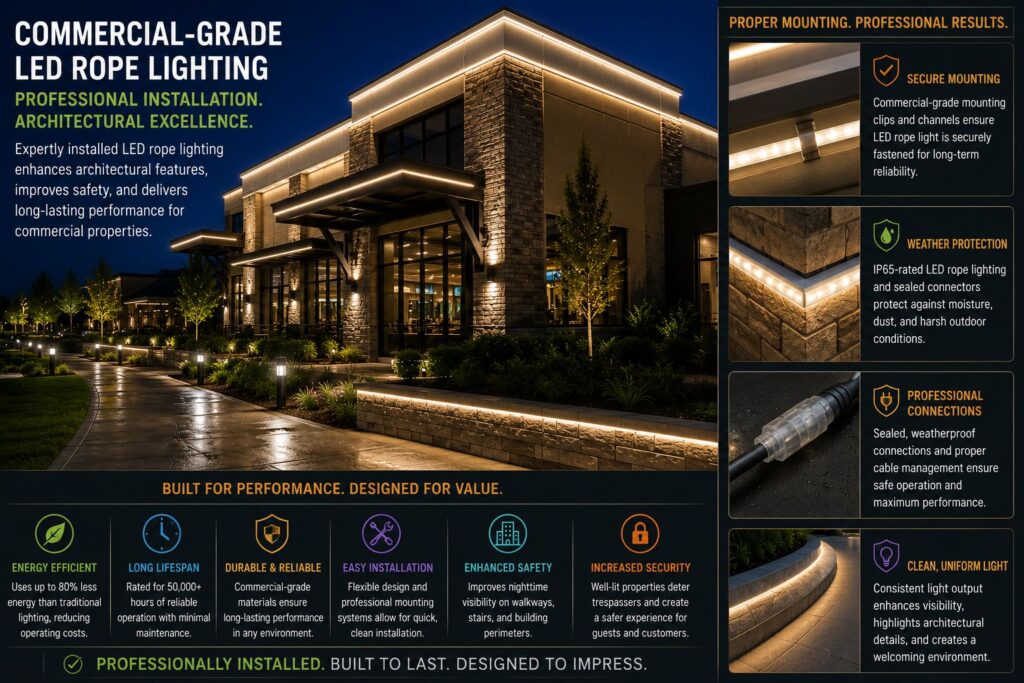
Proper installation helps maximize LED rope light performance, durability, and service life.
Need Help with a Commercial LED Rope Lighting Project?
Industrial Lighting Fixtures supplies commercial-grade LED rope lights and installation accessories for architectural lighting, hospitality properties, landscape projects, entertainment venues, and commercial facilities. Our lighting specialists can help you select the proper rope lighting system and installation components.
Why Proper Installation Matters
Even the highest-quality rope lighting system can experience premature failures if installed incorrectly.
Proper installation helps:
- Improve reliability
- Extend service life
- Maintain waterproof protection
- Reduce maintenance costs
- Improve appearance
- Prevent electrical issues
Installation quality often has a direct impact on long-term ownership costs.
Step 1: Select the Right Rope Lighting Product
Before beginning installation, evaluate:
- Indoor vs outdoor use
- Voltage requirements
- Color temperature
- Brightness levels
- Environmental exposure
- Mounting conditions
Commercial-grade products typically provide superior durability and longevity.
Before selecting a product, review Getting the Right Type of Commercial Grade Rope Lighting to compare available options and performance characteristics.
Step 2: Plan the Installation Layout
Successful projects begin with proper planning.
Identify:
- Power source locations
- Run lengths
- Mounting surfaces
- Connection points
- Accessibility requirements
- Maintenance access
A detailed installation plan helps minimize issues during construction.
Step 3: Choose the Proper Mounting Method
Commercial rope lights can be installed using:
- Mounting clips
- Surface channels
- Aluminum tracks
- Mechanical fasteners
- Specialty mounting brackets
The appropriate mounting method depends on the installation surface and project requirements.
Common surfaces include:
- Concrete
- Brick
- Steel
- Wood
- Architectural panels
- Handrails
Step 4: Avoid Excessive Bending
LED rope lights are flexible, but they have limitations.
Avoid:
- Sharp bends
- Twisting
- Excessive tension
- Kinks
- Improper routing
Following manufacturer bend-radius recommendations helps prevent internal damage.
Step 5: Protect Electrical Connections
Most outdoor lighting failures occur at connection points rather than within the LEDs themselves.
Critical connection locations include:
- Power feeds
- Connector joints
- End caps
- Wire splices
- Power injection points
Proper protection is essential for outdoor installations.
Step 6: Waterproof All Connectors and Accessories
A waterproof rope light does not automatically create a waterproof installation.
Every exposed connection should be protected.
Components Requiring Waterproof Protection
- Power cord connections
- End caps
- Middle connectors
- Extension cables
- Controller connections
- Junction box entries
- Wire splices
Waterproofing End Caps
Best practices include:
- Apply waterproof silicone adhesive or approved sealant.
- Fully seat the end cap.
- Remove excess sealant.
- Allow proper curing time.
Waterproofing Connector Joints
Outdoor-rated connector systems should be:
- Properly engaged
- Sealed with approved materials
- Protected from standing water
- Inspected periodically
Waterproofing Power Connections
Recommended protection methods include:
| Component | Protection Method |
|---|---|
| End Caps | Waterproof Silicone Adhesive |
| Power Cord Entry | Waterproof Connector |
| Middle Connectors | Sealing Gel or Adhesive |
| Wire Splices | Heat Shrink Tubing |
| Junction Boxes | Gasketed Outdoor Enclosure |
Proper waterproofing significantly improves long-term reliability.
Learn more about environmental protection requirements in Can LED Light Strips Be Waterproof?
Step 7: Verify Power Requirements
Commercial rope lighting systems are commonly available in:
- 12V
- 24V
- 120V
Factors affecting power selection include:
- Run length
- Voltage drop
- Power supply location
- Brightness requirements
Proper power planning helps maintain consistent illumination.
Step 8: Test Before Finalizing Installation
Before permanently securing the installation:
- Verify operation
- Test all connections
- Check brightness consistency
- Confirm controller functionality
- Inspect waterproof seals
Correcting issues before project completion saves time and labor.
Common Commercial Rope Lighting Applications
Commercial LED rope lighting is frequently installed in:
- Hospitality properties
- Restaurants
- Retail centers
- Entertainment venues
- Walkways
- Building facades
- Outdoor gathering spaces
- Landscape features
- Architectural accents
Explore real-world examples in Applications for Commercial Grade Rope Lighting.
Installation Mistakes to Avoid
Avoid:
- Using indoor-rated products outdoors
- Leaving connectors exposed
- Ignoring voltage drop
- Over-bending rope lights
- Improper power supply sizing
- Failing to waterproof end caps
- Skipping final testing
These mistakes often result in premature failures and unnecessary maintenance costs.
Long-Term Maintenance Recommendations
After installation:
- Inspect connections annually
- Check waterproof seals
- Verify mounting hardware
- Remove debris accumulation
- Monitor illumination consistency
Routine inspections can help identify issues before failures occur.
Learn more about expected service life in How Long Do Outdoor Rope Lights Last?
Inline Buyer Q&A
Can LED rope lights be installed outdoors?
Yes. Commercial outdoor-rated products are specifically designed for exterior applications.
What is the most important part of installation?
Protecting connectors, end caps, and power connections is one of the most critical factors for long-term reliability.
Do outdoor rope lights need waterproof connectors?
Yes. Waterproof connectors and properly sealed accessories help prevent moisture intrusion.
Can rope lights be mounted to concrete or masonry?
Yes. Appropriate mounting clips and fasteners can be used on most construction materials.
How long do commercial rope lights last?
Many commercial-grade products provide 50,000 to 100,000 hours of operation when properly installed.
Professional LED Rope Lighting Installation Solutions
Proper installation is essential to maximizing the performance, reliability, and lifespan of commercial LED rope lighting systems. Selecting quality products, protecting connections, and following proven installation practices helps reduce maintenance requirements while delivering dependable illumination for years to come.
Planning a hospitality, architectural, entertainment, landscape, or commercial rope lighting project?
👉 Explore Commercial LED Rope Lights or call 1-844-533-7767 for help selecting rope lighting, connectors, accessories, and installation components for your project.
Frequently Asked Questions About LED Rope Lighting
Do rope lights require aluminum mounting channels?
Not always, but channels can improve protection and appearance.
Can rope lights be cut to length?
Many products allow cutting at designated locations according to manufacturer specifications.
What causes most outdoor rope lighting failures?
Moisture intrusion at connectors and power feeds is among the most common causes.
Should end caps be sealed?
Yes. Outdoor installations should always properly seal end caps.
How often should rope lighting be inspected?
Annual inspections are recommended for most commercial installations.
Stay Connected with Our Lighting Resources
Add IndustrialLightingFixtures.org as a Preferred Source on Google to see more of our lighting guides and technical resources across Google Search experiences.

Related LED Rope Lighting Resources
Continue planning your commercial rope lighting installation with these related product-selection, application, performance, and maintenance resources:
- Commercial LED Rope Lights — Explore commercial-grade LED rope lighting products for architectural, hospitality, landscape, entertainment, and exterior applications.
- Getting the Right Type of Commercial Grade Rope Lighting — Review the factors that help determine the appropriate rope light type, configuration, and performance characteristics for a commercial project.
- Applications for Commercial Grade Rope Lighting — Explore architectural, landscape, hospitality, entertainment, accent, and other commercial applications for LED rope lighting.
- Commercial LED Rope Lighting ROI and Energy Savings Guide — Evaluate energy consumption, maintenance requirements, operating costs, and potential long-term savings from commercial LED rope lighting.
- How Long Do Outdoor Rope Lights Last? — Learn how product quality, installation practices, moisture protection, operating conditions, and maintenance affect outdoor rope lighting lifespan.