As part of a comprehensive industrial lighting strategy, LED low bay lighting is engineered for commercial and light industrial spaces with ceiling heights typically between 10 and 20 feet. These fixtures provide uniform illumination, energy efficiency, and improved visual comfort compared to traditional fluorescent or metal halide systems.
Low bay LED fixtures are ideal for facilities where precise, glare-controlled lighting is required without the extreme lumen output necessary for high bay or high mast applications.
Lower mounting heights and confined vertical spaces position these fixtures within the wider framework of industrial lighting systems.
LED Low Bay Lighting Fixtures
In facilities that combine low-ceiling zones with taller processing areas, low bay lighting is often coordinated with high bay luminaires and area lighting solutions to create balanced illumination throughout the space.
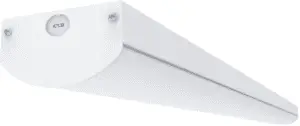
LSW
Brand: ATG
Linear Stairwell Fixture
2ft, 4ft, 8ft lengths
Selectable wattages, CCT
Stairwells, Passageways
Prices start at $200.
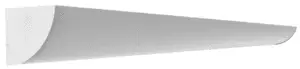
LSC
Brand: ATG
Curved Stairwell Fixture
2ft, 4ft, 8ft lengths
Selectable wattages, CCT
Stairwells, Passageways
Prices start at $200.
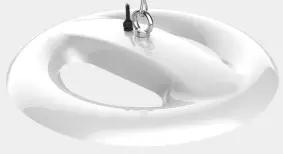
Halo
Brand: G-Comin
NSF Certified; IP69K, High pressure water resistant;
up to 38,400 lumens
50/80/100/150/200/240W;
Prices start at $300.
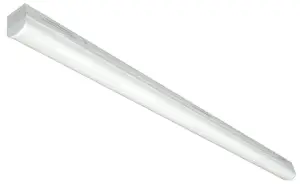
Adriatic
Brand: Beyond
general area lighting in coves,
shops, showcases, and storage,
utility areas; 4ft, 8ft
Prices start at $55

What Is LED Low Bay Lighting?
LED low bay lighting refers to luminaires designed for use in indoor areas with relatively low ceiling heights, typically between 8 and 20 feet. Unlike high bay fixtures used for tall warehouses and large open spaces, low bay lights provide optimized light distribution tailored to lower mounting surfaces, minimizing glare and delivering even illumination across work zones, aisles, retail floors, and low-clearance production areas. These LED systems combine efficiency, long life, and excellent visual performance, making them suited for environments where uniform lighting and human-scale visual comfort are priorities.
For environments with moisture or dust exposure, review our LED Vapor Tight Lighting fixtures designed for sealed industrial applications.
When to Use LED Low Bay Lighting
LED low bay lighting is typically specified for:
-
Warehouses with lower ceiling structures
-
Workshops and fabrication areas
-
Retail and showroom spaces
-
Storage facilities
-
Light manufacturing environments
-
Gymnasiums and multipurpose rooms
For taller ceiling environments exceeding 20 feet, consider transitioning to LED high bay lighting for optimal vertical distribution.
In spaces with suspended ceilings, many facility managers prefer LED drop ceiling light fixtures that provide even coverage while maintaining a clean, professional appearance.
Typical LED Low Bay Lighting Specifications
Mounting Height: 10–20 feet
Lumen Output: 10,000–30,000 lumens (depending on layout)
Color Temperature: 4000K–5000K common
Beam Distribution: Wide symmetrical patterns for even floor coverage
Dimming: 0–10V standard in many models
Ingress Protection: Typically IP20–IP65 depending on environment
Industrial & Commercial Applications
Low bay lighting is widely used in spaces such as:
• Workshops or maintenance bays
• Low-ceiling processing zones
• Assembly areas with mezzanine structures
• Covered loading docks
• Equipment rooms and asset staging zones
• Retail or customer-facing interiors
For food processing facilities and sanitary production areas, consider fixtures from our NSF-Certified LED Lighting collection designed for compliance with food zone requirements. The goal in each of these settings is not broad high-ceiling illumination, but human-scale task visibility with minimal glare and controlled light distribution.
Planning & Selection Considerations
Effective low bay lighting design begins with an assessment of space dimensions, mounting heights, surface reflectance, and task requirements. Designers typically consider:
✔ required foot-candle levels based on activity or code
✔ spacing to mounting height ratios for even coverage
✔ narrow vs wide beam distributions depending on aisle width
✔ glare control for human comfort
✔ optional controls such as occupancy sensing or daylight harvesting
Selecting LED low bay luminaires that integrate seamlessly with existing control systems ensures energy efficiency and operational flexibility, especially in multi-zone commercial facilities.
Comparison Table — Low Bay vs High Bay vs General Area Lighting
| Attribute / Use | Low Bay Lighting | High Bay Lighting | General Area Lighting |
|---|---|---|---|
| Mounting Height | 8–20 ft | 15–40+ ft | Variable |
| Best Use Case | Human-scale work zones | Tall industrial spaces | Campus zones and yards |
| Lumen Range | 2,000–8,000 lm | 10,000+ lm | 5,000–20,000+ lm |
| Beam Pattern | Medium / wide | Wide / broad | Medium / wide |
| Visual Comfort | High at close range | Optimized for height | Balanced |
| Typical Spaces | Workshops, staging | Warehouses, factories | Mixed interior/exterior |
Technical Standards & Compliance Resources
Selecting LED low bay fixtures should align with applicable electrical, building, and energy codes for your jurisdiction. For commercial and industrial installations, this includes evaluating:
• appropriate UL or ETL listings
• occupancy and control requirements
• voltage and driver specifications
• emergency egress lighting coordination
Reviewing these standards ensures that low bay solutions meet both safety expectations and operational performance needs while integrating with facility control systems. For more detailed context on matching fixture categories to space requirements, see our general guides on lighting design and classification.
Benefits of LED Low Bay Fixtures
Improved Energy Efficiency
LED low bay systems can reduce energy consumption by 40–70% compared to fluorescent or HID alternatives.
Enhanced Visual Comfort
Advanced optics reduce glare and shadowing, improving worker visibility and safety.
Extended Maintenance Intervals
With 50,000+ hour lifespans, LED systems reduce relamping costs and downtime.
Flexible Control Integration
Low bay fixtures can integrate with occupancy sensors, daylight harvesting, and scheduling controls to optimize operational efficiency.
Buyer Q&A: Selecting LED Low Bay Lighting
How do I know if low bay lighting is right for my facility?
Start with the fixture mounting height and how the space is used. Low bay lighting is generally suited to commercial and industrial areas with ceilings approximately 10 to 20 feet high where broad, uniform light distribution is needed. Warehouses, workshops, manufacturing areas, retail spaces, and utility buildings with lower ceilings can all be good candidates.
How do I choose the correct lumen output for a low bay fixture?
The required lumen output depends on mounting height, fixture spacing, room dimensions, task requirements, surface reflectance, and desired light levels. Selecting fixtures solely by wattage can lead to excessive or insufficient illumination, so lumen output and light distribution should be considered together.
What should I provide when requesting LED low bay lighting pricing?
Provide the ceiling or fixture mounting height, dimensions of the area, existing fixture type and wattage, approximate fixture quantity, required voltage, desired light levels, and any control requirements. Environmental conditions such as dust, moisture, washdown exposure, or temperature extremes should also be identified.
Can LED low bays directly replace fluorescent or HID fixtures?
Yes. LED low bay fixtures are commonly used to replace fluorescent strip fixtures, metal halide, high-pressure sodium, and other legacy lighting systems. The replacement should be based on required light output and distribution rather than simply matching the wattage of the existing fixture.
Do I need a lighting layout for a low bay project?
For larger warehouses, manufacturing areas, workshops, and commercial facilities, a photometric lighting layout can help determine fixture quantities, spacing, and expected light levels before installation. This can be especially valuable when changing fixture types or reducing the number of fixtures during an LED retrofit.
Need Help Selecting LED Low Bay Lighting?
Choosing the right low bay fixture requires balancing mounting height, lumen output, beam distribution, fixture spacing, environmental conditions, and lighting controls.
We can help evaluate LED low bay solutions for warehouses, workshops, manufacturing areas, commercial facilities, utility buildings, and other spaces with lower mounting heights.
👉 Explore LED Low Bay Lighting Solutions or call 1-844-533-7767 to discuss your commercial or industrial lighting project.
FAQs About LED Low Bay Lighting
What ceiling height is considered low bay lighting?
Low bay lighting is generally used for mounting heights of approximately 10 to 20 feet. Applications above this range may require high bay fixtures, although the appropriate fixture ultimately depends on mounting height, required light levels, spacing, and optical distribution.
How many lumens are needed for low bay lighting?
Lumen requirements vary by application. Many commercial low bay installations use fixtures ranging from approximately 10,000 to 30,000 lumens, but the correct output depends on mounting height, fixture spacing, room dimensions, target light levels, and the work being performed.
What is the difference between low bay and high bay lighting?
Low bay lighting is designed for lower mounting heights and typically uses broader light distribution to provide uniform coverage without excessive brightness. High bay lighting is intended for taller spaces and generally requires greater lumen output and optics designed to deliver useful illumination to the work plane below.
Are LED low bay lights suitable for warehouses?
Yes. LED low bay fixtures can be an excellent choice for warehouses with lower ceilings or mounting heights. They can provide uniform illumination while reducing energy consumption and maintenance compared with many fluorescent and HID lighting systems.
Can LED low bay lighting be dimmed?
Many commercial LED low bay fixtures are available with 0–10V dimming and can be integrated with occupancy sensors, daylight controls, or lighting management systems. Control compatibility should be confirmed for the specific fixture and driver.
Stay Connected with Our Lighting Resources
Add IndustrialLightingFixtures.org as a Preferred Source on Google to see more of our lighting guides and technical resources across Google Search experiences.

Related Low Bay & Industrial Lighting Resources
Continue planning your facility lighting with these related resources covering high bay applications, industrial lighting, retrofit selection, and recommended illumination levels:
- LED High Bay Lighting — Compare high bay lighting options for facilities with taller mounting heights and learn when a high bay fixture is more appropriate than a low bay.
- Industrial LED Lighting — Explore commercial and industrial LED lighting solutions for warehouses, manufacturing facilities, workshops, production areas, and other demanding environments.
- LED Retrofit Kits — Review LED retrofit options for upgrading existing commercial and industrial fixtures while retaining suitable housings or mounting infrastructure.
- Lighting Level Recommendations — Review recommended illumination levels and the factors that should be considered when determining how much light a commercial or industrial space requires.