Why More Industrial Facilities Are Choosing LED Lighting
Industrial lighting has evolved rapidly over the past decade. Modern LED technology has become the preferred lighting solution for warehouses, manufacturing plants, distribution centers, food processing facilities, aircraft hangars, and many other industrial environments.
While the advantages of LED lighting are well documented, facility owners often ask an important question:
Are there any disadvantages to switching to LED lighting?
The answer is that LED lighting offers significant long-term benefits, but like any capital investment, proper planning and fixture selection are essential for achieving the best results.
This guide explains both the advantages and the practical considerations of industrial LED lighting to help you make an informed decision.
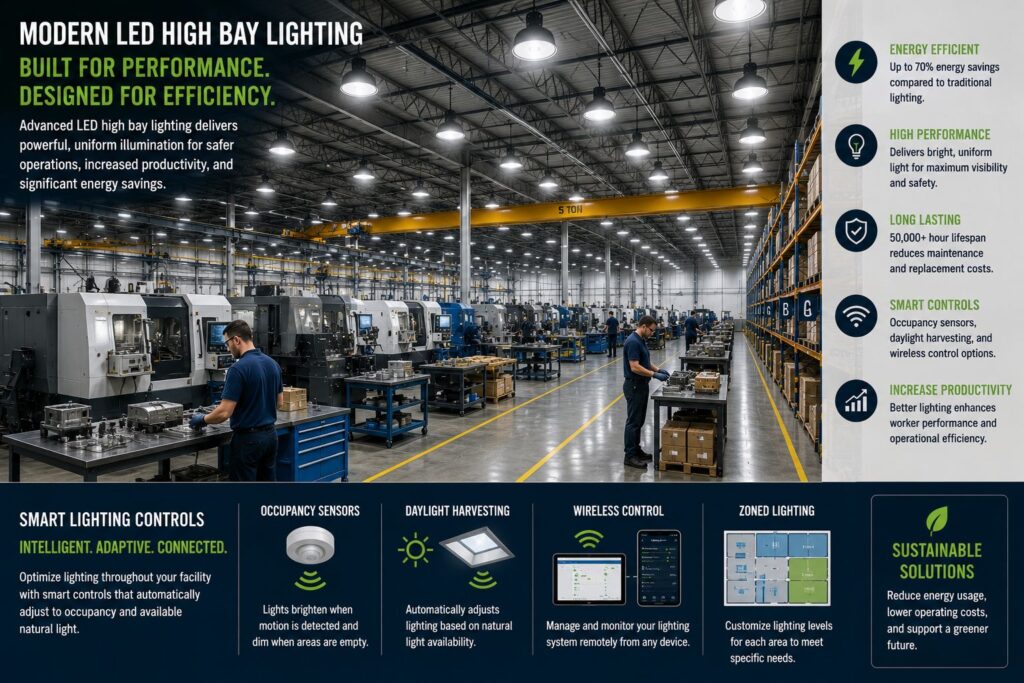
Industrial LED lighting provides significant improvements in energy efficiency, lighting quality, maintenance, and workplace safety. Understanding both the advantages and important design considerations helps facility owners make informed lighting investment decisions.
Need Help Choosing Industrial LED Lighting for Your Facility?
The right industrial fixture depends on more than wattage or initial price. Ceiling height, required light levels, operating environment, durability, energy use, maintenance requirements, controls, and any applicable safety ratings should all factor into fixture selection.
Explore our Industrial LED Lighting solutions or call 844-533-7767 for help selecting fixtures that balance performance, reliability, and long-term operating cost.
Advantages of Industrial LED Lighting
Significant Energy Savings
One of the primary reasons facilities upgrade to LED lighting is reduced electricity consumption.
Compared to many legacy lighting systems, LED fixtures often use substantially less power while delivering equal or improved illumination.
Benefits include:
- Lower utility bills
- Reduced electrical demand
- Improved operating efficiency
- Lower total energy consumption
Looking to maximize savings? Learn how intelligent controls improve efficiency in the Industrial Lighting Controls Guide.
Longer Service Life
Many industrial LED fixtures are designed to operate for 100,000 hours or more.
Long operating life means:
- Fewer replacements
- Reduced maintenance
- Less production disruption
- Lower labor costs
Improved Lighting Quality
Modern LEDs provide:
- Uniform illumination
- Better color rendering
- Reduced shadows
- Instant-on operation
- Minimal flicker
Better lighting supports employee safety, product inspections, and overall workplace productivity.
Lower Maintenance Costs
Industrial facilities with high ceilings often spend considerable time and money replacing lamps.
LED lighting reduces:
- Lift rentals
- Maintenance labor
- Replacement parts
- Equipment downtime
Better Workplace Safety
Improved visibility contributes to:
- Safer forklift operation
- Better pedestrian awareness
- Reduced trip hazards
- Improved machine visibility
- Faster emergency response
Smart Control Compatibility
LED fixtures integrate easily with:
- Occupancy sensors
- Vacancy sensors
- Daylight harvesting
- Wireless lighting controls
- Building automation systems
These technologies further improve energy efficiency.
Practical Considerations Before Upgrading
LED lighting offers substantial benefits, but successful projects depend on proper planning.
Higher Initial Investment
Industrial LED fixtures generally cost more than older lighting technologies.
However, many facilities recover this investment through:
- Lower electricity costs
- Reduced maintenance
- Longer fixture life
- Improved operational efficiency
When evaluating lighting projects, consider the total cost of ownership, not just the initial purchase price.
Planning a complete lighting upgrade? Explore the Industrial Lighting Guide for fixture selection, lighting layouts, and design recommendations.
Fixture Quality Matters
Not all LED fixtures are built to the same standards.
Factors to evaluate include:
- Driver quality
- Thermal management
- Warranty coverage
- Housing construction
- Optical performance
- Certifications
Selecting high-quality industrial fixtures improves long-term reliability.
Need help selecting fixtures? Visit Industrial Lighting Fixtures and Their Uses to compare today’s most common industrial LED lighting solutions.
Proper Lighting Design Is Essential
Simply replacing existing fixtures with LED products of similar wattage does not always produce the best results.
Professional lighting layouts evaluate:
- Fixture spacing
- Beam angles
- Mounting heights
- Required foot candle levels
- Uniformity
Proper design helps avoid over-lighting, under-lighting, and unnecessary energy consumption.
Color Temperature Selection
Choosing the correct color temperature affects both employee comfort and productivity.
Typical recommendations include:
- 4000K for balanced industrial environments
- 5000K for manufacturing, warehouses, and inspection areas
Control System Compatibility
Older lighting control systems may require updates when integrating modern LED fixtures.
Planning for compatibility ensures smooth installation and optimal performance.
Total Cost of Ownership
The purchase price represents only one portion of the overall investment.
| Cost Category | Traditional Lighting | Industrial LED Lighting |
|---|---|---|
| Initial Purchase | Lower | Higher |
| Electricity | Higher | Lower |
| Maintenance | Higher | Much Lower |
| Lamp Replacement | Frequent | Infrequent |
| Labor | Higher | Lower |
| Fixture Life | Shorter | Longer |
| Total Ownership Cost | Higher Over Time | Lower Over Time |
Looking beyond the purchase price often demonstrates the long-term financial value of LED lighting.
Before installing industrial LED lighting, review the Industrial Lighting Installation Guide to understand mounting heights, fixture spacing, lighting controls, and commissioning best practices.
Typical Return on Investment
Return on investment depends on operating hours, electricity rates, fixture quantity, and maintenance costs.
| Facility Type | Typical Payback Period* |
| Warehouse | 2–4 Years |
| Manufacturing Plant | 1–3 Years |
| Distribution Center | 1–3 Years |
| Cold Storage Facility | 2–4 Years |
| Aircraft Hangar | 2–4 Years |
Actual payback periods vary depending on facility conditions and utility costs.
Looking for a detailed financial analysis? Visit the Industrial LED Energy Savings Guide to learn how LED retrofits reduce utility costs and maintenance expenses.
When LED Lighting May Not Be Necessary
Although LED technology benefits most industrial facilities, there are situations where immediate replacement may not be the highest priority.
Examples include:
- Temporary buildings
- Areas with very limited operating hours
- Facilities scheduled for demolition or major renovation
- Specialty applications requiring unique lighting systems
Even in these situations, long-term operational planning often favors LED technology.
Comparing Industrial LED to Traditional Lighting
| Feature | Traditional Lighting | Industrial LED |
| Energy Efficiency | Moderate | Excellent |
| Maintenance | Frequent | Minimal |
| Warm-Up Time | Often Required | Instant |
| Color Rendering | Moderate | Excellent |
| Fixture Life | Moderate | Long |
| Smart Controls | Limited | Excellent |
| Operating Costs | Higher | Lower |
Interested in the latest lighting technologies? Read the Industrial Lighting Technologies Guide to compare LED, fluorescent, HID, and other industrial lighting systems.
Common Mistakes During LED Retrofits
Avoid these common errors:
- Selecting fixtures based only on wattage
- Ignoring beam angle selection
- Choosing incorrect color temperatures
- Overlooking occupancy patterns
- Skipping professional lighting layouts
- Purchasing low-quality fixtures
- Failing to commission lighting controls
Careful planning maximizes both lighting performance and return on investment.
Is Industrial LED Lighting Right for Your Facility?
Most industrial facilities benefit from LED lighting when they:
- Operate long hours
- Have high maintenance costs
- Use older HID or fluorescent systems
- Want to improve workplace safety
- Seek lower operating expenses
- Plan long-term facility improvements
A professional lighting assessment helps determine the most effective upgrade strategy.
Inline Buyer Q&A
Are there any disadvantages to LED lighting?
The primary consideration is the higher initial purchase price. However, many facilities offset this through lower energy consumption, reduced maintenance, and longer fixture life.
Will LED lighting reduce maintenance?
Yes. Long-life LED fixtures significantly reduce lamp replacement, maintenance labor, and equipment downtime.
Does every industrial facility benefit from LED lighting?
Most facilities operating long hours realize substantial operational and financial benefits from LED lighting, particularly warehouses, manufacturing plants, and distribution centers.
Upgrade to Industrial LED Lighting with Confidence
Modern industrial LED lighting delivers measurable improvements in energy efficiency, lighting quality, maintenance, and workplace safety. By understanding both the advantages and the practical design considerations, facility owners can make informed investment decisions that provide long-term operational value.
Whether you’re planning a complete LED retrofit or evaluating upgrade options for a specific facility, our lighting specialists can recommend high-performance industrial LED fixtures tailored to your application, operating environment, and long-term business goals.
👉 Explore our complete selection of Industrial LED Lighting to compare high bays, vapor tight fixtures, explosion proof lighting, outdoor luminaires, and other commercial lighting solutions, or contact us for a free lighting consultation.
Frequently Asked Questions
How much energy can industrial LED lighting save?
Many facilities reduce lighting-related energy consumption by approximately 50–80%, depending on the existing lighting system and operating schedule.
How long do industrial LED fixtures last?
Many commercial-grade industrial LED fixtures are designed to operate for approximately 100,000 hours or more under normal conditions.
Are LED retrofits difficult?
Most industrial LED retrofit projects can be completed without major structural modifications when properly planned.
Should I replace all fixtures at once?
Some facilities upgrade in phases, while others complete full facility retrofits based on operational requirements, available budgets, and maintenance priorities.