Outdoor environments require wide, uniform illumination to maintain safety, visibility, and operational continuity after dark. LED area lights are engineered to deliver controlled, high-output lighting across open exterior spaces such as parking lots, distribution yards, access roads, and commercial campuses. These pole-mounted luminaires are designed for long service life, optical precision, and resistance to environmental exposure.
Unlike traditional HID systems, modern LED area lighting provides immediate full-output illumination, reduced maintenance cycles, and significantly improved energy efficiency. Advanced optics allow for targeted light distribution patterns that minimize glare and reduce light trespass while maintaining consistent ground-level visibility.
Wide-distribution luminaires such as these form a foundational component of comprehensive outdoor lighting systems across commercial and municipal properties.
LED Area Lights
Many facility managers rely on LED area lights to illuminate parking areas, building entrances, and vehicle circulation zones.
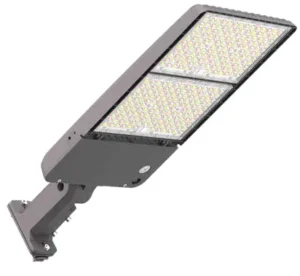
Luma Max
Brand: Beyond
Area Lighting, adjustable wattages from 300W to 500W and adjustable color temperatures the Luma Max provides customizable lighting to meet specific brightness and ambiance needs. Up to 80424 lumens; Prices start at $395.
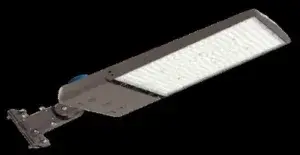
BeamPro+
Brand: Beyond
Area Lighting, BeamPro, All In One LED Area Light/Street Light/Flood Light, Adjustable CCT, Up to 49, 500 Lumens; 100/150/200/240/300W. Prices start at $395.
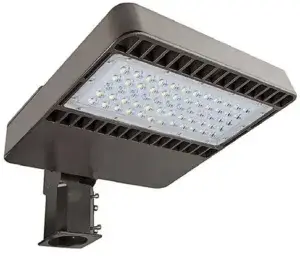
NBAL
Brand: Nebulite
architectural low-profile; LED Area Light comes in both low power (50w – 150w) and high power (200w – 500w) versions; 25W-48W-80W (Watt &CCT Selectable); 100W-150W-200W (Watt &CCT Selectable); 200W-240W-300W (Watt &CCT Selectable); 400W, 500W, 600W(Watt &CCT FIXED)
Prices start at $300.
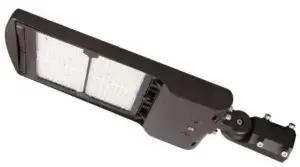
SBC -12 Shoebox
Brand: Ledsion
DLC Listed; Selectable (80/100/150W), (200/240/300W);
up to 45,000 lumens; Prices start at $295.
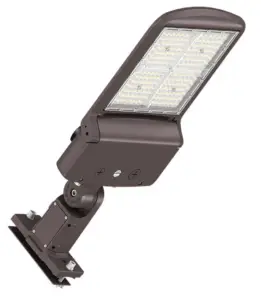
Zoho, 6th Gen
Brand: Beyond
DLC Listed; Selectable (100/120/150W), (200/240/300W);
up to 48,000 lumens; Prices start at $300.
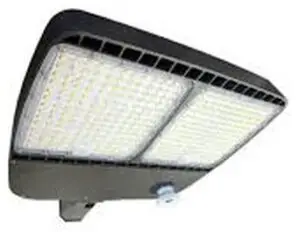
U-HALL
Brand: LightingX
Hyper Series, Large LED Area Light; up to 64,800 lumens; Auto Dealerships, Parking Lots, Sports Field 60/90/120/150/240/300/400W.
Prices start at $225.
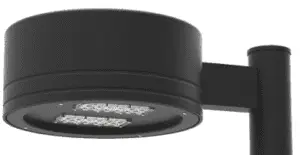
CL-3075
Brand: Crystal
Architectural round flat top LED area light; up to 16,512 lumens
25/45/65/85/105/125W.
Made in the USA – Made to order;
Arm, Yoke, and Spider Mount
Prices start at $550.
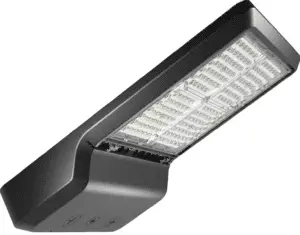
Archer G2
Brand: ATG
DLCd; Selectable (60/80/100W),
(100/120/150W), (200/240/300W);
up to 49,088 lumens; Prices start at $300.
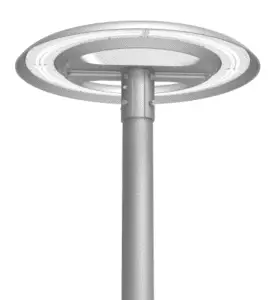
HALO-L
Brand G-Comin
Ideal for parking lots, squares,
parks, greenbelts, golf courses,
Unique appearance, stylish
decoration for your public space;
30/50/80/100/150/200/240W;
Prices start at $300.
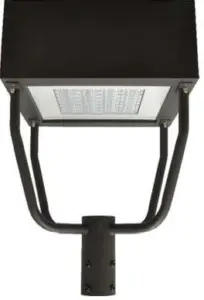
CL-3040 Spider Mount
Brand: Crystal
Most popular fixture for shopping
centers, Campuses, Parking Lots;
12″ (S) or 16″ (M) or 22″ (L)
spider mount (4 arms), extruded
arm, or yoke mount (2 arms);
up to 43,620 lumens @ 300W;
10/20/30/40/50/60/80/100/120/
150/200/250/300W.
Prices start at $525.
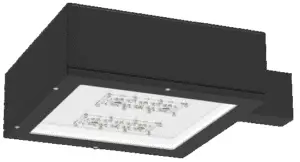
CL-3040 Shoebox
Brand: Crystal
area flood light or shoebox fixture; up to 43,620 lumens;
10/20/30/40/60/80/100/120
150/200/250/300W; Prices start at $475.
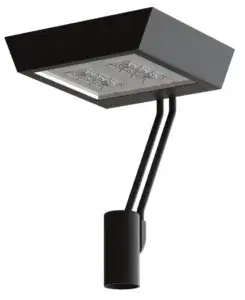
Century II
Brand: Crystal
small area flood light; 17 inches; various mounts; up to 16,980 lumens; 45/55/65/85/105/125W
Prices start at $400.
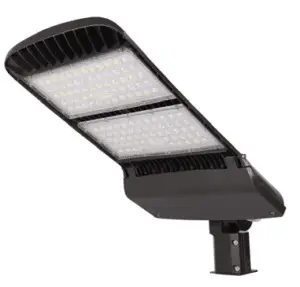
NBQL
Brand: Nebulite
architectural low-profile; LED Area Light; dimmable; UL, DLC; up to 46,204 lumens; 30/50/75/100/150/200/300W.
Prices start at $300.
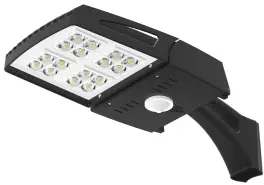
Eros
Brand: Crystal
Low-profile LED area light
20/30/50/80/100/120/150
180/200W; Prices start at $450.
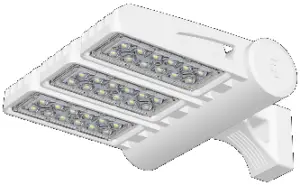
IO
Brand: Crystal
Low-profile LED area light
Modular design with various
mounting options; 20/40/60/80/
100/120/140/160W/180W.
Prices start at $450.

330FAL
Brand: Crystal
Low-profile LED area light hinged front door frame with clear prismatic poly carb lens; 20/30/40/60/80/100/120/150
200/250/300W. Prices start at $450.
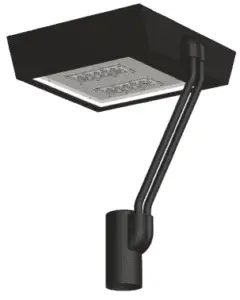
Century
Brand: Crystal
Small 17″ area light; ideal for Residential Exteriors, Walkways,
Entry Ways, Perimeters; up to 16,984 lumens; 45/65/85/105/125W.
Prices start at $450.
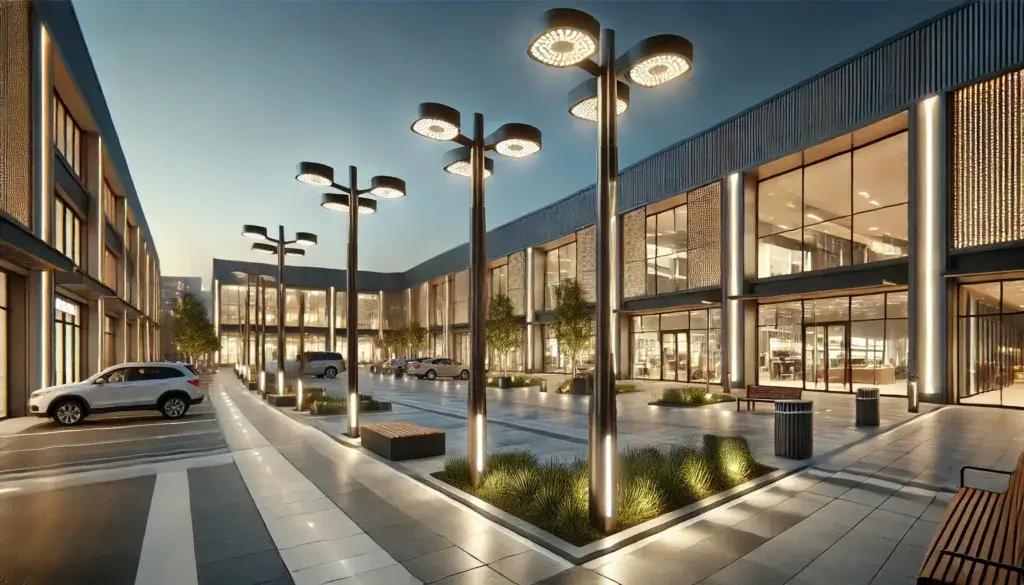
What Is LED Area Lighting?
LED area lighting refers to outdoor luminaires designed to deliver broad, uniform illumination across open spaces such as parking lots, commercial campuses, industrial yards, roadways, and pedestrian zones. These fixtures are typically mounted on light poles or building structures and use precision optical systems to distribute light evenly across large surface areas.
Unlike traditional high-intensity discharge (HID) lighting systems, modern LED area lights provide immediate full-output illumination, improved energy efficiency, and longer operational life. Advanced LED optics allow engineers to control light distribution patterns—commonly identified as Type II, Type III, Type IV, or Type V—ensuring that illumination is directed where it is needed while minimizing glare and light trespass.
For roadway applications requiring forward-throw illumination along traffic corridors, see our LED Street Lights. Projects demanding targeted high-intensity coverage for building façades or storage zones may benefit from LED Flood Lights.
In commercial and industrial environments, LED area lighting plays an important role in maintaining safe nighttime visibility for vehicles and pedestrians while supporting security, operational efficiency, and compliance with exterior lighting regulations. These lighting systems are commonly used in parking facilities, distribution centers, commercial properties, and municipal infrastructure where reliable exterior illumination is essential.
In commercial and industrial settings, properly selected LED area lights enhance pedestrian and vehicular safety, improve security camera performance, and reinforce site professionalism. From retail centers to logistics facilities, these systems support reliable nighttime operations while lowering long-term operating costs.
Not sure which fixture is right for your project? Read our Commercial LED Area Lights Guide to learn how optics, pole heights, mounting options, color temperature, surge protection, and lighting controls influence outdoor lighting performance.
Selecting the correct configuration requires evaluation of mounting height, pole spacing, beam distribution type, voltage range, and environmental conditions. Proper photometric planning ensures optimal uniformity, controlled brightness levels, and compliance with local lighting ordinances.
For a complete overview of exterior lighting systems, fixture selection strategies, and design considerations, see our Outdoor LED Lighting Guide.
Where LED Area Lights Are Commonly Installed
LED area lighting systems are specified for:
-
Parking lots and parking garages (exterior decks)
-
Industrial yards and loading zones
-
Distribution and warehouse facilities
-
Corporate campuses and medical centers
-
Municipal lots and public gathering spaces
-
Drive lanes and access roadways
Commercial area lighting is increasingly designed as part of a coordinated exterior lighting system rather than as a standalone solution. Our guide to outdoor area lighting innovations explores how area lights can work alongside wall-mounted fixtures, bollards, and other lighting layers to improve visibility, pedestrian safety, and overall site illumination.
Retail centers and pedestrian campuses may combine area lighting with decorative LED Post Top Fixtures or traditional LED Post Top Lanterns to enhance visual appeal while maintaining functional illumination.
These environments require durable housings, weather-resistant construction, and optical control to ensure long-term outdoor performance.
Key Design & Specification Considerations
When specifying LED area lights, the following factors must be evaluated:
Mounting Height & Pole Configuration
Higher mounting heights require appropriate beam distribution to maintain uniformity without creating excessive glare or dark zones.
Light Distribution Types
Common distribution patterns (Type II, III, IV, V) are selected based on site layout and coverage requirements.
Environmental Protection
Outdoor area lights should feature robust housings and appropriate ingress protection ratings to withstand rain, wind, dust, and temperature fluctuations.
Commercial solar parking lot lighting offers an ideal solution for remote outdoor spaces where traditional electrical installation may be costly or impractical.
Energy Performance & Controls
Modern systems can integrate photocells, motion sensors, and smart controls to optimize energy savings and reduce unnecessary runtime.
Compliance & Safety
Projects may require adherence to local lighting codes, dark-sky regulations, and energy efficiency standards.
For perimeter-mounted building illumination, review our LED Wall Pack Lights and Outdoor LED Wall Mount Fixtures, which provide façade-focused lighting with controlled distribution.
Technical Specifications
Specification values vary by model and project requirements. Common commercial-grade LED area lighting configurations include:
Wattage Range:
60W – 600W+
Lumen Output:
8,000 – 90,000+ lumens
Voltage Options:
120–277V (standard)
277–480V (industrial)
Color Temperatures:
3000K (Warm White)
4000K (Neutral White)
5000K (Cool White)
CRI (Color Rendering Index):
70+ standard
80+ available
Optical Distributions:
Type II
Type III
Type IV
Type V
Ingress Protection Rating:
Typically IP65 or higher
Impact Rating:
IK08 – IK10 (model dependent)
Housing Construction:
Die-cast aluminum with corrosion-resistant finish
Mounting Options:
Slip fitter
Trunnion
Direct arm mount
Pole-top adapter
Control Compatibility:
Photocell
Motion sensor
Dimming (0–10V)
Smart control systems
Operating Temperature Range:
Typically -40°F to 122°F (model dependent)
Rated Lifespan:
Up to 100,000 hours (L70)
LED Area Lights vs LED Street Lights vs LED Flood Lights
| Feature | LED Area Lights | LED Street Lights | LED Flood Lights |
|---|---|---|---|
| Primary Application | Parking lots, yards, campuses | Roadways, highways, traffic corridors | Targeted large-area illumination |
| Mounting Location | Pole-mounted (central or perimeter) | Pole-mounted along roads | Wall, pole, or structure mounted |
| Distribution Pattern | Type II, III, IV, V | Forward throw (Type II or III common) | Wide or narrow beam angles |
| Coverage Strategy | Uniform site-wide coverage | Linear roadway coverage | Focused directional lighting |
| Glare Control | Moderate-to-high optical control | Designed for roadway glare standards | Depends on beam selection |
| Typical Mounting Height | 15–40 ft | 20–50 ft | 10–80+ ft (varies widely) |
| Best For | Commercial parking & open zones | Municipal and industrial roads | Storage yards, façades, athletic zones |
Parking lots are among the most common applications for commercial light poles. See our Improve a Parking Area with a Commercial Light Pole guide for additional planning considerations.
Advantages of LED Area Lighting
-
Reduced energy consumption compared to legacy HID systems
-
Long operational lifespan with minimal maintenance
-
Improved uniformity and glare control
-
Instant-on performance without warm-up delay
-
Enhanced security and site visibility
-
Compatible with smart lighting and automation systems
Sites requiring architectural integration may also consider LED Architectural Area Lighting or LED Courtyard Post Lighting where aesthetic design is prioritized alongside performance.
Inline Buyer Q&A
How do I choose the right LED area light for a commercial property?
Start with the application, pole height, pole locations, area dimensions, required light levels, and existing electrical conditions.
Then evaluate fixture lumen output, wattage, optical distribution, mounting configuration, voltage, color temperature, controls, environmental ratings, and any requirements for glare or light-trespass control. A photometric layout is recommended for larger parking lots and commercial sites.
How many LED area lights will my project require?
Fixture quantity depends on the size and geometry of the property, mounting height, pole locations, lumen output, optical distribution, required foot-candle levels, and uniformity goals.
Rather than estimating fixture quantity from wattage alone, use a photometric lighting layout to model illumination levels and identify appropriate fixture locations and spacing before installation.
Which light distribution should I choose for an LED area light?
The correct distribution depends primarily on where the pole is located relative to the area being illuminated.
Type II and Type III distributions are commonly used where light needs to project forward from perimeter locations. Type IV provides a broader forward distribution for certain perimeter applications, while Type V distributes light more symmetrically around centrally located poles.
Can I replace existing metal halide area lights with lower-wattage LED fixtures?
Yes. LED area lights commonly replace metal halide and high-pressure sodium fixtures at substantially lower wattages.
Replacement fixtures should be selected according to required lumen output, optical distribution, mounting height, pole spacing, and desired light levels rather than by matching the wattage of the existing HID fixture.
What information should I provide for an LED area lighting quote or photometric layout?
Provide the site address or plans, dimensions of the area, existing or proposed pole locations, mounting heights, voltage, current fixture wattages if applicable, and the intended use of the property.
Also identify any required light levels, controls, neighboring properties, Dark Sky requirements, or areas where glare and light trespass must be minimized.
Plan Your Outdoor Area Lighting Project
Proper outdoor illumination begins with accurate fixture selection and photometric planning. Whether upgrading legacy HID systems or designing a new commercial installation, engineered LED area lighting can improve visibility, uniformity, operational reliability, and long-term efficiency.
Planning a parking lot, commercial property, campus, roadway, equipment yard, or other large outdoor lighting project?
👉 Call 1-844-533-7767 for help selecting LED area lights or to request a professional photometric lighting layout for your project.
Frequently Asked Questions (FAQs)
What mounting height is recommended for LED area lights?
Mounting height depends on site layout and coverage goals. Commercial installations commonly range between 15 and 40 feet. Photometric analysis determines optimal spacing and uniformity.
What is the difference between Type III and Type V distribution?
Type III distribution provides forward-throw coverage ideal for parking lot perimeters, while Type V delivers symmetrical 360-degree illumination suitable for central pole placement.
Are LED area lights suitable for wet locations?
Yes. Commercial-grade LED area lights are engineered for outdoor use and designed to withstand rain, wind, and environmental exposure when properly rated.
Can LED area lights reduce operating costs?
Yes. Compared to traditional metal halide or high-pressure sodium systems, LED area lighting significantly reduces energy consumption and maintenance requirements.
Do area lights support smart lighting controls?
Many modern LED area fixtures are compatible with photocells, motion sensors, and networked control systems for automated operation and energy optimization.
Stay Connected with Our Lighting Resources
Add IndustrialLightingFixtures.org as a Preferred Source on Google to see more of our lighting guides and technical resources across Google Search experiences.

Related LED Area Lighting Design Resources
Plan fixture selection, pole placement, mounting height, light distribution, and illumination levels with these related commercial area lighting resources:
- LED Area Lighting Layout Guide — Learn how pole locations, fixture spacing, mounting heights, optical distributions, and lumen output work together to provide uniform illumination across commercial outdoor areas.
- Area Lighting Pole Height Guide — Review how mounting height affects fixture spacing, coverage, glare, uniformity, and overall area lighting performance.
- Commercial Site Lighting Design Guide — Learn how area lights, parking areas, pedestrian routes, building entrances, and other exterior lighting components are coordinated across a commercial property.
- Lighting Level Recommendations — Review recommended illumination levels for commercial and industrial applications when planning fixture output, spacing, and photometric performance.
- Dark Sky Outdoor Lighting Guide — Learn how fixture selection, shielding, optics, mounting, and color temperature can help control glare, uplight, and light trespass in commercial outdoor lighting projects.