
Commercial Lighting Is a Long-Term Investment
Commercial lighting is much more than purchasing fixtures. A properly designed lighting system should continue delivering reliable performance for many years while minimizing maintenance, reducing operating expenses, and supporting the daily operation of your facility.
Whether you manage an office building, retail center, warehouse, healthcare campus, educational facility, hotel, or municipal property, following proven lighting best practices helps maximize the value of your investment.
Today’s LED lighting systems provide exceptional flexibility, but their long-term performance still depends on selecting the right products, installing them correctly, and maintaining them throughout their service life.
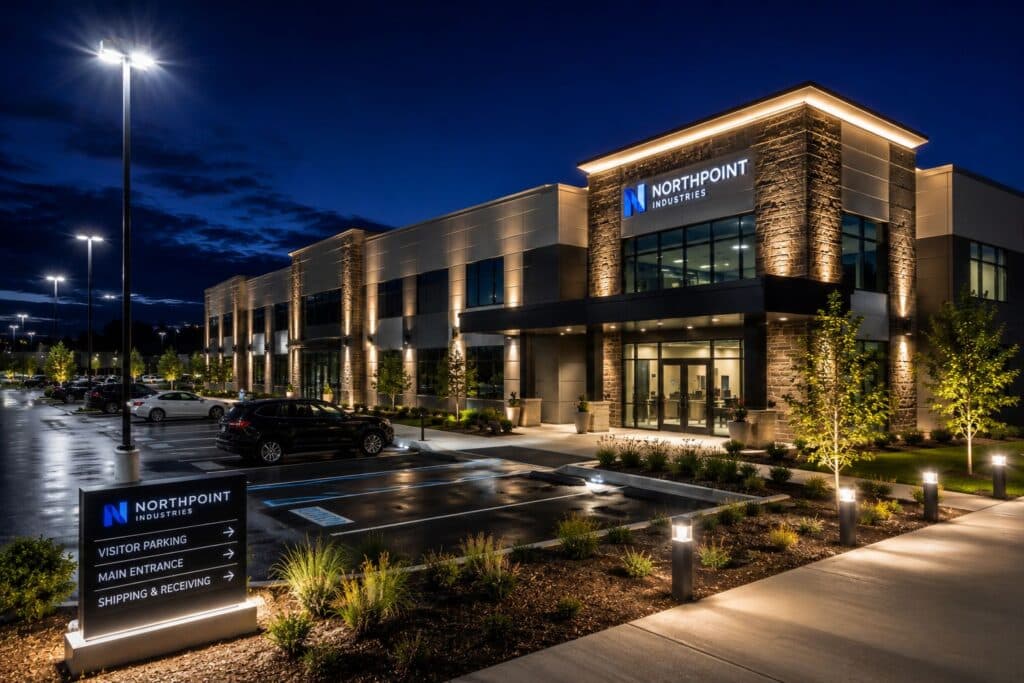
Following commercial lighting best practices helps improve energy efficiency, reduce maintenance costs, extend fixture life, and create safer, more attractive commercial properties.
Want to Get More Value From Your Commercial Lighting?
Better lighting performance starts with the right combination of fixtures, placement, light levels, controls, energy efficiency, and long-term maintenance. Whether you are upgrading an existing property or planning a new installation, evaluating the complete lighting system can improve visibility while reducing operating and maintenance costs.
Explore our Commercial LED Lighting solutions or call 844-533-7767 for help with fixture selection, lighting layouts, controls, and LED retrofit planning.
Best Practice #1: Begin with a Lighting Plan
The most successful commercial lighting projects begin long before fixtures are installed.
A professional lighting plan considers:
- Property layout
- Building architecture
- Parking areas
- Pedestrian traffic
- Security requirements
- Mounting heights
- Optical distributions
- Desired illumination levels
- Energy goals
Instead of selecting fixtures based only on wattage, modern lighting projects use photometric layouts to determine the proper fixture quantity and placement.
For larger exterior projects, our Commercial Site Lighting Design Guide explains how professional lighting layouts improve performance while avoiding over-lighting.
Best Practice #2: Select the Right Fixture for Each Application
Every commercial area has different lighting requirements.
Using the correct fixture improves visibility while maximizing efficiency.
| Application | Recommended LED Fixture |
|---|---|
| Parking Lots | LED Parking Lot Lights |
| Building Entrances | LED Canopy Lighting |
| Building Façades | LED Façade Lighting |
| Walkways | LED Bollard Lights |
| Landscaped Areas | LED Inground Lighting |
| Business Signage | LED Sign Lighting |
| Emergency Exits | Emergency LED Exit Signs |
| Sports Facilities | LED Sports Lighting |
Rather than using one fixture throughout the property, selecting application-specific lighting improves appearance, safety, and long-term performance.
One of the most important best practices is selecting fixtures designed specifically for each application. Continue with our Types of Commercial LED Lighting Fixtures guide to compare the most popular commercial lighting solutions.
Learn more about LED Parking Lot Lights, LED Façade Lighting, LED Bollard Lights, LED Inground Lighting, LED Sign Lighting, and Emergency LED Exit Signs to build a complete commercial lighting system.
Best Practice #3: Take Advantage of Modern LED Technology
Commercial LED lighting has advanced significantly over the past decade.
Modern fixtures now offer features that improve both installation flexibility and long-term performance.
Examples include:
- Higher lumen efficiency
- Precision optics
- Long-life LED drivers
- Surge protection
- Corrosion-resistant finishes
- Smart controls
- Dimming capability
- Network integration
Selecting fixtures with these features helps future-proof your lighting investment.
Different commercial properties require different lighting solutions. Explore our Where to Use Commercial LED Outdoor Lights guide to learn which fixtures perform best for retail centers, office buildings, schools, healthcare campuses, industrial facilities, hotels, and municipal properties.
Field-Selectable Wattage and Color Temperature
One of the most valuable innovations in commercial LED lighting is field-selectable technology.
Many modern fixtures include internal selector switches that allow installers to adjust:
- Wattage
- Lumen output
- Color temperature (CCT)
during installation.
Instead of stocking multiple fixture models, one fixture can often serve several different applications.
Typical selectable options may include:
| Setting | Typical Application |
|---|---|
| Low Wattage | Walkways and smaller parking areas |
| Medium Wattage | Office buildings and retail centers |
| High Wattage | Large parking lots and industrial facilities |
Many fixtures also allow installers to choose between:
- 3000K
- 4000K
- 5000K
using a second selector switch.
This flexibility simplifies installation while allowing lighting levels to be optimized without replacing the fixture.
Best Practice #4: Use Smart Lighting Controls
Lighting controls are one of the easiest ways to improve system efficiency.
Today’s commercial lighting systems frequently incorporate:
- Photocells
- Motion sensors
- Occupancy sensors
- Time scheduling
- Networked lighting controls
- Automatic dimming
- Emergency override controls
These technologies reduce unnecessary operating hours while maintaining appropriate illumination whenever the property is occupied.
Controls also extend fixture life by reducing total operating hours.
Best Practice #5: Perform Preventive Maintenance
Although commercial LED fixtures require significantly less maintenance than traditional HID lighting, periodic inspections remain important.
Routine maintenance should include:
- Cleaning lenses
- Removing debris
- Inspecting fixture seals
- Verifying mounting hardware
- Testing lighting controls
- Inspecting electrical connections
- Checking surge protection
- Confirming fixture alignment
Preventive maintenance helps maintain consistent illumination while reducing unexpected failures.
Routine maintenance extends fixture life, but eventually every lighting system reaches the point where replacement becomes the better investment. Our Commercial LED Lighting Retrofit Guide explains when and how to plan a successful LED upgrade.
Establish a Regular Inspection Schedule
Rather than waiting for fixtures to fail, establish a maintenance schedule.
Recommended inspections include:
| Inspection Item | Suggested Frequency |
|---|---|
| Visual inspection | Monthly |
| Lens cleaning | Every 6–12 months |
| Hardware inspection | Annually |
| Control system testing | Annually |
| Electrical inspection | During scheduled maintenance |
| Photometric review | As needed following property changes |
Routine inspections help identify potential problems before they affect safety or business operations.
Maximize Performance Through Proper Fixture Placement
Even the highest-quality fixtures cannot compensate for poor installation.
Proper fixture placement should consider:
- Pole spacing
- Mounting height
- Beam distribution
- Building setbacks
- Landscaping
- Pedestrian traffic
- Vehicle circulation
- Future expansion
A coordinated lighting plan produces better visibility while minimizing glare and wasted light.
Best Practice #6: Upgrade Older Lighting Systems
Many commercial properties continue to operate lighting systems installed 15 to 25 years ago. While these fixtures may still function, they often consume more electricity, require frequent maintenance, and produce lower-quality illumination than today’s commercial LED solutions.
Common upgrade opportunities include:
- Metal halide parking lot fixtures
- High-pressure sodium area lights
- Fluorescent office lighting
- HID wall packs
- Aging canopy lighting
- Outdated sign lighting
- Older emergency exit signs
Replacing obsolete lighting technologies with modern LED fixtures improves illumination, reduces maintenance, and lowers operating costs while providing better reliability.
Best Practice #7: Monitor Energy Performance
Installing LED fixtures is only the beginning. Monitoring your lighting system helps ensure it continues operating efficiently over its entire service life.
Facility managers should periodically review:
- Monthly electrical usage
- Operating hours
- Lighting control schedules
- Fixture performance
- Driver operation
- Occupancy sensor settings
- Areas with excessive illumination
- Areas requiring additional lighting
Tracking performance allows small adjustments to be made before they become costly problems.
Many modern LED fixtures with field-selectable wattage can be adjusted if lighting requirements change, helping optimize energy usage without replacing fixtures.
Well-maintained lighting systems enhance more than energy efficiency—they also improve your property’s appearance. Discover how façade lighting, parking lot lighting, landscape illumination, and architectural lighting create inviting commercial properties in our Commercial Building Exterior Lighting Guide.
Best Practice #8: Plan for Future Expansion
Commercial properties often evolve over time. Parking lots are expanded, new buildings are added, landscaping matures, and traffic patterns change.
Planning ahead during the initial lighting design can simplify future projects.
Consider:
- Additional electrical capacity
- Pole locations
- Fixture compatibility
- Standardized mounting hardware
- Matching fixture families
- Expandable lighting controls
Selecting commercial-grade fixtures from established product lines makes future additions easier while maintaining a consistent appearance throughout the property.
Common Commercial Lighting Mistakes
Even high-quality fixtures cannot compensate for poor planning or installation.
Avoid these common mistakes:
- Selecting fixtures based only on wattage
- Ignoring beam distribution
- Over-lighting the property
- Creating dark areas between fixtures
- Mixing different color temperatures
- Installing inconsistent fixture styles
- Skipping preventive maintenance
- Neglecting lighting controls
- Using residential fixtures in commercial applications
- Failing to perform a photometric lighting study
Thoughtful planning results in better performance, lower operating costs, and a more attractive commercial property.
Commercial Buyer Checklist
Before upgrading your commercial lighting system, gather the following information:
✓ Property type
✓ Building dimensions
✓ Existing fixture types
✓ Fixture quantities
✓ Pole heights (if applicable)
✓ Ceiling heights (for interior applications)
✓ Operating hours
✓ Electrical service voltage
✓ Current maintenance concerns
✓ Desired lighting improvements
✓ Energy efficiency goals
✓ Future expansion plans
Providing this information helps your lighting specialist recommend the most effective LED solution for your facility.
Inline Buyer Q&A
How often should commercial LED fixtures be inspected?
A visual inspection every month and a more thorough maintenance inspection at least once each year helps identify potential issues before they affect lighting performance.
Do LED fixtures require regular cleaning?
Yes. Dust, dirt, leaves, pollen, and environmental contaminants can reduce light output over time. Periodic cleaning helps maintain optimum illumination.
Is it necessary to replace every fixture during a retrofit?
Not always. Many projects are completed in phases, allowing businesses to spread costs over time while prioritizing areas with the greatest need.
What are the benefits of field-selectable fixtures?
Field-selectable fixtures allow installers to adjust wattage and, in many models, color temperature during installation. This provides greater flexibility, reduces inventory requirements, and makes future lighting adjustments much easier.
Should commercial lighting systems include smart controls?
For many applications, yes. Photocells, occupancy sensors, scheduling systems, and networked controls improve efficiency while extending fixture life.
Maximize the Value of Your Commercial Lighting Investment
A commercial lighting system should do more than illuminate your property—it should improve safety, enhance appearance, reduce operating costs, and provide reliable performance for years to come. By combining thoughtful planning, application-specific fixtures, preventive maintenance, smart controls, and modern LED technology, property owners can maximize both lighting performance and return on investment.
Whether you’re upgrading an existing facility or planning a new installation, our team can help you select the right fixtures, optimize your lighting layout, and recommend energy-efficient solutions tailored to your property.
Ready to Improve Your Commercial Lighting?
Explore our complete selection of Commercial Lighting Fixtures or contact one of our lighting specialists for expert guidance on your next commercial lighting project.
Frequently Asked Questions
How long do commercial LED fixtures typically last?
Quality commercial LED fixtures are designed for many years of operation, significantly reducing maintenance compared to traditional HID or fluorescent lighting systems.
Can LED lighting improve workplace safety?
Yes. Better illumination improves visibility for employees, customers, pedestrians, and vehicle traffic while reducing dark areas around commercial properties.
Are all commercial LED fixtures field selectable?
No. While many newer fixtures offer field-selectable wattage and color temperature, some models are manufactured with fixed outputs. Reviewing fixture specifications before purchasing is recommended.
Is a lighting layout necessary for every project?
Smaller projects may not require a formal photometric study, but larger commercial developments benefit greatly from professional lighting layouts to ensure proper illumination and uniformity.
How can I reduce long-term maintenance costs?
Selecting commercial-grade LED fixtures, incorporating lighting controls, performing preventive maintenance, and using application-specific fixtures all contribute to lower ownership costs over the life of the system.
Related Commercial Lighting Resources
Commercial Lighting Fixtures
Commercial Lighting Guide
Commercial Site Lighting Design Guide
The Four Types of Commercial Lighting
A Guide to the Different Lighting Technologies and Solutions
Commercial Building Exterior Lighting: Improve Curb Appeal, Safety, and Property Value
Commercial LED Lighting Retrofit Guide
Types of Commercial LED Lighting Fixtures