
Heliport standards play a critical role in aviation safety, pilot visibility, landing guidance, and operational consistency across helicopter landing facilities worldwide. Two of the most widely referenced heliport standards organizations are the Federal Aviation Administration and the International Civil Aviation Organization.
While both organizations focus on improving helicopter operational safety, FAA and ICAO heliport standards may differ in areas such as:
- Lighting recommendations
- Marking systems
- Approach guidance
- Rooftop heliport considerations
- Obstruction visibility
- Windsock placement
- International operational practices
Understanding the differences between FAA and ICAO heliport standards is important for hospitals, offshore facilities, commercial aviation operators, military applications, and international heliport projects.
This guide compares ICAO vs FAA heliport standards and explains how modern LED heliport lighting systems support both domestic and international aviation operations.
What Are FAA Heliport Standards?
FAA heliport standards are aviation guidelines and recommendations used primarily within the United States for:
- Hospital heliports
- Commercial heliports
- Emergency response facilities
- Rooftop helicopter landing pads
- Offshore aviation operations
- Private helicopter facilities
FAA guidance commonly addresses:
- Heliport lighting
- Landing zone visibility
- Windsock requirements
- Obstruction lighting
- Approach path safety
- Pilot operational visibility
FAA standards are often referenced for:
- U.S.-based aviation projects
- Hospital emergency transport operations
- Rooftop urban heliports
- Public safety aviation facilities
Learn more about FAA Heliport Lighting Requirements for U.S.-based helicopter landing facilities.
What Are ICAO Heliport Standards?
ICAO heliport standards provide international aviation guidance designed to improve operational consistency across global aviation environments.
ICAO heliport guidance commonly addresses:
- International heliport operations
- Offshore helicopter facilities
- International aviation routes
- Commercial aviation facilities
- Global aviation safety standards
ICAO recommendations may be used for:
- International heliports
- Offshore oil and gas operations
- International hospital aviation facilities
- Cross-border aviation operations
- Military and commercial helicopter transport
ICAO guidance is frequently referenced outside the United States or in facilities supporting international aviation operations.
Primary Differences Between ICAO and FAA Heliport Standards
| Feature | FAA Standards | ICAO Standards |
|---|---|---|
| Primary Region | United States | International |
| Operational Focus | U.S. aviation operations | Global aviation consistency |
| Rooftop Heliport Guidance | Extensive urban guidance | International operational guidance |
| Offshore Applications | Common | Very common |
| Lighting Recommendations | FAA advisory guidance | ICAO international guidance |
| International Compatibility | Primarily U.S.-focused | International interoperability |
Although many operational principles overlap, specific recommendations and terminology may differ between the two organizations.
FAA vs ICAO Heliport Lighting Standards
Both FAA and ICAO standards prioritize:
- Pilot visibility
- Safe helicopter operations
- Landing zone identification
- Nighttime operational safety
- Obstruction awareness
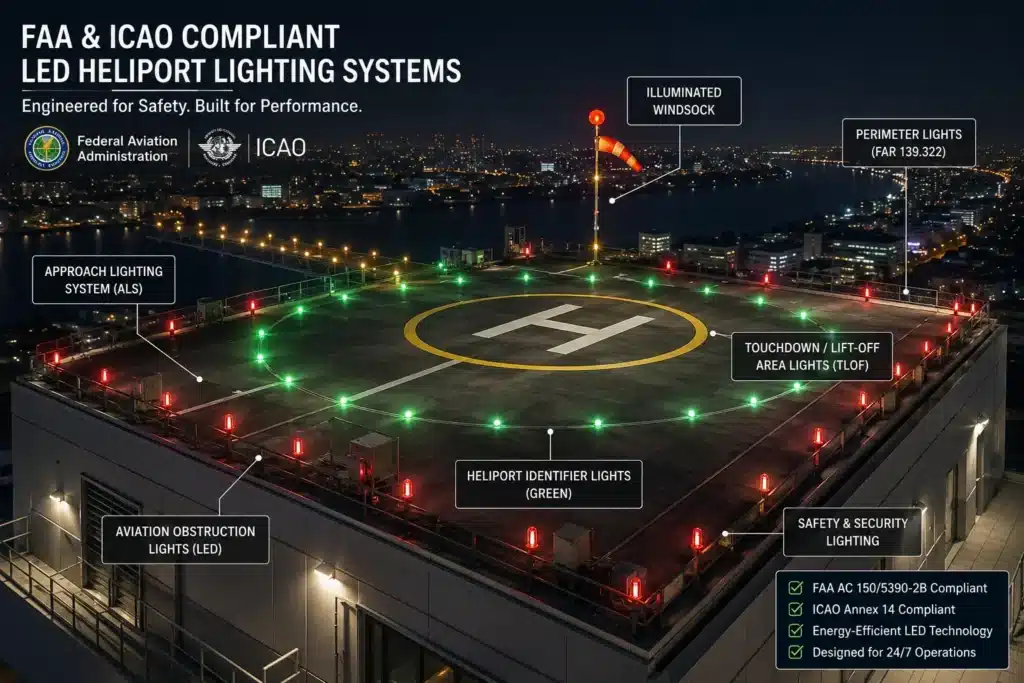
Common heliport lighting systems include:
- Perimeter lighting
- Approach lighting
- Windsock lighting
- Floodlighting
- Obstruction lighting
Modern LED heliport lighting systems are commonly used to support both FAA and ICAO operational recommendations.
Perimeter Lighting Differences
Heliport perimeter lighting helps define landing zone boundaries and improve nighttime pilot visibility.
Both FAA and ICAO systems commonly use:
- Green perimeter lighting
- Omni-directional visibility
- Low-profile fixtures
- Elevated or inset-mounted systems
However, differences may exist in areas such as:
- Fixture spacing
- Installation layouts
- Operational visibility requirements
- International installation practices
Commercial aviation lighting manufacturers often design systems capable of supporting both FAA and ICAO operational environments.
Approach Lighting Comparisons
Approach lighting systems guide pilots during final approach procedures and improve landing alignment visibility.
FAA and ICAO approach lighting systems may vary based on:
- Operational environment
- Heliport type
- International requirements
- Offshore operational needs
- Rooftop landing conditions
Both systems focus on:
- Pilot orientation
- Safe descent guidance
- Reduced visibility operations
- Landing path awareness
LED directional lighting systems are commonly used for modern approach lighting applications.
Rooftop Heliport Standards
Rooftop heliports create additional operational considerations under both FAA and ICAO guidance due to:
- Elevated structures
- Wind turbulence
- Urban environments
- Obstruction proximity
- Limited landing space
Both organizations commonly prioritize:
- Pilot visibility
- Obstruction awareness
- Windsock visibility
- Low-profile lighting systems
- Safe rooftop operations
Hospital rooftop heliports frequently incorporate lighting systems designed to support both domestic and international operational practices.
Explore Rooftop Heliport Lighting Guide for elevated aviation lighting applications.
Offshore Heliport Standards
Offshore heliports frequently operate under ICAO-influenced or internationally recognized aviation standards.
Common offshore heliport challenges include:
- Salt air corrosion
- High wind exposure
- Harsh weather conditions
- Remote maintenance access
- Nighttime operational requirements
Offshore heliport lighting systems commonly feature:
- Marine-grade construction
- Corrosion-resistant finishes
- Sealed LED optical systems
- High wind durability
Many offshore facilities use lighting systems designed for compatibility across multiple aviation operational standards.
Windsock & Obstruction Lighting Standards
Both FAA and ICAO guidance commonly recommend:
- Clearly visible windsocks
- Proper nighttime illumination
- Rooftop obstruction visibility
- Elevated hazard awareness
Windsock systems help pilots identify:
- Wind direction
- Surface airflow conditions
- Rooftop turbulence patterns
- Landing alignment conditions
Obstruction lighting helps improve visibility of:
- Rooftop structures
- HVAC systems
- Antennas
- Communication towers
- Elevated hazards
Review Heliport Windsock Requirements for aviation wind visibility systems.
LED Heliport Lighting Compatibility
Modern LED heliport lighting systems are widely used because they provide:
- Long operating life
- Reduced maintenance
- Improved energy efficiency
- Better weather resistance
- Instant startup
- Improved vibration resistance
LED systems commonly support:
- FAA operational environments
- ICAO international facilities
- Offshore heliports
- Rooftop emergency landing pads
- Hospital aviation operations
Many commercial aviation lighting systems are engineered for multi-standard operational compatibility.
Infrared & NVG-Compatible Heliport Lighting
Night Vision Goggles compatible heliport lighting systems are increasingly used in:
- Military helicopter operations
- Tactical aviation facilities
- Offshore security operations
- Law enforcement aviation units
Infrared-compatible systems may include:
- IR perimeter lights
- IR approach lights
- Dual-mode visible/infrared fixtures
- Tactical rooftop heliport lighting
These systems help support nighttime operations while reducing visible light signatures.
Environmental & Durability Considerations
Commercial heliport lighting systems must often withstand:
- Rain
- Snow
- Salt air
- UV exposure
- Rotor wash vibration
- High winds
- Extreme temperatures
Commercial aviation-grade LED fixtures commonly feature:
- Marine-grade finishes
- Sealed housings
- Corrosion-resistant materials
- Impact-resistant lenses
- High IP weather ratings
These features improve long-term reliability across both domestic and international heliport applications.
Heliport Design Considerations
Successful heliport lighting layouts should evaluate:
- Pilot visibility
- Rooftop geometry
- Landing path alignment
- Obstruction locations
- Environmental exposure
- Electrical infrastructure
- Maintenance accessibility
Lighting systems should help minimize:
- Glare
- Shadowing
- Visual confusion
- Landing uncertainty
Applications for FAA & ICAO Heliport Standards
These standards are commonly referenced for:
- Hospital heliports
- Rooftop landing pads
- Offshore platforms
- Commercial aviation facilities
- Industrial heliports
- Public safety aviation centers
- Military helicopter operations
Modern LED heliport lighting systems improve operational visibility across both domestic and international aviation environments.
Choosing Commercial LED Heliport Lighting
When selecting heliport lighting systems, important considerations include:
- FAA compatibility
- ICAO operational requirements
- Rooftop installation conditions
- Corrosion resistance
- Wind durability
- Optical performance
- IR/NVG compatibility
- Maintenance accessibility
Facilities operating internationally often prioritize flexible lighting systems designed for multi-standard operational compatibility.
Inline Buyer Q&A
What is the difference between ICAO and FAA heliport standards?
FAA standards primarily focus on U.S. aviation operations, while ICAO standards are designed for international aviation consistency.
Do FAA and ICAO both use green heliport perimeter lights?
Yes. Both commonly use green perimeter lighting to define landing zone boundaries.
Are ICAO heliport standards used offshore?
Yes. ICAO guidance is frequently referenced for offshore and international aviation operations.
Can LED heliport lighting support both FAA and ICAO facilities?
Many commercial aviation lighting systems are designed for compatibility with multiple operational standards.
Why are low-profile heliport lights important?
Low-profile fixtures improve helicopter clearance safety and reduce rotor wash hazards.
Need Help Selecting FAA or ICAO Heliport Lighting?
Heliport lighting requirements can vary by jurisdiction, facility type, operational environment, and applicable aviation guidance. Rooftop, hospital, offshore, and commercial heliports may also require specialized considerations for fixture profiles, corrosion resistance, optical performance, and NVG compatibility.
👉 Explore Commercial LED Heliport Lighting or call 1-844-533-7767 to discuss your heliport lighting requirements.
Frequently Asked Questions About FAA Heliport Standards
Which standard is more commonly used outside the United States?
ICAO heliport standards are more commonly referenced internationally and for offshore aviation operations.
Are FAA heliport standards legally required?
Requirements vary by jurisdiction, facility type, and operational environment. FAA guidance is commonly referenced for U.S.-based heliport projects.
Why do offshore heliports often reference ICAO standards?
Offshore aviation facilities frequently support international helicopter operations and multinational aviation operators.
Can a heliport follow both FAA and ICAO guidance?
Yes. Many commercial heliports incorporate design principles compatible with both FAA and ICAO operational practices.
Are heliport lighting fixture colors standardized internationally?
Many aviation lighting systems use internationally recognized colors, although installation practices and operational guidance may vary.
What are dual-mode infrared heliport lights?
Dual-mode systems can operate using both visible aviation lighting and infrared-compatible lighting for NVG operations.
Why is corrosion resistance important for offshore heliport lighting?
Salt air and harsh marine conditions can rapidly damage improperly protected lighting systems.
Do ICAO and FAA both address rooftop heliports?
Yes. Both organizations provide operational guidance relevant to rooftop heliport safety and visibility.
Stay Connected with Our Lighting Resources
Add IndustrialLightingFixtures.org as a Preferred Source on Google to see more of our lighting guides and technical resources across Google Search experiences.
Related Heliport & Aviation Lighting Resources
Continue evaluating lighting requirements for hospital, rooftop, commercial, and international heliports with these related standards, design, and fixture-selection resources:
- FAA Heliport Lighting Requirements — Review FAA guidance for heliport lighting, including perimeter lighting, visual aids, and other considerations for U.S.-based heliport operations.
- Rooftop Heliport Lighting Guide — Explore lighting considerations for rooftop heliports where fixture profile, visibility, wind exposure, installation conditions, and operational safety require additional attention.
- Heliport Perimeter vs. Approach Lights — Understand the different functions of perimeter and approach lighting and how each system supports pilot orientation during heliport operations.
- LED Heliport Lighting — Explore commercial heliport lighting systems for hospital, rooftop, offshore, industrial, and other aviation applications.