Explosion proof paint spray booth lighting refers to LED lighting fixtures specifically engineered for hazardous environments where flammable solvents, vapors, and combustible atmospheres may be present during normal paint application processes. These fixtures are constructed with reinforced enclosures that prevent internal ignition sources from igniting surrounding solvent-rich air, making them essential for compliant operation in Class I Division 1 paint spray booths and similar industrial applications. Certified explosion proof paint booth lighting combines hazard containment performance with energy-efficient LED technology to deliver reliable, uniform illumination that supports safety, quality control, and regulatory compliance.
Coating environments represent a specialized segment of the overall Explosion-Proof Lighting category, requiring enclosure strategies aligned with solvent exposure.
Explosion-Proof Paint Spray Booth Lighting Fixtures
Ensure a safe and well-illuminated workspace with our explosion proof light fixtures for paint booths. Designed specifically for hazardous spray environments, our LED paint booth lighting delivers exceptional brightness, efficiency, and unmatched longevity.
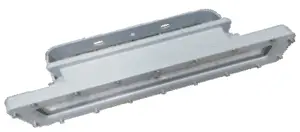
I series
Brand:
Low Bay and High Bay; 2ft, 4ft Linear fixtures; UL: UL1598 /UL1598A / UL844 / CSA C22.2;
Class 1 Division 1; Groups C,D; Class 1 Division 2 Groups A,B,C,D; up to 13,200; 40/50/60/80/100W;
Prices start at $500.
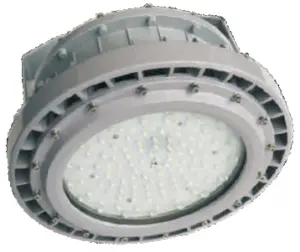
C Series
Brand:
High Bay Lighting, Floodlight; Up to 32,400 lumens; Surface, pendant installs; Class 1 Div 1 Groups C,D; Class 1 Div 2;A,B,C,D; 80/100/120/150/180/200/240W;
Prices start at $400
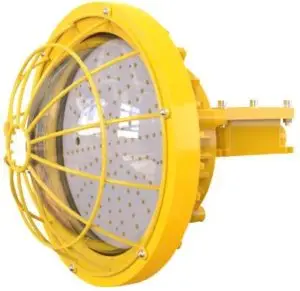
GB Series
Brand: CES
UL844 (American):
Class 1 Div 1 Group A, B, C, D,
UL1598 Luminaries: UL1598A
Marine; UL8750; 60° ,90° ,120°
beam angle; various mounting options;
10/30/40/50/60/70
80/100/185/200W;
Prices start at $300.
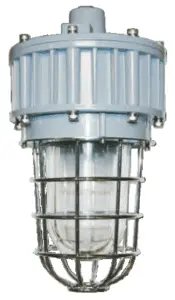
G series
Brand:
Wall Mount or Flood Light,
Choose Spherical Glass Diffuser;
Optional Wire Guard, Dome Reflector, Up to 5400 lumens; Class 1 Div1;10/20/3040W;
Prices start at $400.
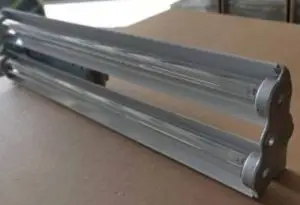
IR4 series
Brand: IRL
Paint spray booth approved;
LED Linear – 2ft, 4ft models;
Corrosion-resistant, marine grade,
copper-free aluminum,
17/ 35/40/54/60/80W;
Made in USA; Prices start at $300
What Is Explosion Proof Paint Spray Booth Lighting?
Explosion proof paint spray booth lighting consists of LED luminaires designed with rugged, sealed housings that contain internal arcs, sparks, and heat within the fixture. Unlike general industrial lighting, these fixtures meet hazardous location requirements for areas where solvent vapors may exist continuously or intermittently. Properly certified units carry Class I Division 1 ratings and — in international projects — may be ATEX or IECEx certified for equivalent zone classifications.
Paint booths often present unique challenges such as volatile overspray, high reflectivity surfaces, and solvent-laden air. Explosion proof LED paint booth lighting ensures both safety and performance, while providing long service life and reduced maintenance compared to legacy HID or fluorescent fixtures.
For a complete technical overview of hazardous location classifications, certification standards, and fixture selection methodology, refer to our Explosion-Proof Lighting Standards & Selection Guide.
When to Use Explosion Proof Paint Booth LED Lighting
Explosion proof paint spray booth lighting is used wherever solvent-based coatings, primers, and finishes are applied in confined industrial spaces. Common applications include:
-
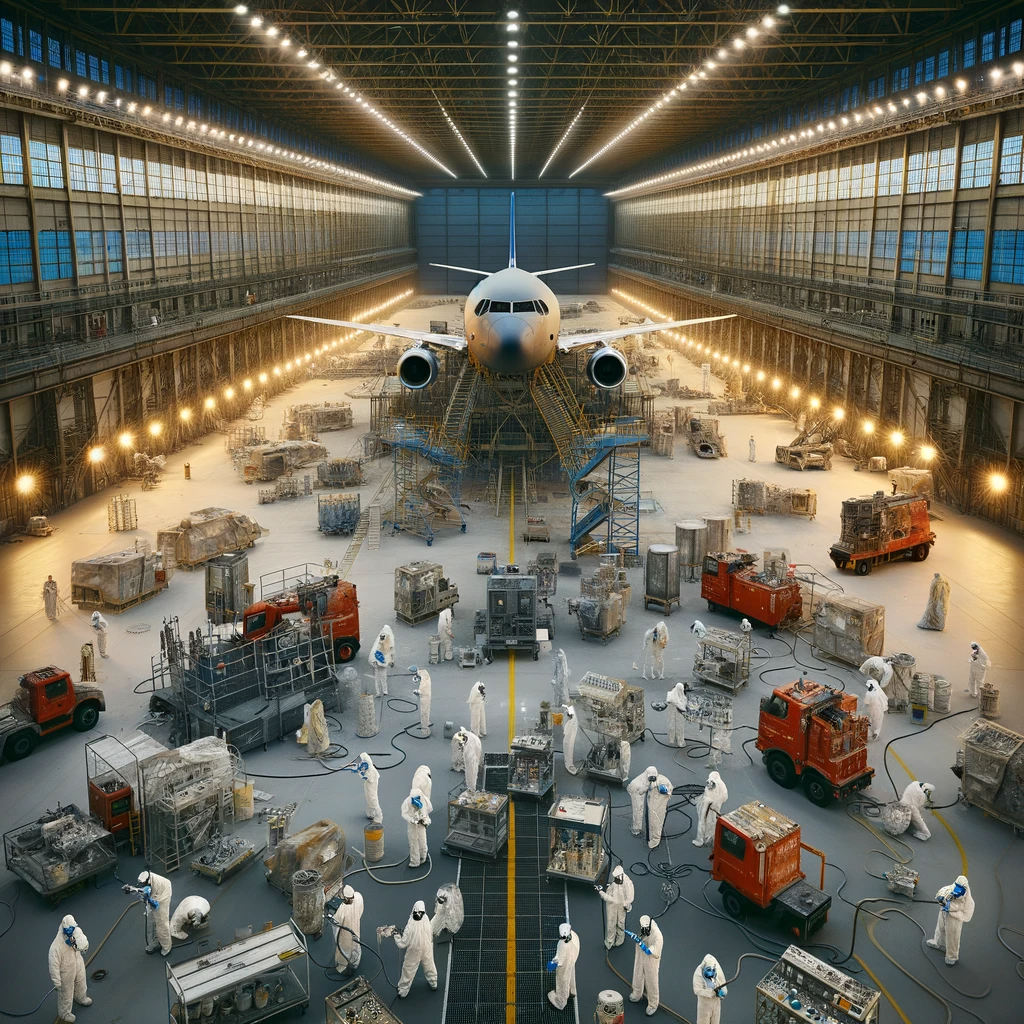
Automotive and aerospace paint spray booths
-
Industrial coatings for metal fabrication
-
Powder coating pre-treat and cure areas with flammable solvents
-
Chemical and coatings manufacturing facilities
-
Shipbuilding and large-equipment paint lines
-
Any enclosed paint bay with Class I hazardous designation
This lighting helps improve visibility for color matching, quality inspection, and worker safety under strict compliance requirements. See Class I Division 1 lighting requirements for solvent-rich atmospheres.
Certain industrial facilities require specially rated hazardous location fixtures for environments containing combustible gases or vapors. Explore common Explosion Proof High Bay applications used throughout industrial operations.
Hazard Classification Reference Table
| Classification System | Typical Hazard |
|---|---|
| Class I | Flammable gases/vapors |
| Zone 1/2 | Likelihood of hazardous atmosphere |
| Division 1/2 | Based on material presence and duration |
Thermal Management Considerations
Key factors for paint booth environments include:
-
High ambient temperatures
-
Solvent vapor exposure
-
Enclosure heat dissipation
-
Driver performance under continuous operation
Optical Distribution Needs
-
Uniform lighting to eliminate shadows
-
Minimized glare on highly reflective surfaces
-
Controlled beam spread for task areas
-
Even vertical and horizontal illuminance
Inline Buyer Q&A
How do I determine what hazardous-location rating is required for paint spray booth lighting?
Start with the electrical classification of the specific area where the fixture will be installed.
Paint spray operations can create flammable vapor environments, but the required Class, Division, or Zone classification can vary according to the coating materials, booth design, ventilation, fixture location, and applicable electrical and fire-safety requirements.
The hazardous-location classification should be established before selecting the lighting equipment.
Does every light in or around a paint spray booth need a Class 1 Division 1 rating?
Not necessarily.
The required rating depends on the classified area and how the luminaire is installed relative to the spray process.
Different locations within, adjacent to, or separated from a spray area can be subject to different requirements.
Fixture selection should follow the applicable classification and project requirements rather than assuming one hazardous-location rating applies everywhere.
What information should I provide when requesting explosion-proof paint booth lights?
Useful project information includes:
- Hazardous-location classification
- Class and Division or Zone
- Gas or vapor group, where applicable
- Temperature code requirements
- Booth dimensions
- Fixture mounting locations
- Existing fixture information
- Required illumination
- Voltage
- Ambient temperature
- Coating or solvent environment
- Ventilation information
- Required certifications
- New construction or retrofit
- Drawings, photographs, or fixture schedules when available
These details help determine which fixture configurations are appropriate for the project.
Can existing paint booth fixtures be replaced one-for-one with LED fixtures?
Potentially, but a one-for-one replacement should not be assumed.
The replacement fixture must be suitable for the classified location and installation, and its output, distribution, mounting, electrical characteristics, temperature rating, and applicable certifications should be evaluated.
A lighting layout can also help determine whether the existing fixture locations provide the desired illumination with the proposed LED equipment.
How important is light distribution in a paint spray booth?
Very important.
Paint and finishing work can benefit from consistent illumination across work surfaces so operators can visually evaluate coverage, finish quality, and surface conditions.
Fixture location, output, distribution, booth geometry, reflectance, obstructions, and the work being performed can all affect visibility.
Can you help evaluate lighting for an existing spray booth retrofit?
Yes.
For retrofit projects, provide the existing fixture information, booth dimensions, mounting locations, voltage, hazardous-location classification, required certifications, and photographs or drawings when available.
This information can help evaluate suitable LED replacement options without assuming the existing installation should simply be duplicated.
Specify the Lighting Around the Spray Booth Classification
Paint spray booth lighting should be selected around the classified location, installation method, booth environment, required illumination, and applicable certifications—not simply fixture wattage or lumen output.
Our lighting specialists can help evaluate explosion-proof LED fixtures for automotive finishing, industrial coating, manufacturing, aerospace, fabrication, and other paint spray applications.
Call 1-844-533-7767 to discuss your explosion-proof paint spray booth lighting requirements.
Frequently Asked Questions About Explosion Proof Paint Booth LED Lighting
Can explosion-proof paint spray booth lighting be used where flammable vapors may be present?
Yes, when the fixture is properly rated and certified for the specific hazardous location in which it is installed.
The required Class, Division, Zone, gas group, temperature code, and other characteristics should match the classification established for that location.
A Class 1 Division 1 fixture should not be described simply as a fixture for “continuous vapor exposure”; the classification is determined according to the applicable hazardous-location definitions and installation conditions.
What certification should explosion-proof paint booth lighting carry?
The required certification depends on the jurisdiction, hazardous-location classification, and project specification.
In North America, equipment may need to be listed or certified for the applicable Class and Division or Zone hazardous location under relevant standards, which can include UL 844 for applicable hazardous-location luminaires.
International projects may use IECEx, ATEX, or other applicable certification frameworks.
The certification marked on the specific fixture should match the project’s requirements.
Does every paint spray booth require Class 1 Division 1 lighting?
No universal classification should be assigned solely because an area is called a paint spray booth.
Classification depends on the spray process, materials, ventilation, booth construction, fixture location, and applicable electrical and fire-safety requirements.
The classification for the actual installation should be established before equipment is selected.
What is the difference between Class 1 Division 1 and Class 1 Division 2 lighting in a spray-finishing environment?
The classifications represent different hazardous-location conditions involving flammable gases or vapors.
Which classification applies depends on the likelihood and conditions under which an ignitable concentration may be present, as defined by the applicable code and the specific installation.
The project’s classified-area documentation should determine which equipment is required.
How do explosion-proof paint booth fixtures handle overspray and moisture?
Construction varies by fixture.
Hazardous-location luminaires may incorporate sealed housings, gaskets, protected optical components, corrosion-resistant materials, and other features appropriate for demanding industrial environments.
Ingress-protection ratings should be reviewed for the specific fixture and exposure.
An IP rating alone does not establish hazardous-location certification or chemical compatibility with a particular coating, solvent, or cleaning agent.
Does an IP66 or IP67 rating mean a fixture is explosion proof?
No.
An IP rating describes specified protection against ingress of solids and water.
Explosion-proof or hazardous-location suitability involves separate construction, testing, certification, and marking requirements.
A fixture can have a high IP rating without being approved for a classified hazardous location.
Are explosion-proof paint booth lights resistant to solvents?
That depends on the specific fixture materials and the chemicals involved.
Hazardous-location certification does not automatically establish compatibility with every solvent, coating, cleaning chemical, or corrosive substance.
Material and chemical compatibility should be evaluated when the fixture will be exposed to specific substances.
Can LED fixtures replace fluorescent or HID paint booth lighting?
Often, but replacement equipment must meet the requirements of the classified location and installation.
Fixture output, distribution, mounting, voltage, temperature rating, certifications, booth geometry, and required illumination should also be evaluated rather than relying solely on wattage equivalency.
Can explosion-proof LED lighting improve visibility during painting and finishing?
Properly designed LED lighting can provide useful illumination and distribution for paint preparation, spraying, inspection, and finishing tasks.
Actual visibility depends on fixture placement, output, distribution, color characteristics, booth geometry, surface reflectance, and the work being performed.
Is color rendering important in paint spray booth lighting?
It can be particularly important where operators need to evaluate colors, coatings, surface coverage, or finish quality.
CRI, color temperature, spectral characteristics, illumination level, and surrounding surfaces can all affect visual evaluation.
Project requirements should determine the appropriate lighting characteristics.
Can a photometric layout be used for a paint spray booth?
Yes.
Photometric data can help evaluate proposed fixture placement, illumination, distribution, and uniformity before installation.
The lighting layout does not replace hazardous-location classification or code review; those requirements must be addressed separately.
Can explosion-proof paint booth fixtures be used in other hazardous industrial applications?
Potentially, but only when the fixture’s certifications, ratings, temperature code, gas or vapor group, environmental characteristics, and other requirements match the hazardous location involved.
A fixture suitable for one classified application should not automatically be assumed suitable for every hazardous environment.
Stay Connected with Our Lighting Resources
Add IndustrialLightingFixtures.org as a Preferred Source on Google to see more of our lighting guides and technical resources across Google Search experiences.

Related Explosion-Proof Lighting Resources
- LED Explosion-Proof Lighting — Explore the main explosion-proof lighting category for classified industrial environments involving flammable gases, vapors, or combustible materials.
- Explosion-Proof Lighting Guide — Learn how hazardous-location classification, fixture ratings, certifications, temperature codes, and environmental conditions affect lighting selection.
- Class 1 Division 1 Lighting — Review lighting considerations for locations classified as Class 1 Division 1.
- UL 844, IECEx and ATEX Certifications — Compare major hazardous-location certification frameworks used when specifying explosion-proof lighting.
- Where Is Explosion-Proof Lighting Needed? — Explore industrial environments and processes where classified-location lighting requirements may apply.