
Outdoor lighting systems provide controlled illumination for exterior environments where visibility, safety, and site performance are essential. These LED fixtures are engineered to withstand weather exposure, temperature variation, and long operating hours while delivering consistent light distribution across open areas, building perimeters, pathways, and access points.
Properly designed outdoor lighting supports secure movement, enhances property appearance, reinforces wayfinding, and improves operational efficiency across commercial and industrial facilities. From parking areas and pedestrian routes to architectural façades and security zones, exterior lighting systems must balance durability, optical control, and long-term energy performance.
Effective exterior lighting requires more than selecting individual fixtures. Our commercial outdoor area lighting design guide explains how pole heights, fixture spacing, optical distributions, layered lighting, and controls work together to improve safety, uniformity, and long-term performance.
This guide outlines when outdoor lighting is specified, key design considerations, and how LED exterior fixtures are selected to meet safety, environmental, and performance objectives.
Outdoor Lighting Solutions
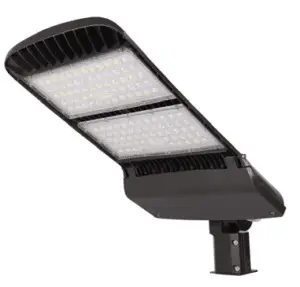
NBQL
Brand: Nebulite
DLC; Fixed watt (30W, 50W, 75W) or field-adjustable (75W-100W-150W, 200W-240W-300W); up to 45,486 lumens; Prices start at $300.
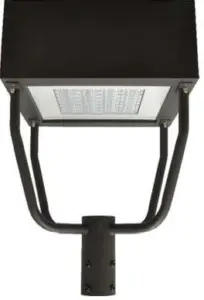
CL-3040 Spider Mount
Brand: Crystal
Most popular fixture for shopping centers, Campuses, Parking Lots; 12″ (S) or 16″ (M) or 22″ (L) spider mount (4 arms), extruded arm, or yoke mount (2 arms); up to 43,620 lumens; 10/20/30/40/50/60/80/100/120/
150/200/250/300W. Prices start at $400.
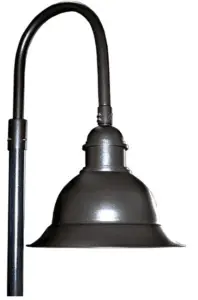
Bell series
Brand: Crystal
20″ Medium, 25″ Large; 40/50/60/80/100/120/150/180/200W,
Prices start at $600.
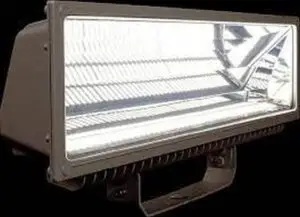
U-HFL
Brand: Altech
low profile, high performance, architectural billboard lighting; tempered glass to reduce glare; IP67, up to 24,300 lumens; 15/30/60/90/120/150W. Prices start at $250.
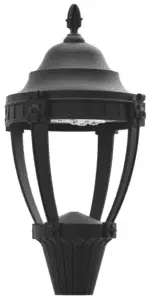
X43
Brand: Crystal
premium architectural luminaire; up to 9,986 lumens; 33″ Ht; 20/40/60/70W; Made in the USA – Made to order; Prices Start at $800.
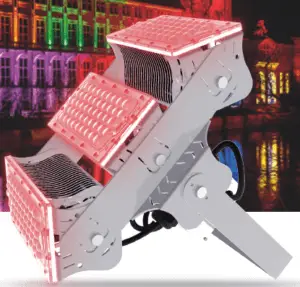
T400A
Brand: G-Comin
RGBW Flood Lights provide 16 million colors allowing you to get the exact color; Remote and APP controls; Multiple modes, flash, timing, music color change mode; 50/100/150/200/300/400/600W.
Prices start at $300.
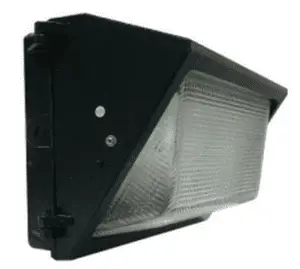
LS-WP
Brand: Ledsion
Large 18″ LED Half Cutoff Wall Pack; 19,500 lumensl; ETL, CETL, DLC;
41/60/80/100/120/150W. Prices start at $250.

CL-1022
Brand: Crystal
Architectural wall sconces; Down Light, UP/Down Light. Decorative Front Square or Decorative 4 Square Cutout Design; 10/15/25W;
Prices start at $475.
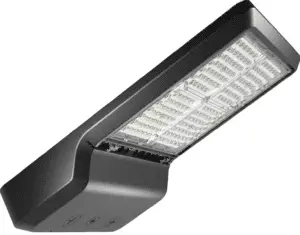
Archer G2
Brand: ATG
DLCd; Selectable (60/80/100W),
(100/120/150W), (200/240/300W);
up to 49,088 lumens; Prices start at $300.
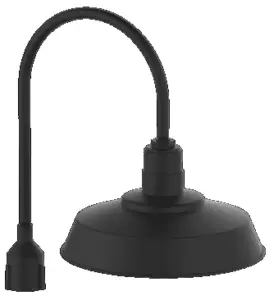
RLM
Brand: Crystal
Gooseneck Barn Light, Vintage style architectural indoor/outdoor LED luminaire with different shade designs
(classic, barn, slanted), Pendant-7 different arm mounts; 10/20/30W; Prices start at $395.
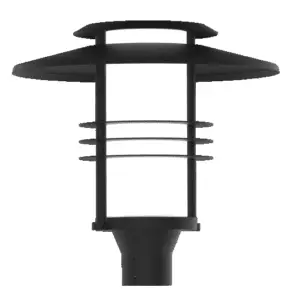
ODIN
Brand: Crystal
modern, sophisticated design transforms any outdoor space. 4 different shade styles, opal acrylic lens standard, up to 12,000 lumens;
25/45/55/65/80/100W; Prices Start at $900.
When Outdoor Lighting Is Specified
Outdoor lighting is specified when facilities require:
-
Safe illumination of parking areas, drive lanes, and pedestrian pathways
-
Perimeter visibility for security and surveillance support
-
Compliance with local lighting ordinances and energy codes
-
Controlled light distribution to reduce glare and light trespass
-
Durable fixtures engineered for weather, wind, and environmental exposure
Exterior lighting systems are selected not only for brightness, but for uniformity, optical control, and long-term reliability under continuous outdoor operation.
HOA and multifamily communities require outdoor lighting that balances pedestrian safety, roadway visibility, architectural appearance, light trespass, and long-term operating costs. See our HOA Lighting Design Guide for practical guidance on planning lighting for community streets, walkways, parking areas, entrances, and shared outdoor spaces.
Outdoor Lighting Systems by Application
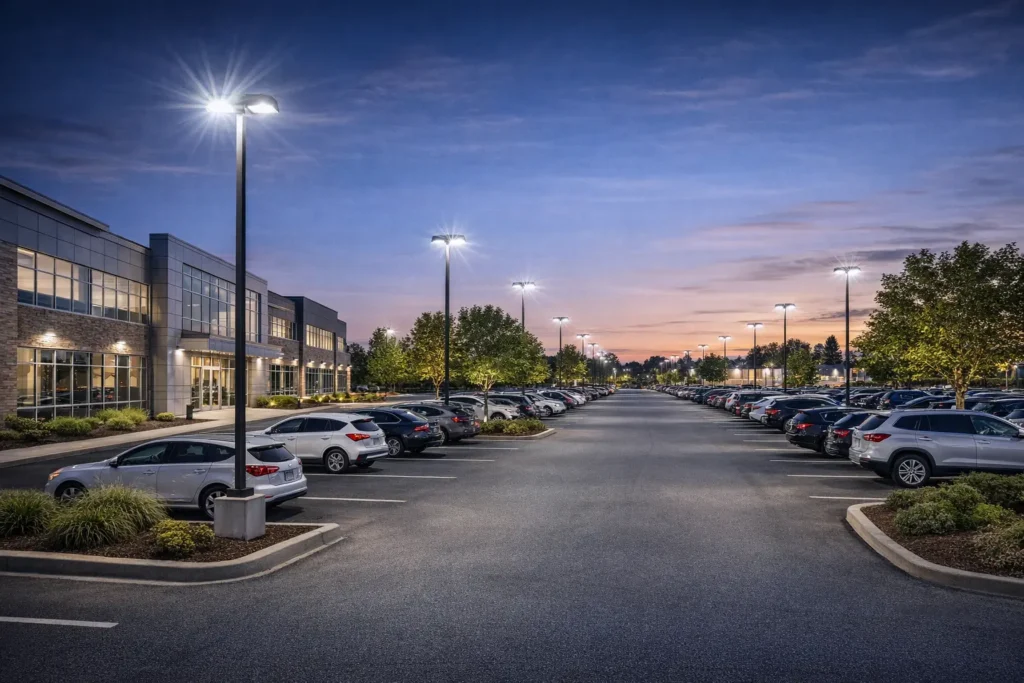
Exterior lighting design begins with open-area illumination. Parking lots and site circulation zones are commonly served by LED area lights mounted to engineered light poles selected for mounting height, structural capacity, and distribution strategy. These systems provide broad, uniform coverage across vehicular and pedestrian zones.
For projects requiring off-grid installation or infrastructure resilience, solar lighting systems provide an alternative to traditional wired outdoor lighting.
Building perimeters and entry points often rely on LED wall packs or architectural wall-mounted fixtures to maintain visibility along façades and service areas. Pedestrian walkways and landscaped environments may incorporate LED bollards or post-top fixtures to guide movement while maintaining visual comfort.
Large exterior spaces such as yards, storage areas, or athletic fields require high-output LED flood lights or high-mast systems capable of delivering extended coverage with controlled beam patterns. In environments where surveillance or risk mitigation is a priority, purpose-built outdoor security lighting supports consistent perimeter illumination.
Specialized exterior applications introduce additional requirements. Rooftop landing areas may require heliport lighting systems, while tall structures incorporate aircraft warning lights to comply with aviation safety regulations. FAA heliport lighting requirements often include supplemental floodlighting and access area illumination for improved operational safety.
Decorative architectural lighting may utilize façade fixtures or flexible linear solutions to enhance building identity without excessive spill.
Selecting the appropriate outdoor lighting configuration requires evaluation of mounting height, spacing, glare control, and environmental exposure to ensure performance and long-term durability.
Outdoor Lighting Performance Considerations
Effective outdoor lighting systems are engineered to manage:
-
Ingress Protection (IP Ratings): Resistance to moisture, dust, and environmental exposure
-
Wind Load & Structural Stability: Pole and mounting considerations
-
Optical Distribution: Precision beam control to reduce glare and light trespass
-
Color Temperature Selection: Balancing visibility with neighborhood compatibility
-
Energy Code Compliance: Adherence to local efficiency standards and lighting power density limits
Exterior lighting must balance illumination targets with environmental responsibility, minimizing unnecessary spill and skyglow.
Beyond reducing energy consumption, LED upgrades can also lower long-term service and replacement expenses. Learn how commercial LED outdoor lighting reduces maintenance and operating costs over the life of the system.
Types of Outdoor Lighting Fixtures Across Commercial Properties
Modern outdoor lighting strategies extend well beyond simple pole-mounted luminaires. Large-area illumination is typically achieved through high-output area lights and engineered street lighting systems designed to deliver uniform coverage across parking lots, campuses, roadways, and industrial yards. Where directional control and perimeter visibility are required, flood lighting and billboard lighting solutions provide focused beam distribution with managed glare. These high-output systems form the foundation of exterior site lighting where safety, visibility, and energy performance must operate together.
Building-mounted luminaires address façade illumination and entry transitions. Durable wall packs, architectural wall-mounted fixtures, and decorative wall sconces support controlled perimeter coverage while reinforcing building identity. In coastal or high-moisture environments, bulkhead-style fixtures offer impact resistance and corrosion protection while maintaining reliable performance. These systems provide code-compliant illumination along building edges and service zones.
Pedestrian-scale lighting introduces another layer of site design. Post top fixtures, traditional lantern-style luminaires, and acorn post top lighting provide both functional visibility and architectural character. Courtyard lighting and architectural post top systems are often selected to enhance plazas, landscaped environments, and campus walkways with balanced illumination that supports ambiance without overwhelming surrounding areas.
Properties seeking enhanced visual impact often integrate façade and landscape lighting layers. Architectural area lighting provides broader site coverage with refined optical control, while programmable RGB systems introduce dynamic color capability for hospitality, municipal, and branded environments. These systems allow exterior spaces to become visually engaging while maintaining commercial performance standards.
For homeowner associations, condominium communities, and multifamily properties evaluating older outdoor fixtures, our HOA Lighting Upgrades Guide explains how modern commercial LED lighting can reduce energy and maintenance costs while improving visibility and community appearance.
When coordinated effectively, pole-mounted, wall-mounted, pedestrian-scale, and accent luminaires operate as part of a unified outdoor lighting system. Proper planning balances lumen output, distribution type, mounting height, and environmental durability to create exterior environments that are safe, visually cohesive, and built for long-term reliability.
Planning lighting for a commercial property requires balancing fixture selection, coverage, energy efficiency, maintenance, and site-specific requirements. See our Commercial LED Outdoor Lighting Guide for additional guidance on selecting and applying exterior LED lighting.
Common Applications
Outdoor lighting is widely used in:
-
Commercial parking areas and circulation routes
-
Campus and pathway wayfinding
-
Building perimeters and security zones
-
Landscape and facade accent illumination
-
Sports and recreational fields
-
Entry plazas and outdoor gathering spaces
Solar parking lot lighting systems provide energy-efficient outdoor illumination without requiring extensive underground electrical infrastructure.
Mounting Height & Coverage Strategy for Outdoor Lighting
| Mounting Height | Typical Application | Coverage Logic |
|---|---|---|
| 10–15 ft | Pathways and walkways | Lower output, wider optics |
| 15–25 ft | Parking and circulation | Balanced coverage |
| 25–40 ft | Large area zones | Higher output, optimized optics |
| 40+ ft | Large campuses or stadium edges | Long-throw optics |
Distribution Type Quick Guide
| Distribution | Best Application |
|---|---|
| Type III | Parking rows |
| Type IV | Perimeter walkways |
| Type V | Central open areas |
| Flood | Facade and architectural accent |
Light Trespass & Glare Management
-
Use shielded optics to reduce spill light
-
Aim fixtures to contain light within site boundaries
-
Select beam patterns to minimize glare toward drivers and neighbors
Inline Buyer Q&A
How do I choose the right outdoor LED lighting for a commercial property?
Start with the function of each exterior area rather than selecting one fixture type for the entire property.
A complete outdoor lighting project may include:
- Parking lot and area lighting
- Building-mounted wall packs
- Flood and perimeter lighting
- Street and roadway lighting
- Pedestrian and pathway lighting
- Bollards
- Decorative post-top lighting
- Architectural and facade lighting
- Canopy lighting
- Commercial light poles and mounting systems
- Specialty exterior lighting
Fixture selection should consider mounting height, distribution, output, environmental exposure, glare, surrounding properties, controls, architecture, and applicable project requirements.
How do I determine how many outdoor fixtures my property needs?
Fixture quantity cannot be determined accurately from wattage or lumen output alone.
Property dimensions, pole locations, mounting heights, fixture distributions, building locations, obstructions, required illumination, uniformity objectives, and surrounding conditions all affect the layout.
For larger commercial projects, photometric modeling can help determine fixture quantities, placement, and distribution before installation.
Should I replace existing outdoor fixtures or retrofit them to LED?
Either approach can be appropriate.
Retrofits can make sense when existing housings, poles, mounting hardware, wiring, and other components remain suitable for continued service.
Complete fixture replacement may be preferable when existing equipment is deteriorated, incompatible with the proposed LED system, difficult to maintain, or unable to provide the required distribution and controls.
Evaluate the condition and performance of the complete system rather than comparing initial equipment cost alone.
What outdoor fixture rating does my project require?
There is no single IP or environmental rating appropriate for every outdoor installation.
Consider wet-location requirements, exposure to precipitation and dust, mounting orientation, operating temperatures, corrosion conditions, cleaning practices, and other site-specific factors.
Use the fixture’s actual listings and manufacturer environmental specifications to determine suitability.
How can I reduce glare and light spill from commercial outdoor lighting?
Glare and spill light can be managed through appropriate fixture distribution, shielding, mounting height, output, placement, orientation, and controls.
Property boundaries, roadways, neighboring buildings, residences, windows, pedestrian areas, and normal viewing positions should be considered when designing the system.
More light is not automatically better outdoor lighting.
What information should I provide when requesting an outdoor lighting quote?
When possible, provide:
- Site plan or property dimensions
- Photos of the existing property
- Areas to be illuminated
- Existing or proposed pole locations
- Pole and mounting heights
- Existing fixture information
- Voltage
- Building-mounted fixture locations
- Retrofit or new-construction requirements
- Desired controls
- Project location
- Applicable specifications or lighting requirements
For larger sites, drawings and photometric requirements can substantially improve fixture and layout recommendations.
Outdoor electrical systems should also account for surge protection for LED lighting, particularly for pole-mounted fixtures and long circuit runs.
Build the Outdoor Lighting System Around Your Property
Commercial outdoor lighting works best when parking areas, buildings, pedestrian routes, roadways, entrances, landscaping, and architectural features are planned as parts of one coordinated system.
Whether you’re developing a new property, replacing aging HID fixtures, upgrading an existing site to LED, or correcting poorly illuminated areas, our lighting specialists can help evaluate:
- Parking lot and area lights
- Wall packs and building-mounted fixtures
- LED floodlights
- Street and roadway lighting
- Bollards and pathway lighting
- Decorative post-top fixtures
- Architectural and facade lighting
- Canopy lighting
- Commercial light poles
- Photometric layouts
- Controls and retrofit strategies
For a detailed look at fixture selection, layout, glare, environmental exposure, controls, and exterior-lighting design, see our Outdoor LED Lighting Guide.
For project assistance, have your site plan, photographs, existing fixture information, mounting heights, voltage, and project requirements available when possible.
Call 1-844-533-7767 to discuss your commercial outdoor lighting project.
Frequently Asked Questions About Outdoor Lighting
What types of outdoor LED lighting are used on commercial properties?
Commercial properties can use many fixture types depending on the application.
Common systems include parking lot and area lights, wall packs, floodlights, street lights, bollards, post-top fixtures, canopy lights, architectural fixtures, facade lighting, pathway lighting, and specialty exterior luminaires.
A property may use several fixture types to address different outdoor areas.
What type of outdoor lighting is best for parking lots?
LED area lights mounted on appropriately selected commercial poles are commonly used for parking lot illumination.
Fixture selection depends on mounting height, pole spacing, optical distribution, property geometry, required illumination, uniformity objectives, surrounding properties, and applicable requirements.
See our LED Parking Lot Lights for commercial parking-area applications.
How do I reduce glare in outdoor lighting systems?
Glare can be managed through fixture optics, shielding where appropriate, output, mounting height, placement, orientation, and distribution.
The goal is to illuminate the intended area without unnecessarily directing high brightness toward drivers, pedestrians, windows, neighboring properties, or other sensitive locations.
Does full cutoff automatically eliminate glare?
No.
Controlling uplight is important, but glare also depends on fixture brightness, mounting height, viewing angle, placement, distribution, and surrounding conditions.
A fixture can control uplight while still producing uncomfortable glare if it is improperly selected or positioned.
What IP rating is recommended for outdoor lighting?
There is no universal IP rating required for every commercial outdoor fixture.
IP ratings address specific levels of protection against ingress of solids and liquids. They should be considered together with wet-location suitability, mounting orientation, temperature range, corrosion exposure, construction, and other environmental requirements.
An IP rating alone does not establish that a fixture is suitable for every outdoor application.
Can outdoor LED lighting reduce energy consumption?
Yes, an appropriately designed LED upgrade can reduce lighting energy use compared with many older HID and other legacy systems.
Actual savings depend on existing wattage, replacement wattage, fixture quantity, operating hours, controls, and lighting requirements.
Do LED outdoor lights require less maintenance?
They can reduce routine lamp-replacement requirements compared with many legacy lighting systems.
However, LED modules, drivers, controls, surge-protection components, electrical connections, and fixtures can still require service over time.
Actual maintenance requirements depend on equipment quality, operating conditions, environmental exposure, electrical conditions, and accessibility.
How long do commercial outdoor LED lights last?
There is no universal service life.
LED components, drivers, thermal management, operating hours, electrical conditions, environmental exposure, fixture construction, and maintenance can all influence long-term performance.
Compare manufacturer-specific rated-life information and warranties when evaluating fixtures.
How bright should commercial outdoor lighting be?
There is no single brightness level appropriate for every outdoor application.
Parking areas, roadways, pedestrian routes, building entrances, loading areas, architectural surfaces, and other exterior spaces perform different functions and may require different lighting criteria.
Fixture output should be selected around the application rather than simply maximizing lumens.
How far apart should outdoor lights be spaced?
There is no universal spacing rule.
Spacing depends on mounting height, fixture distribution, output, property geometry, obstructions, desired illumination, uniformity, and surrounding lighting conditions.
Photometric modeling is the preferred approach when accurate spacing and performance need to be evaluated.
What color temperature is best for outdoor commercial lighting?
There is no single color temperature appropriate for every commercial exterior application.
Architecture, application, surrounding properties, visual objectives, local requirements, Dark Sky considerations, and existing site lighting can all influence the appropriate selection.
What is Dark Sky friendly outdoor lighting?
Dark Sky friendly lighting generally emphasizes placing light where it is needed while limiting unnecessary uplight, glare, excessive illumination, and light trespass.
Fixture distribution, shielding, color temperature, output, controls, and installation all contribute to the finished system.
Can outdoor lighting improve security?
Lighting can improve nighttime visibility and support surveillance, pedestrian awareness, and broader site-security strategies.
It should not be treated as a standalone security system. Site layout, landscaping, access control, surveillance equipment, and operational practices should also be considered.
What are wall packs used for?
Wall packs are building-mounted exterior fixtures commonly used around entrances, building perimeters, service areas, loading areas, walkways, and other spaces adjacent to commercial structures.
Optical distribution, mounting height, output, glare, and neighboring properties should be considered when selecting them.
What are LED floodlights used for?
LED floodlights provide directional illumination for applications such as building exteriors, signs, yards, architectural features, sports or recreation areas, equipment areas, and other exterior targets.
Beam distribution, aiming, mounting distance, output, and spill-light control should be matched to the application.
When should bollard lighting be used?
Bollards are commonly used for pedestrian-scale illumination along pathways, sidewalks, courtyards, entrances, landscaped areas, campuses, and other outdoor spaces.
Spacing should be based on the actual fixture distribution and site layout rather than a universal distance.
When are decorative post-top lights appropriate?
Decorative post-top fixtures are often used where both illumination and architectural appearance are important.
Applications can include campuses, multifamily communities, hospitality properties, parks, pedestrian areas, municipal streetscapes, courtyards, and commercial developments.
Can existing outdoor light poles be reused during an LED upgrade?
Potentially.
Existing poles should be evaluated for physical condition, mounting compatibility, fixture weight and EPA, wind-loading considerations, mounting height, electrical condition, and project requirements before reuse.
Do outdoor lighting projects need photometric layouts?
Not every project requires one, but photometric modeling is valuable for parking lots, campuses, roadways, industrial sites, large commercial properties, and other projects where fixture quantity, spacing, illumination, uniformity, and spill light need to be evaluated before installation.
Stay Connected with Our Lighting Resources
Add IndustrialLightingFixtures.org as a Preferred Source on Google to see more of our lighting guides and technical resources across Google Search experiences.

Related Outdoor Lighting Resources
- Outdoor LED Lighting Guide — Start with the comprehensive planning guide for commercial exterior fixture selection, layouts, environmental exposure, glare control, and lighting design.
- LED Parking Lot Lights — Explore commercial LED area-lighting systems for parking lots, large outdoor properties, and vehicle circulation areas.
- Commercial Light Poles — Review commercial poles and mounting systems for parking lots, campuses, roadways, and other outdoor lighting installations.
- LED Bollard Lights — Explore pedestrian-scale bollard lighting for pathways, entrances, campuses, multifamily properties, and landscaped areas.
- LED Post Top Fixtures — Review decorative and architectural post-top lighting for commercial, municipal, campus, hospitality, and pedestrian environments.
- LED Wall Packs — Explore building-mounted exterior LED lighting for commercial entrances, perimeters, service areas, and other exterior applications.