Warehouse lighting is often one of the largest electrical loads within a facility. Because many warehouses operate 12 to 24 hours per day, even small improvements in lighting efficiency can produce substantial utility savings. Modern LED warehouse lighting systems help reduce operating costs while improving visibility, safety, and maintenance performance.
Whether upgrading a distribution center, storage warehouse, or industrial facility, LED lighting typically delivers one of the fastest returns on investment available in facility operations.
Why Warehouse Lighting Impacts Energy Costs
Most warehouses contain:
- High ceilings
- Large floor areas
- Long operating hours
- Numerous fixtures
- Multiple work shifts
These factors make lighting a significant contributor to overall electricity consumption.
Facilities using older technologies often experience excessive energy use from:
- Metal halide fixtures
- High-pressure sodium fixtures
- Fluorescent high bays
- Legacy HID systems
From warehouses to aircraft hangars, the Industrial LED High Bay Lighting Guide helps facility owners choose lighting systems that improve visibility, safety, and operational efficiency.
How LED Warehouse Lighting Saves Energy
LED fixtures convert a greater percentage of electrical energy into usable light.
Benefits include:
- Lower fixture wattage
- Improved optical efficiency
- Reduced wasted light
- Better light distribution
- Compatibility with advanced controls
Many facilities achieve energy reductions between 50% and 75%.
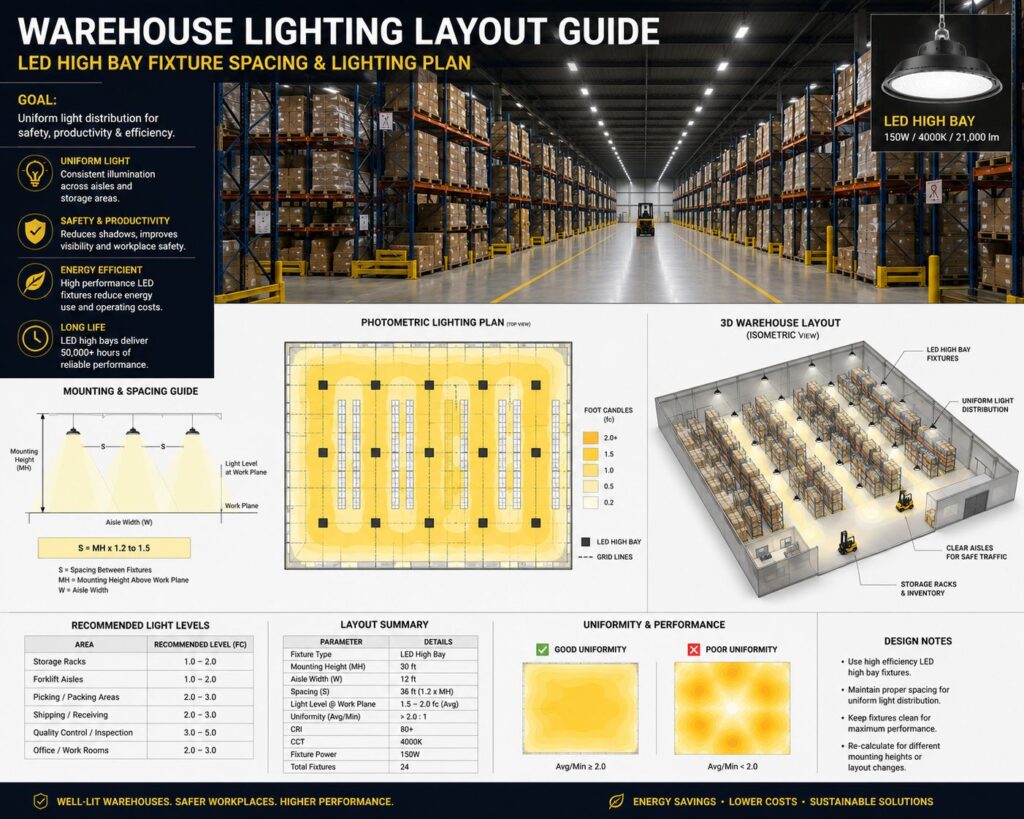
Planning fixture placement and spacing? Review Warehouse Lighting Layout Guide.
Typical Warehouse Lighting Upgrade Example
Before and After LED Retrofit
| Existing Lighting | New LED Lighting | Energy Savings |
|---|---|---|
| 400W Metal Halide High Bays | 150W LED High Bays | 62.5% |
The actual savings vary depending on operating hours, utility rates, fixture quantities, and control strategies.
Before selecting fixtures for your facility, visit our Industrial Lighting Fixtures and Their Uses guide to compare high bays, vapor tight fixtures, explosion proof lighting, wall packs, flood lights, and other LED solutions designed for industrial environments.
Where Additional Savings Come From
The fixture upgrade is only part of the savings opportunity.
Occupancy Sensors
Warehouse aisles are often unoccupied for significant periods.
Sensors can:
- Turn lights off automatically
- Dim fixtures when areas are vacant
- Reduce unnecessary operating hours
Daylight Harvesting
Facilities with skylights or clerestory windows can use daylight controls to reduce energy consumption during daytime hours.
Zoned Controls
Different warehouse areas often have different operating schedules.
Examples include:
- Storage aisles
- Shipping areas
- Packing stations
- Maintenance rooms
Designing high-rack storage illumination? Explore Warehouse Aisle Lighting Design
Sources of Warehouse Lighting Savings
| Energy Saving Strategy | Potential Benefit |
|---|---|
| LED Fixture Upgrade | Lower Wattage Consumption |
| Occupancy Sensors | Reduced Operating Hours |
| Daylight Harvesting | Less Daytime Energy Use |
| Zoned Controls | Lighting Only Where Needed |
| Improved Optics | Better Light Distribution |
| Reduced Maintenance | Lower Service Costs |
Operating a fulfillment center? Visit Distribution Center Lighting.
Maintenance Savings Matter Too
Energy savings receive most of the attention, but maintenance savings can be equally valuable.
LED fixtures often provide:
- 100,000+ hour lifespans
- Fewer lamp replacements
- Reduced lift rentals
- Less labor expense
- Fewer operational disruptions
Facilities with ceilings above 25 feet often realize substantial maintenance savings.
Planning a broader facility upgrade? See Industrial Facility Lighting Design.
Energy Savings by Warehouse Type
General Storage Warehouses
Typical benefits:
- Reduced utility costs
- Improved visibility
- Lower maintenance requirements
Distribution Centers
Additional benefits:
- Better inventory accuracy
- Improved picking efficiency
- Enhanced worker productivity
Cold Storage Facilities
LED lighting performs particularly well in refrigerated environments because efficiency typically improves in cold temperatures.
Selecting fixtures for warehouse applications? Learn more about LED High Bay Lighting.
Understanding Return on Investment (ROI)
Warehouse LED projects are often justified using:
- Energy savings
- Maintenance savings
- Utility rebates
- Improved productivity
- Reduced downtime
Many projects achieve payback periods between two and five years, depending on operating conditions.
Common Factors Affecting Savings
Several variables influence project economics.
Operating Hours
Facilities operating 24/7 generally achieve the fastest payback.
Utility Rates
Higher electricity costs increase annual savings.
Existing Fixture Type
Older HID systems typically offer greater savings opportunities than newer fluorescent systems.
Control Strategies
Adding sensors and smart controls can significantly improve overall savings.
Benefits Beyond Energy Savings
| Benefit | Operational Impact |
|---|---|
| Better Visibility | Improved worker performance |
| Improved Safety | Reduced workplace hazards |
| Reduced Maintenance | Lower operating costs |
| Better Uniformity | More consistent lighting |
| Instant-On Operation | No warm-up delays |
| Smart Controls | Greater operational flexibility |
Whether you’re designing a new facility or replacing outdated fixtures, Exploring the Different Types of Industrial Lights offers practical guidance for matching LED lighting solutions to real-world industrial environments.
Frequently Asked Questions
How much energy can LED warehouse lighting save?
Most warehouse facilities achieve between 50% and 75% energy savings when replacing older HID lighting systems.
Are occupancy sensors worth installing?
Yes. Warehouses often contain low-traffic areas where sensors can significantly reduce operating hours.
Does LED lighting reduce maintenance costs?
Absolutely. LED fixtures typically last far longer than metal halide or fluorescent systems.
Are utility rebates available?
Many utility providers offer rebates for qualifying LED lighting upgrades.
Do cold storage facilities benefit from LEDs?
Yes. LEDs generally perform exceptionally well in refrigerated environments.
Speak With a Warehouse Lighting Specialist
Whether you’re upgrading a warehouse, distribution center, or industrial storage facility, we can help identify opportunities to reduce energy consumption and maintenance costs with modern LED lighting.
Get assistance with fixture selection, lighting layouts, rebate opportunities, and energy-saving LED retrofit solutions.
Inline Buyer Q&A
Q: Is energy savings the biggest reason companies switch to LED lighting?
A: Energy savings is often the primary driver, but maintenance reductions and improved lighting quality are also major benefits.
Q: Can a lighting layout increase savings?
A: Yes. A photometric layout helps optimize fixture counts and spacing, reducing unnecessary energy consumption.
Q: Do controls make a noticeable difference?
A: Occupancy sensors and daylight harvesting systems often provide substantial additional savings beyond the LED retrofit itself.