Why Industrial Facilities Are Switching to LED Lighting
Energy costs continue to represent one of the largest operating expenses for industrial facilities. Warehouses, manufacturing plants, distribution centers, and production facilities often operate lighting systems for long hours each day, making lighting efficiency an important factor in controlling overall operating costs.
Modern industrial LED lighting offers an effective way to reduce electricity consumption while improving illumination quality, lowering maintenance requirements, and creating safer working environments. When combined with intelligent lighting controls, LED systems can significantly improve long-term operational efficiency.
This guide explains how industrial LED lighting generates measurable savings and why many organizations continue replacing older lighting technologies with modern LED solutions.
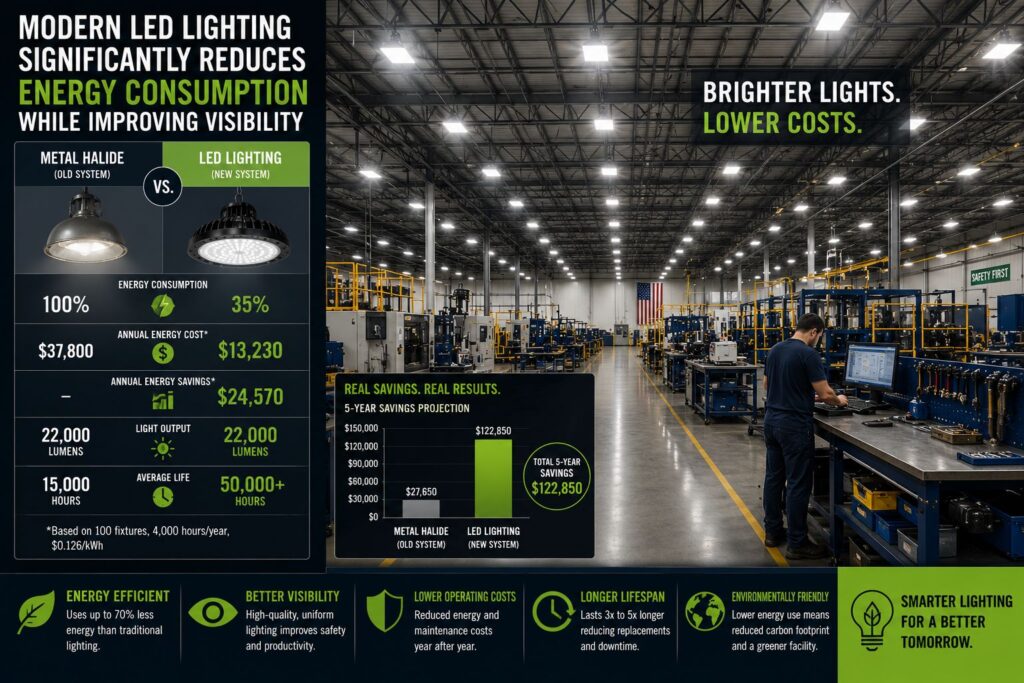
Modern industrial LED lighting significantly reduces energy consumption while improving visibility, lowering maintenance costs, and increasing productivity throughout warehouses, manufacturing plants, distribution centers, and industrial facilities.
Want to Reduce Industrial Lighting Energy and Maintenance Costs?
The savings from an LED upgrade depend on your existing fixture wattage, operating hours, light levels, facility layout, and opportunities for occupancy or daylight controls. A properly designed retrofit can reduce energy use while improving illumination and lowering long-term maintenance requirements.
Explore our Industrial LED Lighting solutions or call 844-533-7767 for help evaluating the right LED upgrade for your facility.
Why Industrial Facilities Are Switching to LED Lighting
Energy costs continue to represent one of the largest operating expenses for industrial facilities. Warehouses, manufacturing plants, distribution centers, and production facilities often operate lighting systems for long hours each day, making lighting efficiency an important factor in controlling overall operating costs.
Modern industrial LED lighting offers an effective way to reduce electricity consumption while improving illumination quality, lowering maintenance requirements, and creating safer working environments. When combined with intelligent lighting controls, LED systems can significantly improve long-term operational efficiency.
Interested in maximizing additional savings? Learn how occupancy sensors and intelligent controls improve efficiency in Lighting Controls, Occupancy and Vacancy Sensors for Energy Savings.
This guide explains how industrial LED lighting generates measurable savings and why many organizations continue replacing older lighting technologies with modern LED solutions.
Where Older Lighting Systems Lose Energy
Many industrial facilities still operate legacy lighting systems that consume substantially more electricity than modern LEDs.
Common examples include:
- Metal Halide Fixtures
- High Pressure Sodium Fixtures
- Mercury Vapor Fixtures
- Fluorescent High Bays
- HID Flood Lights
Older technologies often experience:
- Higher electrical demand
- Light depreciation over time
- Frequent lamp replacements
- Longer warm-up periods
- Higher maintenance costs
- Increased heat generation
These inefficiencies contribute to higher operating expenses throughout the life of the lighting system.
New to industrial lighting? Visit What Is Industrial Lighting? to understand the fundamentals of industrial lighting systems and their role in modern facilities.
Many industrial facilities still operate legacy lighting systems that consume substantially more electricity than modern LEDs.
Common examples include:
- Metal Halide Fixtures
- High Pressure Sodium Fixtures
- Mercury Vapor Fixtures
- Fluorescent High Bays
- HID Flood Lights
Older technologies often experience:
- Higher electrical demand
- Light depreciation over time
- Frequent lamp replacements
- Longer warm-up periods
- Higher maintenance costs
- Increased heat generation
These inefficiencies contribute to higher operating expenses throughout the life of the lighting system.
LED technology delivers significant efficiency improvements by converting more electrical energy into usable light.
Benefits include:
Lower Wattage
Modern LED fixtures produce comparable or better illumination while consuming substantially less electricity.
Improved Optical Performance
LED optics direct light where it is needed instead of wasting energy illuminating ceilings or unused spaces.
Instant-On Operation
Unlike many HID fixtures, LEDs immediately reach full brightness after power is applied.
Lighting Controls
Occupancy sensors, daylight harvesting, and programmable controls further reduce electrical consumption during periods of low activity.
Looking to maximize the efficiency of your LED lighting system? The Industrial Lighting Controls Guide explains how occupancy sensors, daylight harvesting, wireless controls, and IoT technology reduce operating costs and improve facility performance.
Typical Industrial LED Energy Savings
| Existing Lighting | Typical LED Replacement | Estimated Energy Reduction |
|---|---|---|
| 400W Metal Halide | 150W LED High Bay | 60–70% |
| 250W Metal Halide | 100W LED High Bay | 55–65% |
| T5 HO Fluorescent | LED Linear High Bay | 40–60% |
| HID Flood Light | LED Flood Light | 50–70% |
| HID Wall Pack | LED Wall Pack | 50–75% |
Actual savings vary based on fixture selection, operating hours, and facility conditions.
Need help selecting fixtures for your retrofit? Explore Industrial Lighting Fixtures and Their Uses to compare high bays, vapor tight fixtures, flood lights, wall packs, and other industrial lighting solutions.
Maintenance Savings
Energy savings are only one part of the return on investment.
Industrial LED fixtures also reduce maintenance expenses through:
- Longer operating life
- Fewer lamp replacements
- Reduced ballast failures
- Less equipment downtime
- Fewer lift rentals
- Lower labor costs
Facilities with high ceilings often realize significant maintenance savings because replacing lamps becomes less frequent and requires fewer disruptions to daily operations.
Additional Operating Cost Benefits
ED lighting may also help reduce:
- HVAC cooling loads due to lower heat output
- Emergency maintenance calls
- Inventory handling errors caused by poor visibility
- Production interruptions related to lighting failures
Improved lighting quality often contributes to smoother day-to-day operations across industrial facilities.
Before selecting fixtures for your next project, explore the Industrial Lighting Technologies Guide to compare LED, fluorescent, HID, metal halide, and other industrial lighting technologies.
Industrial Applications That Benefit Most
Warehouses
Long operating hours and high ceilings make warehouses ideal candidates for LED retrofits.
Manufacturing Plants
Improved visibility supports production quality while reducing electrical consumption.
Distribution Centers
Uniform illumination enhances order picking, forklift operation, and inventory accuracy.
Food Processing Facilities
LED vapor tight fixtures reduce maintenance while supporting clean, well-lit work environments.
Whether you’re replacing fluorescent strip lights or designing a new facility, What Are Vapor Proof Light Fixtures? helps explain when sealed LED fixtures are the right solution.
Cold Storage Facilities
LED fixtures operate efficiently in refrigerated environments and provide instant illumination.
Aircraft Hangars
Large open spaces benefit from powerful, energy-efficient LED high bay systems.
Outdoor Industrial Facilities
Flood lights, wall packs, and high mast lighting improve security while lowering operating costs.
Wondering where LED lighting delivers the greatest value? Read Industrial LED Lighting Applications for practical examples across warehouses, manufacturing
Typical Areas of Savings
| Savings Category | Operational Benefit |
| Electricity | Lower monthly utility bills |
| Maintenance | Fewer fixture replacements |
| Labor | Reduced service calls |
| Equipment Rentals | Less lift usage |
| Productivity | Better visibility |
| Safety | Improved workplace illumination |
| Sustainability | Lower energy consumption |
Planning a facility modernization project? The Industrial LED Lighting Pros and Cons guide explains how LED lighting improves energy efficiency, maintenance, safety, and long-term operating costs.
Factors That Affect Return on Investment
Several variables influence the financial return from an LED retrofit.
Important considerations include:
- Daily operating hours
- Local utility rates
- Existing fixture technology
- Number of fixtures
- Ceiling height
- Maintenance costs
- Lighting controls
- Utility rebate programs
Facilities operating 24 hours per day generally experience faster payback periods than buildings with limited operating schedules.
Beyond Energy Savings
Industrial LED lighting delivers benefits that extend well beyond lower utility bills.
Many facility owners also report improvements in:
- Employee safety
- Productivity
- Equipment visibility
- Inspection accuracy
- Forklift operations
- Workplace comfort
- Building appearance
- Security
Better lighting creates a more efficient working environment while supporting long-term operational goals.
Construction projects often require flexible lighting solutions. The Construction Site Lighting Guide explains how modern LED systems improve visibility while reducing operating costs.
Planning an Industrial LED Retrofit
A successful lighting upgrade begins with a professional evaluation of your existing facility.
Key considerations include:
- Building layout
- Mounting heights
- Fixture spacing
- Lighting levels
- Existing electrical infrastructure
- Environmental conditions
- Future expansion
- Maintenance accessibility
Proper fixture selection ensures maximum performance while optimizing long-term energy savings.
Planning a complete facility upgrade? Our Industrial Lighting Guide explains fixture selection, layout considerations, and lighting design best practices.
Inline Buyer Q&A
How much energy can industrial LED lighting save?
Many industrial facilities reduce lighting energy consumption by approximately 50–80%, depending on the existing lighting system and operating conditions.
Does LED lighting reduce maintenance costs?
Yes. Industrial LED fixtures typically last much longer than HID or fluorescent systems, resulting in fewer lamp replacements and lower maintenance expenses.
Can LED lighting lower cooling costs?
Because LED fixtures generate less heat than many traditional lighting technologies, they may reduce HVAC cooling loads in climate-controlled facilities.
Lower Operating Costs with Industrial LED Lighting
Modern LED lighting is one of the most effective investments industrial facility owners can make. Beyond reducing electricity consumption, LED retrofits improve workplace safety, minimize maintenance, enhance productivity, and support long-term operational efficiency.
Whether you’re upgrading a warehouse, manufacturing plant, distribution center, or outdoor industrial site, our lighting specialists can help you develop a customized LED retrofit strategy that delivers measurable performance and long-term value.
👉 Visit our Industrial Lighting Fixtures homepage to explore our complete selection of commercial and industrial LED lighting products or request a free lighting consultation today.
Frequently Asked Questions
How long does it take to recover the investment in LED lighting?
Payback periods vary depending on operating hours, electricity rates, maintenance savings, and available utility incentives.
Are LED retrofits suitable for older industrial buildings?
Yes. Many existing warehouses and manufacturing facilities can be upgraded without major structural modifications.
Do occupancy sensors increase energy savings?
Yes. Occupancy sensors automatically reduce lighting operation in unoccupied areas, increasing overall energy efficiency.
Which facilities benefit most from industrial LED lighting?
Warehouses, manufacturing plants, distribution centers, food processing facilities, cold storage warehouses, aircraft hangars, and outdoor industrial properties typically achieve significant operational benefits from LED upgrades.