
Why Proper Installation Matters
Selecting high-quality LED fixtures is only part of a successful lighting project. Proper installation directly affects lighting performance, workplace safety, maintenance requirements, and long-term operating costs.
Whether installing lighting in a warehouse, manufacturing facility, distribution center, aircraft hangar, or food processing plant, careful planning helps ensure consistent illumination while reducing unnecessary energy consumption and future maintenance.
A professionally designed installation also simplifies future expansion and supports integration with intelligent lighting controls.
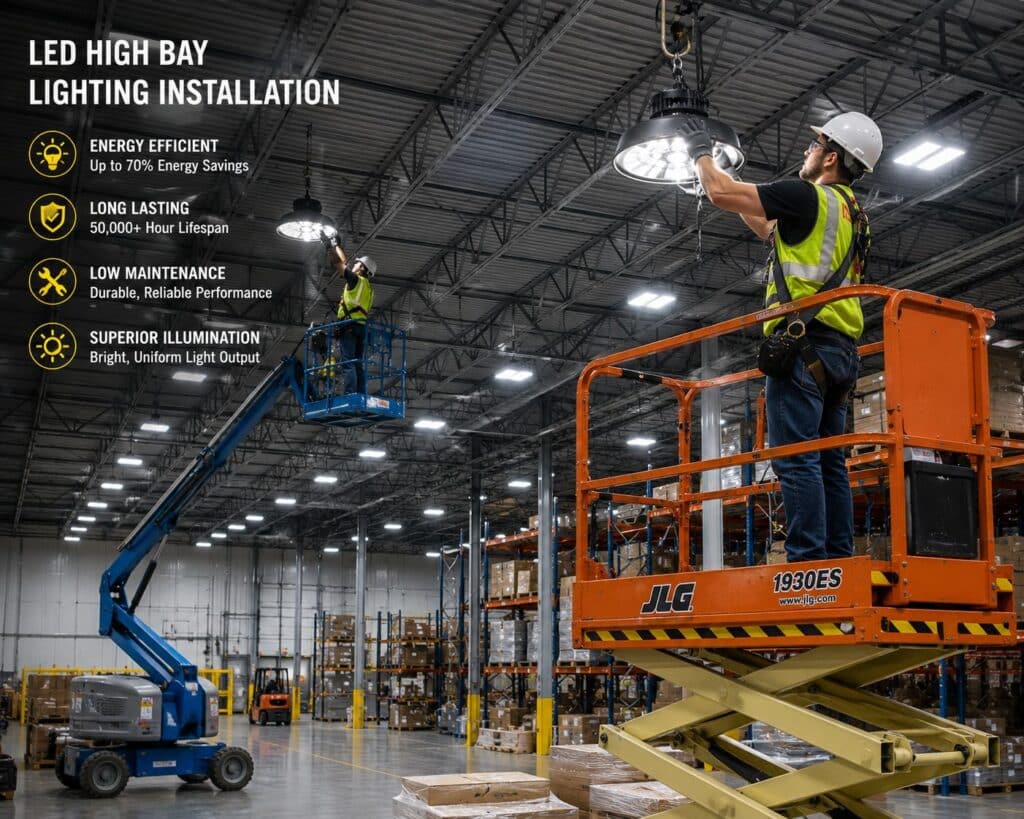
Proper installation of industrial LED lighting ensures safe operation, uniform illumination, long fixture life, and maximum energy efficiency across warehouses, manufacturing plants, and other industrial facilities.
Planning an Industrial Lighting Installation or LED Retrofit?
A successful installation starts with the right fixtures and layout. Ceiling height, fixture spacing, light levels, beam distribution, electrical requirements, controls, emergency lighting, and facility conditions should all be evaluated before installation begins.
Explore our Industrial LED Lighting solutions or call 844-533-7767 for help selecting fixtures and planning an effective lighting layout for your facility.
Planning Before Installation
Every successful lighting project begins with a detailed evaluation of the facility.
Consider:
- Building dimensions
- Ceiling height
- Production equipment
- Rack layouts
- Machinery locations
- Existing electrical infrastructure
- Operating hours
- Future expansion plans
Planning these factors before installation helps optimize fixture placement and lighting performance.
Need help selecting fixtures? Visit Industrial Lighting Fixtures and Their Uses to compare today’s most common industrial LED lighting products.
Selecting the Right Mounting Height
Fixture mounting height influences light distribution, uniformity, and glare.
| Mounting Height | Typical Fixture |
|---|---|
| 15–20 ft | Low Bay or Small High Bay |
| 20–25 ft | 100–150W High Bay |
| 25–30 ft | 150–200W High Bay |
| 30–40 ft | 200–300W High Bay |
| 40–60 ft | High Output LED High Bay |
Actual mounting recommendations vary depending on beam angle, fixture output, and lighting objectives.
Planning a complete facility lighting project? Explore the Industrial Lighting Guide for fixture selection, lighting layouts, and design recommendations.
Fixture Spacing and Layout
Proper spacing is essential for achieving uniform illumination.
Good lighting layouts help:
- Minimize shadows
- Reduce glare
- Improve worker visibility
- Eliminate dark areas
- Reduce over-lighting
Professional photometric layouts help determine the optimum fixture spacing for each application.
Installing high bay fixtures? Read the Manufacturing Facility High Bay Lighting Guide for mounting recommendations and application-specific guidance.
Wiring Considerations
Industrial lighting installations should be designed with long-term maintenance and future expansion in mind.
Typical considerations include:
- Available voltage
- Circuit capacity
- Fixture grouping
- Dedicated lighting circuits
- Surge protection
- Emergency power connections
- Control wiring requirements
Electrical installations should always comply with applicable local electrical codes and project specifications.
Emergency Lighting
Many industrial facilities require emergency illumination to improve occupant safety during power interruptions.
Emergency lighting may include:
- Emergency battery backup fixtures
- Emergency drivers
- Exit signs
- Emergency egress lighting
- Generator-supported lighting systems
Proper placement ensures safe evacuation routes remain illuminated when normal power is unavailable.
Temporary jobsite lighting plays an important role in worker safety and productivity. Our Construction Site Lighting Guide explains how to select LED lighting systems for indoor and outdoor construction projects.
Integrating Lighting Controls
Installing intelligent lighting controls during the initial project often reduces future retrofit costs.
Recommended controls include:
- Occupancy sensors
- Vacancy sensors
- Daylight harvesting
- Wireless controls
- Time scheduling
- Zoned lighting controls
Integrating controls from the beginning helps maximize energy savings and operational flexibility.
Looking to maximize energy savings? The Industrial Lighting Controls Guide explains how occupancy sensors, daylight harvesting, and wireless controls improve lighting performance.
Commissioning the Lighting System
After installation, the lighting system should be commissioned to verify proper operation.
Commissioning typically includes:
- Fixture operation verification
- Lighting level measurements
- Control programming
- Sensor adjustments
- Emergency lighting testing
- Fixture aiming
- Documentation of system settings
Proper commissioning ensures the lighting system performs as intended.
Common Installation Mistakes
Avoid these common errors:
- Incorrect mounting heights
- Uneven fixture spacing
- Ignoring beam angle selection
- Installing insufficient emergency lighting
- Improper sensor placement
- Overlooking future expansion
- Skipping commissioning
Careful planning reduces costly adjustments after installation.
Installation Best Practices by Facility
| Facility Type | Installation Focus |
| Warehouse | Uniform aisle lighting |
| Manufacturing Plant | Equipment and workstations |
| Distribution Center | Rack aisles and shipping |
| Food Processing | NSF and vapor tight fixtures |
| Cold Storage | Low-temperature fixtures |
| Aircraft Hangar | Wide beam coverage |
| Industrial Yard | Pole placement and flood lighting |
Designing warehouse lighting? Visit Warehouse Lighting Layout Guide for spacing recommendations and photometric planning concepts.
Safety During Installation
Lighting projects should prioritize worker safety throughout installation.
Best practices include:
- Lockout/tagout procedures
- Proper lift equipment
- Secure fixture mounting
- Safe wiring practices
- Verification before energizing circuits
- Inspection of mounting hardware
Following safe installation procedures helps reduce project risks and supports long-term fixture reliability.
Inline Buyer Q&A
How high should industrial LED fixtures be mounted?
Mounting height depends on ceiling height, fixture output, beam angle, and the required lighting level. Professional lighting layouts help determine the optimum installation height.
Should lighting controls be installed during the initial project?
Yes. Installing occupancy sensors, wireless controls, and daylight harvesting systems during the original installation typically reduces future labor costs and improves long-term energy efficiency.
Is commissioning necessary?
Commissioning verifies that fixtures, lighting controls, emergency systems, and lighting levels operate as designed before the project is completed.
Plan Your Industrial Lighting Installation for Long-Term Success
A successful industrial lighting project begins with thoughtful planning, proper fixture selection, and professional installation practices. From mounting heights and fixture spacing to lighting controls and commissioning, every decision influences energy efficiency, workplace safety, and long-term system performance.
👉 Explore our complete selection of Industrial LED Lighting and let our lighting specialists help you design an installation that delivers reliable performance, lower operating costs, and years of dependable service.
Frequently Asked Questions
What is the most important part of an industrial lighting installation?
Planning is one of the most important steps. Proper fixture selection, spacing, mounting height, and lighting layout significantly influence system performance.
Can existing industrial lighting be retrofitted with LED fixtures?
Yes. Many industrial facilities replace older HID and fluorescent systems with modern LED lighting while utilizing much of the existing electrical infrastructure.
Should photometric layouts be performed before installation?
Yes. Professional lighting layouts help determine fixture quantity, spacing, and expected illumination levels before installation begins.
Do lighting controls require special wiring?
Some control systems require additional wiring, while many modern wireless lighting controls minimize installation complexity.