
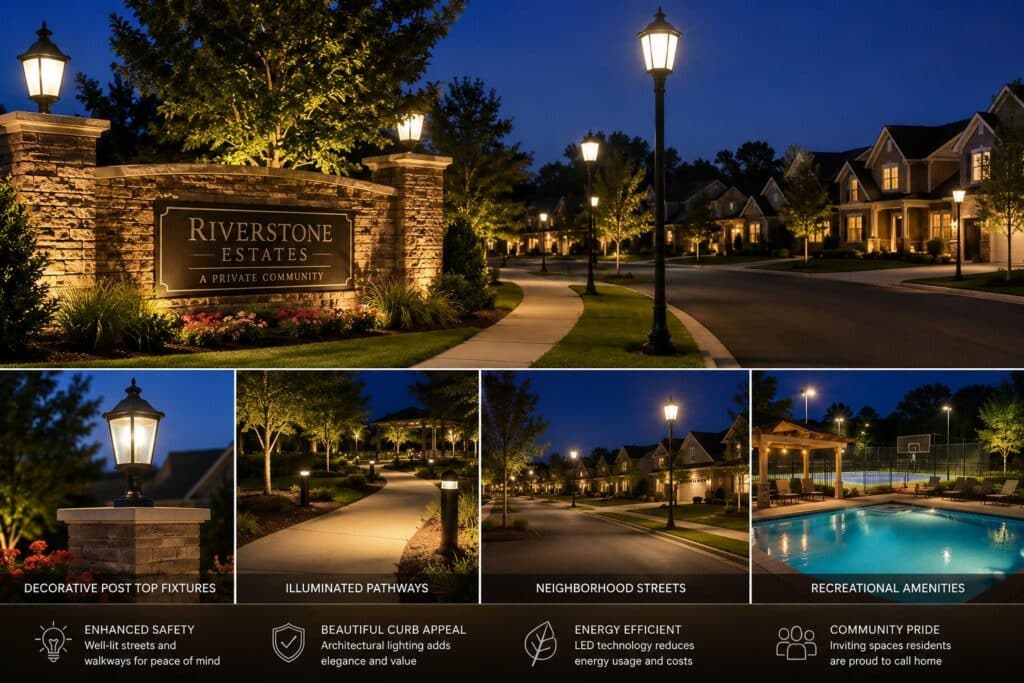
Outdoor lighting is one of the most visible and important investments made by homeowners associations. Properly designed HOA lighting improves resident safety, enhances community appearance, supports security initiatives, and creates a welcoming environment throughout the neighborhood.
From entrance monuments and community parks to pathways, streets, clubhouses, and recreational facilities, architectural lighting helps define the character of a residential development while providing reliable nighttime visibility.
Sidewalks and pathways are among the most frequently used areas within residential communities. Learn more about fixture selection and pathway illumination in our Pedestrian Lighting Design Guide.
Modern LED architectural lighting solutions allow HOAs to improve lighting quality, reduce maintenance costs, and lower energy consumption while enhancing the overall resident experience.
What Is HOA Lighting Design?
HOA lighting design involves the planning, selection, and placement of outdoor lighting systems throughout a residential community.
Common HOA lighting applications include:
- Neighborhood streets
- Sidewalks and pathways
- Community entrances
- Monument signage
- Clubhouses
- Community pools
- Parks and playgrounds
- Mail kiosk areas
- Dog parks
- Sports courts
- Parking lots
- Common gathering spaces
A successful HOA lighting plan balances aesthetics, safety, security, maintenance requirements, and long-term operating costs.
Many lighting challenges faced by HOAs are also common within apartment and condominium developments. Our Multifamily Site Lighting Guide explores site lighting strategies for larger residential properties and mixed-use communities.
Why HOA Lighting Matters
Resident Safety
Lighting improves visibility along walkways, streets, and common areas while helping residents safely navigate the community after dark.
Community Security
Proper lighting supports surveillance efforts and can help reduce opportunities for criminal activity.
Property Appearance
Architectural lighting enhances curb appeal and creates a positive first impression for residents and visitors.
Community Identity
Decorative fixtures help establish a consistent visual theme throughout the development.
Long-Term Property Value
Well-maintained lighting systems contribute to community attractiveness and perceived value.
Parking lots, recreation areas, and larger common spaces often require higher-output lighting systems. Our architectural area lighting solutions provide uniform illumination while maintaining community aesthetics.
HOA Lighting Priorities by Area
| Community Area | Primary Objective | Recommended Fixture Types |
|---|---|---|
| Entrance Monuments | Visibility & Community Identity | Decorative Post Tops, Spotlights |
| Streets | Safety & Wayfinding | Architectural Street Lights |
| Sidewalks | Pedestrian Safety | Bollards, Post Tops |
| Parks & Open Spaces | Visibility & Comfort | Decorative Area Lighting |
| Clubhouses | Security & Aesthetics | Wall-Mounted Fixtures, Post Tops |
| Pools & Recreation Areas | Activity Support | Architectural Area Lighting |
| Mail Kiosks | Security & Visibility | Area Lights, Bolla
rds |
Many residential communities rely on decorative post top fixtures to illuminate streets, pathways, parks, and common areas. Learn more about fixture styles and applications in our Decorative Post Top Lighting Guide.
Community Entrance Lighting
Community entrances are often the most recognizable feature of an HOA.
Lighting should:
- Highlight monument signage
- Improve visitor visibility
- Enhance community branding
- Support wayfinding
- Create a welcoming appearance
Decorative post top fixtures and architectural landscape lighting are commonly used.
Looking for decorative community lighting fixtures? Explore our Architectural Post Top Lighting collection for solutions designed specifically for neighborhoods, parks, pathways, and common areas.
Residential Street Lighting
Neighborhood streets require lighting that promotes visibility without creating excessive glare.
Objectives include:
- Driver visibility
- Pedestrian safety
- Consistent illumination
- Reduced light trespass
- Enhanced aesthetics
Many HOAs utilize decorative street lighting systems that complement community architecture.
Bollard lighting can improve visibility along sidewalks, pathways, and common areas throughout residential communities. Explore our Residential Bollard Lighting Guide.
Sidewalk and Pathway Lighting
Pedestrian pathways connect residents to amenities, parks, recreational facilities, and neighboring streets.
Effective pathway lighting should:
- Improve visibility
- Reduce trip hazards
- Support wayfinding
- Minimize dark areas
- Enhance nighttime comfort
Bollards and decorative post tops are popular solutions.
Pedestrian circulation is important in both residential and educational environments. Our Campus Pathway Lighting guide explores pathway illumination techniques that improve safety and wayfinding.
Community Amenities Lighting
Clubhouses
Clubhouse lighting should support:
- Evening activities
- Safe entry and exit
- Parking area visibility
- Architectural aesthetics
Pools
Pool lighting must balance safety and ambiance while supporting nighttime activities.
Parks and Recreation Areas
Parks often require:
- Pathway illumination
- Gathering area lighting
- Seating area visibility
- Activity-specific lighting
HOA Lighting and CPTED Principles
Many communities utilize Crime Prevention Through Environmental Design (CPTED) principles when planning outdoor lighting.
Key CPTED objectives include:
Natural Surveillance
Improving visibility throughout the neighborhood.
Access Control
Guiding movement toward intended routes and community facilities.
Territorial Reinforcement
Clearly defining community boundaries and common spaces.
Maintenance
Ensuring fixtures remain operational and visually appealing.
For additional guidance, see our CPTED Lighting Principles resource.
Effective community security begins with visibility. Learn how CPTED Lighting Principles can improve natural surveillance, access control, and resident safety through thoughtful lighting design.
Choosing Decorative Lighting Fixtures
Architectural fixture selection impacts both community appearance and lighting performance.
Popular HOA fixture styles include:
Decorative Post Top Lighting
Commonly used for:
- Streets
- Parks
- Pathways
- Gathering spaces
Decorative post top fixtures are among the most widely used lighting solutions in HOA communities. Visit our Decorative Post Top Lighting Guide to learn about fixture styles, applications, and design considerations.
Architectural Area Lighting
Suitable for:
- Parking lots
- Recreation facilities
- Larger common areas
Bollard Lighting
Ideal for:
- Walkways
- Sidewalks
- Amenity areas
Bollard fixtures provide low-level illumination for sidewalks, pathways, parks, and amenity areas. Explore our architectural bollard lighting solutions for pedestrian-focused applications.
LED Benefits for HOA Communities
Modern LED lighting offers significant advantages:
- Reduced energy consumption
- Longer fixture life
- Lower maintenance costs
- Improved visibility
- Better uniformity
- Reduced relamping requirements
- Enhanced sustainability
These benefits can help HOAs lower operating expenses while improving resident satisfaction.
Lighting is also part of the broader responsibility for maintaining common areas, infrastructure, safety, and community appearance. Our guide to homeowner association maintenance looks at these considerations from a wider HOA property-management perspective.
HOA lighting affects much more than nighttime visibility. Fixture selection, placement, architectural appearance, pedestrian safety, security, and neighborhood character all influence how residents experience shared outdoor spaces. Explore our Homeowner Association Lighting Guide for additional considerations when planning community lighting.
HOA Lighting Design Best Practices
Maintain Consistent Fixture Styles
Using a common fixture family throughout the community creates a cohesive appearance.
Prioritize Uniform Illumination
Avoid excessive brightness and dark gaps between fixtures.
Minimize Glare
Select fixtures with controlled optics and shielding.
Consider Residential Character
Warm color temperatures such as 3000K are often preferred in residential environments.
Plan for Future Growth
Lighting infrastructure should accommodate future community expansion and renovations.
Once you’ve developed an overall lighting strategy, the next step is planning how to implement upgrades over time. Our HOA LED Lighting Upgrades Guide explains how associations can prioritize projects, manage reserve funding, and modernize community lighting in logical phases.
Inline Buyer Q&A
What type of lighting is best for HOA communities?
Decorative post top lighting, architectural area lights, bollards, and pedestrian lighting are among the most common fixture types used in residential communities.
Why do many HOAs choose decorative fixtures?
Decorative fixtures enhance community appearance while providing functional illumination for residents and visitors.
Is LED lighting worth upgrading to?
Yes. LED systems typically reduce maintenance expenses and energy consumption while improving lighting performance.
What color temperature is best for neighborhoods?
Many residential communities prefer 3000K fixtures because they create a warm and inviting appearance.
How can lighting improve community security?
Proper lighting improves visibility, supports surveillance efforts, and contributes to CPTED-based security strategies.
Ready to Improve Your HOA Community Lighting?
Planning a lighting upgrade for an HOA community, condominium development, or residential neighborhood? We can help you select decorative post top fixtures, bollards, pathway lighting, community street lighting, and architectural area lights that support safety, visibility, and a cohesive community appearance.
👉 Explore Architectural Lighting Solutions or call 1-844-533-7767 to discuss your community lighting project.
Frequently Asked Questions
What is HOA lighting design?
HOA lighting design involves planning outdoor lighting systems that improve safety, security, aesthetics, and functionality throughout a residential community.
Why is pathway lighting important?
Pathway lighting improves pedestrian visibility and helps residents safely navigate common areas after dark.
Are decorative street lights suitable for residential communities?
Yes. Decorative street lighting is commonly used because it combines aesthetics with effective roadway illumination.
Can HOA lighting reduce operating costs?
Modern LED lighting systems can significantly reduce energy and maintenance expenses.
What community areas should receive priority lighting?
Entrances, streets, pathways, parking areas, and community amenities are typically the highest-priority areas.
Stay Connected with Our Lighting Resources
Add IndustrialLightingFixtures.org as a Preferred Source on Google to see more of our lighting guides and technical resources across Google Search experiences.

Related HOA & Architectural Lighting Resources
Continue planning outdoor lighting for HOA communities, condominium developments, multifamily properties, and residential common areas with these related design and fixture-selection resources:
- Multifamily Site Lighting Guide — Review lighting strategies for apartment communities, condominium developments, and mixed-use residential properties, including common areas, parking, pathways, and building surroundings.
- CPTED Lighting Principles — Learn how outdoor lighting can support visibility, natural surveillance, pedestrian awareness, and broader crime prevention through environmental design strategies.
- Campus Pathway Lighting Guide — Review fixture placement, illumination, spacing, and pedestrian visibility considerations that also apply to pathways and common areas within residential communities.
- Decorative Post Top Lighting Guide — Explore decorative post top fixture styles and selection considerations for neighborhoods, community streets, pedestrian areas, and other architectural outdoor environments.