
Commercial light poles serve as the structural backbone for outdoor LED lighting systems across parking lots, athletic fields, campuses, retail centers, and municipal sites. Engineered to withstand environmental exposure and significant wind loads, these support structures accommodate high-output luminaires while maintaining long-term durability and safety compliance. Whether specifying new installations or upgrading existing systems, correctly engineered light poles ensure proper mounting height, optical distribution, and site coverage for a variety of outdoor lighting applications.
Structural mounting solutions such as these are fundamental elements of complete commercial lighting fixtures strategies.
Commercial Light Poles
In comprehensive outdoor lighting designs, commercial light poles are paired with area, street, and security luminaires to create cohesive illumination strategies that balance coverage, uniformity, and energy efficiency across public and private outdoor spaces.
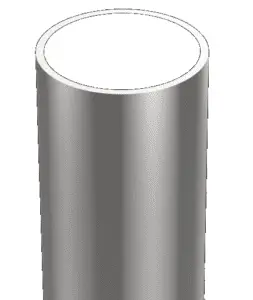
CL-RSA
Brand: Crystal
Round Straight Aluminum Poles
Prices start at $600.
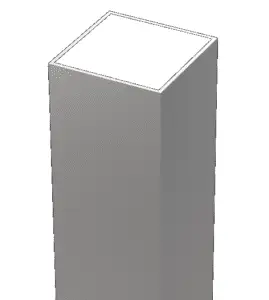
CL-SSA
Brand: Crystal
Square Straight Aluminum Poles
Prices start at $600.
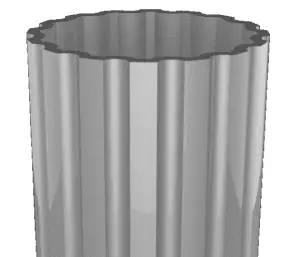
CL-RSAF
Brand: Crystal
Round Straight Aluminum Fluted Poles; Prices start at $700.
CL-RSADB / CL-RSAFDB
Brand: Crystal
Round Straight Aluminum Direct Burial Poles; Round Straight Aluminum Fluted Direct Burial Poles
Prices start at $600.
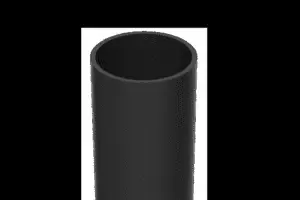
CL-RSS
Brand: Crystal
Round Straight Steel Poles
Prices start at $600.
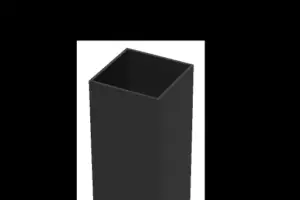
CL-SSS
Brand: Crystal
Square Straight Steel Series
Prices start at $600.
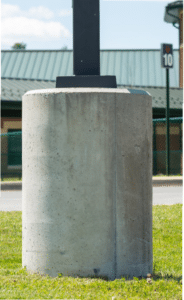
Precast Pole Bases
Brand: Atlas
Base diameter, length, bolt patterns, ground wire, and conduit options can all be customized to your specs.
Prices start at $
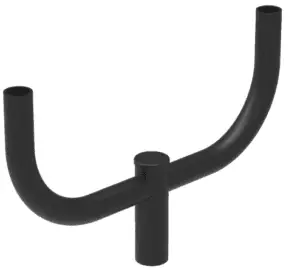
BHR
Brand: Crystal
Bull Horn Arms
Prices start at $300.
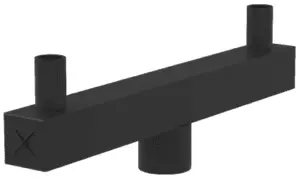
CLP-SCA
Brand: Crystal
Cross Arms
Prices start at $300.
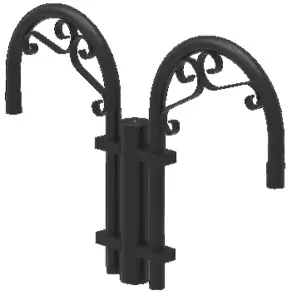
Decorative Arms
Brand: Crystal
Prices start at $350.
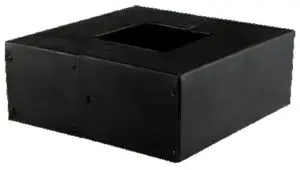
Square Formed 2-Piece
Brand: Crystal
Aluminum Base Cover; 4″ Square Poles, Black Powdercoat Finish,
10¾” x 11″ x 4 ½” High;
Prices start at $200.

What Are Commercial Light Poles?
Commercial light poles are engineered vertical support structures designed to mount outdoor luminaires at required heights to achieve uniform site illumination. Available in steel or aluminum, single- and multi-section designs, these poles are selected based on mounting height, wind load requirements, lighting distribution, and architectural intent. They enable optimal performance from LED parking lot lights, sports field lights, wall packs, façade luminaires, and other exterior fixtures.
Commercial light poles are available in a wide range of heights, materials, shapes, mounting configurations, and finishes to support different site and fixture requirements. For a broader look at how today’s pole designs, materials, mounting options, and applications come together, see our guide to modern commercial LED light poles.
For comprehensive outdoor illumination, commercial light poles are often paired with high-output LED parking lot lights to ensure uniform distribution across large open spaces.
When Should Commercial Light Poles Be Used?
Commercial light poles are specified wherever outdoor LED luminaires need secure elevation for:
• Parking lots and garages
• Roadways and access drives
• Campus and pedestrian pathways
• Perimeter and security lighting
• Parks and recreational zones
• Industrial yards and truck terminals
• Sports fields (in conjunction with lighting)
Light poles enable efficient illumination distribution by positioning luminaires at heights that support optimal beam coverage, uniformity, and minimized glare.
For parking-area projects, see our Parking Lot Light Pole Guide for additional guidance on pole placement, mounting considerations, visibility, and site illumination.
Pole accessories play an important role in creating a finished lighting installation. Review our Decorative Light Pole Base Covers resource for additional information.
Key Features & Specifications
Material & Structural Integrity
Available in:
-
Steel — high strength and longevity
-
Aluminum — corrosion resistance and lighter weight
Mounting Heights
Common commercial mounting heights:
-
15–40 feet (parking and perimeter)
-
40–100+ feet (sports and large-area illumination)
Not sure what mounting height is appropriate for your project? Review our guide to commercial light pole heights for typical pole heights by application and key factors that influence pole selection.
Before selecting fixtures or pole heights, review our Parking Lot Foot Candle Requirements resource to understand how average foot candle levels affect visibility, safety, and security.
Wind Load Ratings & Engineering Compliance
Designed per ASCE 7 and local code requirements for structural safety.
Finishing Options
Powder coating, galvanized steel, and architectural finishes for corrosion resistance and visual appeal.
Accessory Compatibility
Compatible with:
-
Tenons
-
Arms and brackets
-
Base covers
-
Clam shell pole base covers-To protect anchor bolts and enhance pedestrian safety at grade, installations frequently include clam shell pole base covers with engineered light pole systems.
Commercial Light Pole Types
-
Straight steel poles
-
Tapered polygon/round poles
-
Multi-section / breakaway poles
-
Flagpole-style illumination supports
-
Architectural accent poles
Selection depends on lighting design goals, site conditions, and wind/structural requirements.
Remote roadway projects often use Commercial Solar Street Lights where extending utility power would be expensive or impractical.
Industrial & Commercial Applications
Commercial light poles support outdoor LED lighting systems in many environments, including:
• Retail parking lots
• Industrial yards
• Campus walkways
• Road networks and access roads
• Distribution facilities
• Institution grounds
• Recreational and park areas
Paired with the appropriate LED luminaires, light poles ensure consistent visibility, safety, and operational efficiency in outdoor spaces by elevating fixtures to the right height and orientation for uniform coverage.
Pole height, spacing, fixture distribution, and site layout all influence parking lot illumination. See our commercial light pole guide for parking lots for additional application considerations.
As integral components of a complete commercial outdoor lighting system, light poles support a variety of LED luminaires across site types and applications.
Comparison Table — Pole Height & Application Examples
| Pole Height | Typical Use Cases | Recommended Fixtures |
|---|---|---|
| 10–15 ft | Walkways, pedestrian paths | Low bay, bollard, area lights |
| 15–25 ft | Parking lots, perimeter lighting | Area lights, wall packs |
| 25–35 ft | Roadways, large lots | Street lights, area lights |
| 35–60+ ft | Stadiums, high mast zones | Sports lighting, high mast |
Mounting height and structural planning are addressed in our full commercial lighting design and specification guide.
Parking lot lighting performance depends on more than the fixture alone. Pole height, spacing, mounting configuration, and site layout all affect coverage and uniformity. See how these factors work together in our guide to improving a parking area with a commercial light pole.
Technical Standards & Compliance Resources
Commercial light poles must meet structural and electrical safety standards, including:
✔ AASHTO/LTS (for structural loading)
✔ IBC/ASCE standards for wind & seismic design
✔ UL or ETL listings for luminaires mounted on poles
✔ Tenon and mounting hardware standards
✔ Corrosion resistance for outdoor environments
Poles and mounting systems should be specified based on local code requirements, wind exposure categories, and installation conditions to ensure long-term performance and safety. Proper coordination with lighting layout plans, utility feeds, and control schemes helps minimize installation errors and maintenance costs.
Choosing the right commercial light pole requires more than selecting a height and finish. Pole material, mounting configuration, wind load, fixture weight, foundations, anchor bolts, and mounting hardware all affect the safety and performance of the installation. Explore our Commercial Light Poles & Mounting Systems Guide for a detailed overview of pole selection and installation considerations.
Planning & Selection Considerations
When planning for commercial light poles, designers should evaluate:
✔ Site geometry and spacing requirements
✔ Wind load and environmental exposure
✔ Mounting hardware compatibility with luminaires
✔ Foundation and anchorage design
✔ Fixture height vs. beam distribution trade-offs
✔ Control and wiring access for maintenance
Selecting the right pole height, material, and mounting configuration impacts both illumination performance and long-term durability. Coordination with structural engineers and lighting designers ensures code compliance and optimized light distribution.
Athletic field projects pair tall, engineered commercial light poles with precision LED sports luminaires for high-performance illumination in stadium and recreation environments
Inline Buyer Q&A
How do I choose the right commercial light pole for my project?
Start with the application, required mounting height, fixture quantity and configuration, fixture weight and effective projected area (EPA), local wind conditions, pole material, mounting method, and applicable structural requirements.
Pole selection should be coordinated with the luminaires and mounting hardware rather than treating the pole as an independent component.
What information should I provide when requesting commercial light poles?
Helpful information includes the project location, desired pole height, fixture manufacturer and model, number of fixtures per pole, mounting configuration, fixture EPA and weight, pole material preference, voltage and wiring requirements, foundation or base information when available, and desired finish.
The project location is particularly important because structural requirements can vary according to local wind and other design conditions.
What is EPA and why does it matter when selecting a light pole?
EPA stands for effective projected area. It represents the wind-exposed characteristics of fixtures, arms, brackets, and other equipment mounted on the pole and is used in evaluating wind loading.
A pole must be suitable for the proposed fixture configuration and applicable design conditions. Adding fixtures, arms, cameras, banners, signs, or other attachments can change the loading on the pole.
Should I choose a steel or aluminum light pole?
Both materials are widely used for commercial lighting.
Steel poles provide structural options for many parking, roadway, industrial, and commercial applications. Aluminum poles offer lighter weight and corrosion-resistant characteristics that can be advantageous in certain environments.
The appropriate material depends on structural requirements, environment, mounting height, fixture configuration, finish, maintenance objectives, and project specifications.
Can I reuse existing light poles when upgrading to LED fixtures?
Sometimes, but the existing pole should not automatically be assumed suitable for a new fixture configuration.
Pole condition, mounting configuration, fixture weight, EPA, wind loading, corrosion, anchor bolts, foundation condition, and other structural considerations should be evaluated before installing replacement luminaires.
This is especially important when the new fixture quantity, mounting arms, or configuration differs from the original installation.
Need Help Selecting Commercial Light Poles?
Commercial light pole selection involves more than choosing a height and finish. Pole material, fixture configuration, EPA, wind loading, mounting method, foundation conditions, project location, and applicable structural requirements all influence the correct specification.
Whether you’re planning poles for a parking lot, dealership, campus, municipal property, industrial facility, retail center, roadway, or other commercial outdoor lighting project, our lighting specialists can help coordinate poles, fixtures, mounting hardware, and project requirements.
👉 Call 1-844-533-7767 to discuss your commercial light pole and outdoor lighting project.
FAQs for Commercial Light Poles
What is a commercial light pole used for?
Commercial light poles provide structural support and mounting height for outdoor luminaires used in parking lots, roadways, campuses, dealerships, industrial properties, pedestrian areas, retail centers, municipal sites, and other exterior environments.
The pole, luminaire, mounting hardware, foundation, and electrical system should be considered as components of the overall lighting installation.
What materials are commercial light poles made of?
Steel and aluminum are common materials for commercial light poles.
Available pole construction can vary by application and may include square or round configurations, straight or tapered designs, and different finishes or protective coatings.
Material selection should consider structural requirements, corrosion exposure, appearance, maintenance, project specifications, and environmental conditions.
What mounting heights are typical for commercial light poles?
Commercial light poles are available in a wide range of mounting heights, and there is no single height range appropriate for every project.
Parking lots, pedestrian areas, roadways, campuses, dealerships, and industrial properties can each require different pole heights based on area size, fixture output, optical distribution, pole spacing, required illumination, and surrounding conditions.
Sports lighting and high mast lighting generally involve specialized pole systems designed for their particular mounting heights, loads, and applications.
Do commercial light poles require engineering certification?
Structural requirements depend on the project location, pole design, mounting configuration, applicable codes, wind conditions, and other site-specific factors.
Projects may require structural calculations, engineered foundations, stamped drawings, or other documentation depending on the jurisdiction and installation.
Applicable requirements should be verified for the specific project rather than assuming one certification standard applies everywhere.
How does wind speed affect light pole selection?
Wind loading is a major consideration in commercial light pole specification.
The pole must be evaluated for the applicable design conditions and the effective projected area of the equipment mounted on it. Fixture quantity, arms, brackets, cameras, banners, signs, and other attachments can affect the total loading.
Because requirements vary geographically and by project, pole selection should use the applicable structural design criteria for the installation location.
What accessories are compatible with commercial light poles?
Common accessories can include mounting arms, bullhorns, tenons, brackets, hand-hole covers, anchor bolts, base plates, pole caps, internal wiring components, and decorative or protective pole base covers.
Compatibility should be verified with the pole and fixture configuration before ordering.
Are there aesthetic options for commercial light poles?
Yes. Commercial poles are available in different shapes, tapers, finishes, colors, mounting configurations, and architectural styles.
Decorative base covers and other accessories can also help conceal anchor bolts and improve the finished appearance of pole installations in campuses, hospitality properties, retail centers, multifamily communities, and public spaces.
What is the difference between anchor-base and direct-burial light poles?
Anchor-base poles typically use a base plate secured to anchor bolts connected to a concrete foundation.
Direct-burial poles extend below grade and are installed directly into an engineered foundation or embedment configuration appropriate for the pole and site.
The appropriate installation method depends on pole design, soil and foundation conditions, structural requirements, project specifications, and installation practices.
Stay Connected with Our Lighting Resources
Add IndustrialLightingFixtures.org as a Preferred Source on Google to see more of our lighting guides and technical resources across Google Search experiences.

Related Commercial Light Pole Resources
- Area Lighting Pole Height Guide — Learn how pole height affects fixture selection, spacing, coverage, photometric performance, and commercial outdoor lighting design.
- Parking Lot Light Pole Guide — Review pole height, placement, fixture configurations, and other considerations specific to commercial parking lot lighting systems.
- Commercial Light Pole Base Covers — Explore protective and decorative options for concealing anchor bolts and improving the finished appearance of commercial pole installations.
- Clamshell vs. Slip-Over Pole Base Covers — Compare two common base-cover configurations and determine which approach is appropriate for new and existing pole installations.
- Outdoor LED Lighting Guide — Review broader commercial outdoor lighting considerations including poles, fixtures, mounting, controls, environmental conditions, and lighting design.